
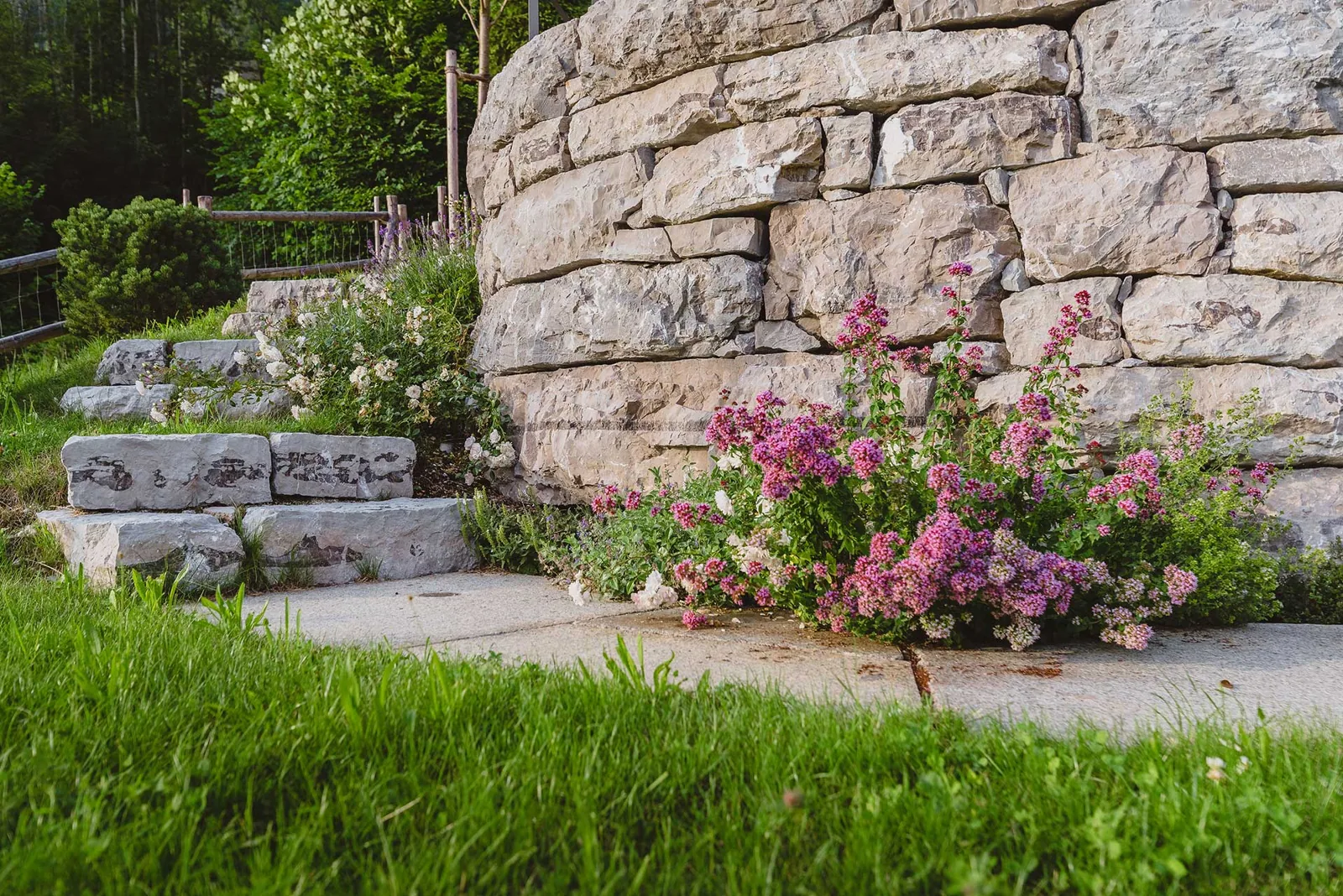
Caring for natural stone and walls
How to clean and maintain paving and walls properly
Compiled by our master gardeners · Last updated: July 2026
To print and file away – free to download.
Natural stone is a durable, robust building material that gains character over the years. Terrace surfaces, paving and walls don't need elaborate care – but they do need the right care. Using aggressive products or the wrong tools can do more damage than dirt and weather combined.
Regular cleaning
For regular care, a broom, water and, if needed, a brush with a neutral cleaner are enough. Sweep away leaves and organic debris regularly – they hold moisture and encourage algae. Stubborn deposits can be removed with warm water, a scrubbing brush and a pH-neutral stone cleaner. Use pressure washers with restraint: with a flat-jet nozzle and enough distance, many hard stones are unaffected, but soft stones and joints suffer from too much pressure.
Discolouration and patina
Natural stone changes over time – this is not a flaw but part of the material. An even patina from weather and use is part of the charm of many surfaces. Isolated stains are different: remove oil and grease stains (e.g. from the barbecue) with absorbent material as soon as possible and follow up with a suitable intensive cleaner. Rust stains, flower petals or flowerpot rings can be treated with special stain removers matched to the stone – here the rule is: test on an inconspicuous spot first.
Algae and moss
Algae and moss form on shady, damp surfaces. Removing them mechanically with a brush and water is the gentlest method. Acid-free algae removers can help; thorough rinsing afterwards is important. To prevent growth, anything that makes the surface drier helps: thin out trees and shrubs, remove leaves, keep drainage working well.
Keep an eye on the joints
On paved surfaces with sand or grit joints, it is normal for joint material to wash out over time – simply top up and sweep in as needed. Remove weeds from the joints mechanically (joint scraper, weed burner); chemical weedkillers are generally not permitted on paved surfaces. For firmly grouted surfaces and walls, it's worth checking once a year for cracks or broken-out joints, so that no water gets in and causes frost damage.
Winter and grit
De-icing salt attacks many natural stones and their joints, and also damages adjacent planting areas. On natural stone surfaces, use abrasive gritting materials such as chippings or sand. Clear snow with a plastic or rubber shovel – metal edges leave scratches on honed surfaces.
Sealing – yes or no?
With absorbent stones, sealing can noticeably reduce susceptibility to stains, for example in barbecue and dining areas. But it is not a must, and depending on the product and wear it has to be renewed regularly. Whether it makes sense depends on the stone, the surface finish and how it is used – get advice on your specific surface and follow the sealant manufacturer's instructions.
Answers about natural stone and walls
Can I clean my natural stone terrace with a pressure washer?
Why must acid never be used on limestone?
Do I need to seal my natural stone?
What can I do about algae on the shady side of the terrace?
Let's talk about your project
We are happy to advise you in person, with no obligation.
Request a consultation