
Garden maintenance in Bad Tölz, Lenggries & Upper Bavaria
Professional garden maintenance with a permanent team: lawns, hedges, perennials, trees and ponds – regular and well planned.
Maintenance with a plan, not knee-jerk action
A well-kept garden takes time, knowledge and a trained eye. We look after your garden regularly – with a permanent team that knows your garden, at intervals tailored to your wishes, from weekly to yearly. Almost 300 gardens are in ongoing maintenance with us, and we have looked after more than 300 clients for over five years – some since 2005.
Valentin Huber-Saffer
Our maintenance department is led by Valentin Huber-Saffer, B.Eng. in landscape construction. Everything comes together with him: which team is at which garden and when, what needs doing this week and what can wait, and which planting needs different treatment from the year before.
It is more organisation than gardening – and that is exactly what makes the difference between maintenance and simply mowing the lawn. A garden changes every year: trees and shrubs grow larger, perennials spread, patterns of shade shift. Whoever plans the maintenance has to see this coming, rather than tidying up afterwards.
Before him, Elisabeth Simon led the department – today she is managing director of both companies and, alongside Ludwig and Balbina Fuchs, part of the management team. That you can grow with us from apprentice to the management team is not an advertising slogan, but her own path. You can find the whole maintenance team under Our team.

The people who know your garden
A permanent crew rather than changing faces: these colleagues are out in the gardens of the region all year round.
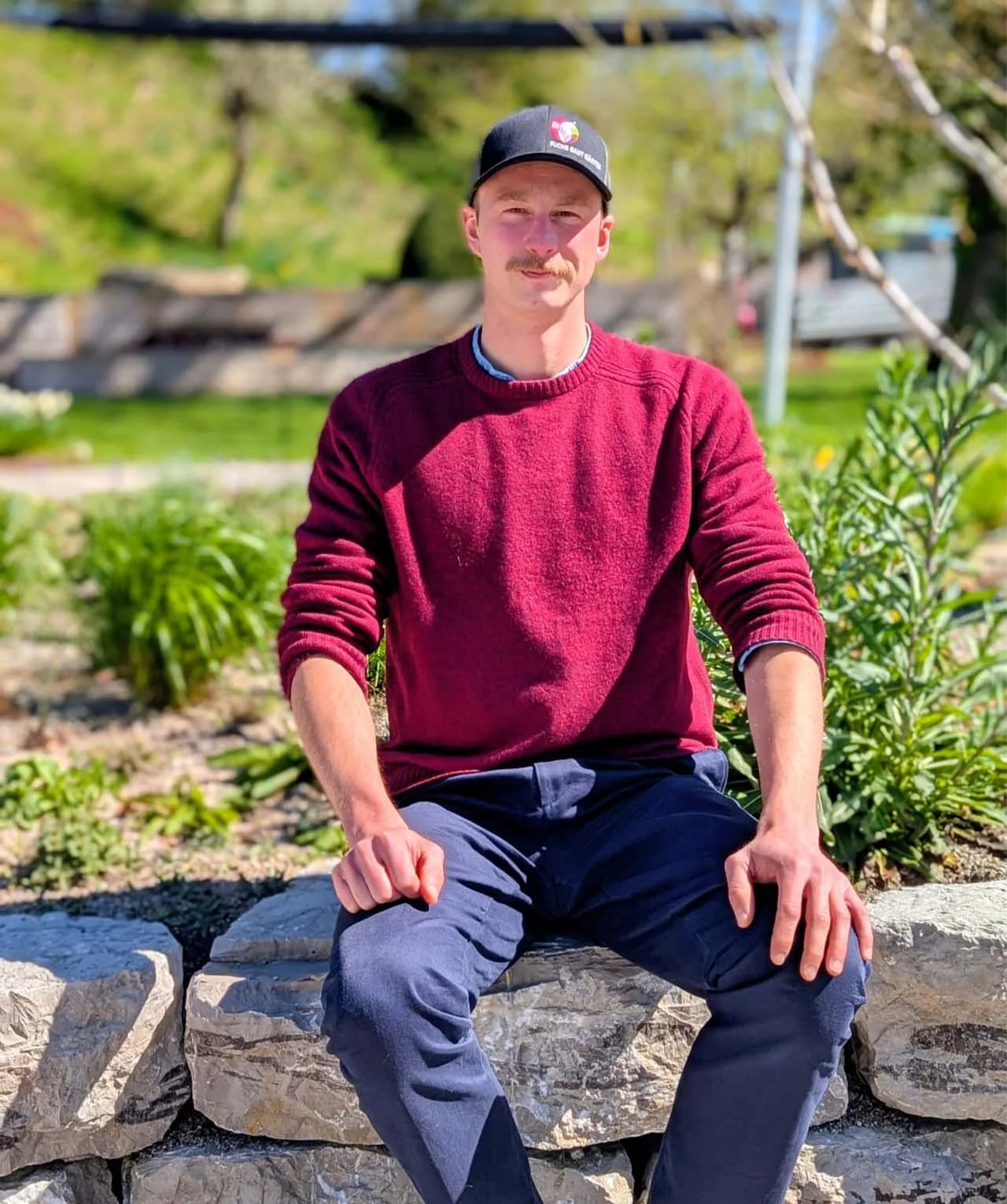
Head of Maintenance · B.Eng. in landscape construction

Master landscape gardener
Landscape gardening technician
Foreman · Irrigation
Foreman Planting & Maintenance (part-time)
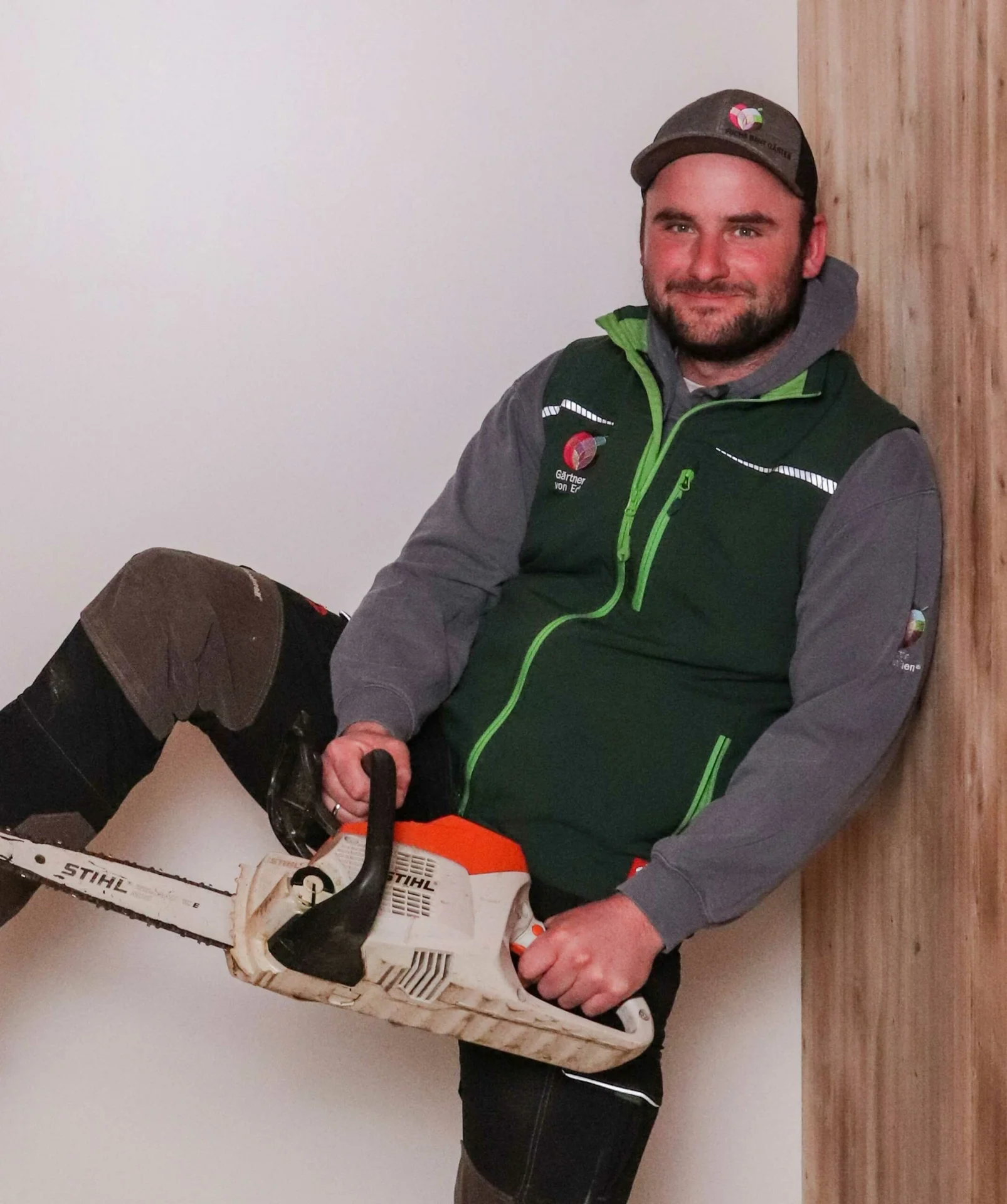
Journeyman landscape gardener · Garden maintenance

Landscape gardening worker · Garden maintenance
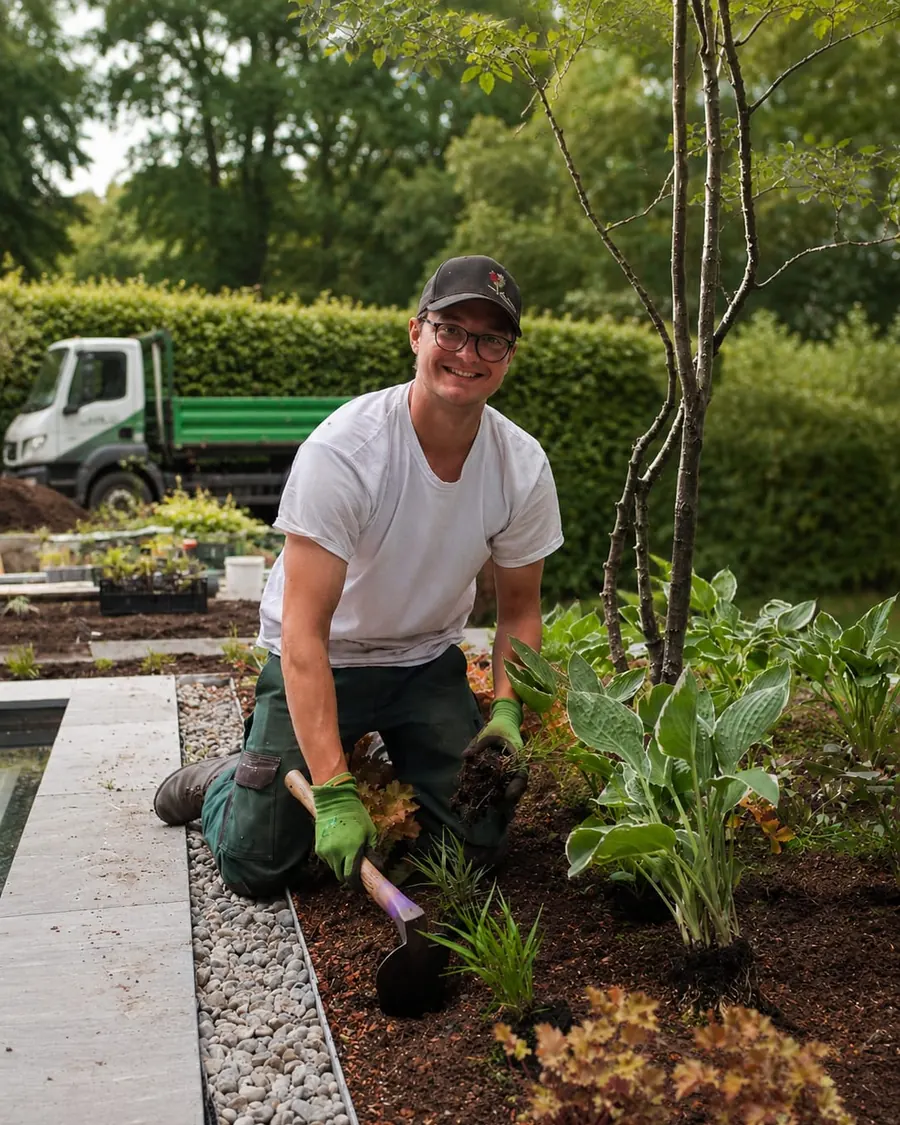
Journeyman landscape gardener
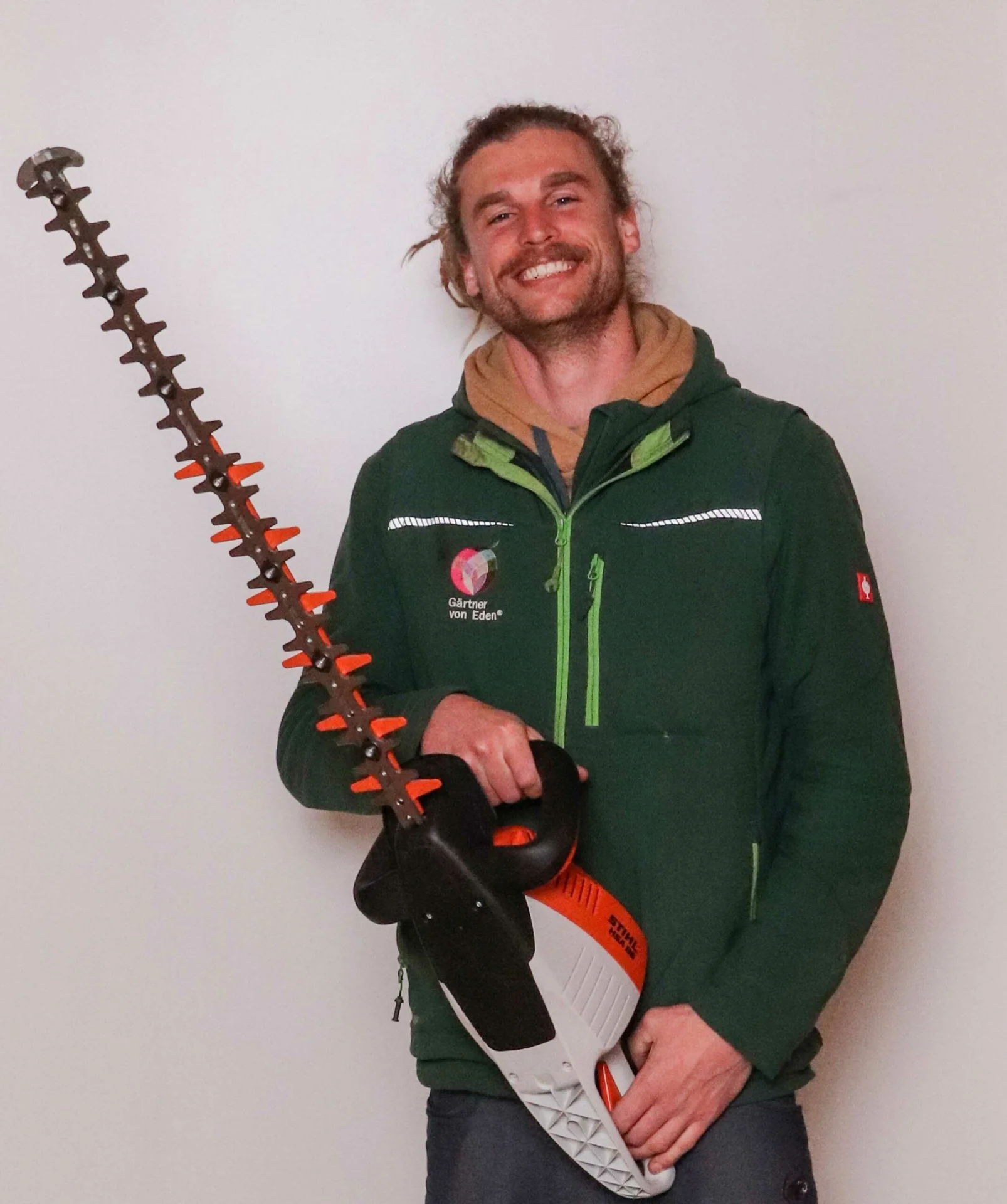
Journeyman landscape gardener

Journeywoman landscape gardener

Career changer in landscape gardening

Journeywoman landscape gardener

Journeywoman landscape gardener
Sebastian Lechner: large trees, old farmhouse gardens
When it comes to demanding maintenance – old fruit trees, established farmhouse gardens, trees and shrubs that need a delicate touch – Sebastian Lechner is our man: a master landscape gardener with a knowledge of plants and pruning that you can't simply google.
How he thinks about maintenance is best heard from him directly – on the Fuchs baut Podcast he talks about large trees, farmhouse gardens and maintenance with passion.

More maintenance conversations from the Fuchs baut Podcast: Helmut Groß on a life in the garden and Episode 24 on maintenance, trees and craftsmanship.
The team at work
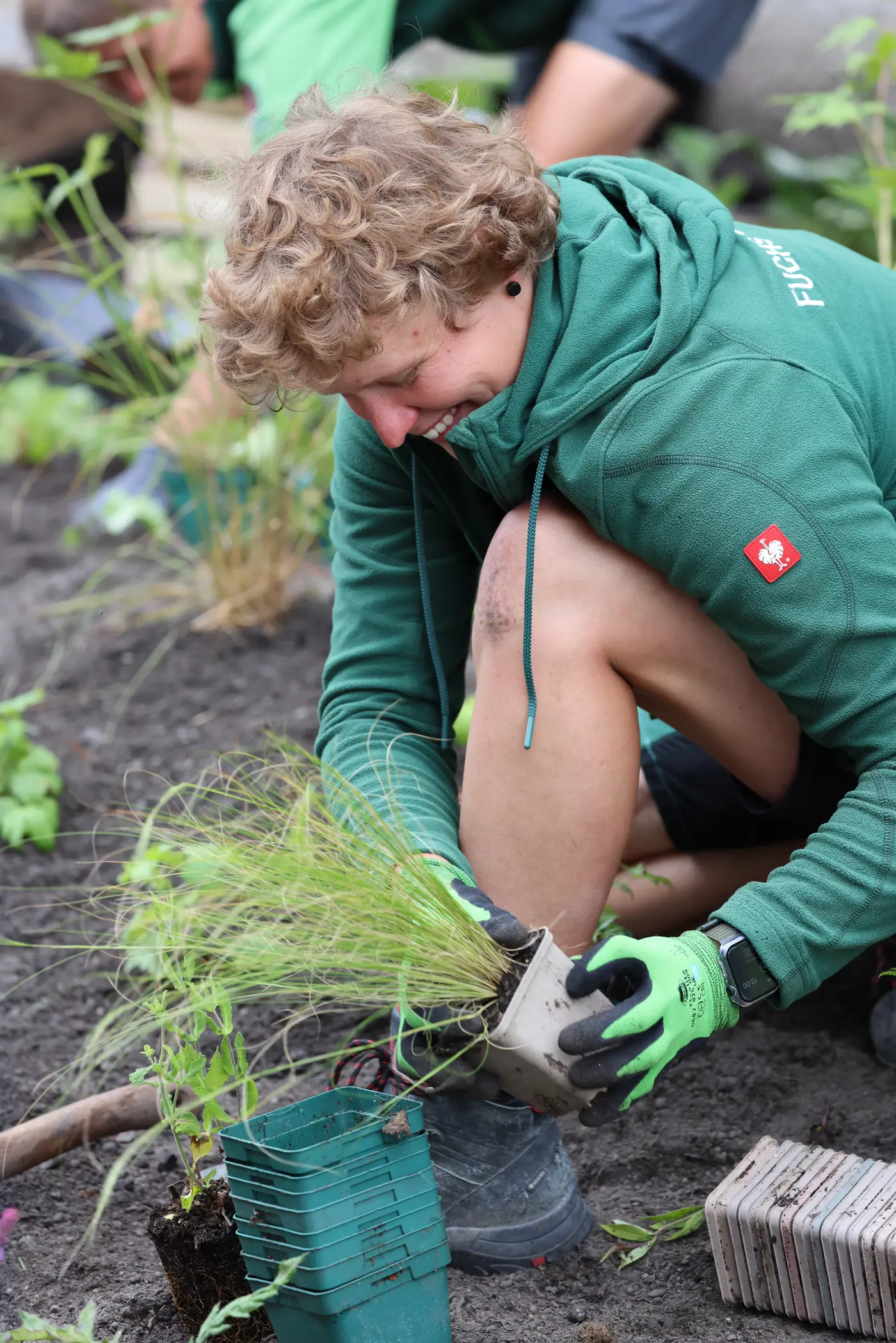
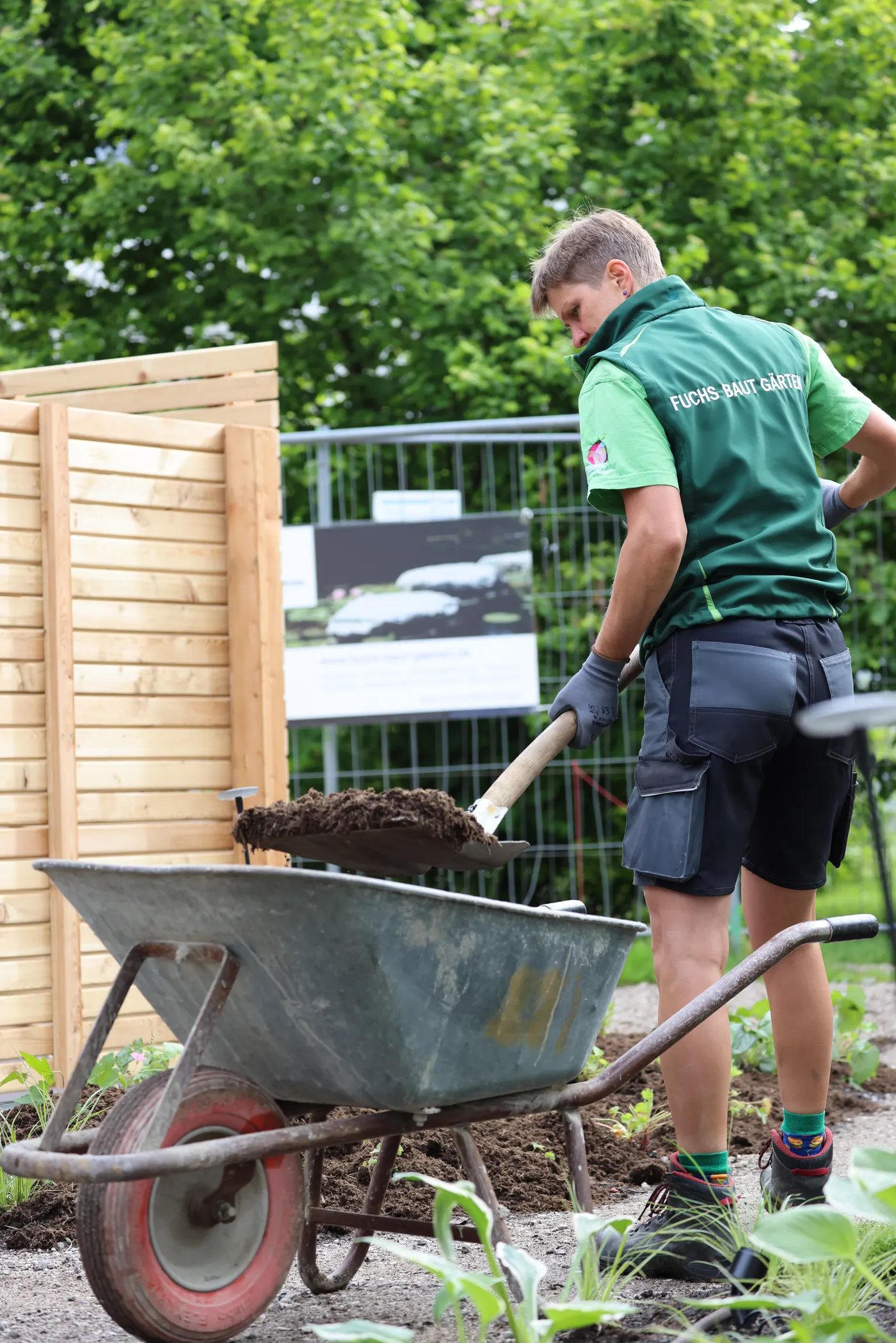
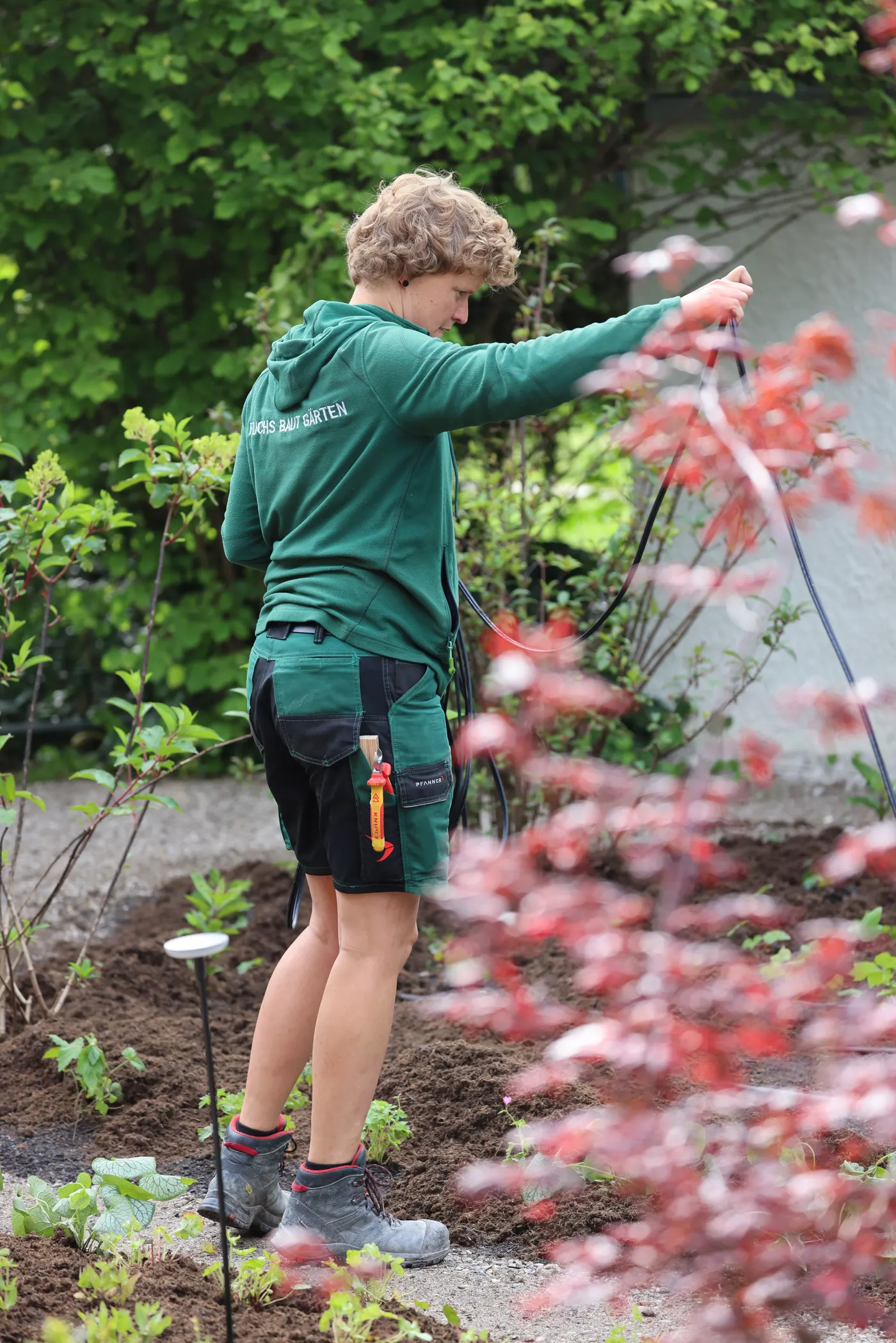
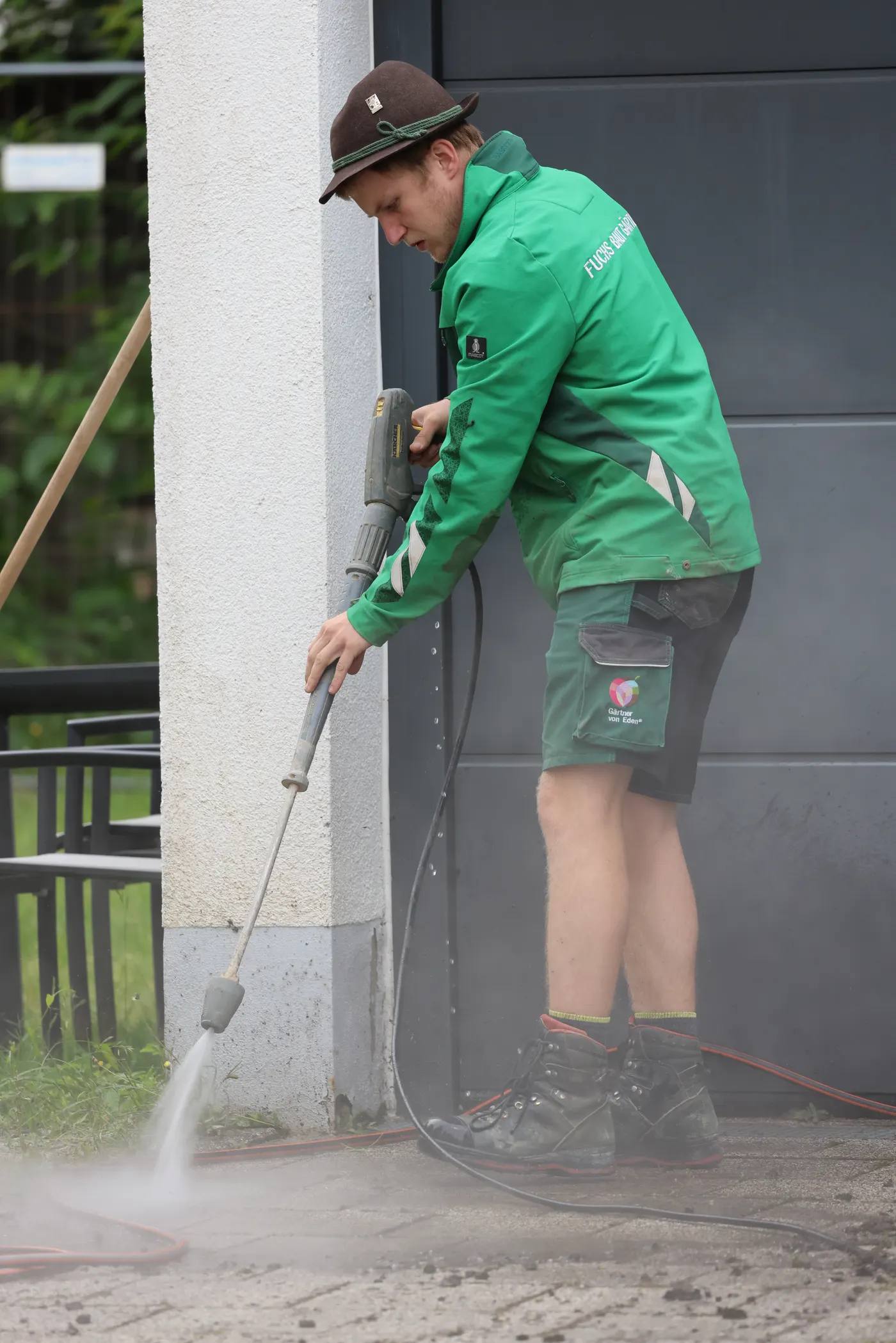
Photos: Benjamin Klopp.
Flowering borders need ongoing care
What clients want most from maintenance is flowering perennial borders – and these don't happen by themselves. A perennial border is alive: perennials need dividing when they become too dense, key perennials and companion perennials need to stay in balance, some plants self-seed where they don't belong, and others quietly disappear. Whoever tends the border over the years keeps its picture-book bloom – whoever leaves it to itself gets matted grass and gaps within three years.
Our maintenance teams know the planting plans of our gardens and know what should grow where. And if a border has lost its shape, we rebuild it – with dividing, replanting and a plan for the coming years.
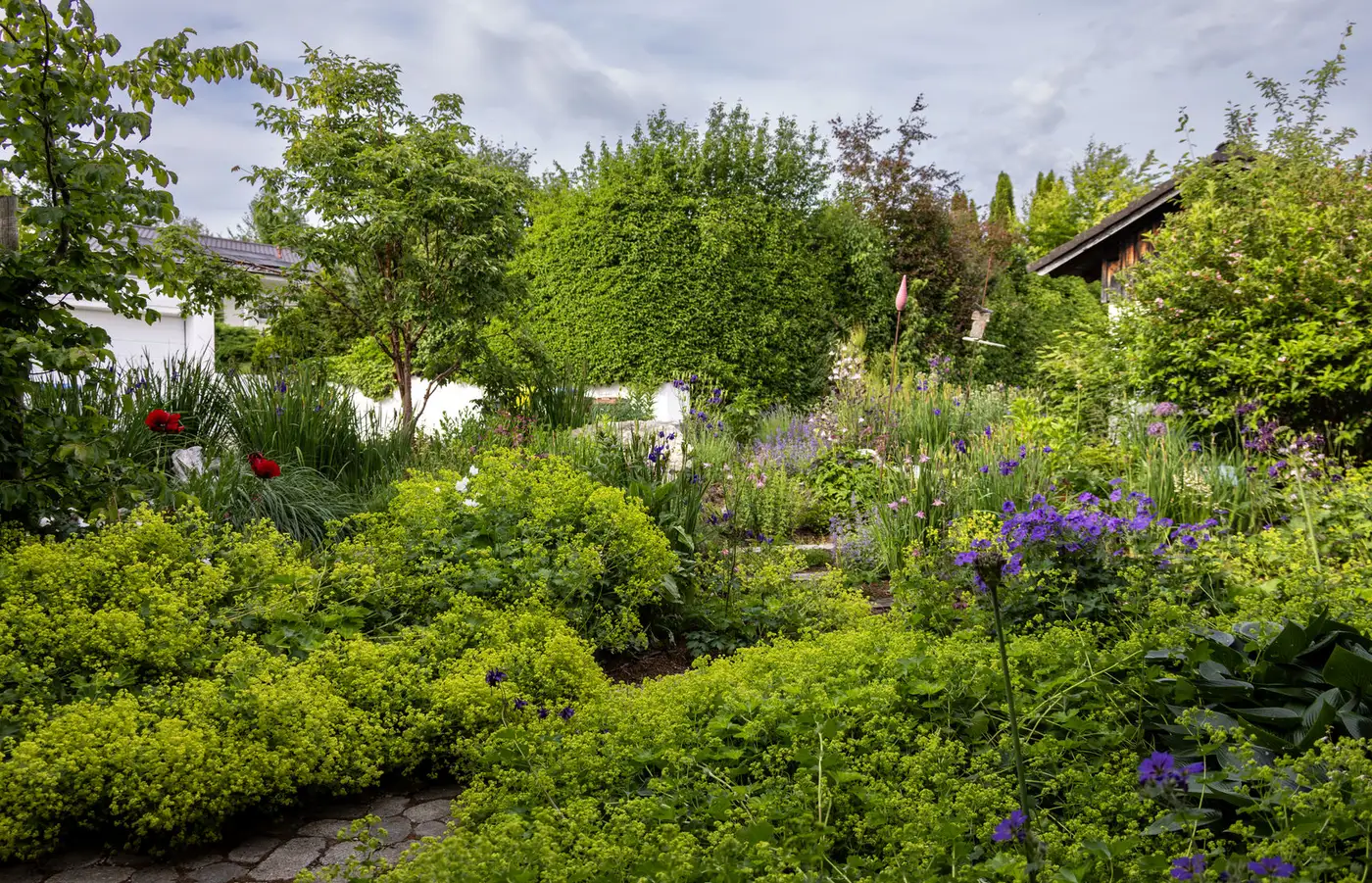
In November you can see whether someone looks after the pond
A swimming pond in autumn is the most honest test: clear water while the leaves fall all around.


We built this swimming pond in Murnau and have looked after it ever since. In autumn that means: removing leaves from the water before they sink, cutting back marginal plants, and preparing the equipment for winter. Skip this once and you will see it next spring. Whether you call it pond care, swimming pond care or pool care: we take care of winterising in autumn, reopening in spring and upkeep throughout the season – for swimming ponds, natural pools, Living Pools and pond features, even if we did not build them ourselves. You can find more in our guide Maintaining a swimming pond and natural pool.
Photos: Benjamin Klopp / frames for good.
Our maintenance services
- Lawn care: mowing, scarifying, aerating, fertilising
- Hedge and shrub trimming, including topiary
- Care of perennial and grass beds, replanting
- Weeding of beds, paths and terraces
- Care of trees and shrubs, maintenance of sloping gardens with safety measures
- Green roofs
- Plant protection plans against fungi and pests
- Maintenance of swimming ponds, natural pools, bio pools & pond systems
As a full-service landscaping company, we bring all the trades together under one roof. We invoice by time and materials or as an annual maintenance package.

Garden maintenance near you
Our maintenance team regularly works in Bad Tölz, Lenggries, Wolfratshausen, Geretsried, south Munich, and around Tegernsee and Lake Starnberg. Whether you need regular annual maintenance or a one-off garden service – find your area and get in touch with no obligation.

Ten years of the same garden
What good maintenance achieves only shows after years.
The company garden of the Rudolf Group in Geretsried was designed in 2014 and built in 2017 – and we have been there every year since. That is exactly the difference between a garden that looks better after ten years than it did at the start, and one that is left to become overgrown: topiary at the right time, perennials that are divided in spring rather than replaced, and a pond whose technical equipment someone knows.
In 2025 we replanted the perennial beds there – on the initiative and to the design of our master gardener Sebastian Lechner, while a company of around 300 employees carried on working. That same year, the project won the TASPO Award and the BGL Award: Grüne Visitenkarte.

What maintenance looks like
A maintenance visit in a company garden we have looked after for years: thinning the crown, raking the lawn, tidying perennials, weeding gravel areas, re-trimming lawn edges – and in winter, the major cut in the bare crown. None of it looks spectacular – and that is exactly how you recognise a garden that is cared for continually rather than rescued once a year.


Maintenance visit in the company garden of the Rudolf Group in Geretsried – the garden that won the TASPO Award and the BGL Award as a Grüne Visitenkarte. Photos: Klas Stöver.
Built by us – and in our care ever since
We have looked after more than 300 clients for over five years, some of them since 2005. That is not a statistic but a way of working: anyone who has built a garden knows how it wants to be looked after. Six examples from our projects:
Since 2009 · Bichl
The Wasserband is the most maintenance-intensive private garden in our care – our team works here throughout the whole season. View the project
Since 2010 · Rottach-Egern
The sculpture garden has been in our care without a break since it was created – from clipping the yews to winterising the pond. View the project
Since 2011 · Rottach-Egern
The swimming pond from 2011 is still clear today – because we have looked after it since it was built. View the project
Since 2013 · Penzberg
The park garden by the swimming pond has been continuously in our care since completion – it is the only way a formal garden stays formal. View the project
Since 2016 · Tyrol
For the large swimming pond in the Wildschönau, we cross the border almost every autumn – to winterise, clean and service it. View the project
Since 2018 · Bad Tölz
Every year since it was built in 2018, we have got the Living Pool ready for the season and ready for winter. View the project
The hotel grounds also stay with us for maintenance after construction – from the Tannerhof to the Bergeblick.
Eight topics that come up through the year
Garden maintenance is not a list of tasks but a question of timing. Almost everything listed here is a matter of scheduling – if you cut a hedge back hard in March or cut perennials down to ground level in autumn, you are not doing too little, but the right thing at the wrong time.
Swimming pond and pool
Depending on the season, the skimmer basket needs emptying daily to weekly, the underwater plants need cutting back several times in summer, and the marginal plants in winter. Once a year we vacuum off the sediment, the filter mats are washed once or twice, and in autumn the leaf protection net goes on. Every three to five years the regeneration zone is emptied, rinsed and replanted. For pools, there is also water testing and winterising the equipment. Swimming pond
Lawn
Mowing at the right height and feeding according to the season – in autumn with a potassium-rich feed so the grasses survive the winter. Scarifying belongs at the start of the growing season from early April, on a dry lawn, with the blades no more than 3 mm into the soil; then top-dress with sand. The last cut before winter should not be too short.
Hedges
For a dense shape, twice a year: once in late winter, by the end of February, and once around Midsummer Day on 24 June, when the first strong growth is over. From 1 March to 30 September, protection under § 39 BNatSchG applies – heavy cutting back is not permitted then, but shaping is. We treat infested box in situ (box tree moth with nematodes, among other things) – but we no longer plant new box, here are the alternatives. Hedges · Order hedge trimming
Fruit trees
For pome fruit – apple, pear – we prune before bud break; for stone fruit – cherry, plum, damson – immediately after harvest. A fruit tree that has not been pruned for years does not need drastic action, but two to three rounds of pruning over several years.
Major pruning in winter
Once the leaves have fallen, you can see the structure of a tree or shrub – and pruning outside the growing season means less stress for the plant and fewer broken branches in the next storm season. Exceptions we observe: spring-flowering shrubs such as forsythia and lilac only after flowering, summer-flowering ones such as panicle hydrangea before March, and walnut, maple or birch, because of their strong sap flow, preferably in late summer.
Tree pruning with an aerial platform
For tall crowns we work with an aerial platform rather than just a ladder and rope. There are two reasons: we can reach every branch without clambering around in the tree and damaging the bark – and we work safely, even above paths, terraces and neighbouring properties. And where no platform can reach, our arborists work with rope climbing techniques – with no heavy machinery in the garden at all. Trees
Perennial beds
In autumn, only tidy perennials, don't cut them back: seed heads and stems feed birds, protect the roots and bring the winter garden to life. Cutting back comes in late winter. Every three to five years, perennials are divided, gaps replanted and overly vigorous varieties held in check. Often a bed doesn't need replanting, just reorganising. Perennial planting
Terraces and surfaces
We clean natural stone, paving and timber decks with tested equipment and at a safe distance – too much pressure opens up joints and roughens the surface, so it turns green again faster the following year. Afterwards, joints are topped up where material is missing. We remove weeds on paths and terraces in an environmentally friendly way with hot water instead of chemicals.
We have care guides as PDFs for individual plants and structures – from bamboo and topiary to green roofs.
How we work together
Every garden gets its own maintenance plan, tailored to the planting, how you use the garden and your budget. You receive a transparent cost estimate in advance, we invoice for the actual time spent – and you get a regular team, with contacts who know your garden.
Garden maintenance where you are
Our maintenance team works throughout the Bavarian Oberland. What we have already built and cared for in your area is on our location pages – for example landscape gardening in Bad Tölz and landscape gardening in Wolfratshausen, as well as Icking · Geretsried · Egling · Tegernsee · Holzkirchen · Penzberg – all locations under Locations.
“Simply brilliant – and for years now!”
“An absolute dream come true, and we can recommend Fuchs baut Gärten without reservation!”
“The lads got stuck in. Thought ahead. Developed ideas. Simply first class.”
Answers about garden maintenance
Can I claim garden maintenance against tax?
When are you allowed to trim hedges?
How often should a garden be maintained?
What needs doing in the garden in autumn?
Do I need to cut back perennials in autumn?
What helps against moss in the lawn?
Do you also take care of the leaves?
Who does the gardening?
How do you get rid of bindweed?
Do you take care of regular garden maintenance?
What does your garden maintenance include?
Do you also maintain swimming ponds and natural pools?
How is garden maintenance billed?
How much does garden maintenance cost?
Do you offer garden maintenance in my area?
Do you also offer a one-off garden service instead of a contract?
Let's talk about your project
We are happy to advise you in person, with no obligation.
Request a consultation