
Natural Outdoor Swimming Pools for Municipalities
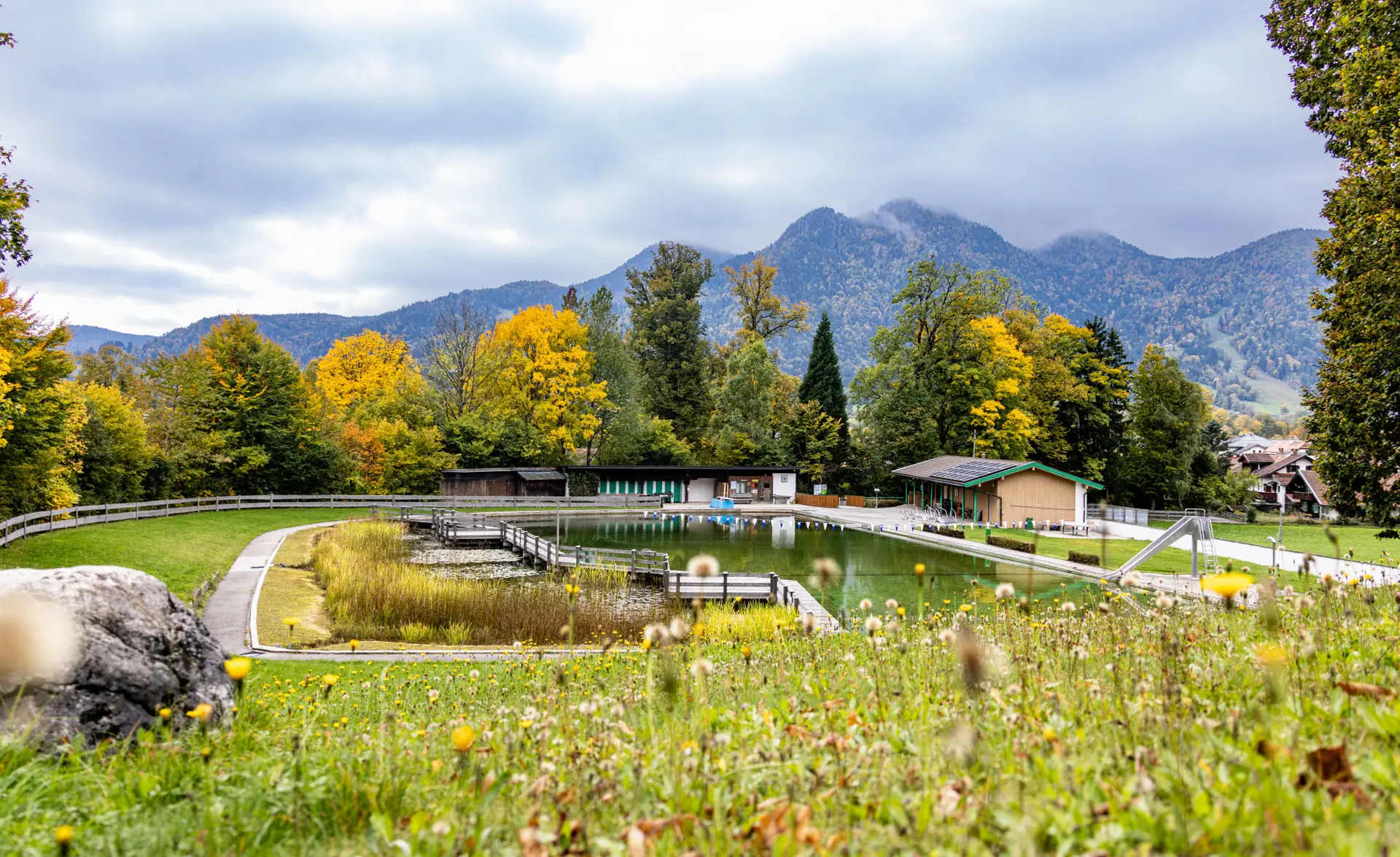
We have built two public natural pools: the Naturfreibad Lenggries and the largest natural pool in Germany at the Aschauerweiher. Chlorine-free, filled all year round, with no pool heating – and both are open for you to step in and swim.
Two natural pools you can visit
Not every pool we build is in a private garden. Two public natural pools are among our largest projects: the Naturfreibad Lenggries and the largest natural pool in Germany at the Aschauerweiher. Both manage without chlorine, both are open in summer – and in both you can simply go for a swim.
Naturfreibad Lenggries
The outdoor pool of the municipality of Lenggries looks back on 90 years of history – it celebrated its anniversary in 2024. In operation since 1934, it repeatedly had problems with water quality; several times per season the pool had to be refilled. The municipality faced a choice: find a lasting solution or close the pool. In July 1999 the municipal council decided to convert it into a natural outdoor swimming pool, and construction took place in 2001.
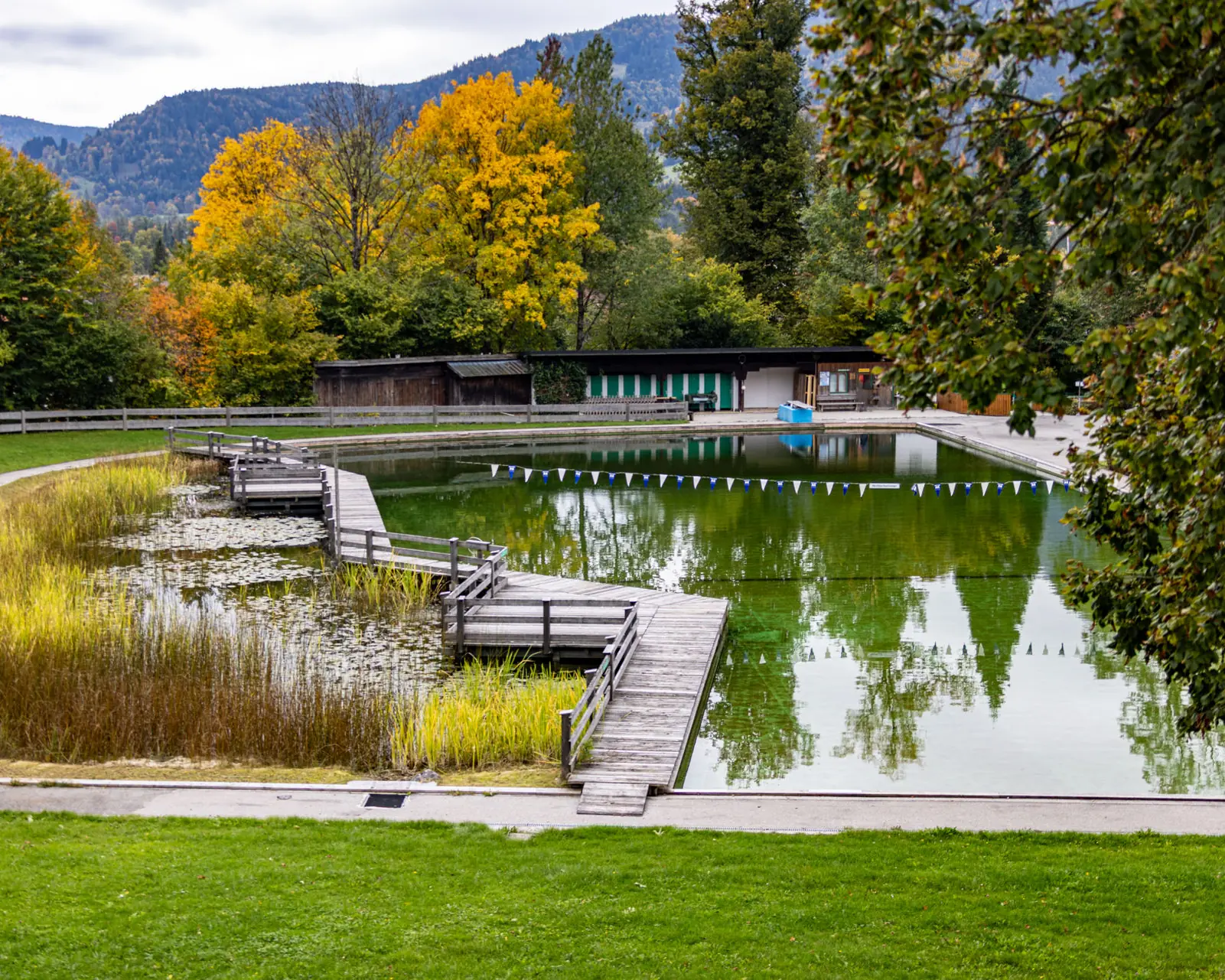
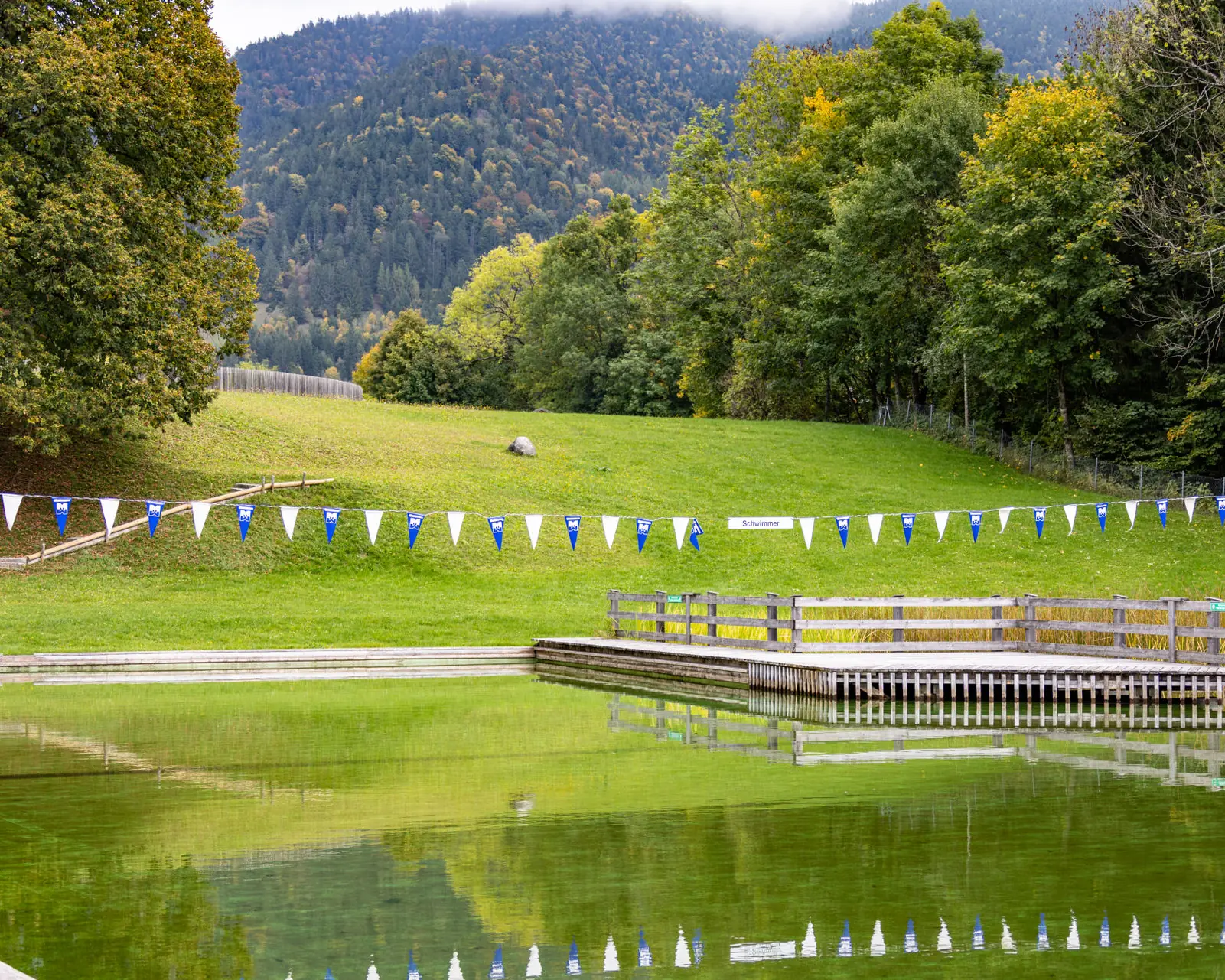
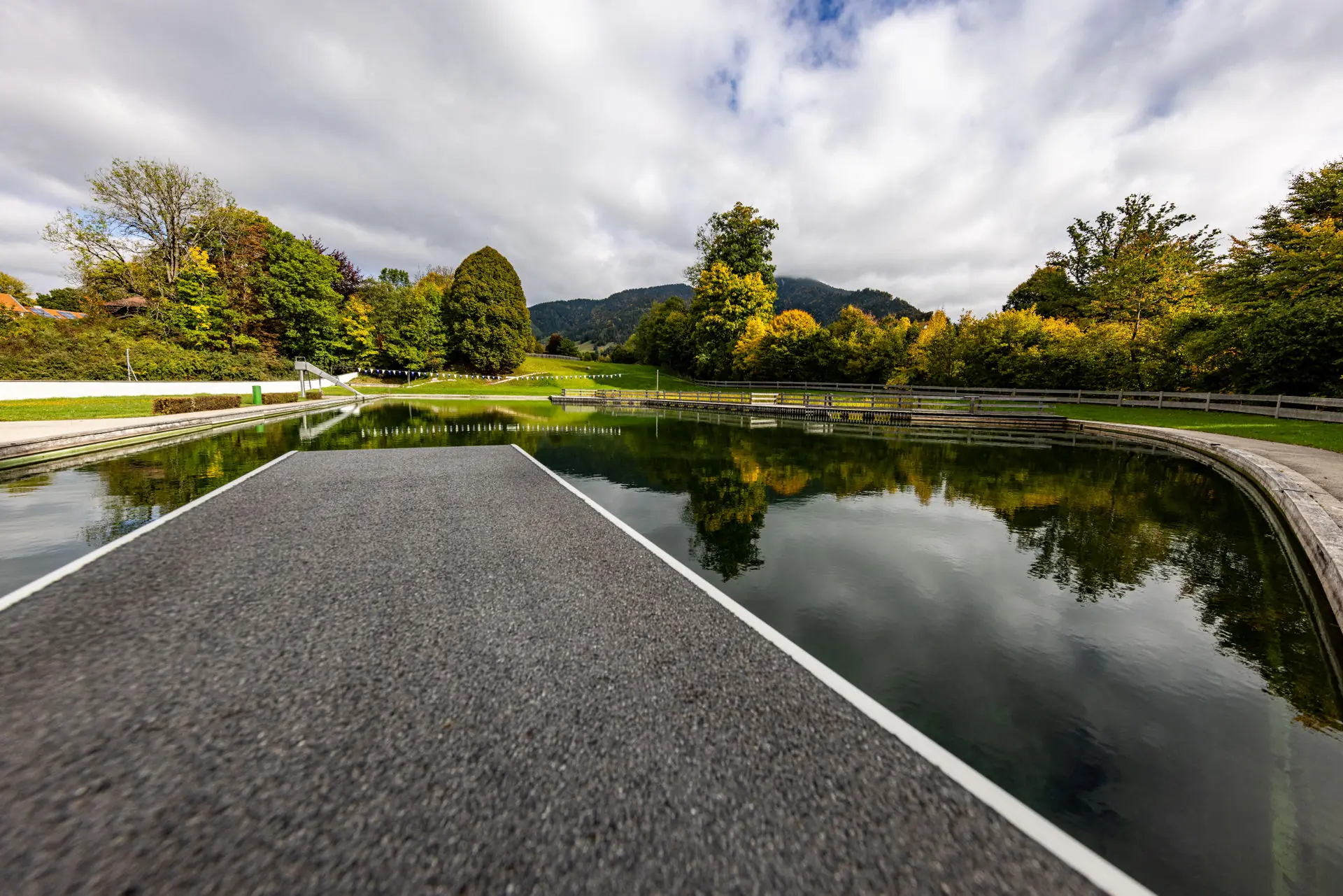
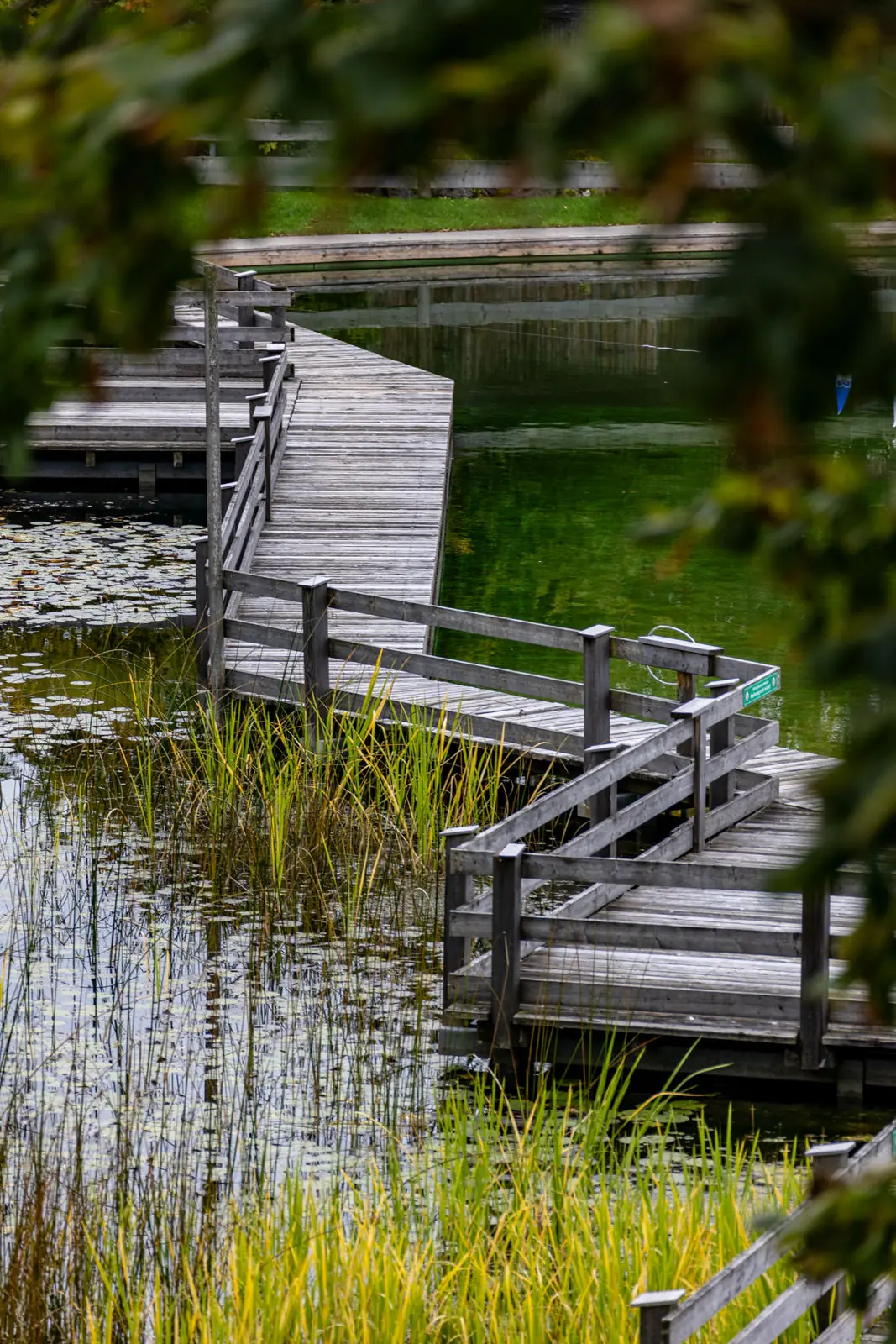
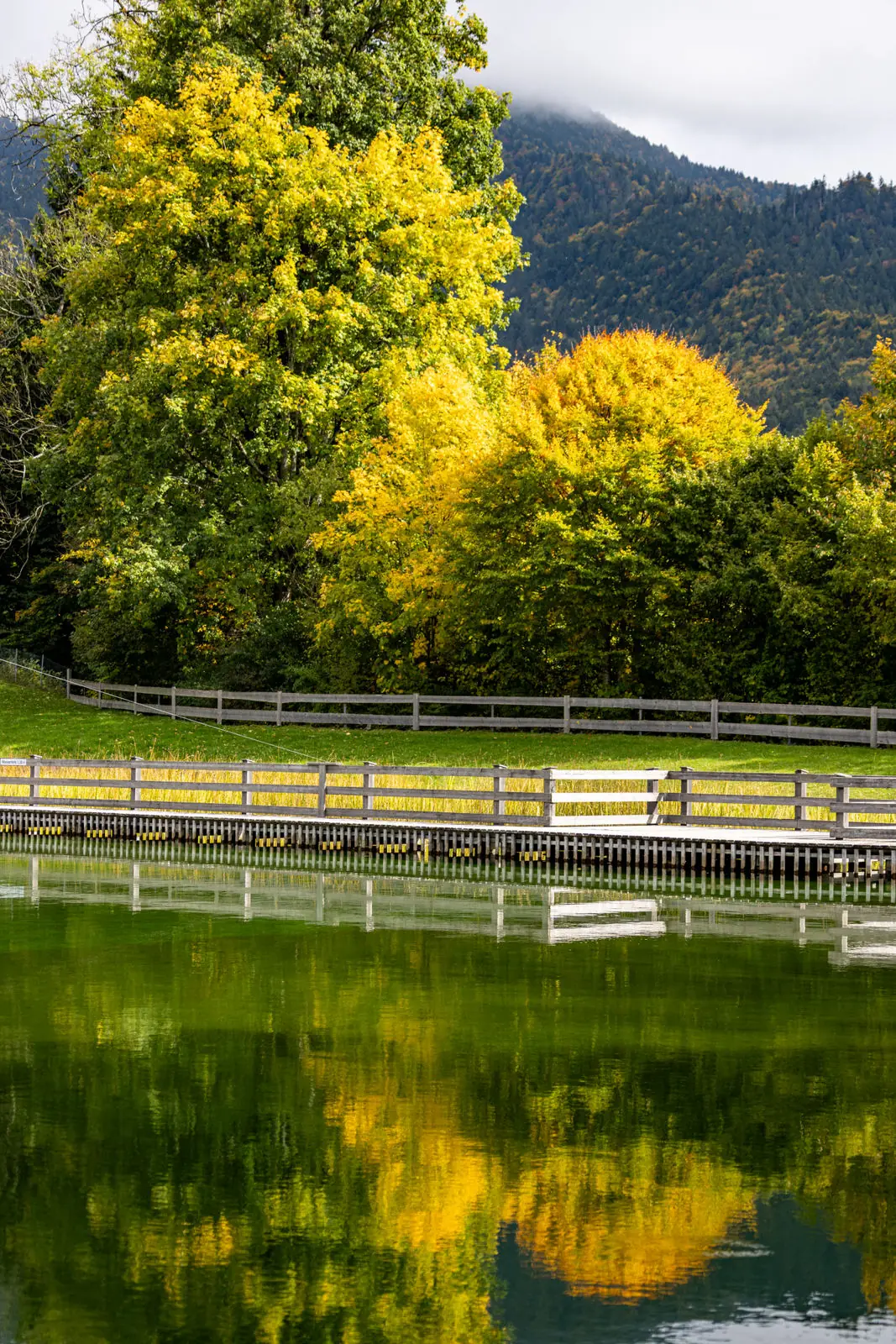
The existing pool was given regeneration zones, timber walkways and a diving board, and the generous plant filter was created on an adjoining meadow. Design and construction were in our hands, the conversion concept came from the planning office WasserWerkstatt, and the technology from our partner Biotop. Since then, the water has cleaned itself without any chemicals. Visitor numbers rose significantly, and in 2003 the municipality received the Environmental Award of the district of Bad Tölz-Wolfratshausen for it. In 2024 the pool celebrated its 90th birthday.
| Location | Lenggries, district of Bad Tölz-Wolfratshausen |
| Client | Municipality of Lenggries |
| Decision / construction | Municipal council July 1999, conversion 2001 |
| Swimming area | 1,650 m² |
| Regeneration zone | 1,540 m² |
| Total water surface | 3,190 m² |
| Water depth | 2,5 m |
| Children’s paddling area | 60 m² |
| Water treatment | biological, chlorine-free – Biotop Swimming Pond |
| Our services | Design and construction of the pond system |
| Award | District Environmental Award 2003 |
Technical details from the project sheet of our partner Biotop. Photos: Benjamin Klopp / frames for good.
Naturbad Aschauerweiher, Bischofswiesen
There has been a pool at the Aschauerweiher in the Berchtesgadener Land since 1880. It was rebuilt in 2002/2003 and reopened as a natural pool in 2004 – since then “das Aschi” has been regarded as the largest natural pool in Germany. Over 12,000 aquatic plants take care of the cleaning; no chemicals are used.
The facility shows how much is possible in a natural pool when space allows: a bathing beach with a stream, jumping rocks, a pirate island with a suspension bridge – and a view of the Watzmann and Hoher Göll. For us, it is the largest public water facility we have built.
| Location | Bischofswiesen, Berchtesgadener Land |
| Client | Gemeinde Bischofswiesen |
| Public pool in the village since | 1880 |
| Conversion to a natural pool | 2002/2003, reopened in 2004 |
| Swimming area | 4,200 m² |
| Plant filter | 3,800 m² |
| Water treatment | biological, chlorine-free – over 12,000 aquatic plants |
| Special features | Bathing beach with stream, jumping rock, pirate island with suspension bridge |
| Size | considered the largest natural pool in Germany |
Details according to the Gemeinde Bischofswiesen. The pool is open daily in summer – the best way to experience it is to jump in yourself.
What a public natural pool does for a village
The finest proof comes from extreme mountaineer Thomas Huber of the Huberbuam. In our video “Gespräch im Garten”, he explains that it was the Aschauerweiherbad that first gave him the idea of wanting a swimming pond in his own garden too. We were able to build both: the public natural pool in Bischofswiesen and, later, his private swimming pond.
For municipalities, this is more than a nice story. A natural pool is not just a pool that incurs running costs – it shows an entire village what chlorine-free water feels like, and becomes a place people identify with.
More of our public facilities
Besides Lenggries and the Aschauerweiher, our work includes, among others, a facility in Stetten (2003, around 500 m²) and one in Oberhaching (2008, around 1,000 m²), as well as the water technology for the Marina de Monaco in Munich. Together with the two natural pools, that makes around 12,000 m² of publicly accessible water surface.
The practical advantage for a municipality that is considering this: you can visit these pools before you decide. We are happy to come along and show you what you can see in a 25-year-old facility – and what you can't.
When a decision has to be made about your own outdoor pool
Both pools above once stood at exactly this point. We are happy to pass on what we learned along the way: how the water treatment works, what speaks in favour of a natural pool – and where its limits lie.
How a natural outdoor swimming pool keeps the water clean
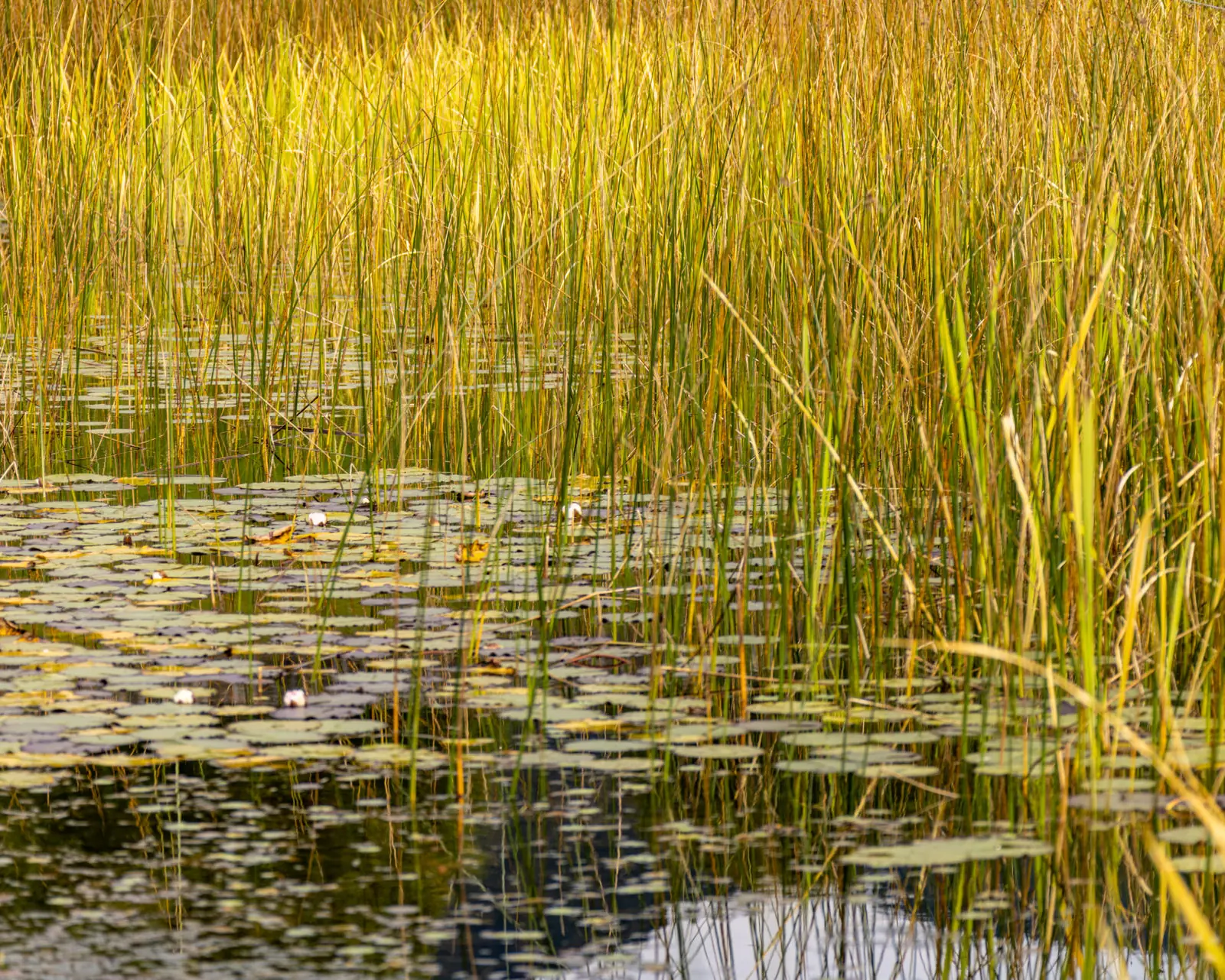
A natural outdoor swimming pool – technically a swimming pond – divides the area into a swimming zone and a planted regeneration zone. Aquatic plants and microorganisms remove the nutrients that algae live on, keeping the swimming zone low in nutrients and clear in the long term. Circulation is quiet and energy-efficient, and there is no disinfection.
The difference from a chlorinated pool is not a moral one but a technical one: no disinfectants have to be stored, dosed and monitored, and the group of substances known as trihalomethanes, which form during chlorination from chlorine and organic material, never arise in the first place. According to the German Environment Agency, a properly operated chlorinated pool is harmless to health – a natural pool simply avoids this effort.
Why more and more municipalities are thinking about it
The figures are clear. According to the KfW Municipal Panel 2025, 48% of municipalities report an investment backlog for their outdoor pools. For 16% of outdoor pools, closure looms unless they are renovated within three years.
This hits children directly. According to the DLRG, the share of non-swimmers of primary school age doubled from 10 to 20 per cent between 2017 and 2022; almost 60% leave primary school without being confident swimmers. Over the same period, in municipalities with fewer than 5,000 inhabitants, the share of parents who say a pool is easy to reach fell from 90 to 78 per cent. Without a pool nearby, children learn to swim less well – and in hot summers, the place where a community comes together is missing.
Why it makes sense for the municipality
Six points that regularly make the difference in council meetings – and one honest drawback.
No chemicals on site
No storing, dosing or documenting of disinfectants – and no chlorine by-products in the water.
The pool stays
As a rule, the existing outdoor pool is kept in use and extended with regeneration areas. Conversion instead of new build.
Filled all year round
No draining and refilling every season. In frost, the surface can be used as an ice rink – the Naturbad Königstein does exactly that.
No pool heating
There is no heating system that costs energy and needs maintenance. The water is as warm as the summer makes it.
A piece of nature in the village
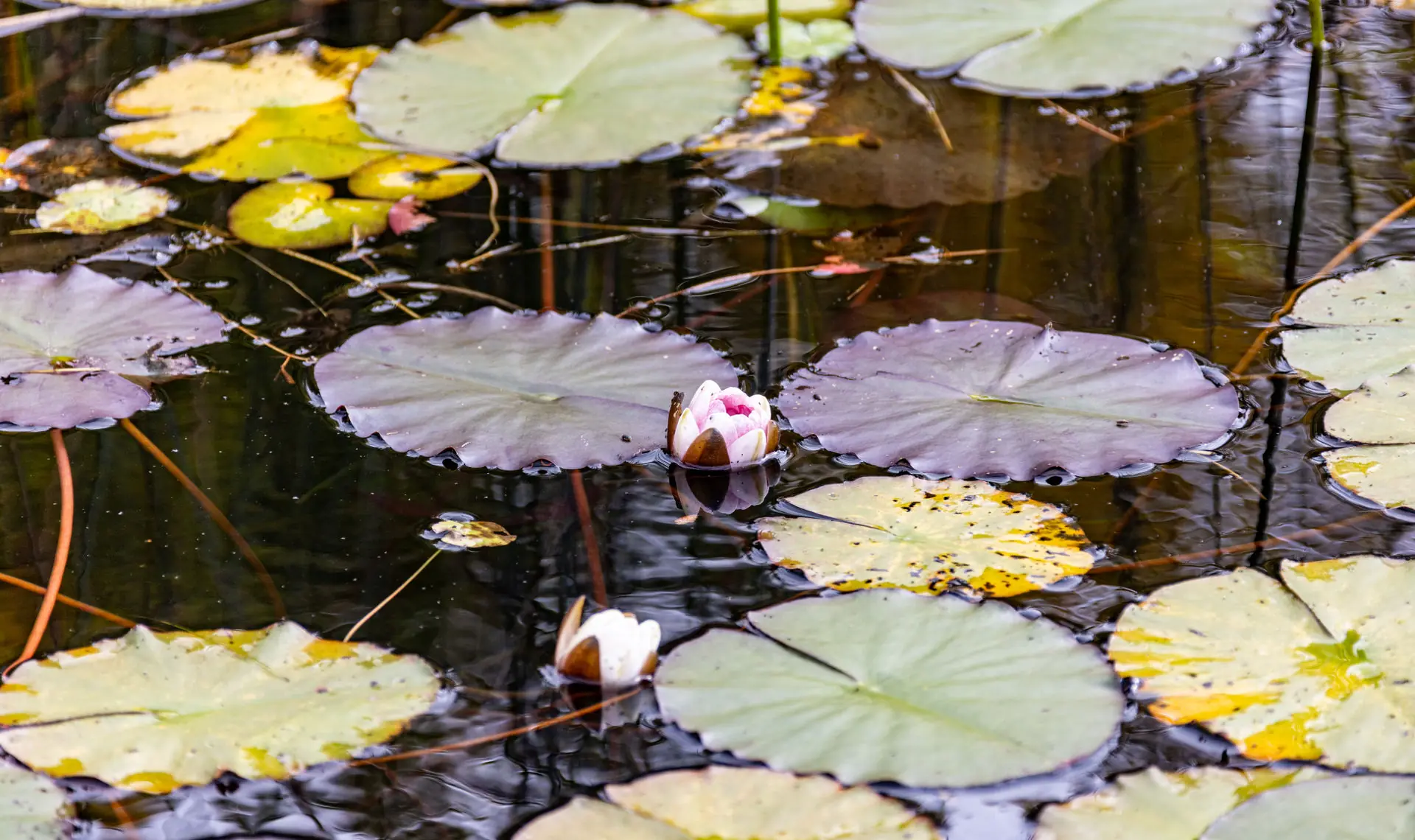
Shallow water, reeds and water lilies provide habitat for dragonflies, amphibians and insects – in the pool itself, people only swim.
A pool people love
Natural pools feel like a bathing lake, not like a facility. In Lenggries, visitor numbers rose significantly after the conversion.
And the honest drawback
A natural pool is not a chlorinated pool with a green coat of paint. The water is not heated and is correspondingly fresh in spring; after winter, the biology needs a few weeks to get going. And a different hygiene standard applies: public natural pools are not assessed under DIN 19643 like chlorinated pools, but according to the German Environment Agency's recommendation “Hygienische Anforderungen an Kleinbadeteiche” (hygiene requirements for small bathing ponds) – with regular sampling by the public health office and a notice to guests that the risk of infection is higher than in a disinfected pool. In our experience, those who communicate this openly have no problems; those who conceal it do.
Conversion instead of new build – and what that means
The economic core lies in the fact that the existing pool is retained. It gains a regeneration zone, new inlets and outlets, walkways and entry points; the plant filter area is usually created on an adjoining meadow. Most of the civil engineering, concrete repair and technical buildings of a conventional new build are no longer needed.
A recent example from Lower Bavaria shows the scale: in Freyung, a disused swimming pool was rebuilt as a natural pool in 2024. According to the mayor, a technical renovation of the old chlorinated pool would have cost at least twice as much. There are no reliable, universally valid comparison figures for construction and running costs – so we deliberately quote none, and instead calculate each pool individually.
How we work with municipalities
We have been a Biotop partner for over 30 years and have built over 440 water features – from 10 m² in a terraced-house garden to the pools on this page. For public pools, the FLL guidelines apply (“Richtlinien für Planung, Bau, Instandhaltung und Betrieb von Freibädern mit biologischer Wasseraufbereitung”), and for hygiene, the German Environment Agency's recommendation for small bathing ponds.
We work as a full-service provider or as the contractor carrying out the work when design and construction are tendered separately – as in Lenggries, where the concept came from a planning office. If you wish, we also take on long-term maintenance and seasonal service.
We are most useful early on: when the question is whether the existing pool is suitable, how much regeneration area the site allows and what that realistically means. We give this assessment before any planning begins – and we say so if a site isn't right.
Related: Swimming pond · All construction types at a glance · Urban green spaces · For landscaping & civil engineering firms · Environment & sustainability

Who did what
The move from chlorinated pool to natural pool took place in 2003, and the conversion concept is not ours: it was designed by Wasserwerkstatt – with regeneration zones, timber walkways and a generously sized plant filter. We built it and have maintained the facility ever since. We say this explicitly here because someone else's design work deserves to be credited.
The operator is the Gemeinde Lenggries. For its chemical-free water treatment, it received the 2003 environmental award of the district of Bad Tölz-Wolfratshausen. And the key point for any municipality that is considering this: after the conversion, visitor numbers rose significantly. The switch to biological treatment was not only ecologically right, it secured the future of the pool.
Sources: Gemeinde Lenggries and Wasserwerkstatt; project sheet for the Biotop Design Award 2025; Landkreis Bad Tölz-Wolfratshausen, Environmental Award 2003.
More impressions: natural outdoor swimming pool for municipalities
Answers about natural outdoor swimming pools for municipalities
Can an existing chlorinated outdoor pool be converted into a natural outdoor swimming pool?
How much space does the plant filter need?
Who monitors the water quality in a public natural pool?
Is the water in a natural outdoor swimming pool heated?
What happens to a natural outdoor swimming pool in winter?
Do natural pools get algae or mosquitoes?
What does a natural outdoor swimming pool cost a municipality?
Do you also build outside Upper Bavaria?
Let's talk about your project
We are happy to advise you in person, with no obligation.
Request a consultation