
Urban Green Spaces
Street trees, planting beds and green spaces in the urban environment – from site logistics, substrate and trunk protection to aftercare once the work is complete.
We make the city greener
Courtyard, front garden, company grounds or public square: planting in the city is a different matter from creating a garden on the edge of town. The site is tighter, the conditions are harsher – and without care beyond the first few years, it won't work.
Why urban plantings have a tougher time
Between paving, walls and façades, every plant is under pressure. It gets much warmer than in open country, because stone and asphalt store the heat and release it again at night. Rain often doesn't reach the root zone at all, because it runs off sealed surfaces – drought stress is the norm, not the exception.
Then there is the root space: what looks generous above ground is often a cramped, compacted pocket below, squeezed between utilities and foundations. A tree that is meant to stand there for 30 years needs an honest assessment before planting – and sometimes the recommendation to choose a size smaller, or a different species.
The site is half the work
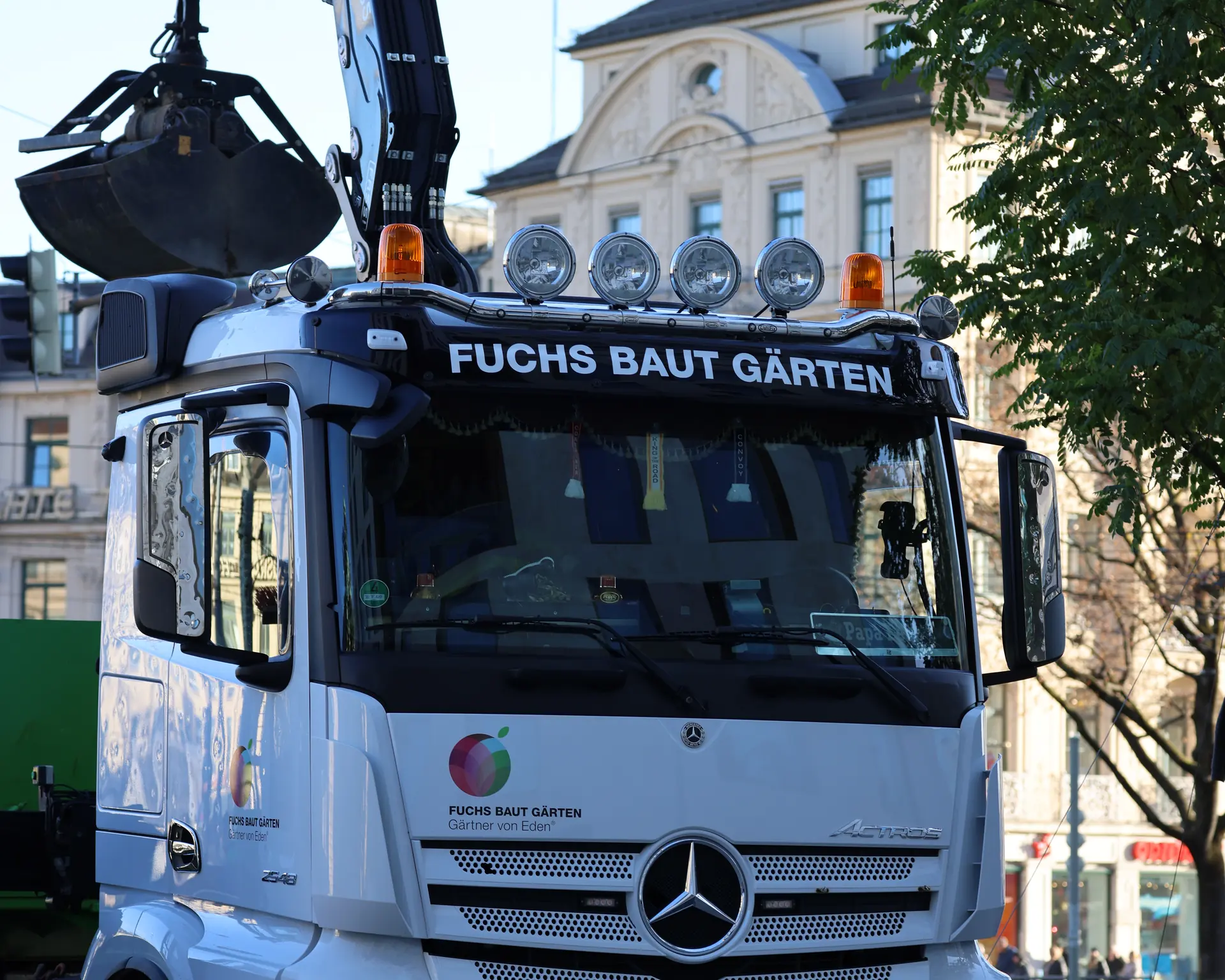
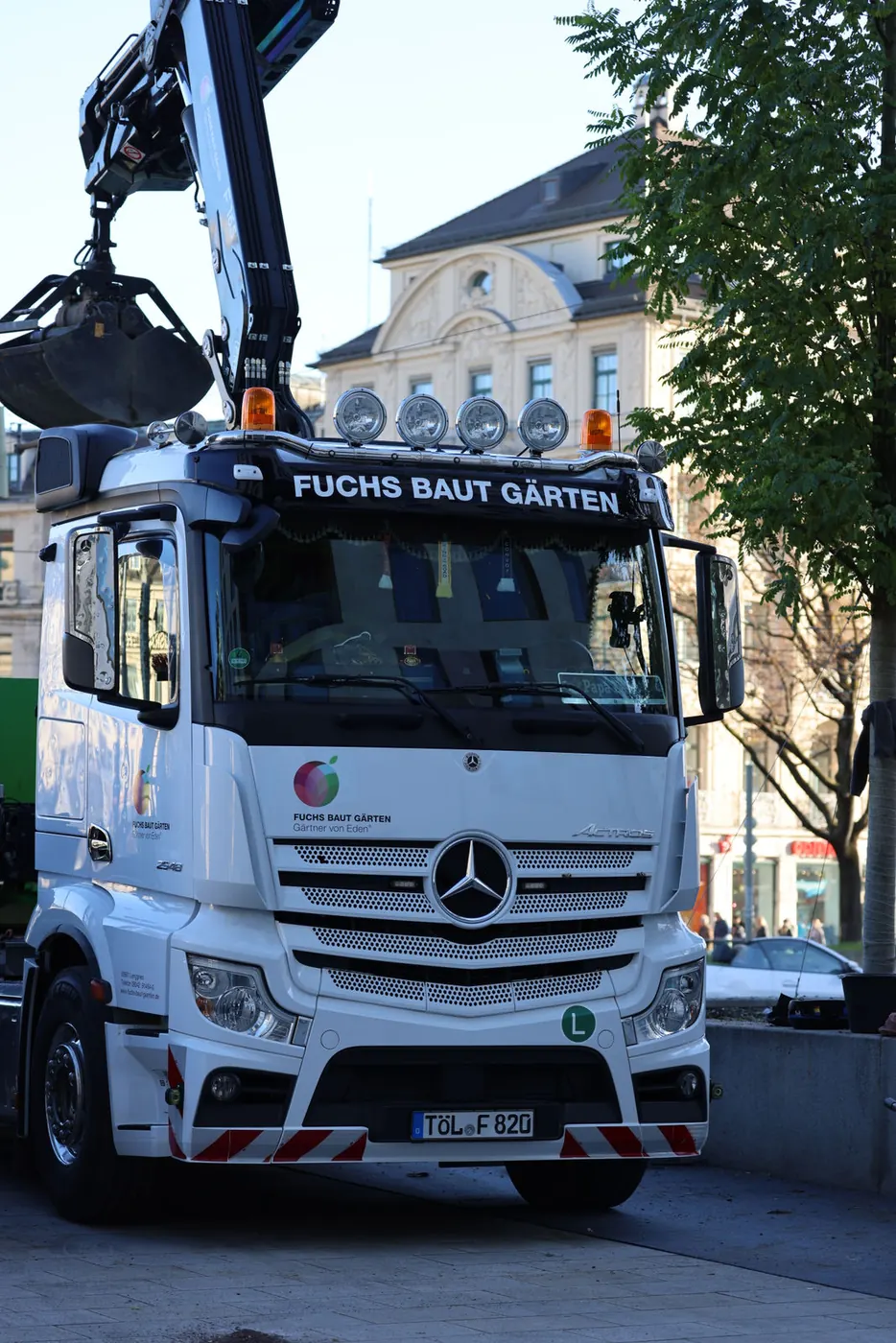
In the middle of the city, logistics decide success. Road closures and parking restrictions have to be applied for and coordinated, deliveries and crane use need a time slot, and life carries on all around: pedestrians, cyclists, shop deliveries, emergency access.
This cannot be improvised, only planned with experience. We work with our own equipment and our own staff, agree the procedures beforehand with everyone involved, and set up the site so that the work stays as brief and as unobtrusive as possible.
Substrate and trunk protection – what you can't see matters
What nobody sees after planting decides the next few decades. A load-bearing substrate that conducts water keeps the root space open instead of compacting under load. For this, we supply tested material of consistent quality from our own Erdenwerk.
Above ground, it is about protection: trunk protection against collision damage and sunscald on young bark, secure anchoring, and an edging that shields the root zone from trampling and compaction. These details cost little and save plantings.
Maintenance has to happen – who does it is secondary
A planting is not finished when construction is complete. Watering, feeding and keeping an eye out for pests must happen reliably over the first few years, otherwise even the best planting was in vain. In the city this applies even more than in a garden, because drought and heat take their toll faster there.
To be honest, it matters less to us who takes this on. Whether it is your own depot, a caretaker service, the city parks department or us – what matters is that it happens at all, and is done properly. That is why we hand over specific care instructions with every planting, tell you what to look out for in which year, and are available for any questions. If you would like to hand over the care, our maintenance team will gladly take it on long term.
For reference and sharing, our care guides are available free of charge as PDFs – from irrigation and pruning trees and shrubs to perennials.
Green space in the city doesn't belong only to plants
Wherever something grows in the city, life follows: insects and wild bees find food, ants and small animals look for a habitat, and mice even settle into raised beds and planters. That is welcome – it is the whole point of urban green spaces – and needs to be considered right from the start.
At the same time, many people share the same space. Dog urine brings salts and nitrogen to the root zone in concentrated spots, litter ends up in the beds, and people take shortcuts along popular routes until the soil is compacted. Signs won't solve that, but planning will: robust plant choices, sensible edging, paths where people walk anyway. That is the real task – and we are happy to support local authorities with it.
For local authorities, administrations and businesses
We design, plant and maintain in urban settings – from a single street tree to planting beds, raised beds and entire green spaces. Where design and construction are tendered separately, we work together just as well: as the contractor carrying out the work, as an advisor on substrate and species selection, or for care after completion.
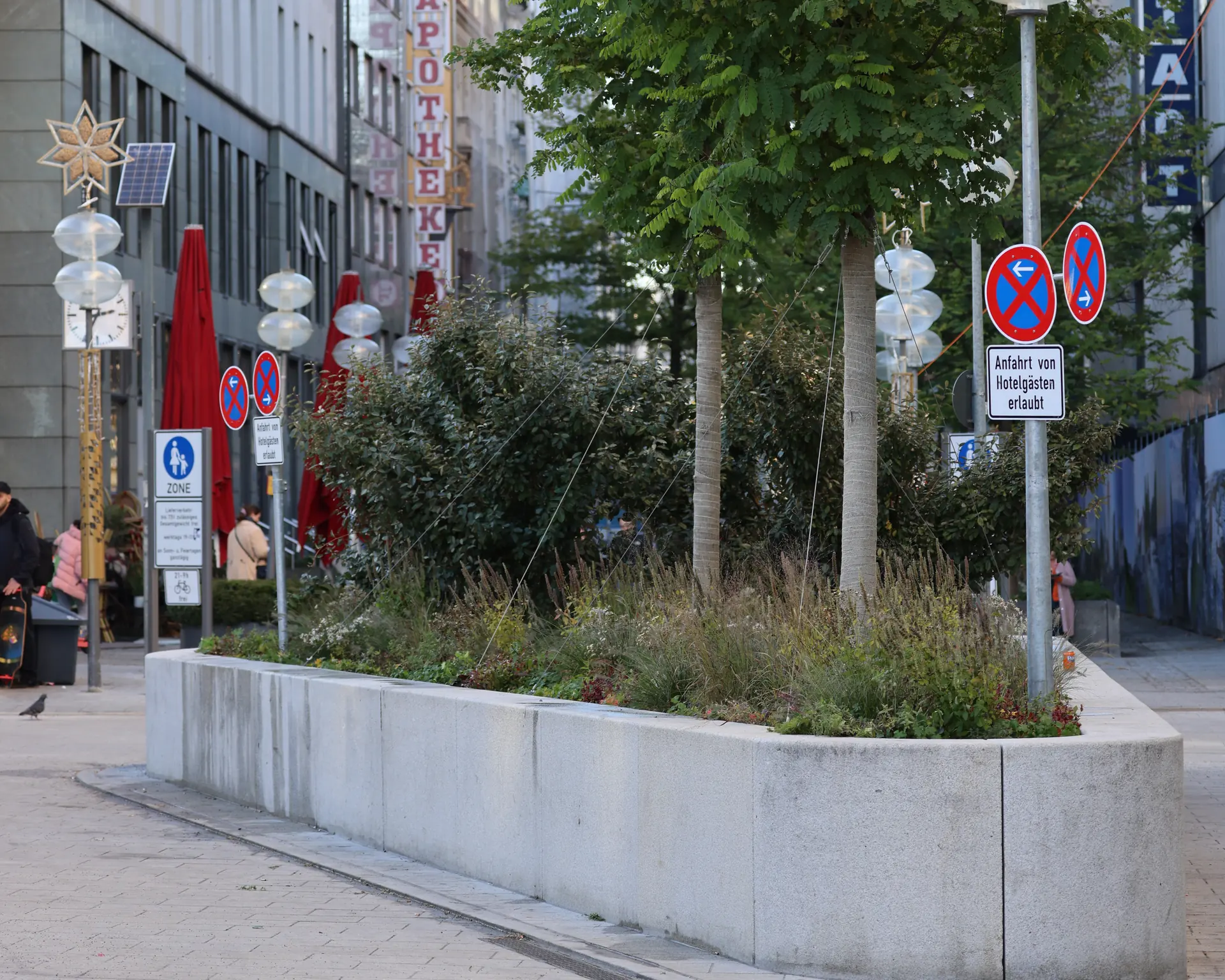
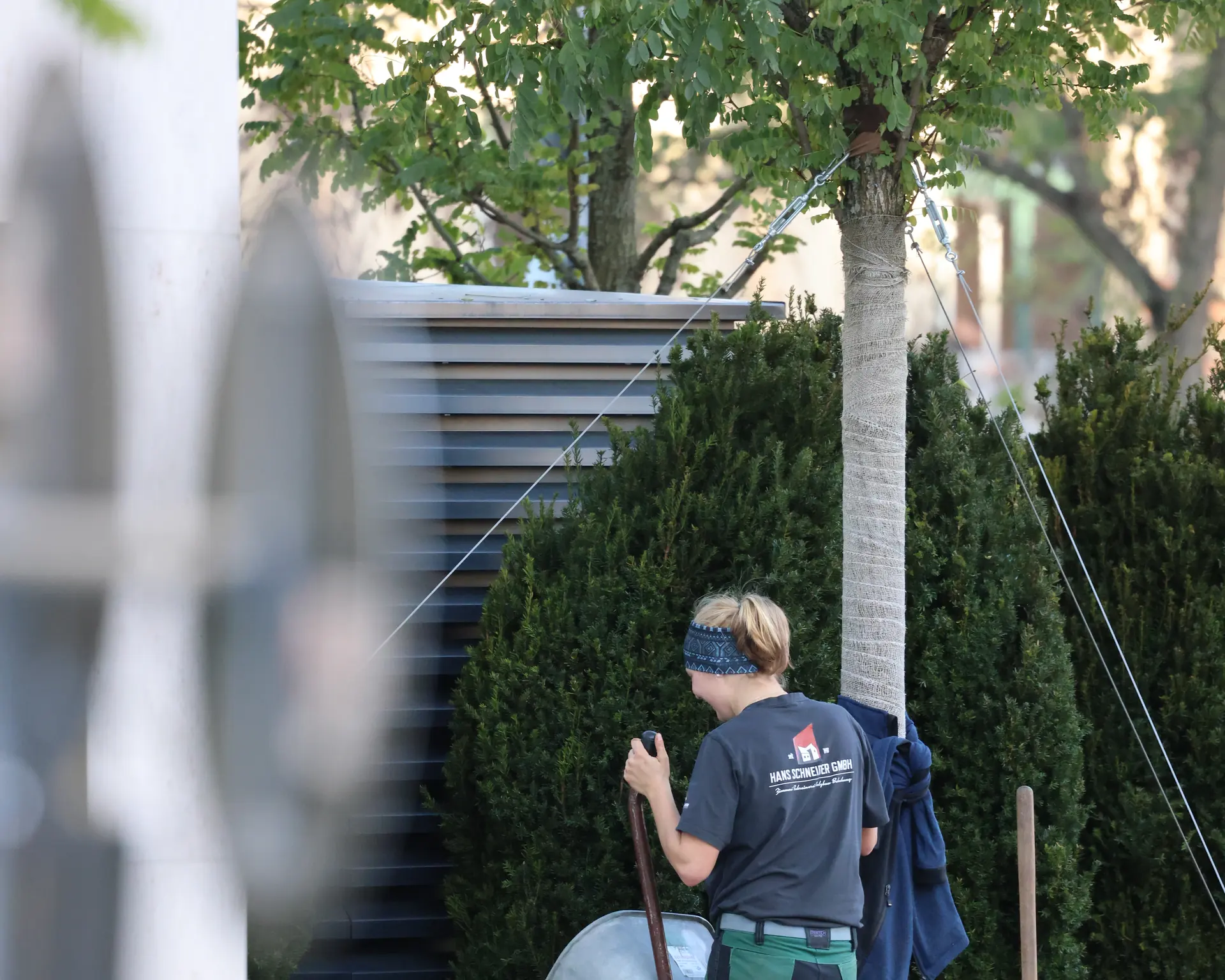
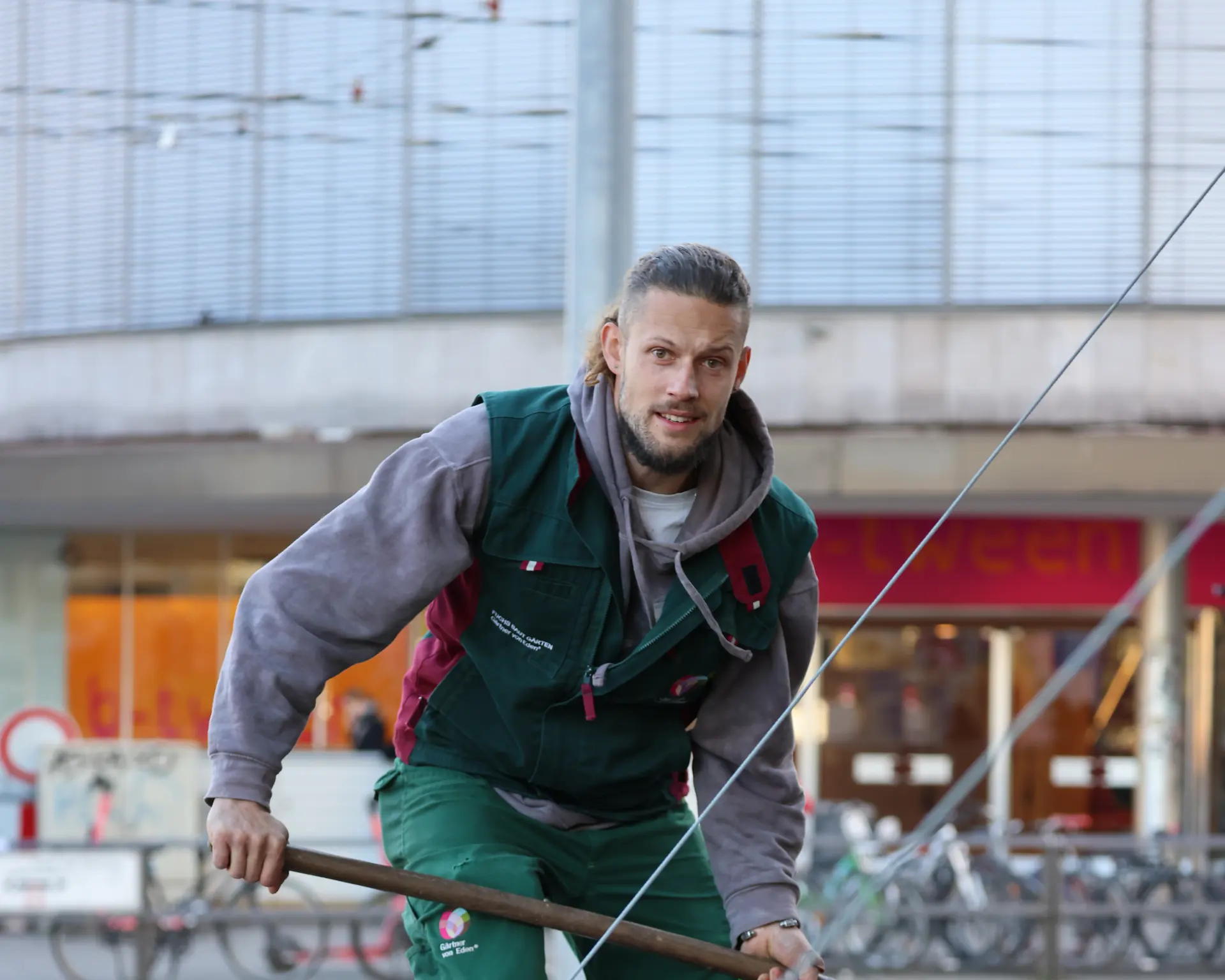
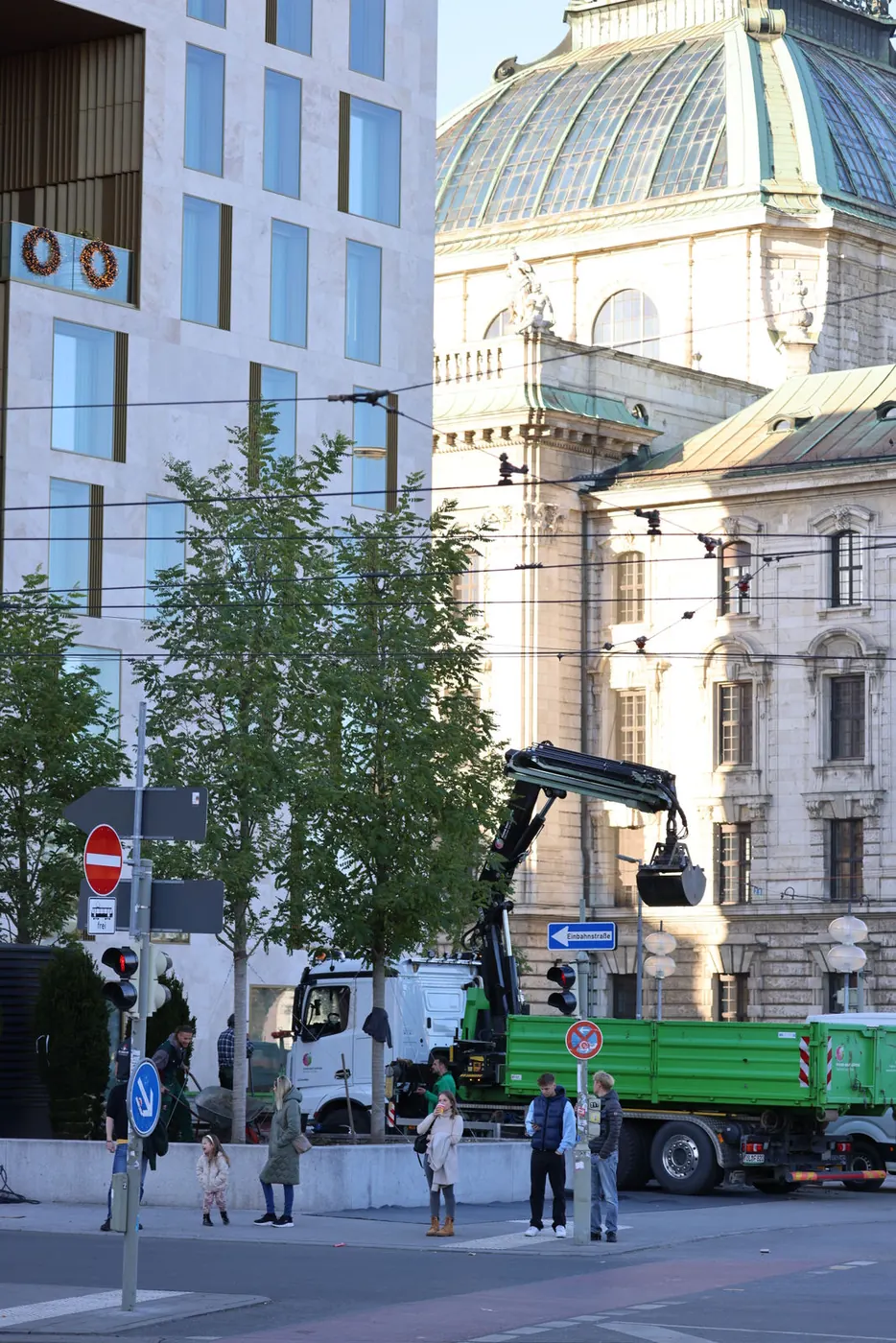
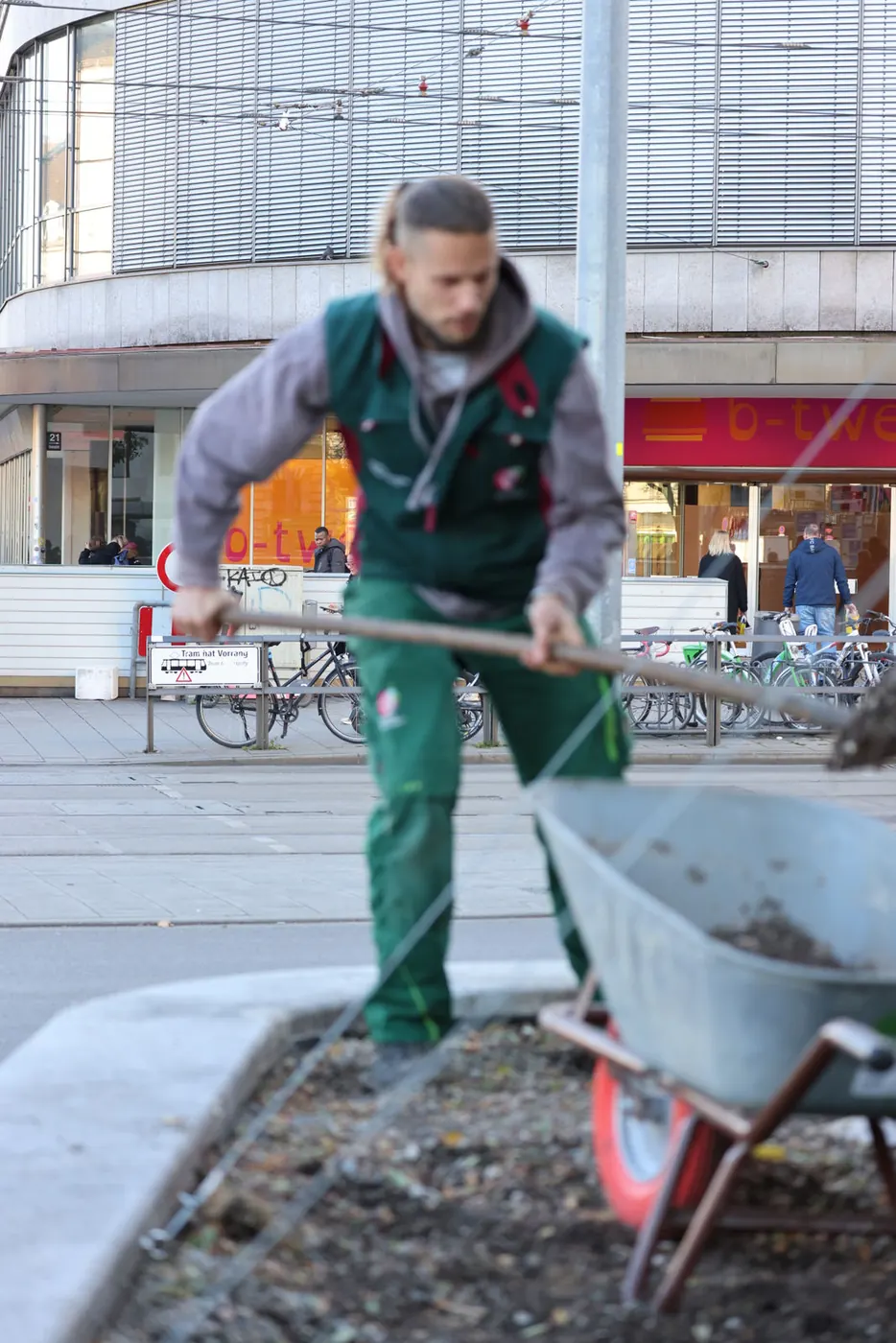
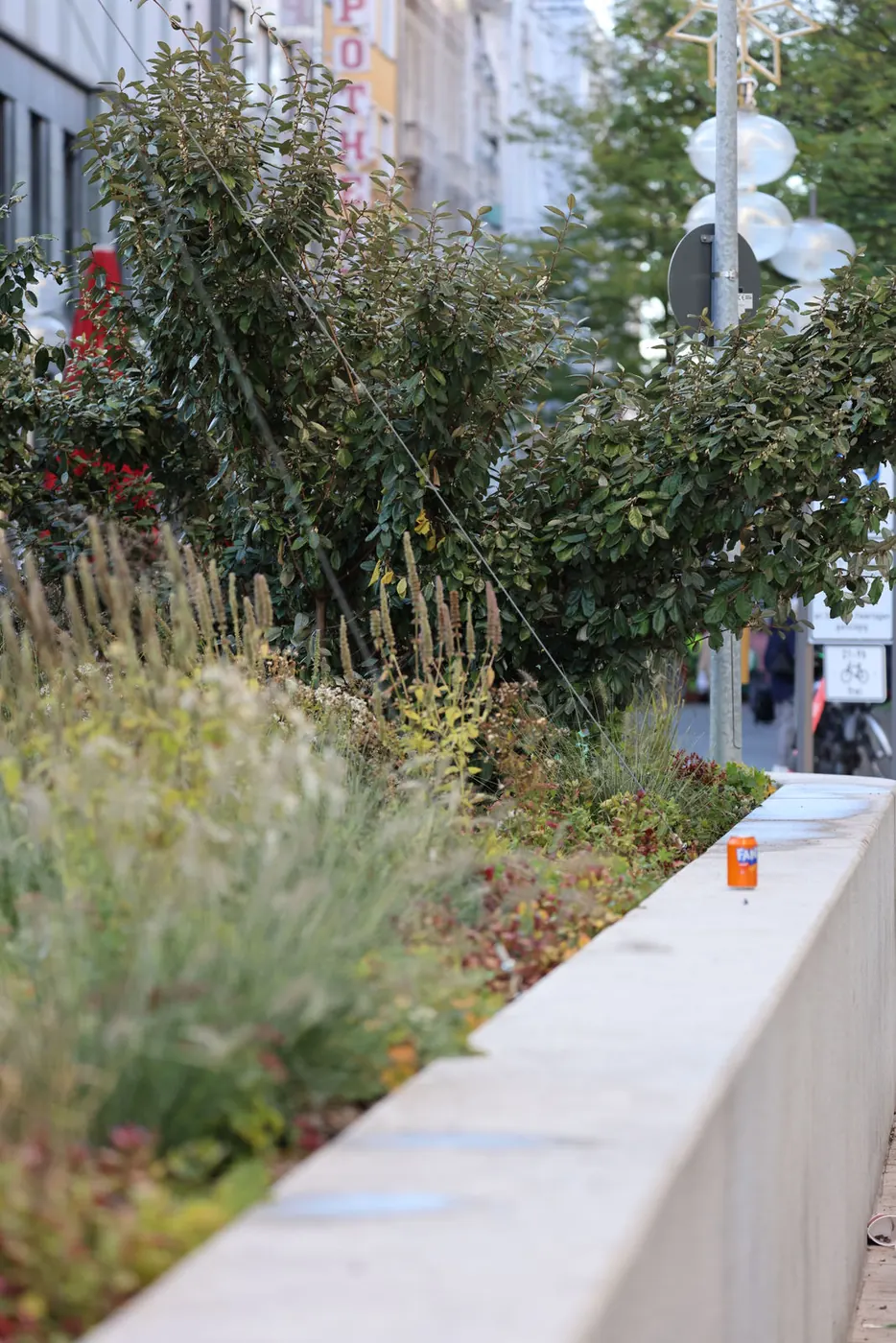
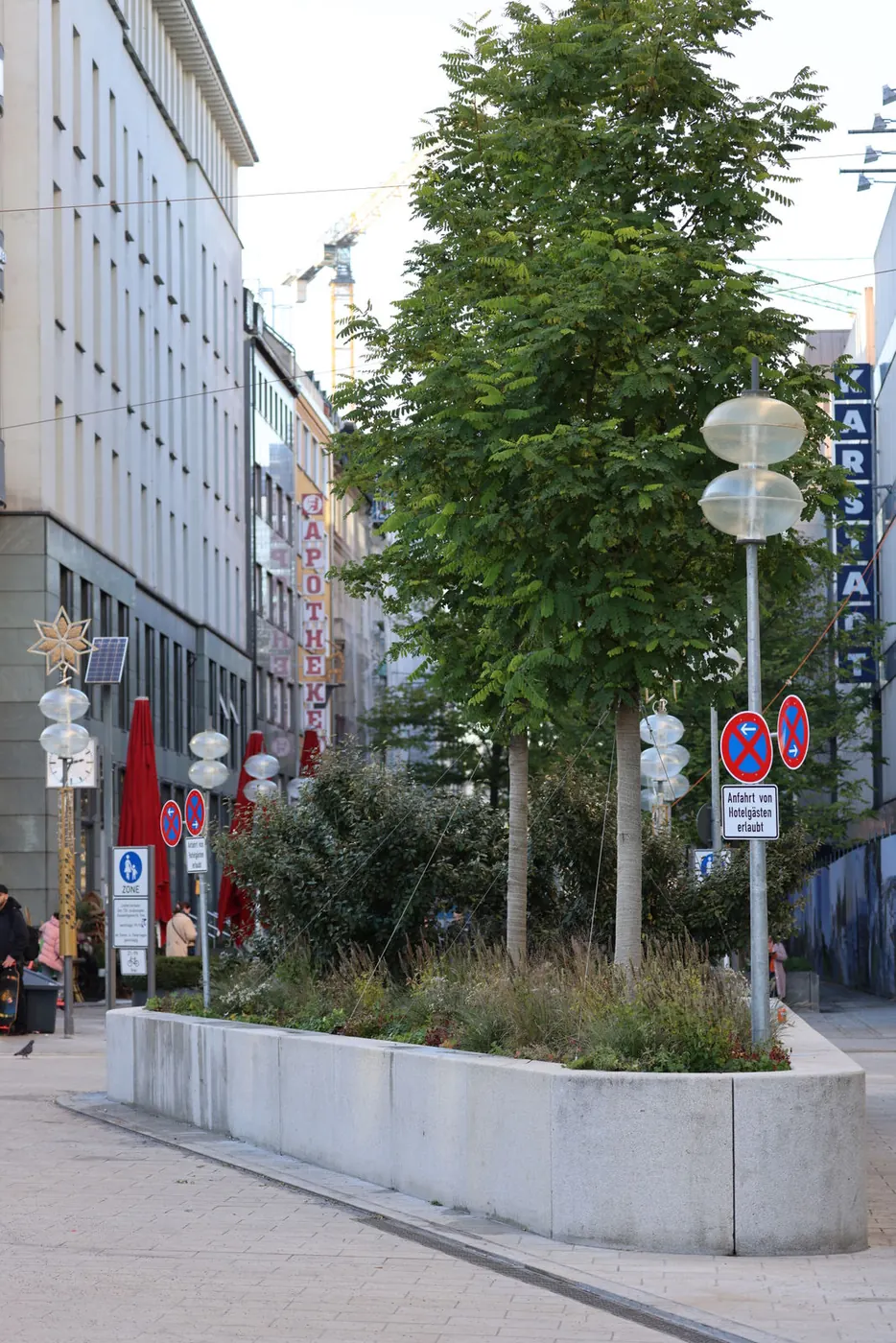
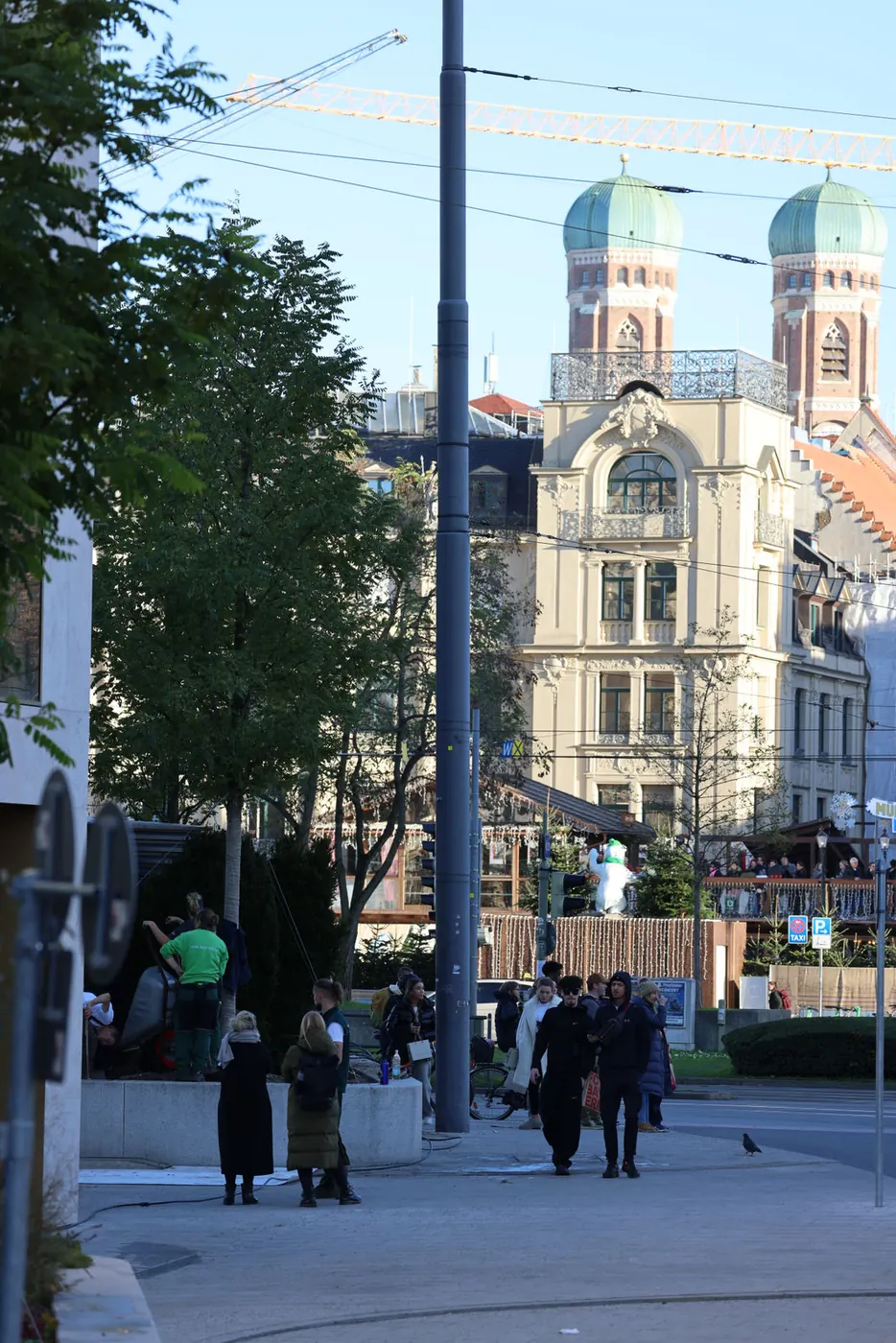
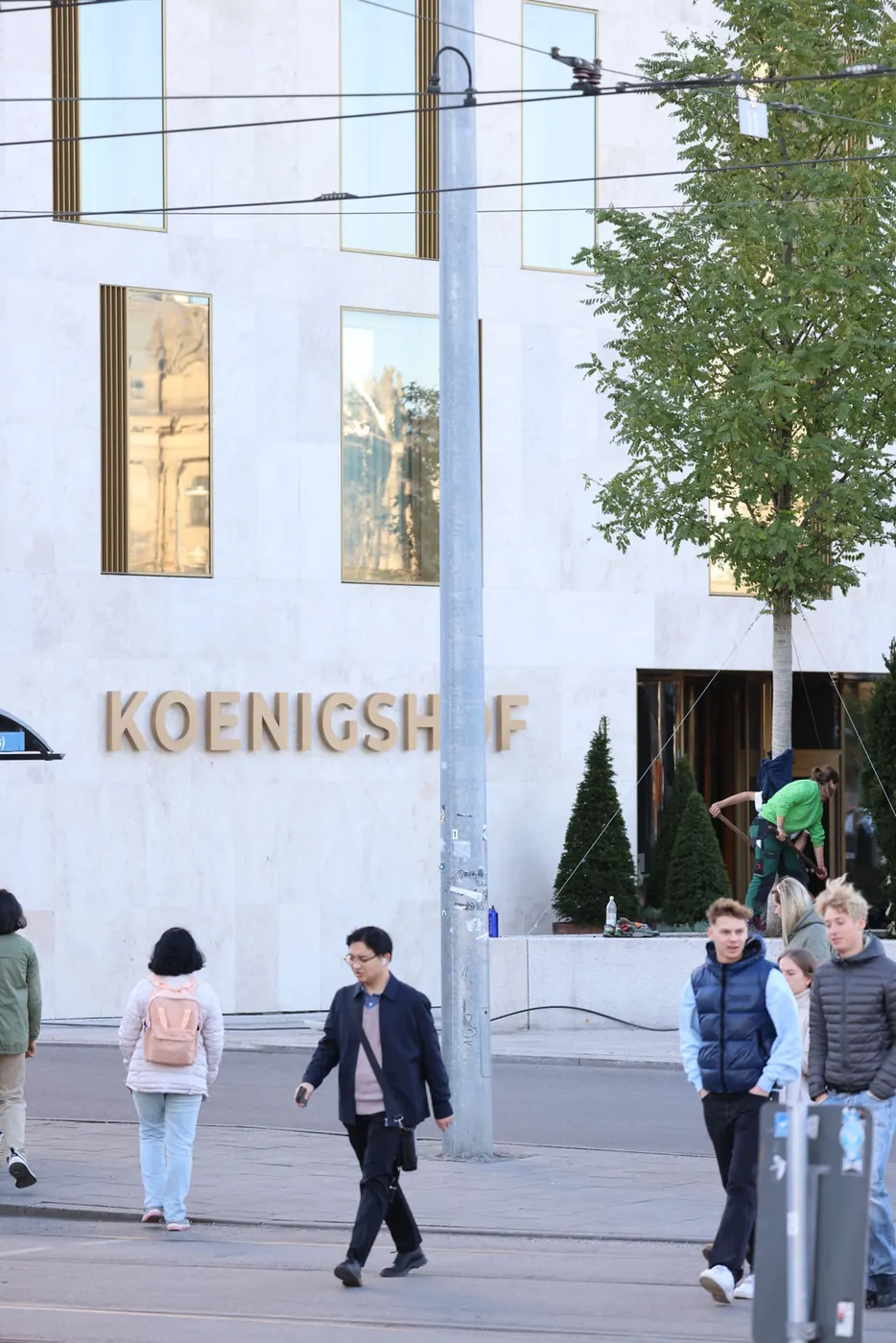
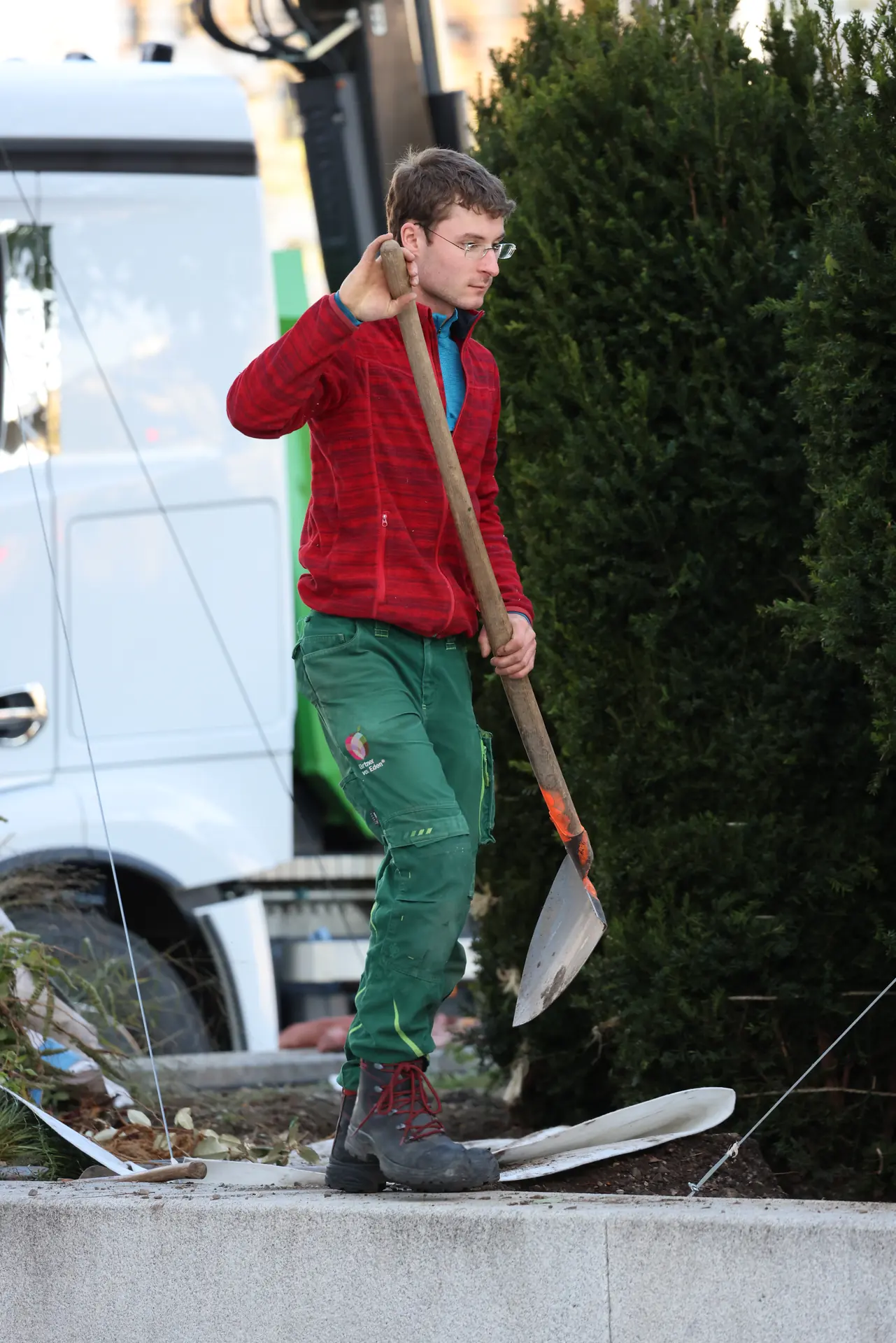
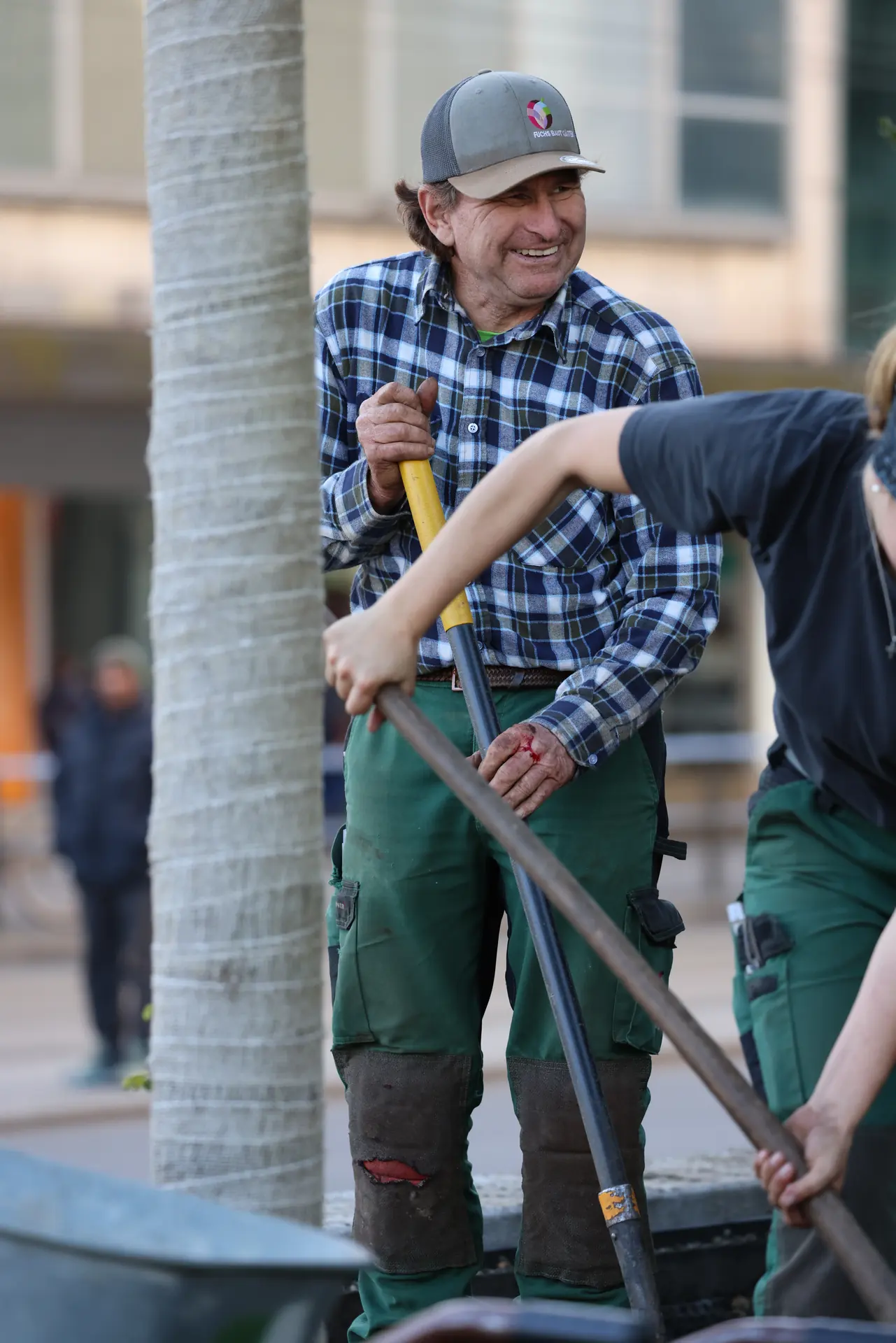
The pictures below show an example from practice: planting work at Munich's Karlsplatz (Stachus) – delivery by loader crane in the middle of the pedestrian zone, substrate filled into the stone troughs, planting with grasses and perennials, all while one of Germany's busiest city centre locations carried on as normal.
Talk to us early. Most problems in the city don't arise during planting, but from decisions made beforehand – about root space, substrate and the question of who waters afterwards.
Related: Trees & large trees · Perennial planting · Green roofs on inner-city buildings · Our work in Munich · Natural outdoor swimming pools for municipalities · For landscaping & civil engineering companies
Four completed examples
In Iffeldorf we designed two places for the municipality, both in use since the opening on 1 June 2024: the new village centre at the town hall with its square, community garden and playground – and the Erinnerungsgarten, a cemetery where burials take place among perennials. Both projects feature in the Callwey book “Landschaftsarchitektur”, and we look after both beyond completion.
The “Marina Monaco” in Munich-Schwabing-Freimann is a swimming pond with over 80 metres of shoreline – in the middle of an industrial area, created as a temporary use for five years. A new urban district will be built there afterwards. This project is also in the Callwey book and shows what temporary greenery can achieve: a cool, publicly accessible place where a factory hall once stood.
Permanent, but just as public: the natural outdoor swimming pool in Lenggries, which we built and have maintained ever since – chemical-free since 2003, run by the municipality.
If you are planning for a local authority, an administration or a property development: let's talk, including about areas that will only be there for a while.
Planting between tram tracks
A planting in the middle of Munich – between traffic lights, tracks and passers-by. There is no place where gardening has less space and gets more attention.
What you see here: trees in planters and grasses along a long stretch of the street, with the Justizpalast behind. Filling in substrate, watering, clearing up – all while a city centre carries on as normal, with delivery time windows and a lorry that can't stand there forever.
What our role was – and what it wasn't
One step at a time, because it matters to us to state this correctly: the tree nursery Lorenz von Ehren had received the commission from a client. The client had already chosen the plants there herself. We were not involved in consultation, selection or design – we carried out the planting work.
Of course, we would have been glad to be involved from the start and to advise. But we are just as happy to join later and carry out the work. We come on board at any construction phase – though it is nicer from the beginning.
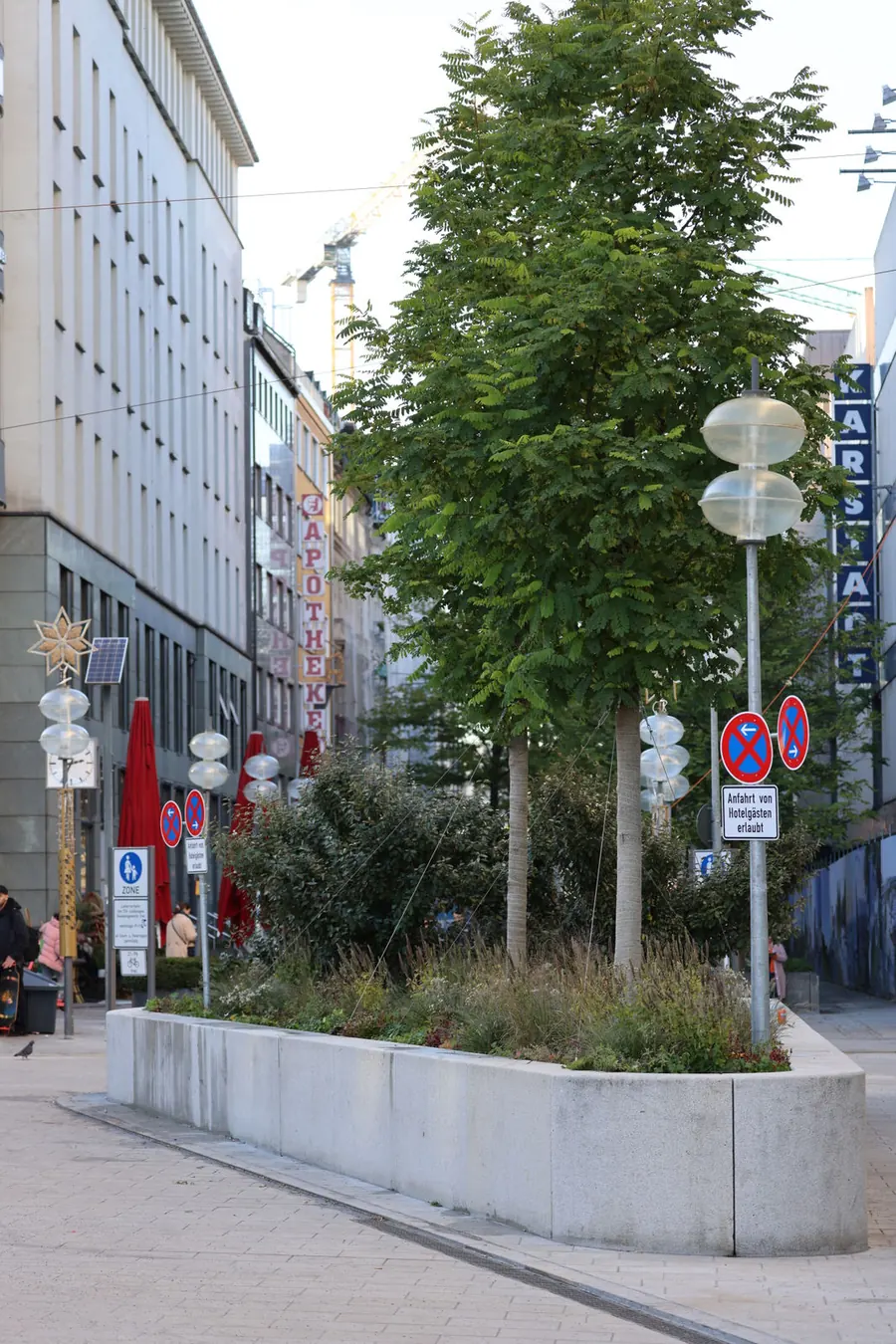
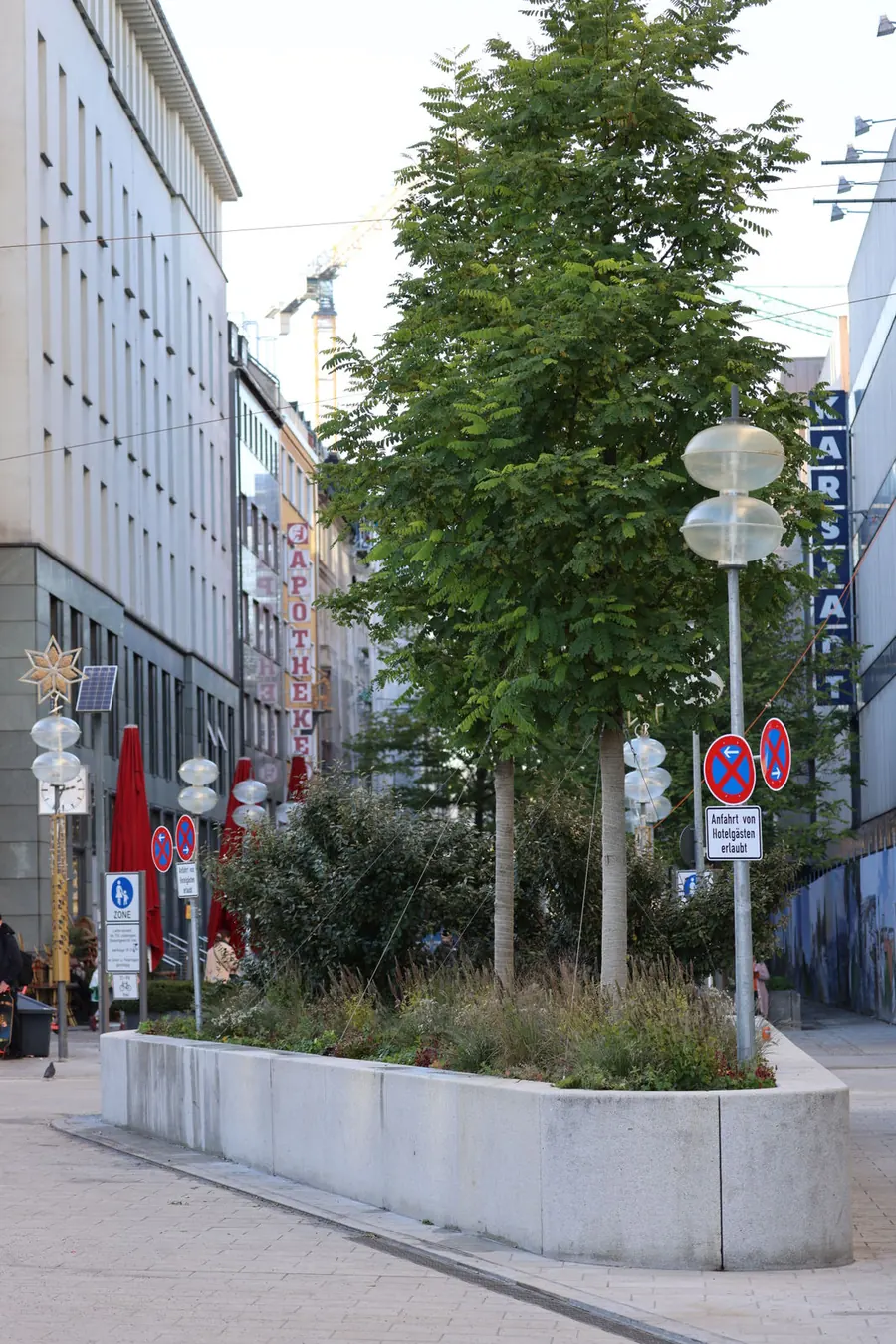
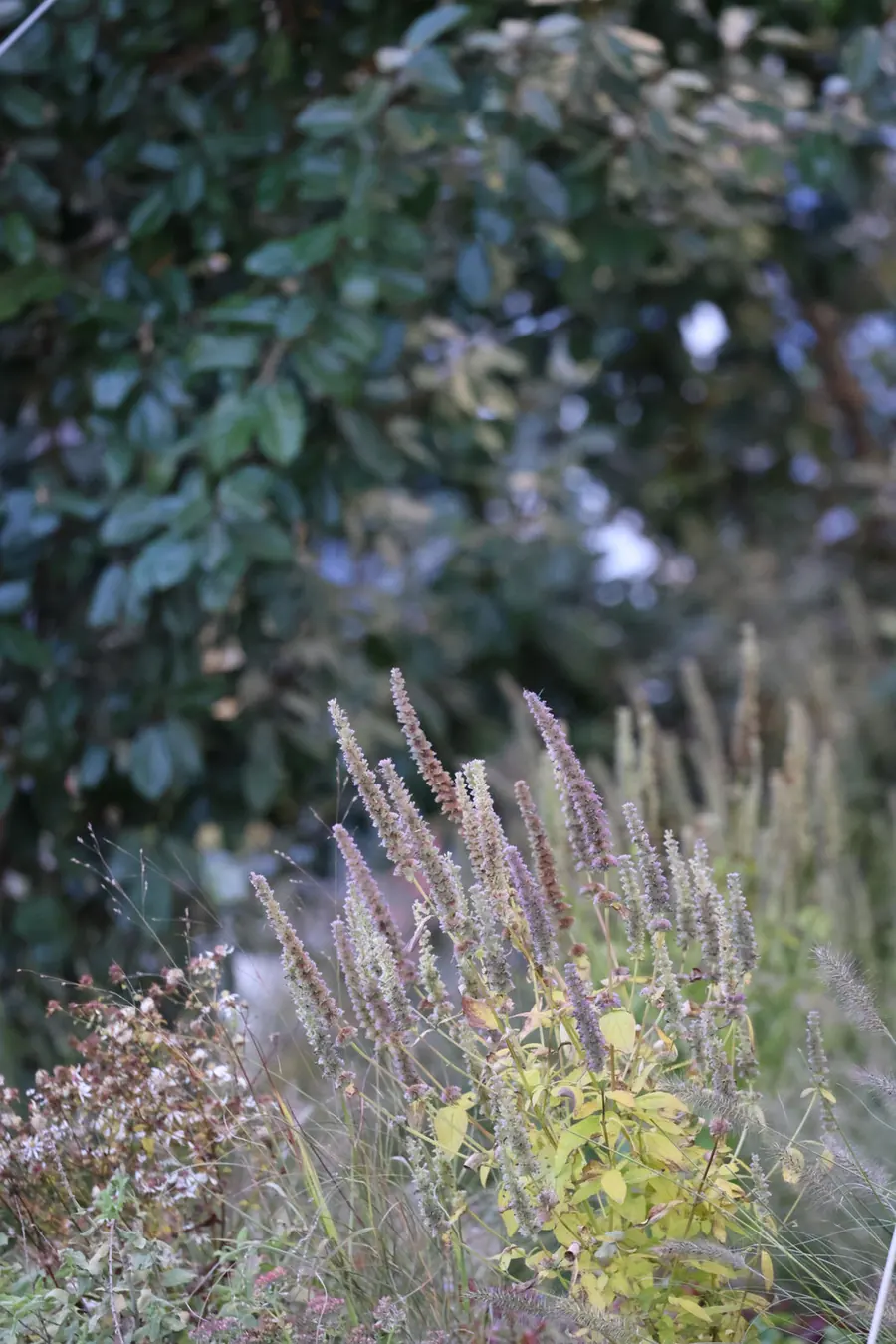
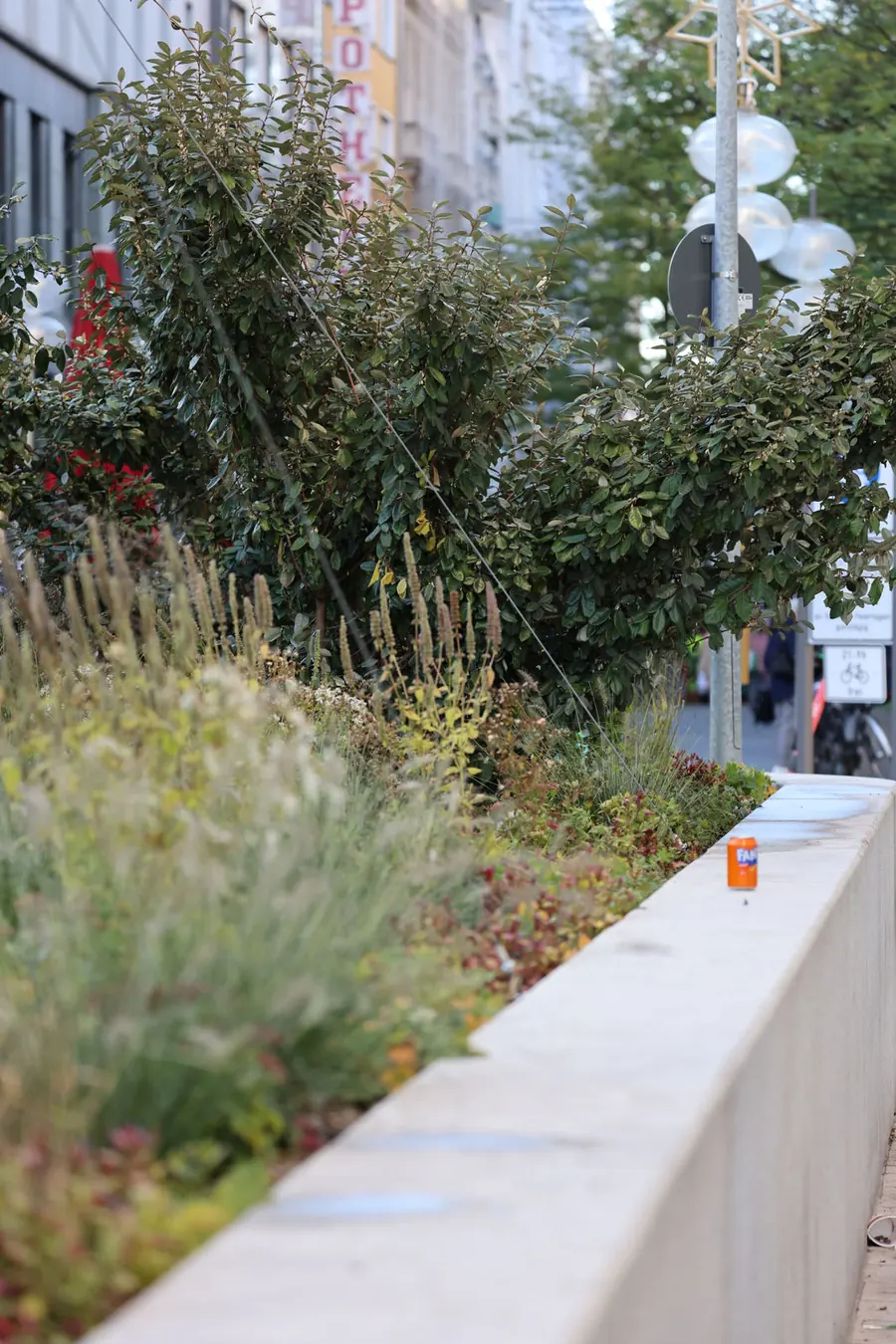
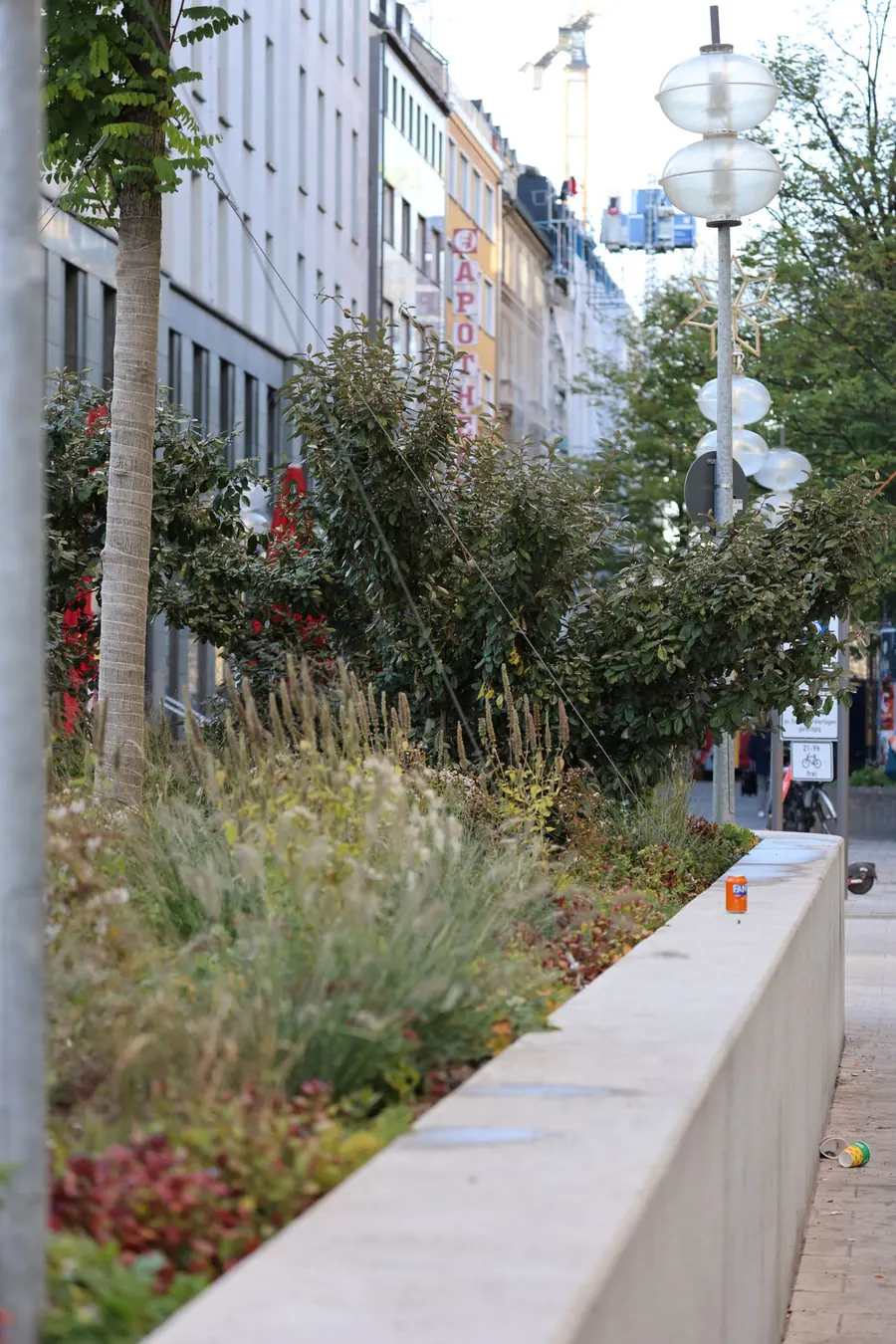
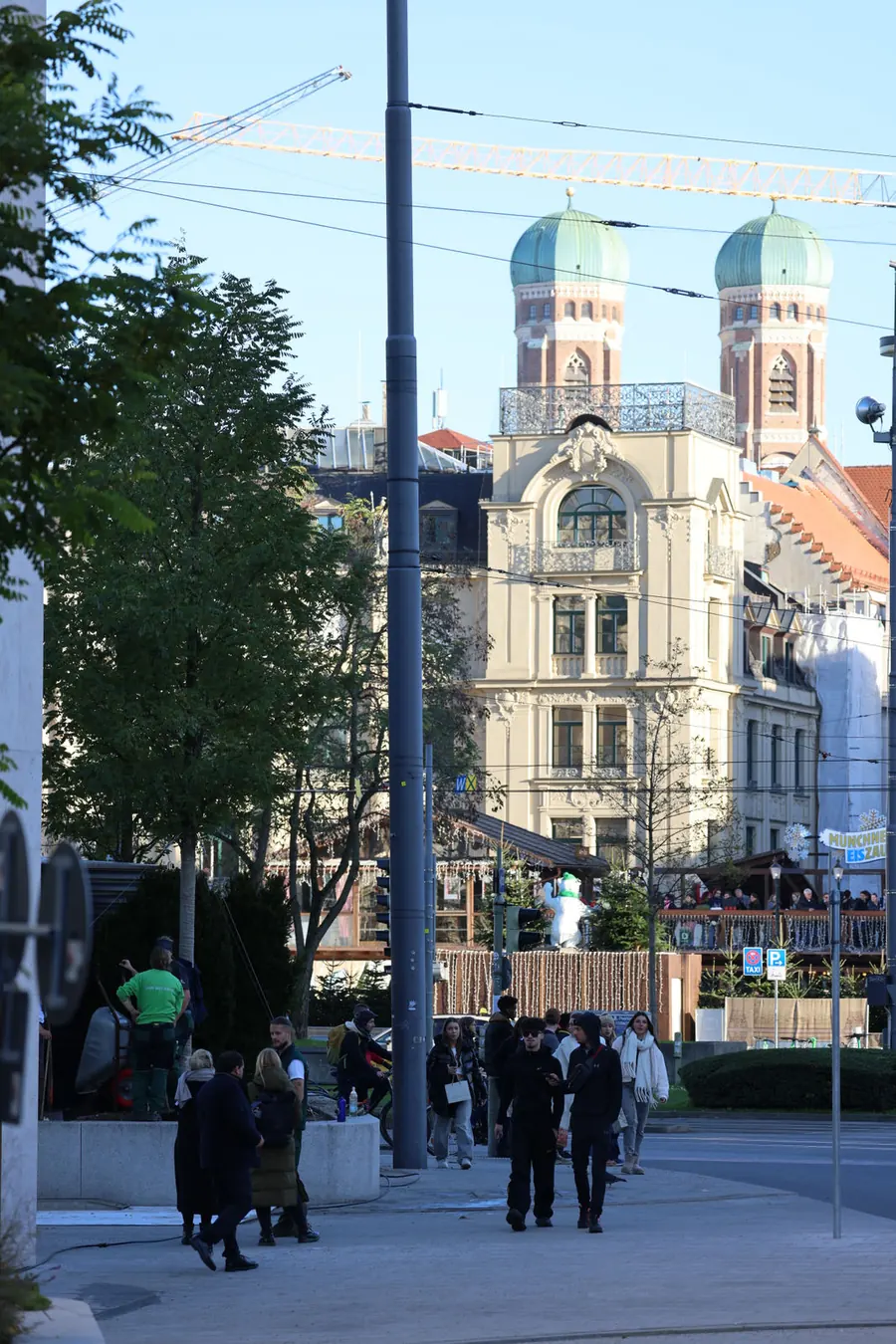
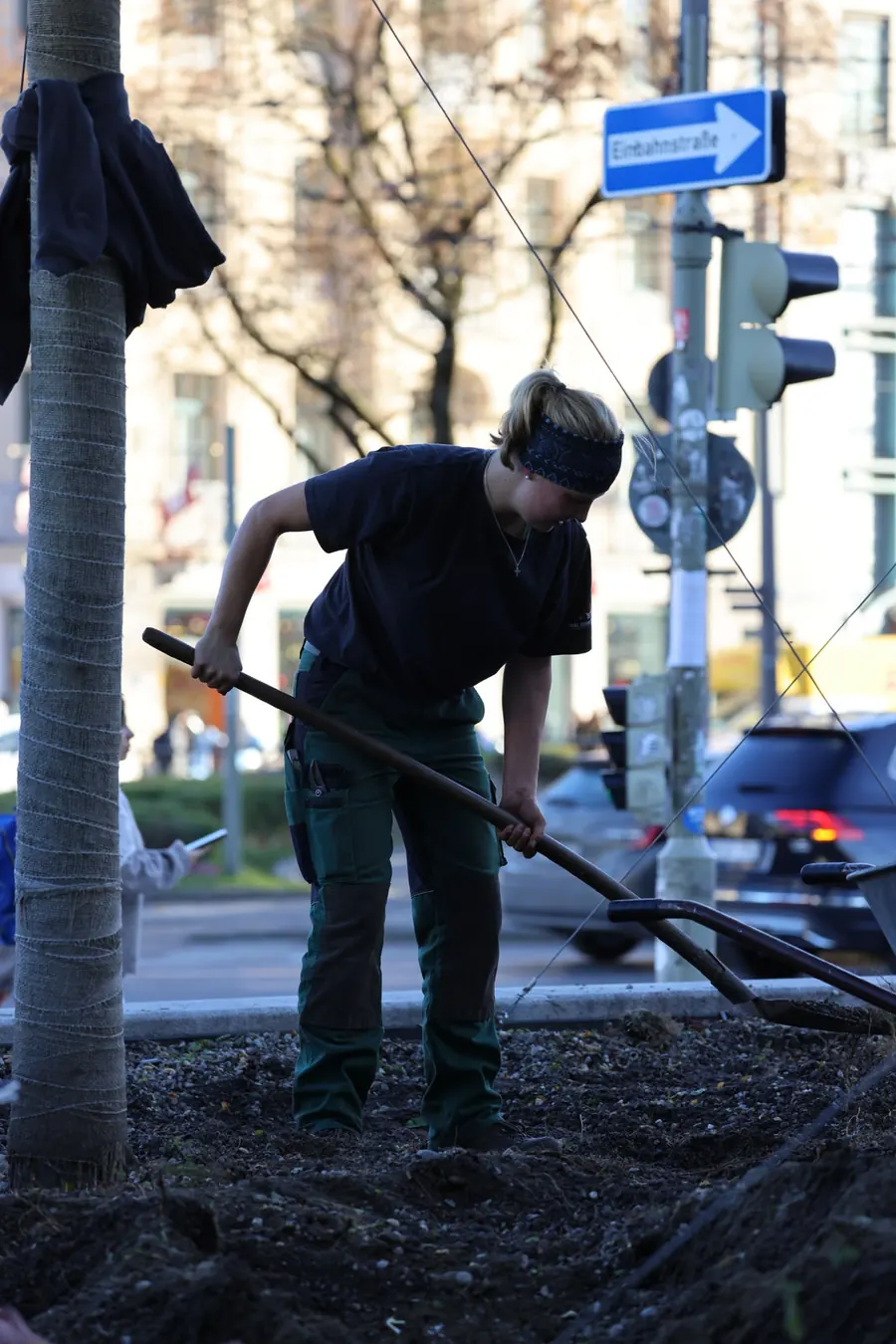
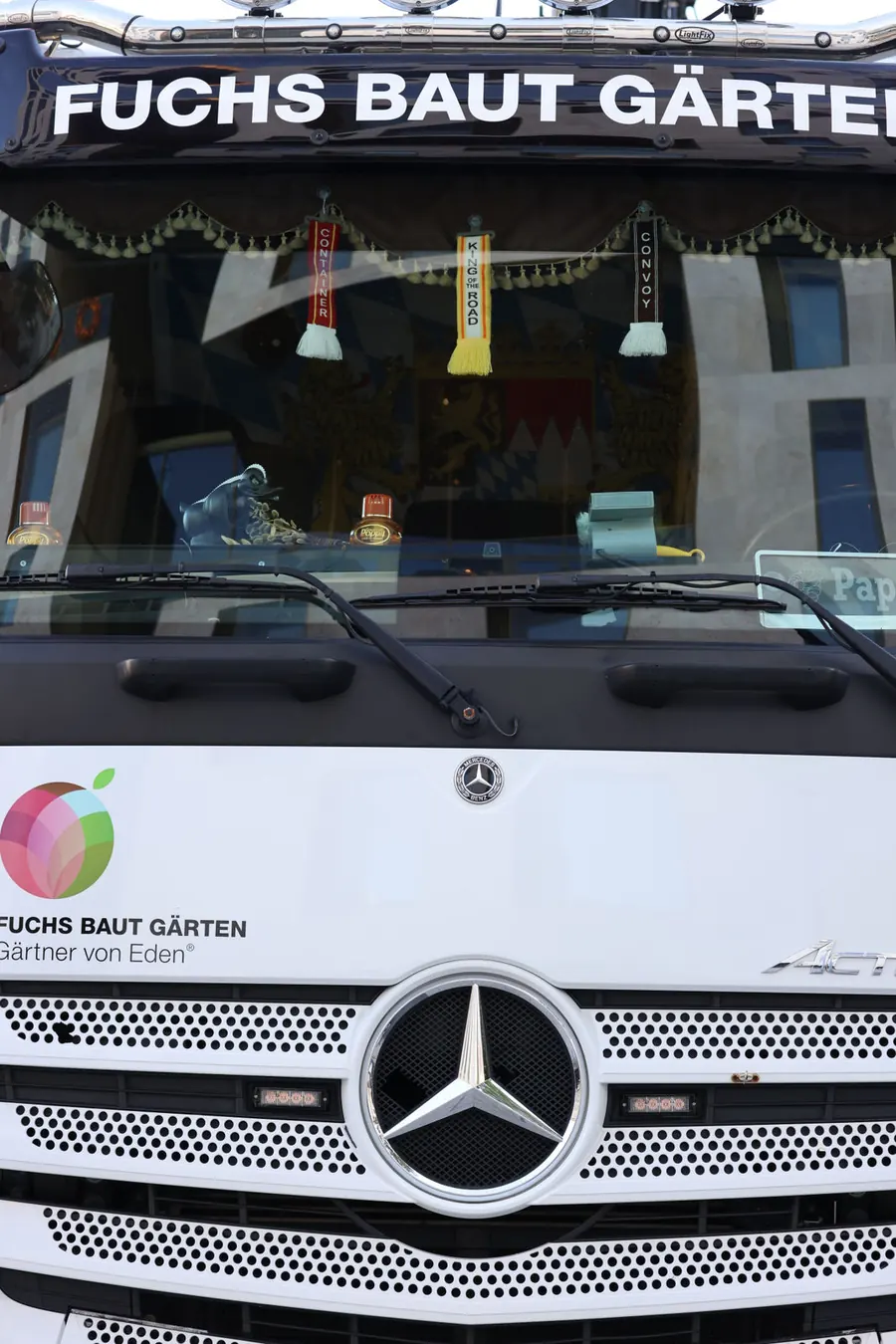
Photos: Benjamin Klopp. Eight of 381 shots – we chose those in which no one can be recognised.
More impressions: urban green spaces

Answers about urban green spaces
Do you also work for municipalities and public clients?
Do you also design village centres and cemeteries?
What is different about planting in the city centre compared with a private garden?
Who takes care of watering and maintenance after planting?
How does a building site in the middle of the city work?
Do dog urine and road salt harm the plantings?
Do you also create raised beds and planters in public spaces?
Let's talk about your project
We are happy to advise you in person, with no obligation.
Request a consultation