
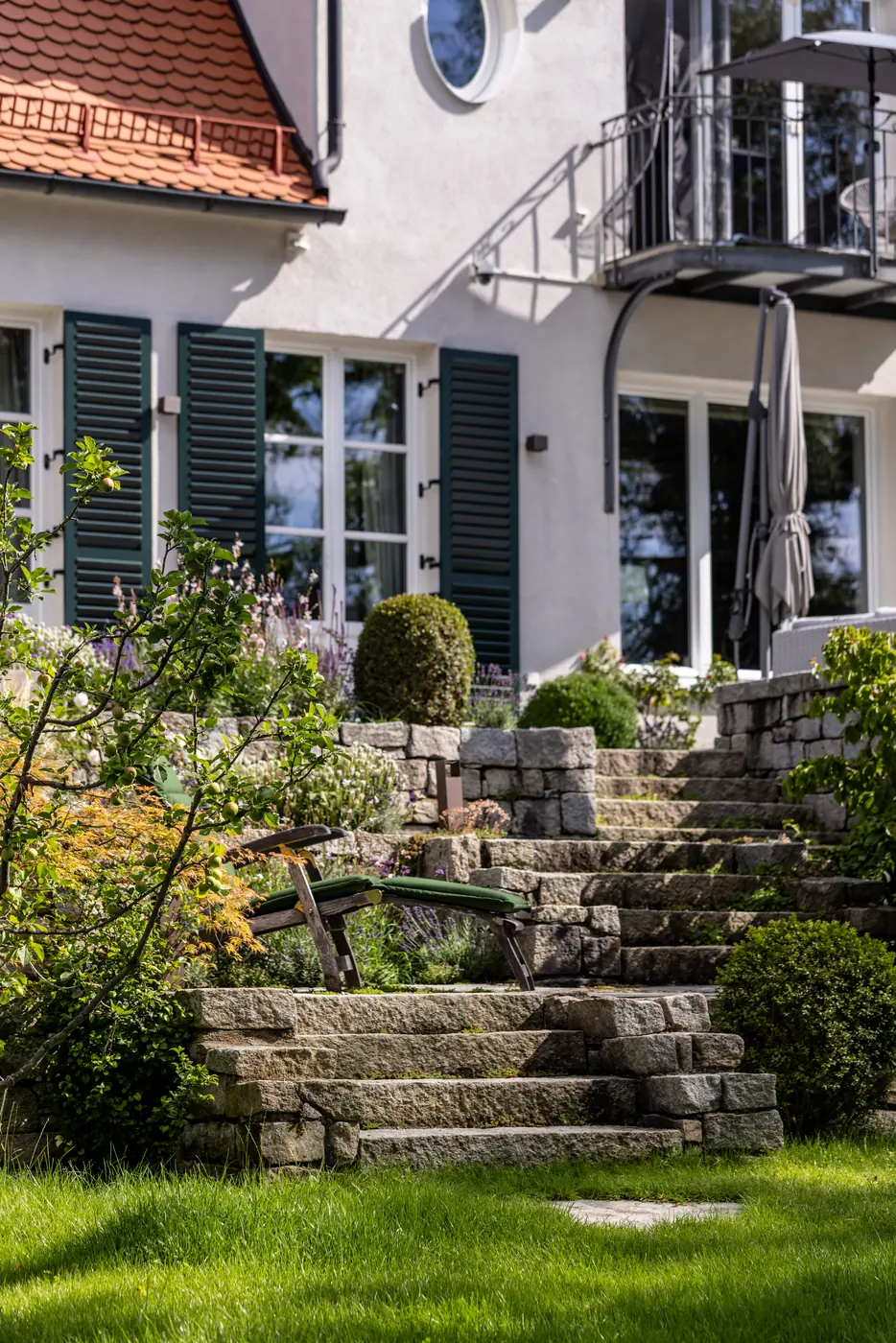
Swimming pond, natural pool or pool – which suits you?
The difference between a swimming pond, a natural pool (Living Pool) and a classic pool – and which one suits your garden, with pros and cons.
By Hans Rampf · Landscape architect · technically reviewed by Fuchs baut Gärten · updated 15 June 2026
The three routes to your own water
Whether close to nature or crystal clear with a pool look – the right solution depends on your wishes, your plot and how much maintenance you want. The direct comparison:
| Option | Water treatment | Character | Ideal for |
|---|---|---|---|
| Swimming pond | naturally, via plants | natural, without chlorine | nature lovers |
| Natural pool / Living Pool | biological filter | clear pool look, without chlorine | pool look without chemicals |
| Chlorinated pool | classic, with chlorine | warm water above 28 °C | swimming in warm water |
When the swimming pond is right
The swimming pond cleans the water naturally through plants and microorganisms and becomes a living biotope. No chlorine, but a piece of nature in your garden. Ideal for anyone who loves being close to nature.
Everything about the swimming pond: construction, size, costs
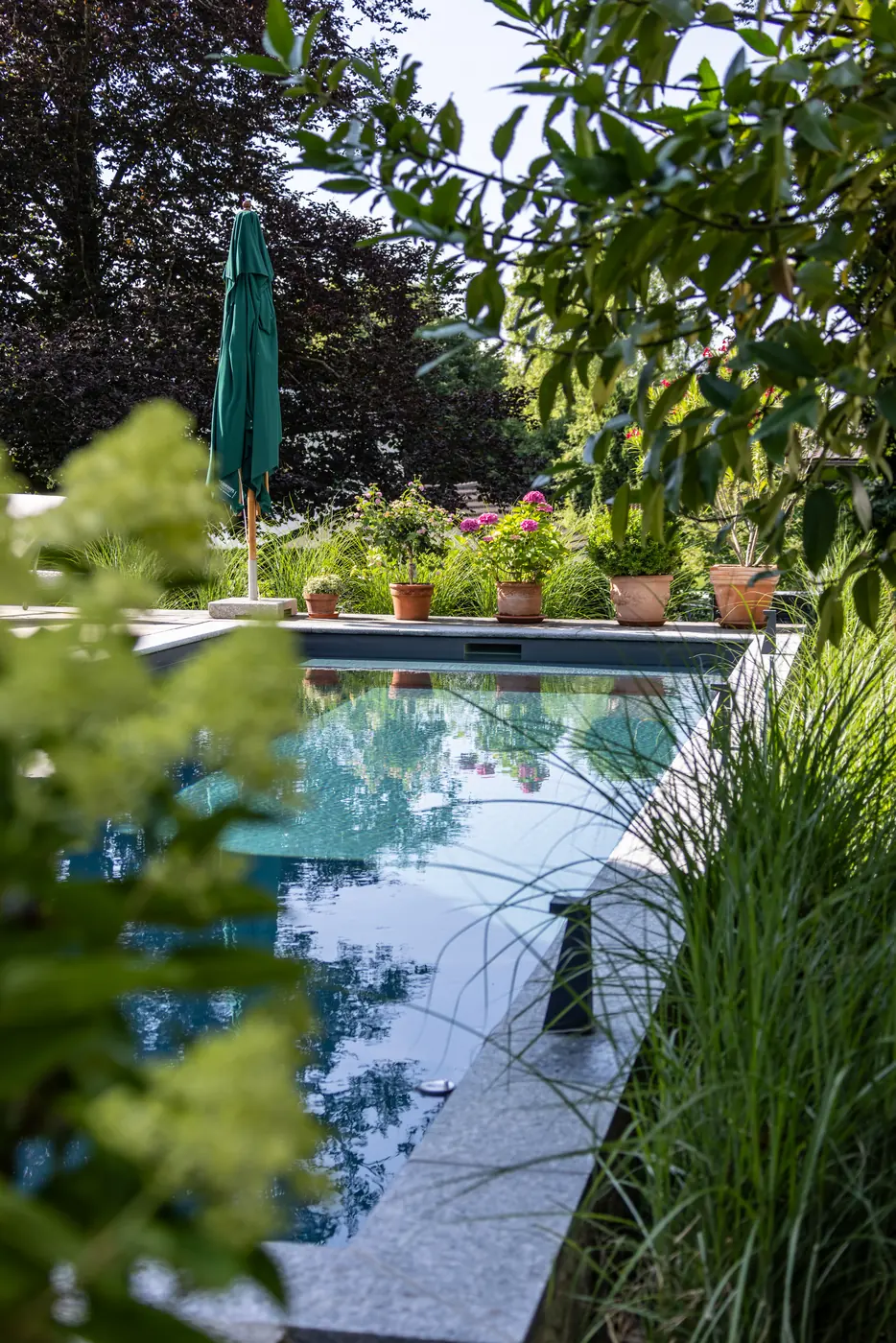
When the natural pool (Living Pool) is right
The Living Pool looks like a classic pool but uses a biological filter – crystal-clear water entirely without chemicals. The elegant choice for a pool look without chlorine.
Everything about the natural pool (Living Pool): technology, costs, disadvantages
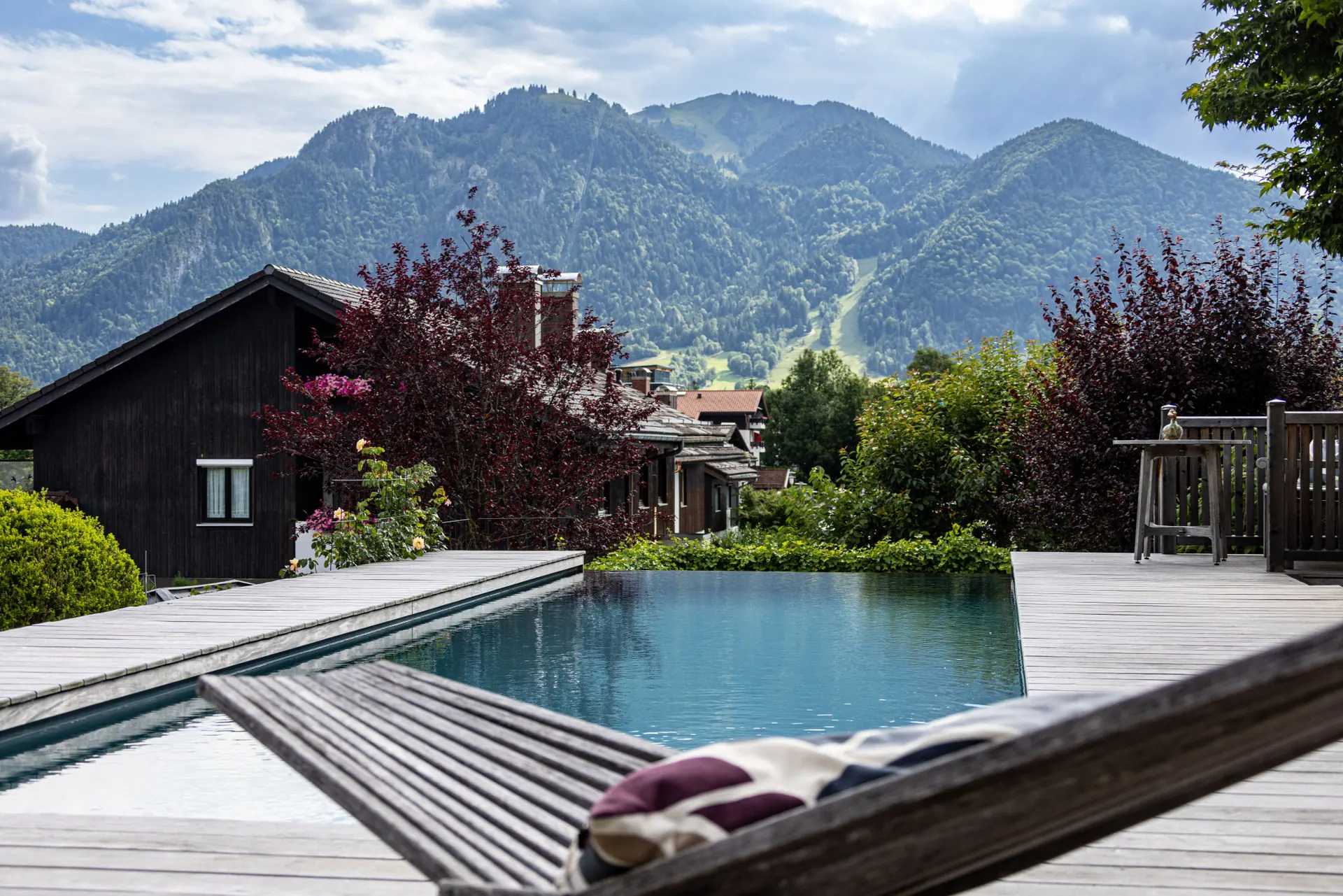
Regeneration area or filter mats – where the real difference lies
Both systems work without chlorine, and both keep the water clear through biology. The difference is the area on which this biology works – and you can see it in the garden.
The Swimming Pond works with a regeneration area
Next to the swimming area lies a planted zone with substrate, through which the water is channelled. This is where the microorganisms live that draw nutrients out of the water. This area is part of the system, not decoration: it needs its space, and that space is taken from the swimming area. In return, you get a body of water that changes its face through the year – with water lilies, dragonflies and an ice cover in winter.
The Living Pool works with biological filter mats
Here the same biology sits in a filter instead of a planted zone: the biofilm that does the cleaning settles on filter mats in the compact biological filter. A phosphate filter also removes the nutrient that algae live on from the water. The pool therefore looks like a classic pool – crisp edge, visible floor, no belt of plants – and needs no additional space in the garden. The five components in detail
Why the Schwimmteich is now called a Swimming Pond
It is the same system. “Schwimmteich” was the older German term; our partner BIOTOP now calls it a Swimming Pond. If you read “Swimming-Teich” in documents from the nineties and “Swimming Pond” today, both mean the same thing: the bathing water with a regeneration area.
And then there are the hybrids
In practice, many clients do not choose one or the other, but both at once. The most common combination: a Living Pool in the middle of a swimming pond. On the outside lies the planted zone with water lilies; on the inside you swim in a clearly defined basin with filter technology. You sit by the biotope and swim in the pool. Such systems are more complex to plan because two bodies of water and two circuits have to work together – but they resolve exactly the conflict on which the decision otherwise hinges.
If you take over an older system
With existing systems, we regularly come across sand filters – the technology of an earlier generation of equipment. It works, but it is more labour-intensive and less economical than today’s biological filters. If you buy or inherit such a system, it can usually be converted without touching the basin. We look at it on site and tell you what the system can still do and what is worth doing.
When the classic pool is right
The chlorinated pool allows higher water temperatures above 28 °C and athletic swimming, e.g. with a counter-current system. Classic technology, warm water.
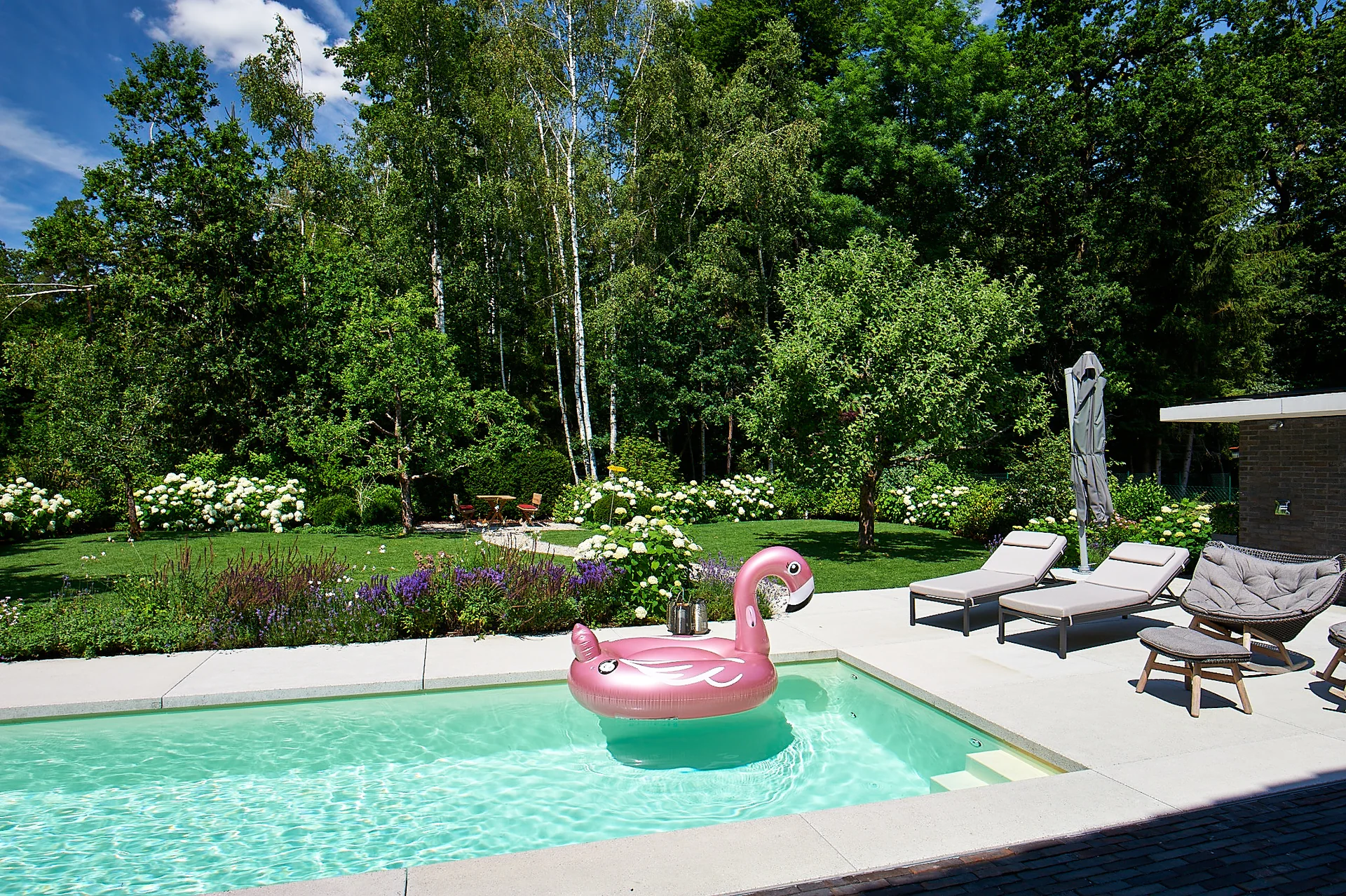
As a Biotop partner for over 30 years with more than 440 water features built, we will find the right option together with you. More about swimming ponds & pools
Answers about swimming ponds, natural pools and pools?
Which option needs the least space?
Which option is the cheapest to install?
How does the maintenance effort differ?
What happens to a swimming pond and a natural pool in winter?
Can an existing pool be converted to biological water treatment?
Who is the classic pool still right for?
What suits small gardens better: a compact pool or a small swimming pond?
More garden knowledge
You will find even more practical knowledge in our maintenance library with detailed maintenance guides – or simply ask us directly.
Let's talk about your project
We are happy to advise you in person, with no obligation.
Request a consultation