
Garden Construction, Natural Stone & Terraces
Expert garden construction: terraces, paths, steps and outdoor spaces made from high-quality, durable materials.
From earthworks to the final stone
We build what has been planned – with stone from the region, clean workmanship and a building site that works even when no lorry can get through. This page explains which materials we work with, why we choose them and how we reach plots that are difficult to access.
Private gardens are our core business – and they are the focus of this page. We also build for:
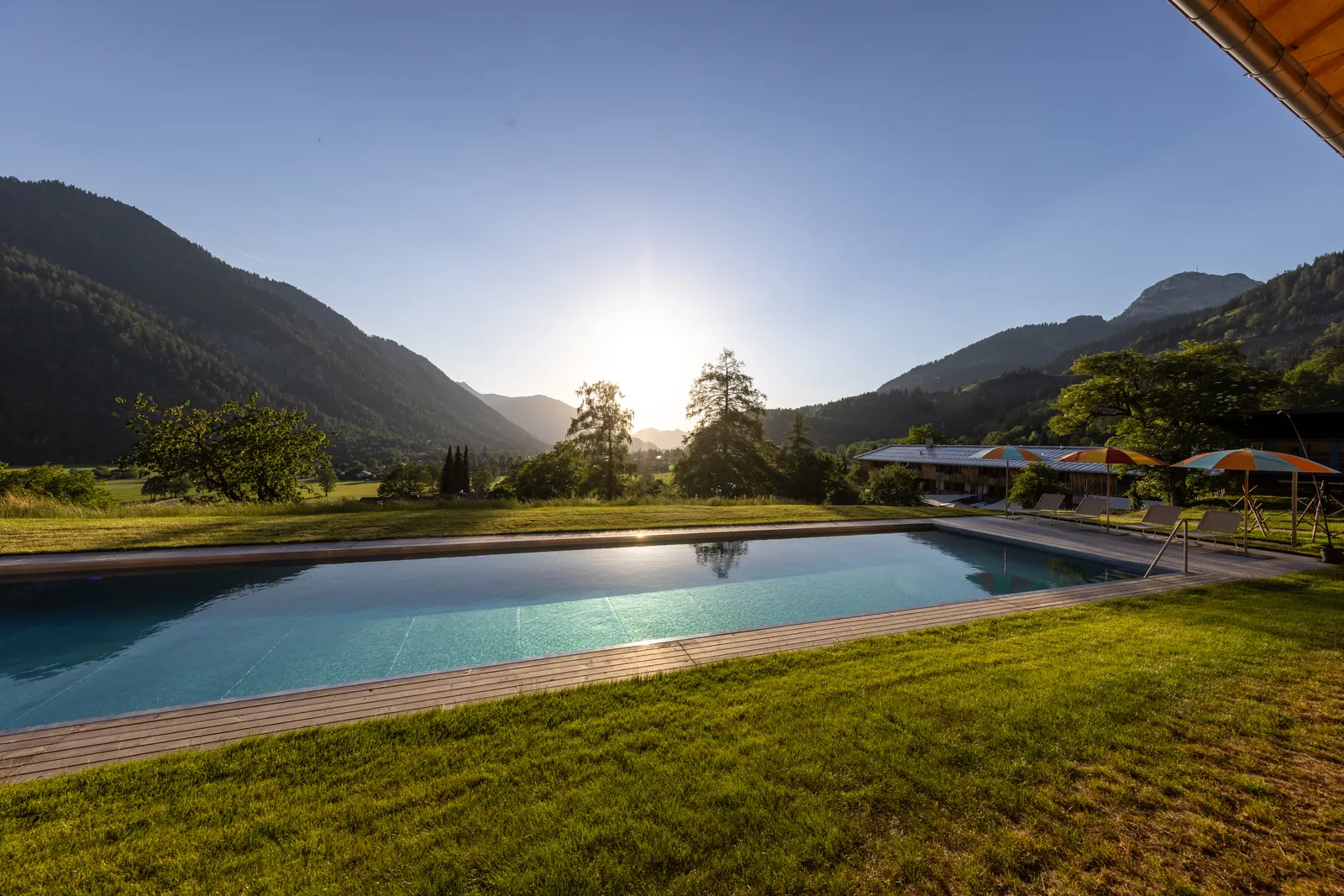
Hotels & Restaurants
Outdoor spaces your guests will remember.
Learn more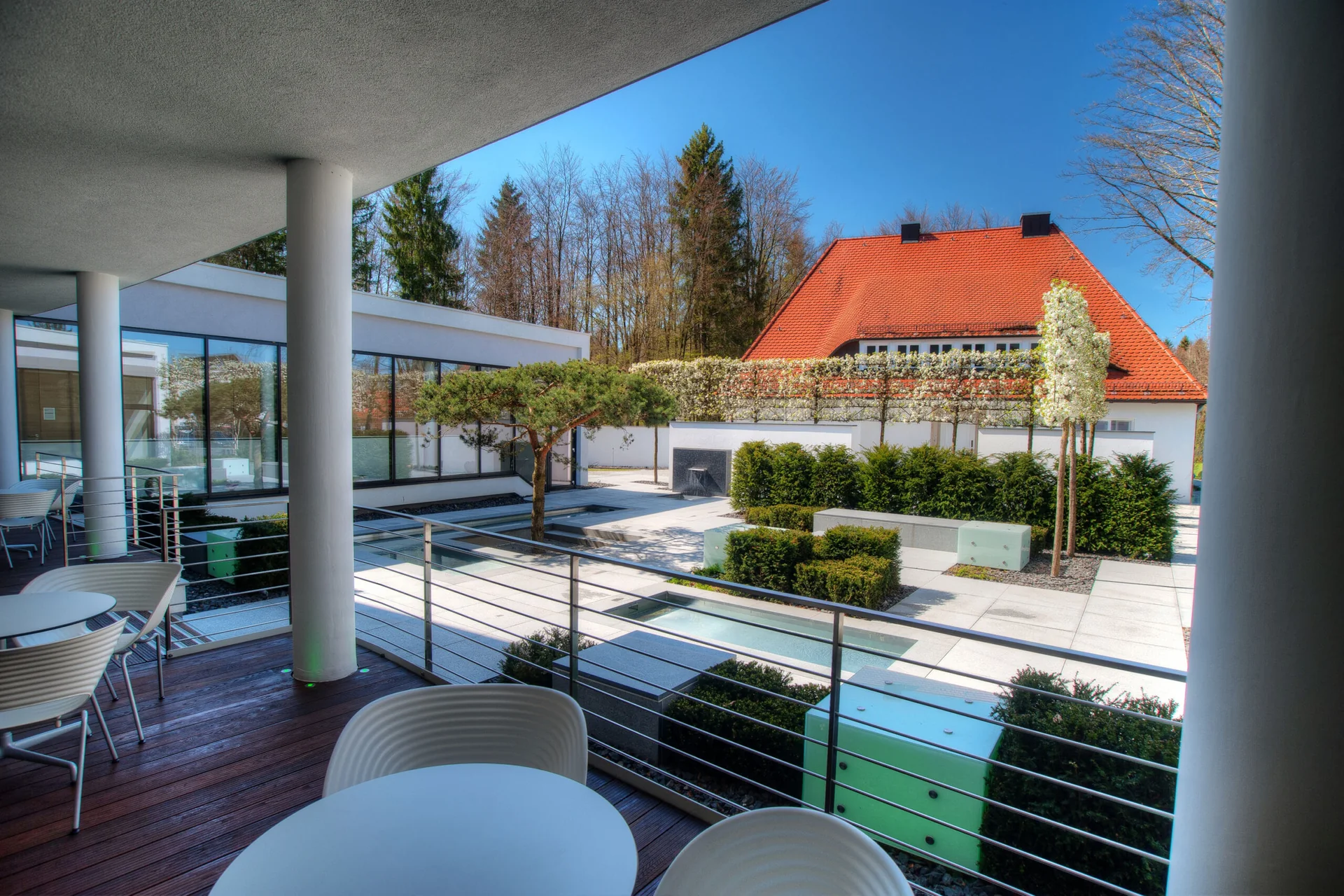
Company grounds
Green calling cards for businesses – built and maintained.
Learn more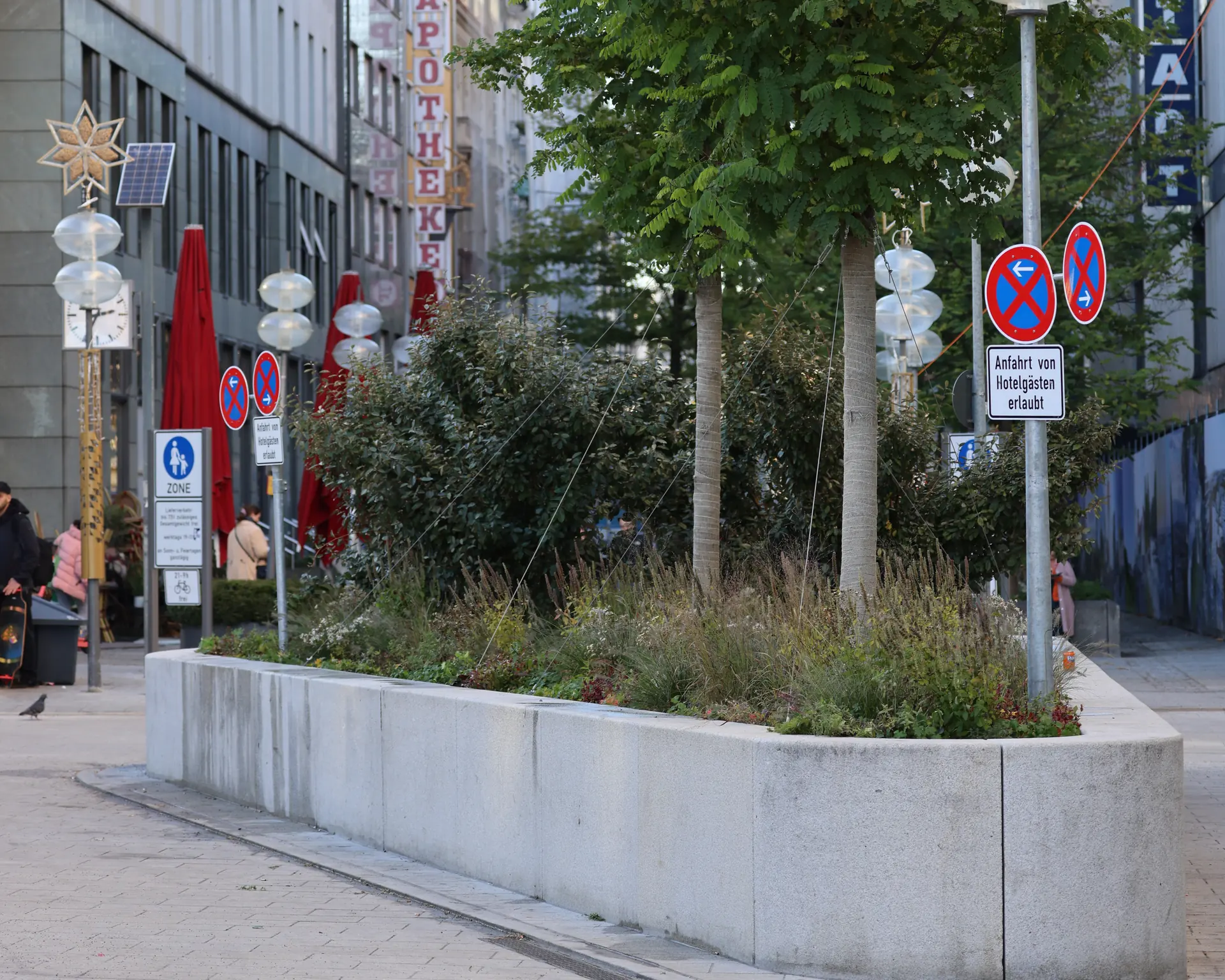
Public Spaces & Municipalities
From the town hall square to the planting at Stachus.
Learn more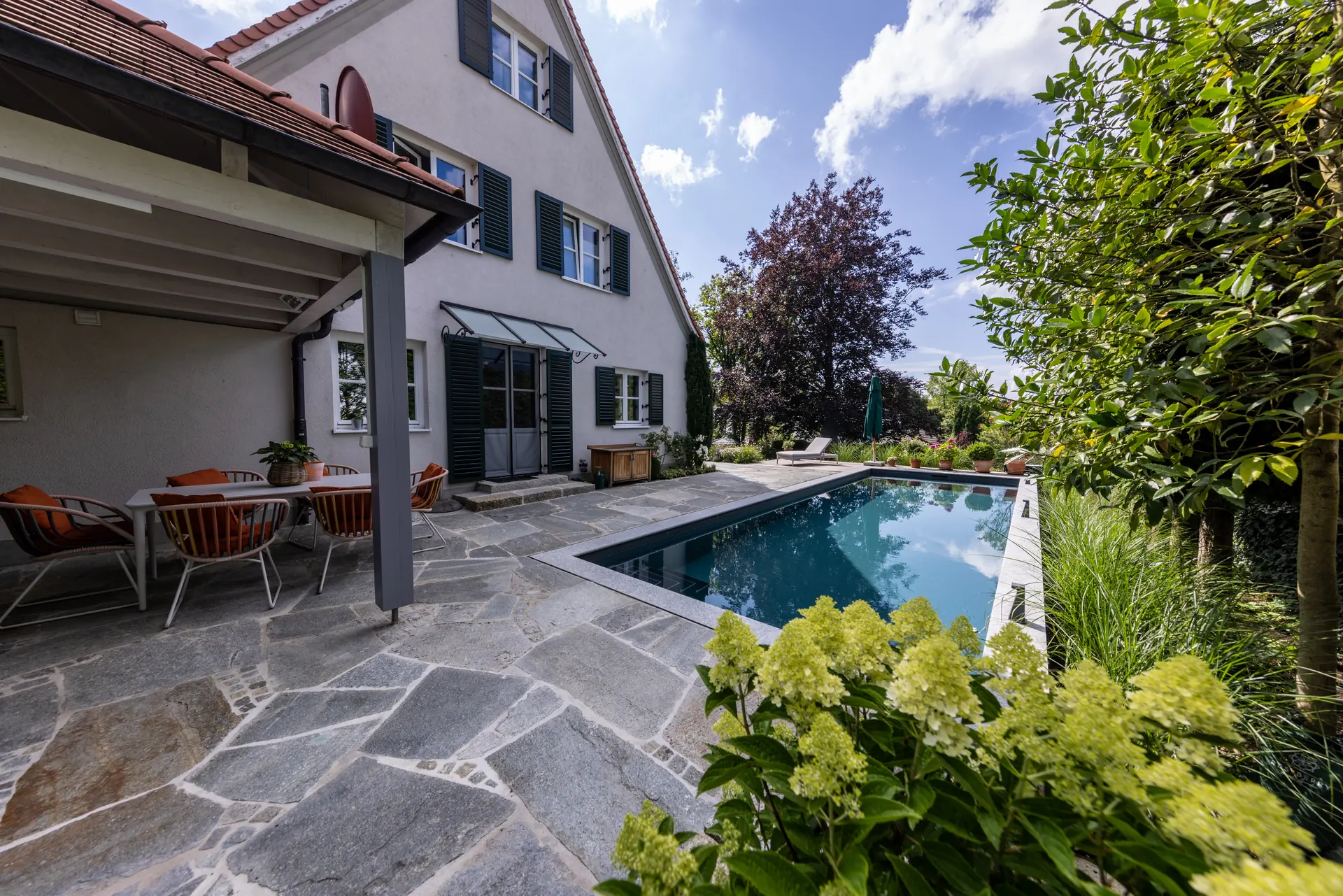
Terraces
Natural stone, timber or ceramic – with a foundation that lasts.
Learn more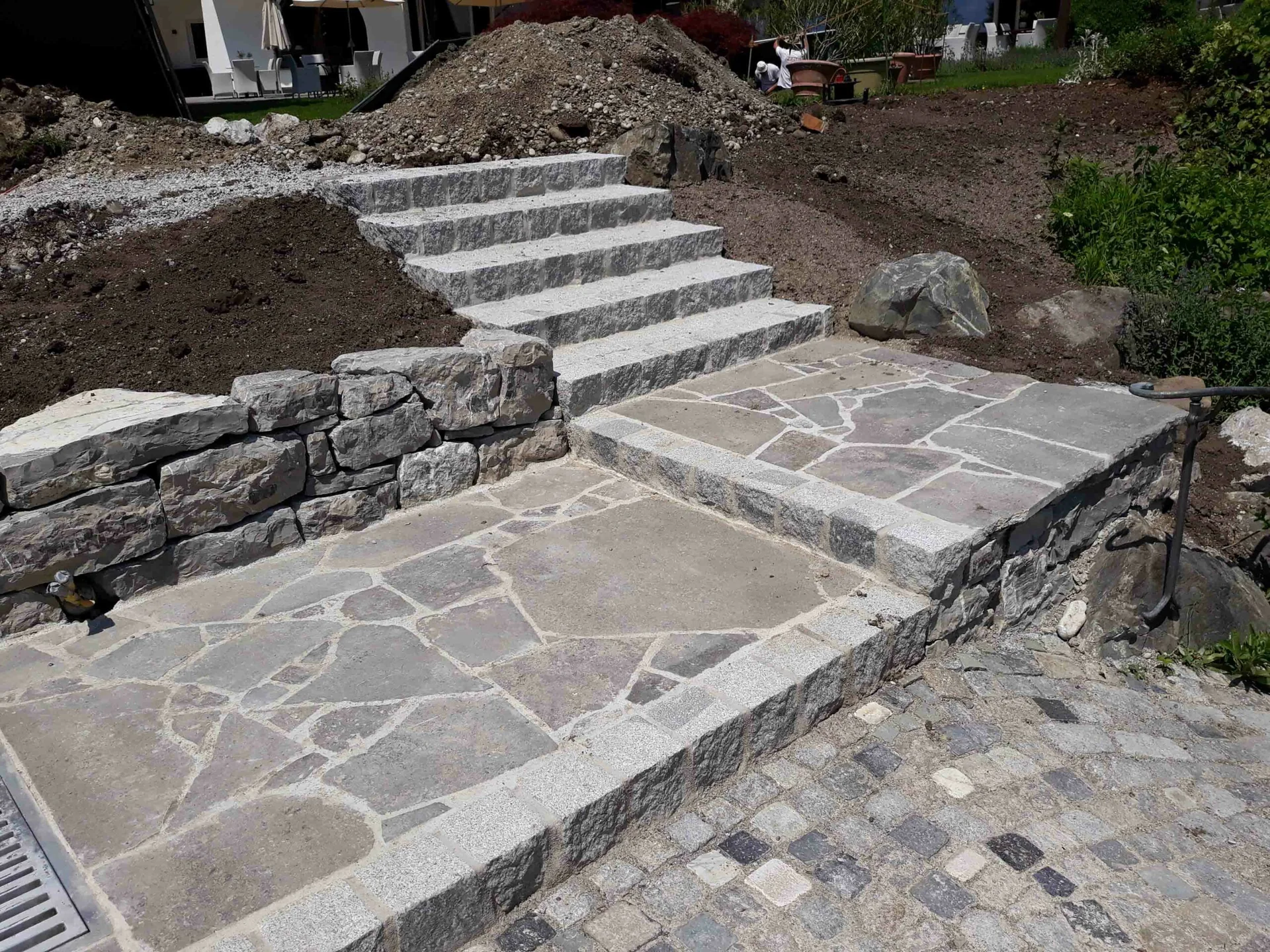
Paths & Steps
Block steps, paving and water-bound surfaces.
Learn more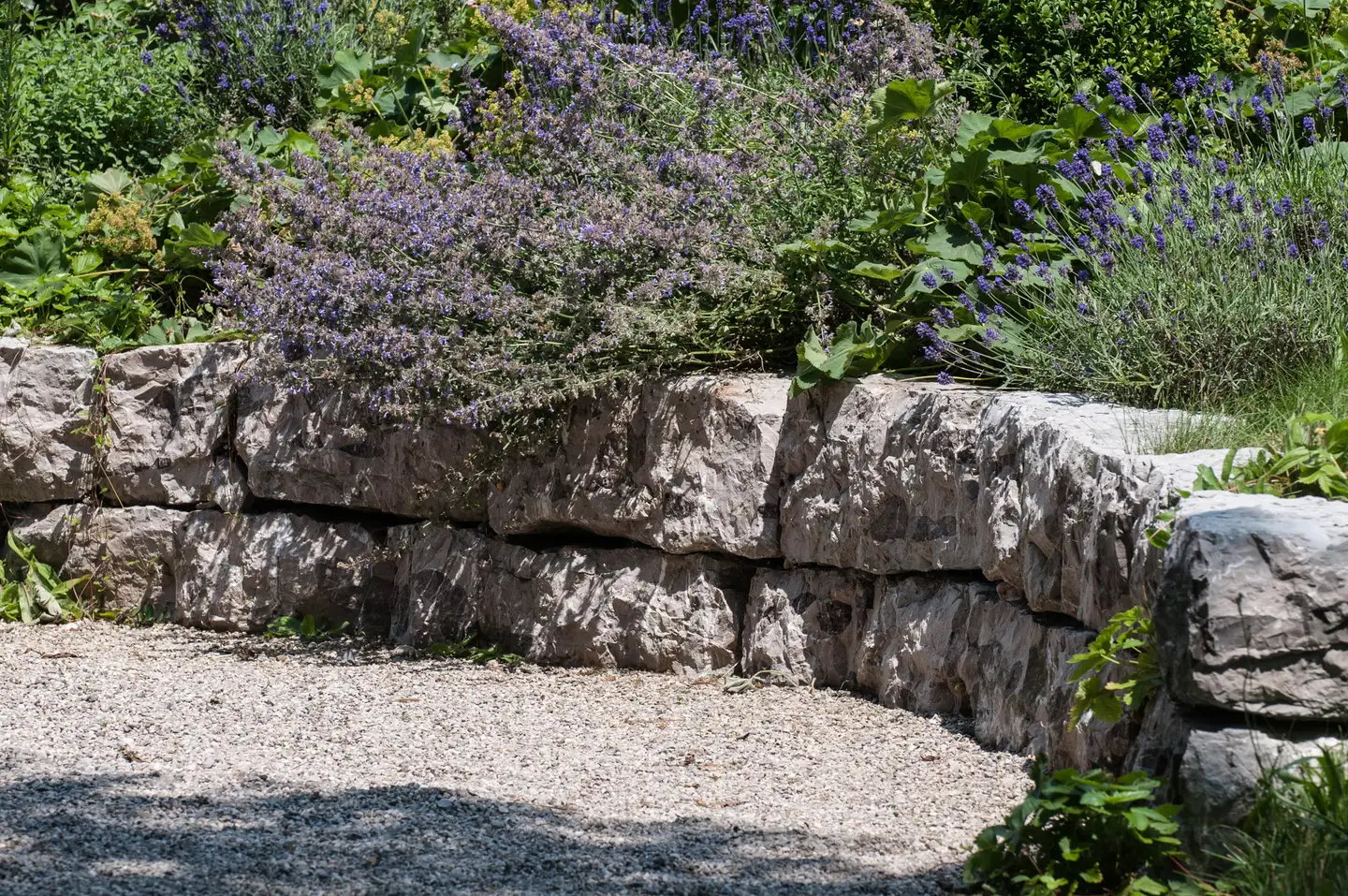
Natural Stone Walls & Fences
Limestone dry stone walls – over 3,500 m² since 2004.
Learn more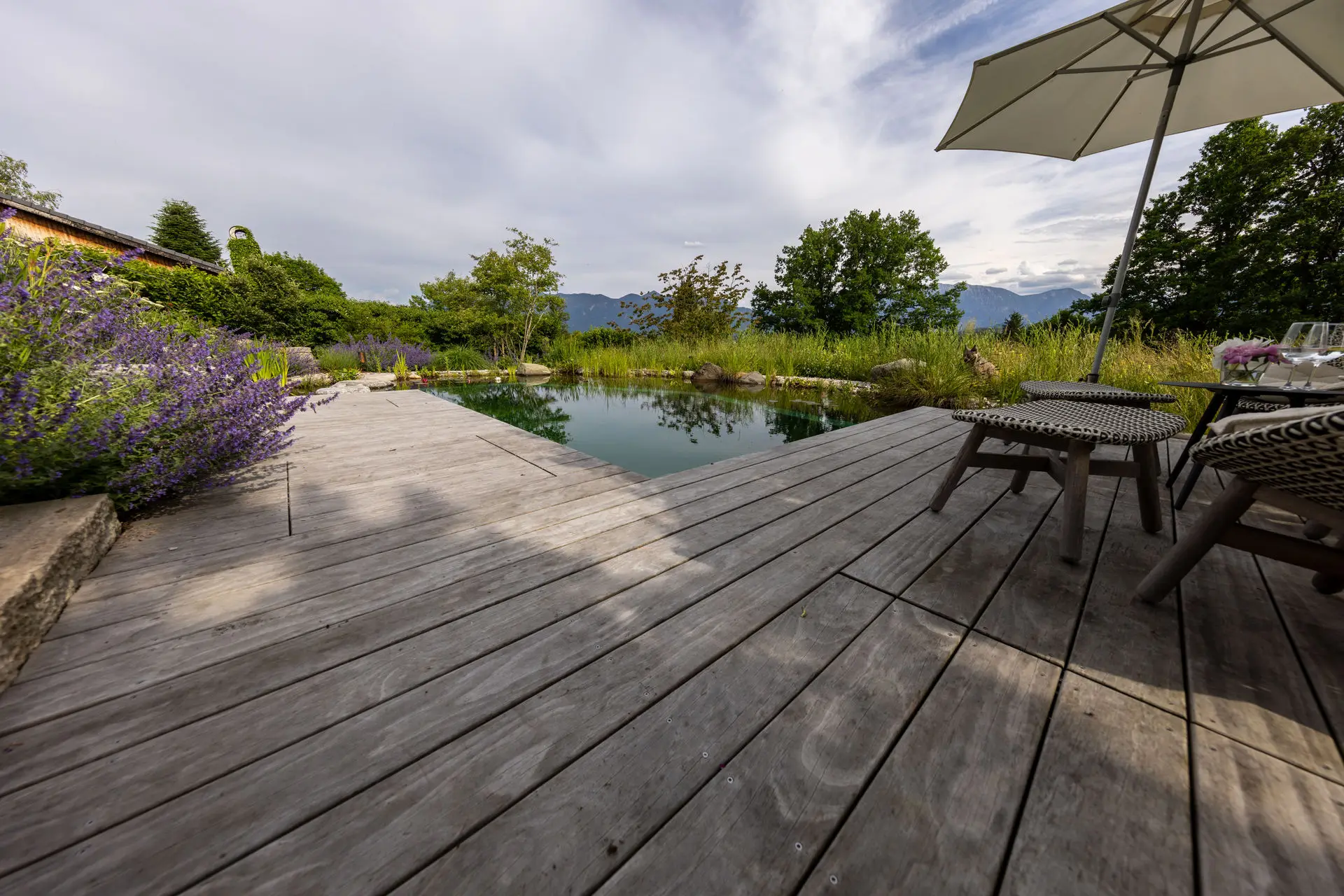
Timber Work & Joinery
Decks, privacy screening and bespoke work from our own workshop.
Learn more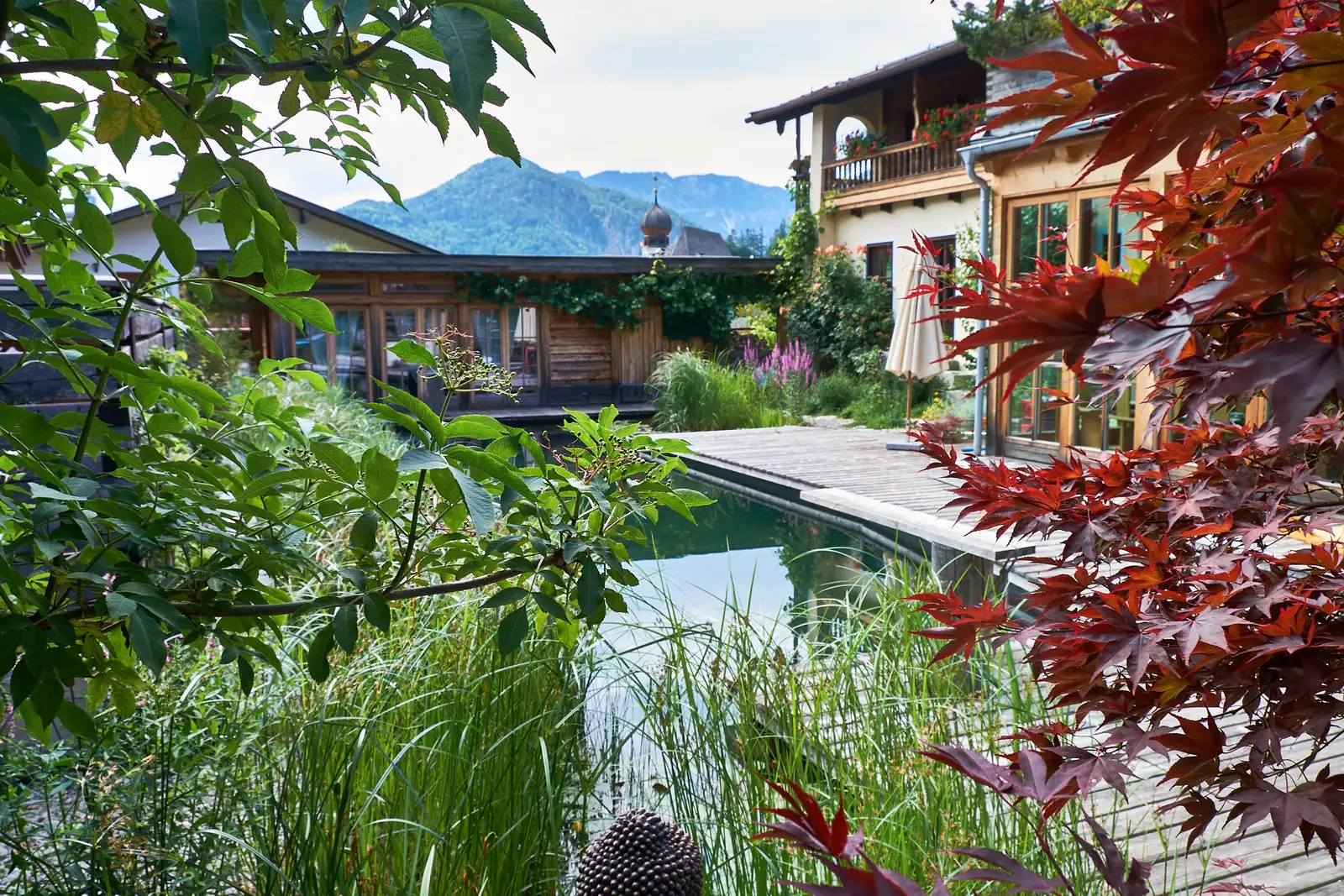
Plants & Planting
From planting plan to establishment care.
Learn more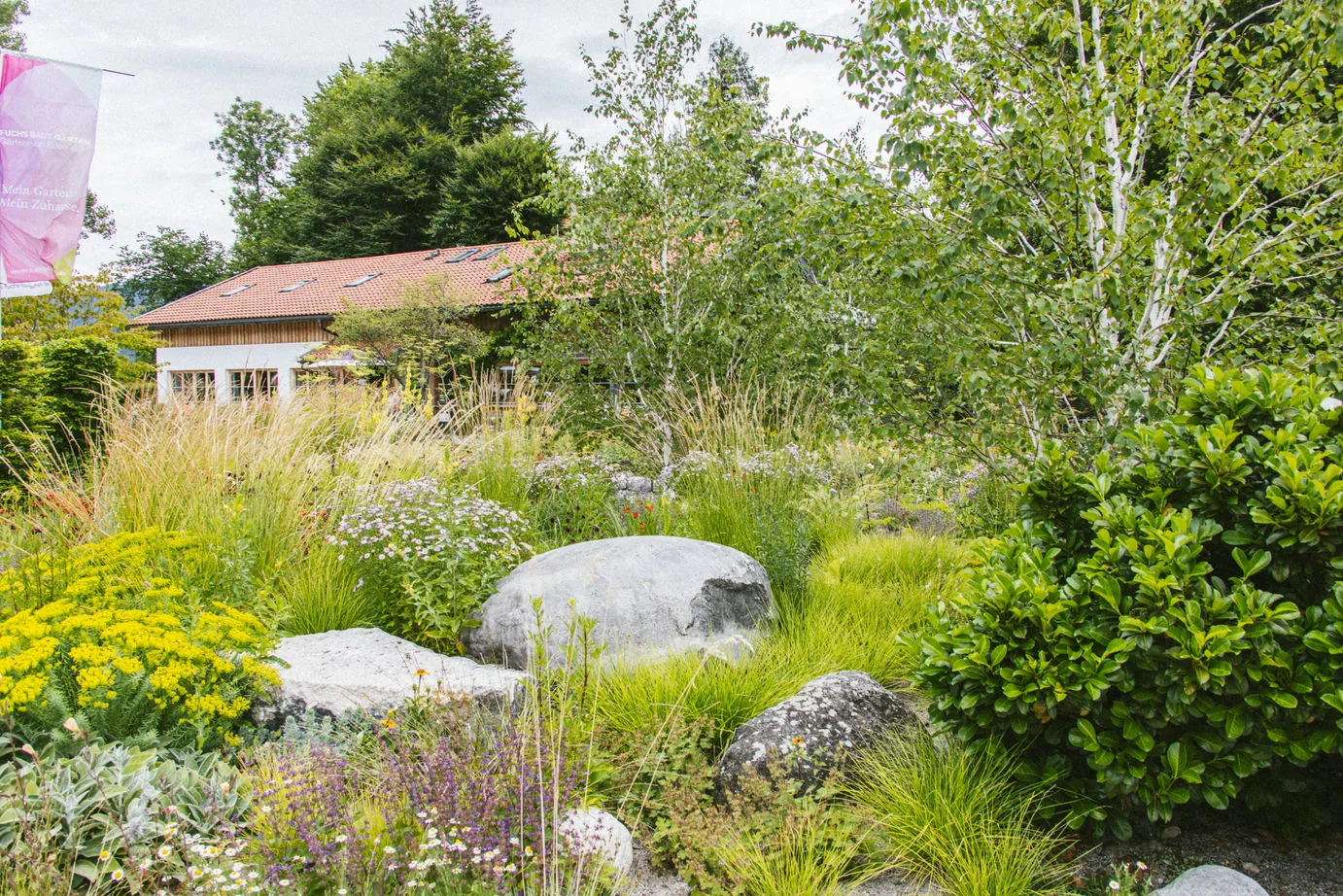
Perennial Planting
Beds arranged by habitat – over 60,000 perennials planted.
Learn more
Trees & Large Trees
Specimen plants that anchor a garden – set in place by crane.
Learn more
Privacy Screening & Hedges
Green boundaries – from hedges to tall hedges.
Learn more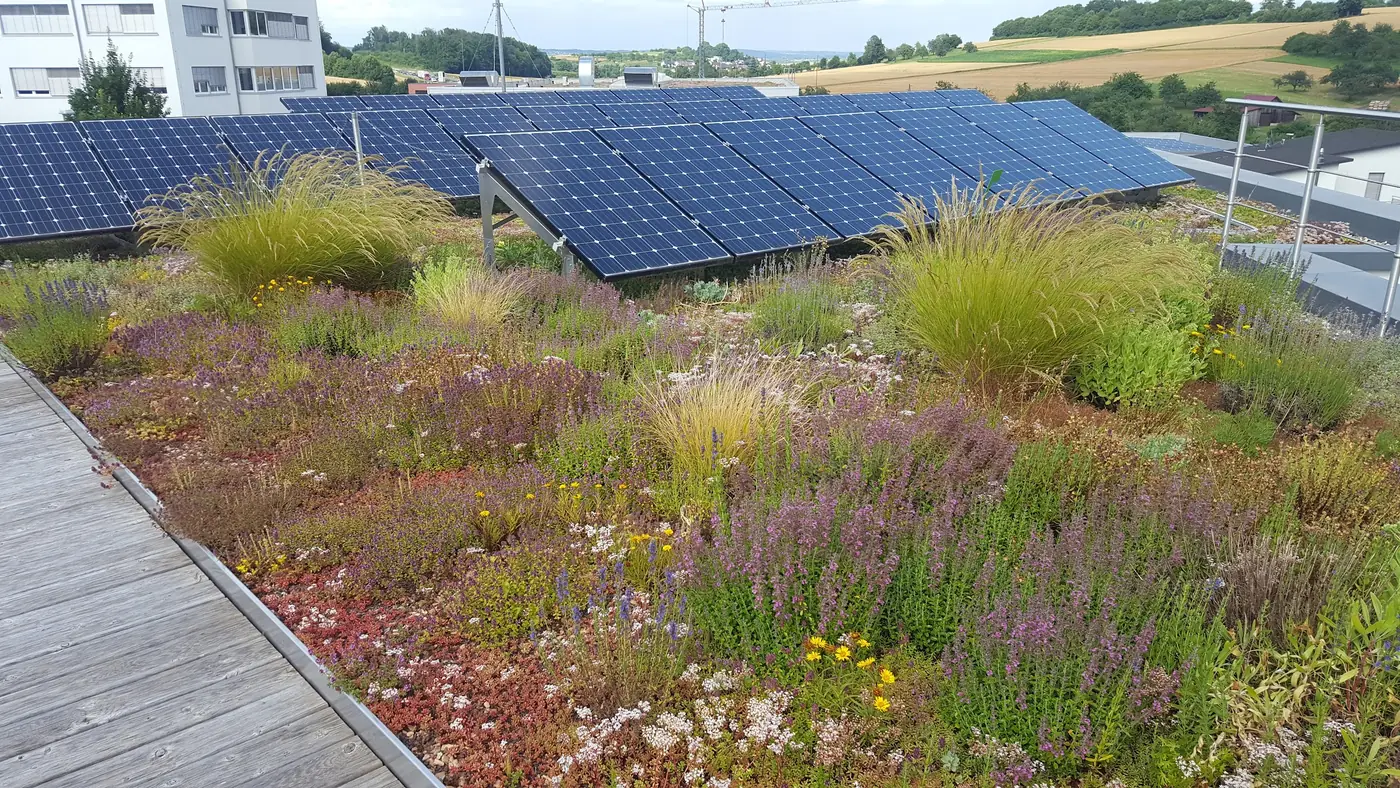
Green Roofs & Façade Greening
Green where there would otherwise only be roof.
Learn more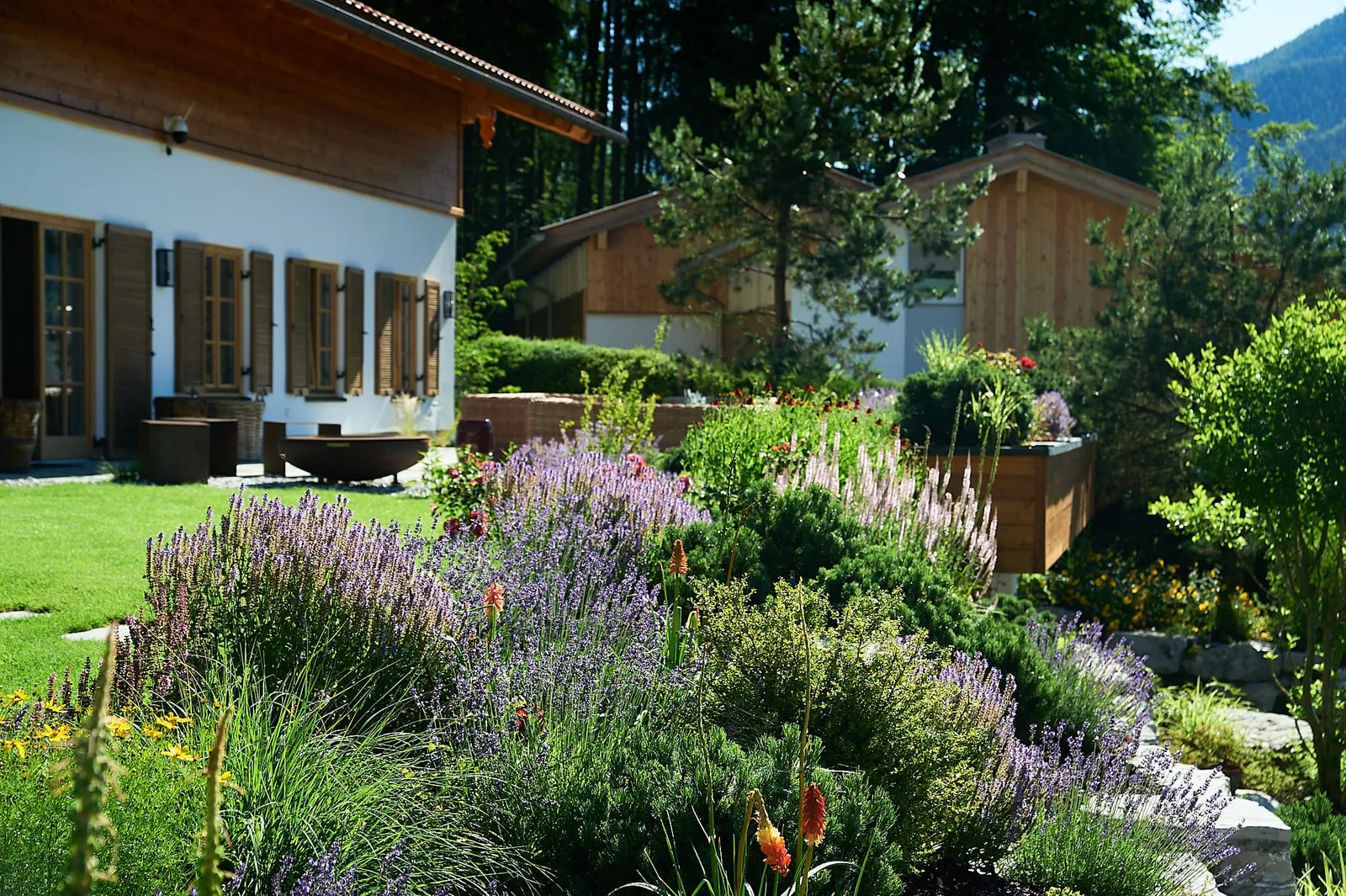
Roof Terraces
An open-air living room above the rooftops.
Learn more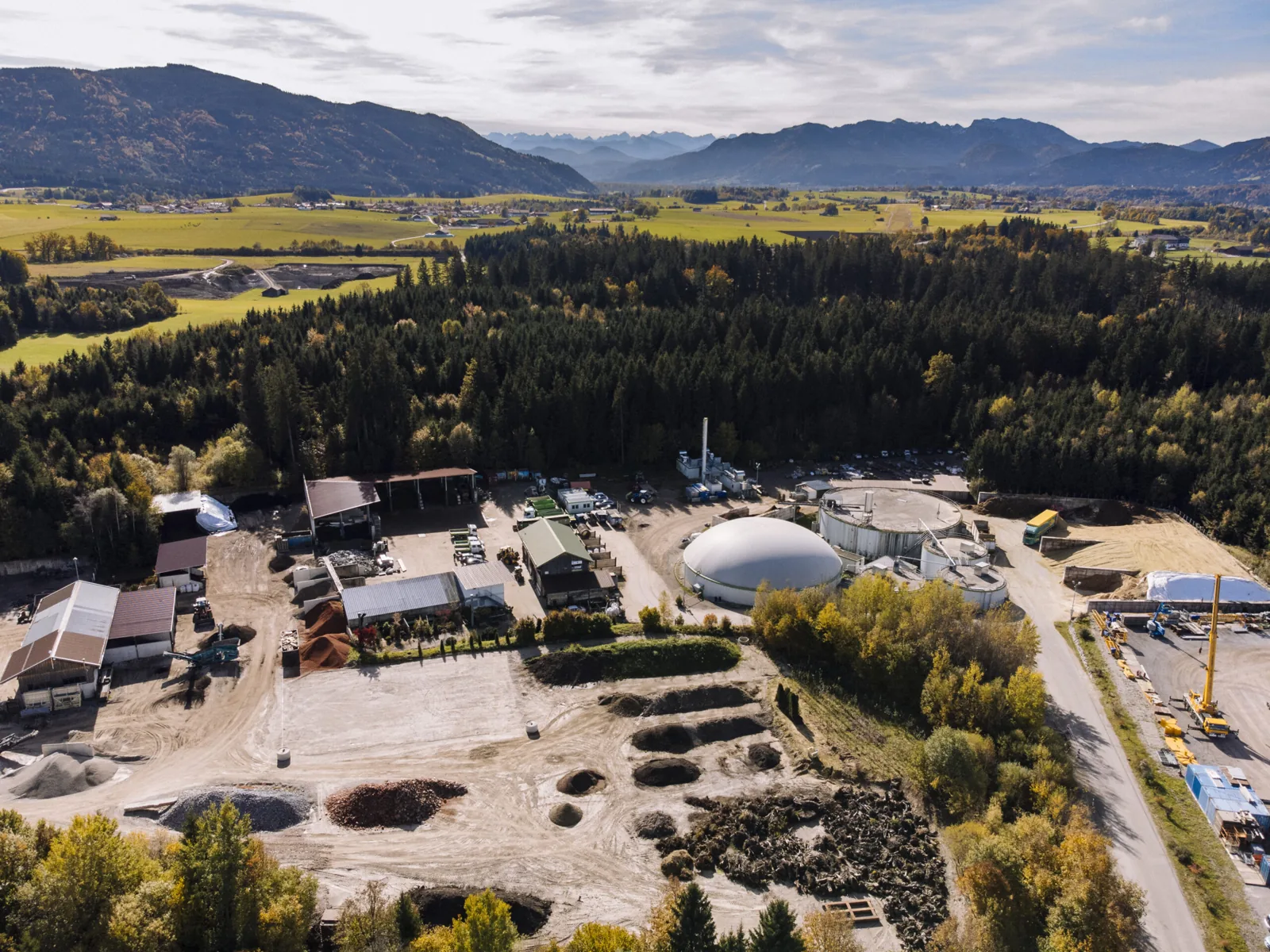
Erdenwerk – Soils & Substrates
Our own soils from Reichersbeuern – also available for collection.
Learn moreThe place where you sit the most
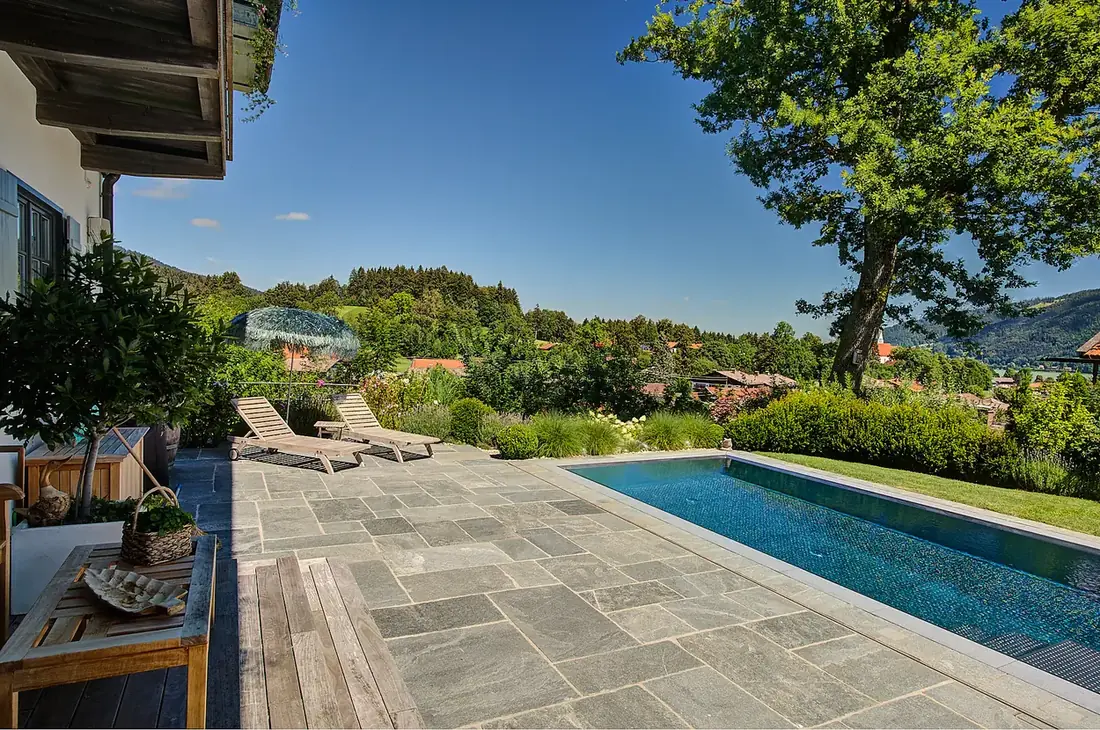
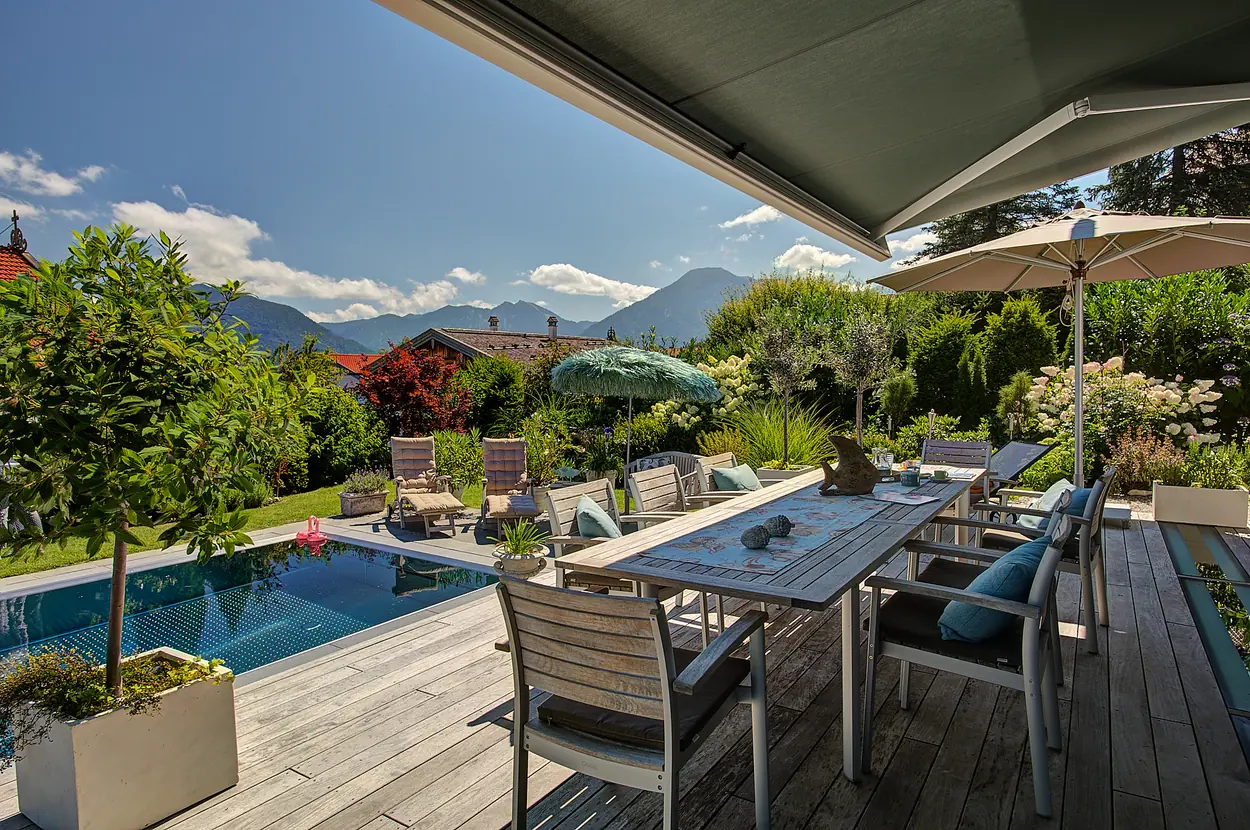
Natural stone, timber, concrete or ceramic – the choice is made at the house, not from a catalogue. On the Tegernsee it is cut Muschelkalk slabs as an extended living room, in Kirchheim a larch timber terrace at the bathhouse, and in a Munich city garden Kebony – timber that darkens rather than turning grey, crafted by our own joinery workshop. What matters most is what you can't see later: the sub-base and the sealing against moisture and frost. That is how you can tell, after ten years, who did the building.
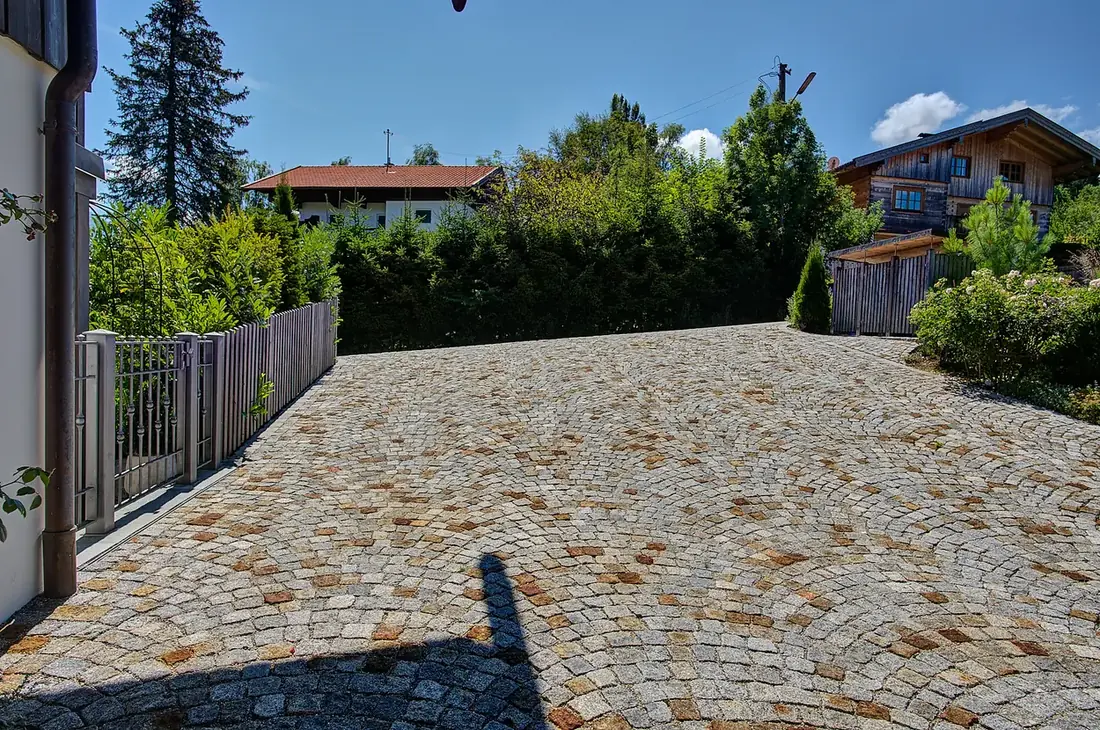
With natural stone, we master the full range of laying styles: polygonal slabs with their free-flowing joint patterns, large-format slabs and rough-edged slabs, cut Muschelkalk – and small granite setts in rows, arcs or concentric circles. Since 2004 we have laid and invoiced over 15,000 m² of natural stone paving; using built examples, we will show you which laying style suits your house and the way you use it. We explain the sub-base, gradients and the building process under terrace construction.
Where a garden becomes walkable
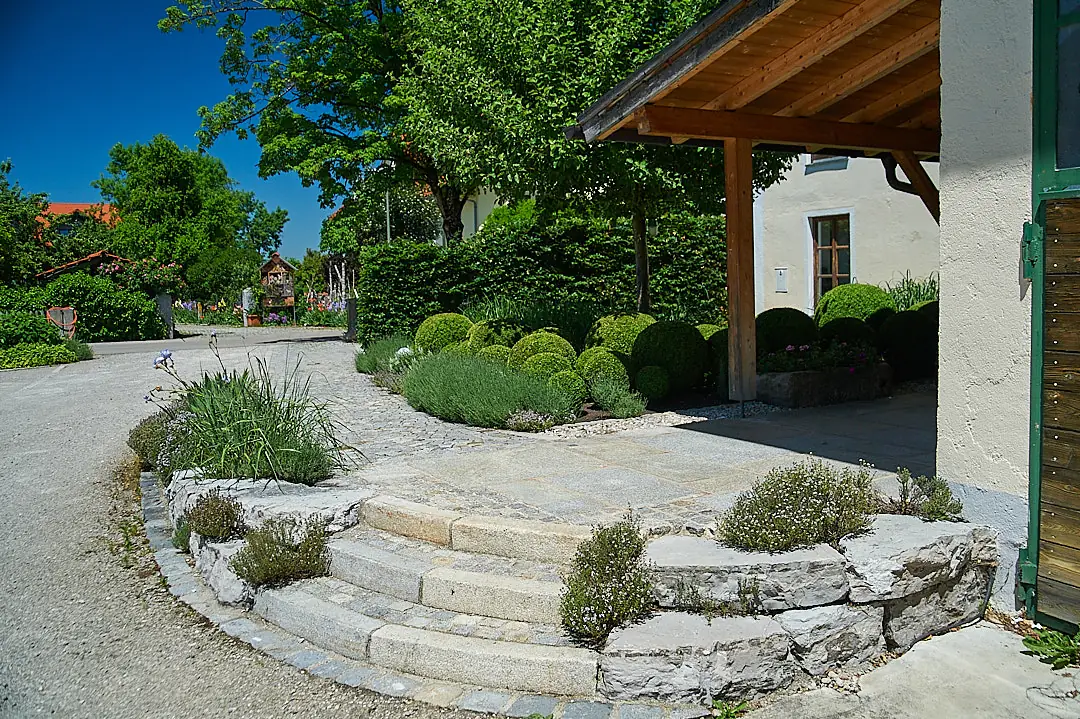
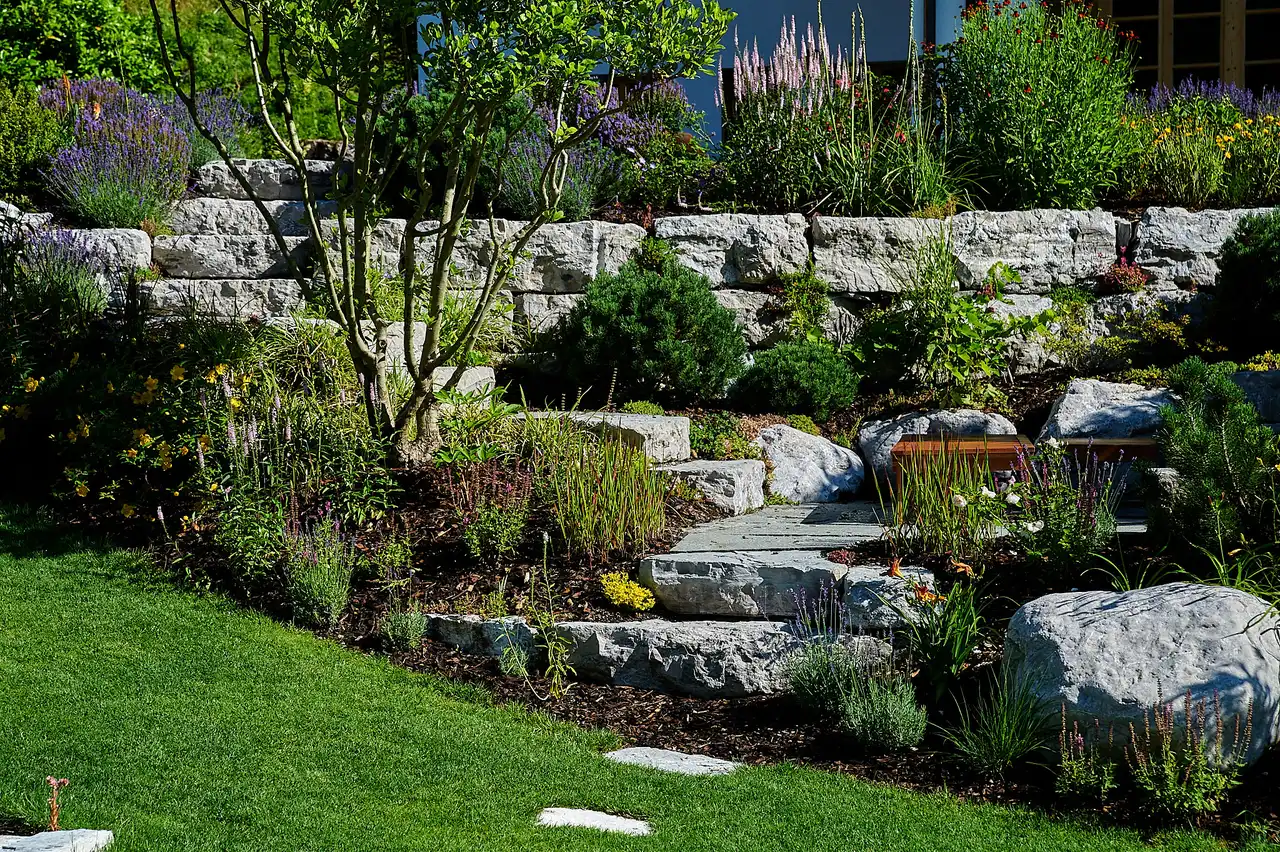
On a slope, the steps decide whether the lower part of the garden is used or just looks pretty. We build with granite block steps, stepping stones in the lawn, small-sett paving and water-bound path surfaces – the latter are permeable, quiet, and you can hear who is coming. In Kreuth, wide limestone steps lead down the slope to seating areas on several levels; in Kirchheim, large setts, rough-edged slabs and small setts of reclaimed granite lie side by side in the same courtyard.
A wall you can sit on
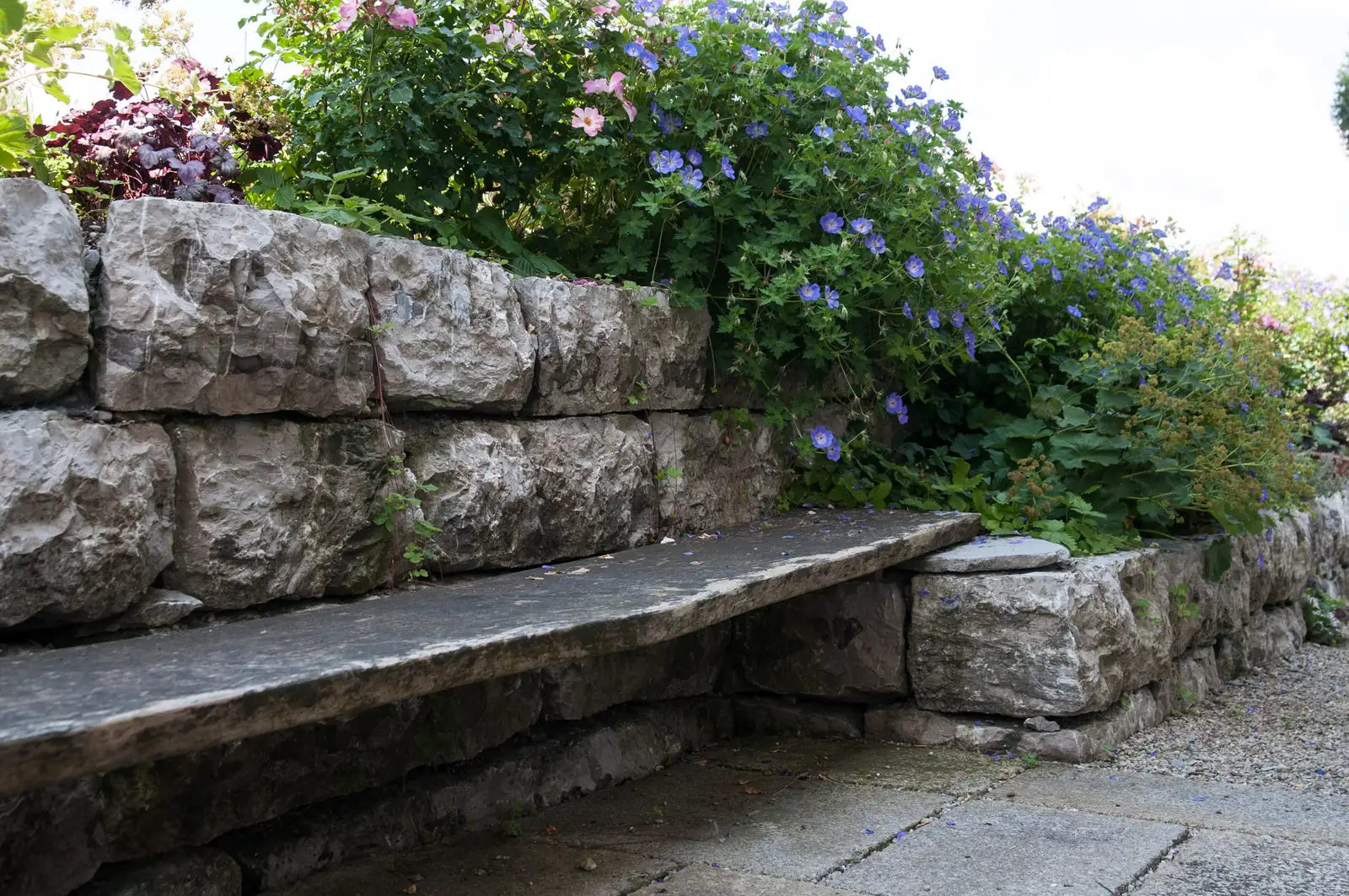
Walls hold the slope, structure the garden and give off warmth – and when they are planned properly, they double as seating. In Thanning, a bench made from a single stone slab sits within the dry stone wall: no construction, no furniture to put away in winter, and in summer it becomes overgrown. At Schliersee the walls are made of hand-stacked limestone, and on the edge of the Alps a wall of Limes dolomite organises the entire slope. More on this: Walls and Fences.
Which stone for what
We prefer to work with stone from the region – not on principle, but because it belongs here and the distances are short.
Limestone for walls and steps – widespread in the Alps, light in colour, weathers beautifully. Muschelkalk, cut, for terrace slabs. Granite for paving, kerbs, fountains and seating blocks – also reclaimed, with softened edges. Limes dolomite for large retaining walls. Plus boulders as set stones that create the transition into the landscape.
Whatever grows by itself in the wide joints is allowed to stay. That isn't negligence – it is the reason these gardens look, after years, as if they had always been there.
Stones with a history
Natural stone doesn't spoil. For one project we cleaned and reused granite edging stones removed in the town of Bad Tölz – stones that had already served for decades and are now back in place. In Kirchheim we didn't demolish the old concrete farm surfaces but integrated them into the design, because the farmyard is still in agricultural use. This is the least spectacular form of sustainability and the most effective: don't throw away what still works. More under Environment and Sustainability.
When no lorry can get there
Access matters more than material.
Most of the gardens we build cannot be reached by lorry. That is exactly where it is decided whether a project is feasible – and we clarify this before the quote, not on site.
1.20 metre passage
At a city garden in a Munich suburb, the only access was 1.20 m wide. The machines were lifted into the garden by crane, and the material travelled in on conveyor belts. You can see the result under Oasis at the Living Pool.
Building site in city-centre traffic
At Stachus in Munich we planted between tram tracks and traffic lights – with delivery time windows and a lorry that couldn't stand there for long. What that looks like is shown under Green in the City.
Steep slope
On a slope, logistics is the real issue: excavated soil that mustn't slip, material that has to go uphill, and plants that need to establish quickly. Our sloping gardens are collected under Gardens on Slopes.
Even a section of wall is a commission
No minimum order value, construction phases possible, join at any stage.
You don't have to commission the whole garden at once, and you don't have to have been involved from the start. We have no minimum order value – a single terrace, a section of wall or a new path is just as welcome as a complete outdoor space, and it is the same team.
For larger projects we deliberately divide the work into construction phases, each of which is complete and usable on its own – first the terrace and access, the slope the following year. And we also join when planning or building has already begun: happy to come on board at any construction stage, though it is nicer from the very beginning. Get in touch.
Answers about garden construction
Which company supplies natural stone for gardens, paths and walls and helps with choosing the right material?
Which materials do you use for terraces?
Do you build natural stone walls?
Do you work with sustainable materials?
Which area do you cover?
Our plot is hard to access – is it still possible?
Which natural stone do you recommend for what?
Is there a minimum size for a job?
Can I commission just one construction phase?
Let's talk about your project
We are happy to advise you in person, with no obligation.
Request a consultation