
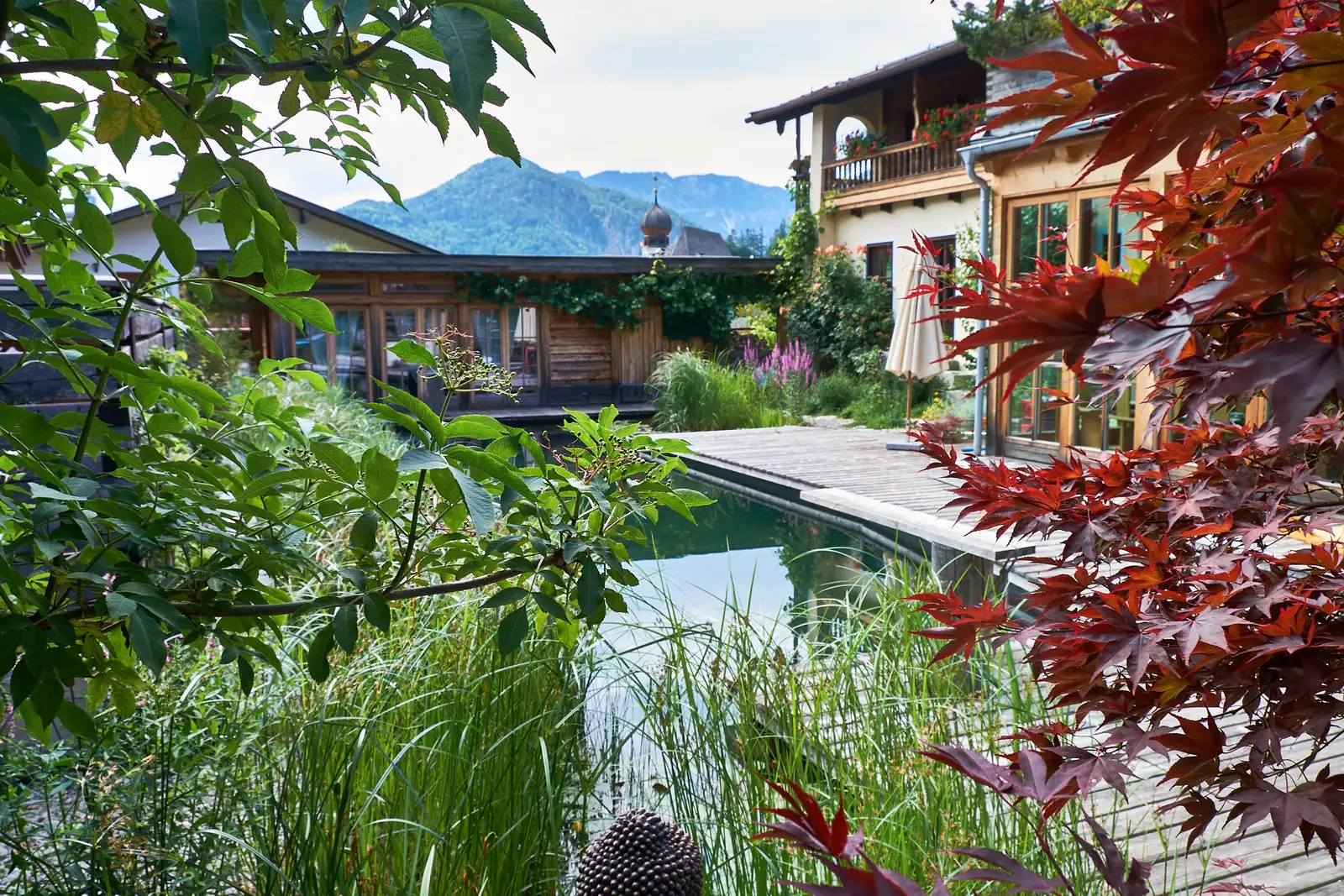
Planting & Greening
Planting concepts suited to the site, a wide variety of perennials, turf and soil improvement – expertly planned and planted.
Suited to the site, not uniform green
The right plant in the right place: we plan plantings that suit soil, light and climate – for gardens that look good in every season.
Over 60,000 perennials
That is how many perennials and ground cover plants we have planted and invoiced since 2004 – from a single bed to an area covering an entire plot. Plus over 8,000 flower bulbs for spring.
Over 25,000 m² of wildflower meadow
Sown on both lean and moist sites – areas that hum with life instead of just being green. See what that looks like in the project Blumen statt Rasen.
Over 150,000 m² of lawn
Sown or laid as turf, always with a clean fine grade – the base material comes from our own Erdenwerk.
Our plant expertise
- Expert planting advice for trees, shrubs and perennials
- Planting concepts suited to the site, with layered planting and a wide variety of perennials
- Turf and lawn construction
- Soil improvement as the basis for healthy growth
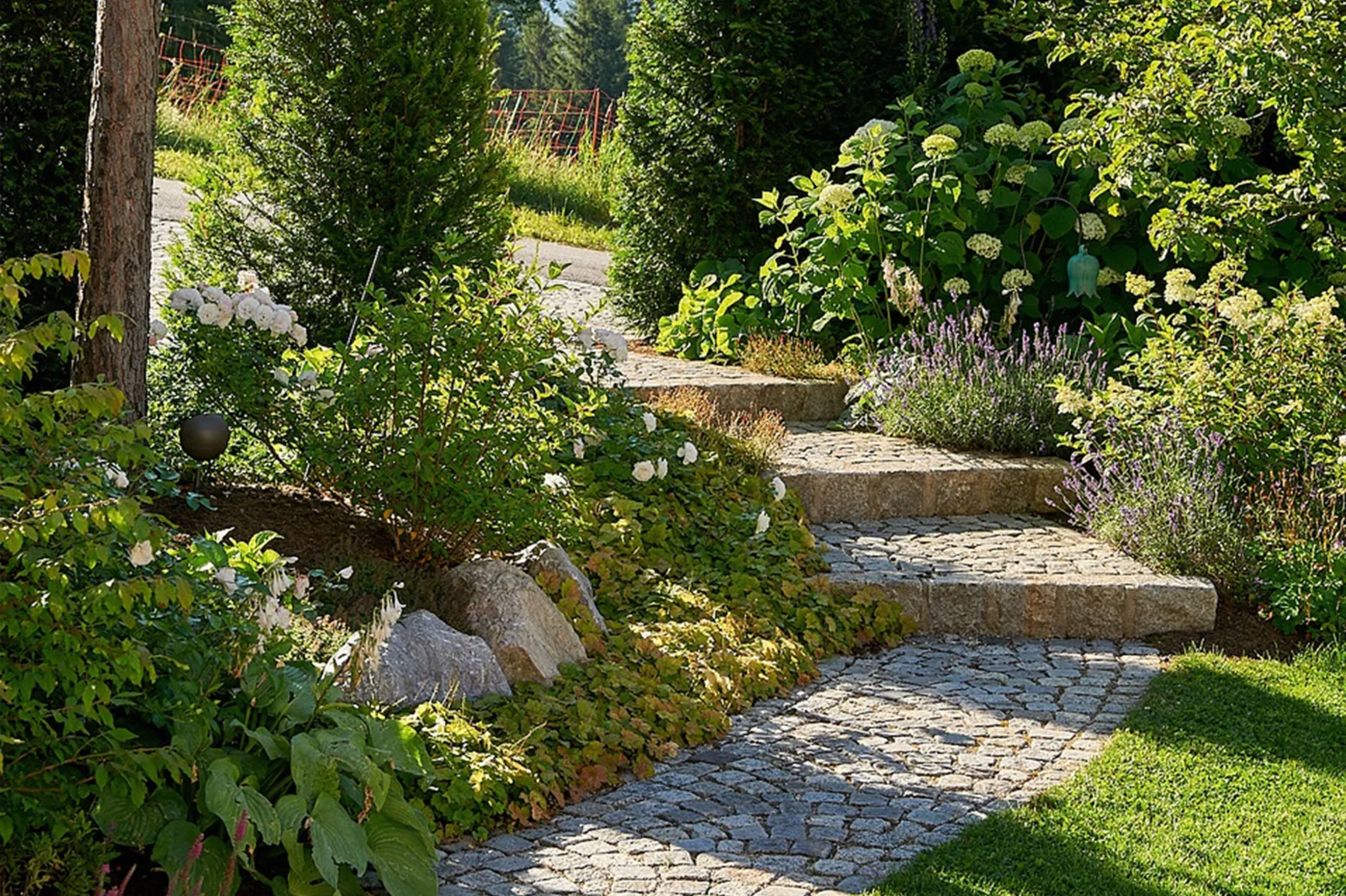
Colourful design
We compose colour from flowers, foliage and bark – creating a garden that changes with the seasons and keeps revealing new scenes.
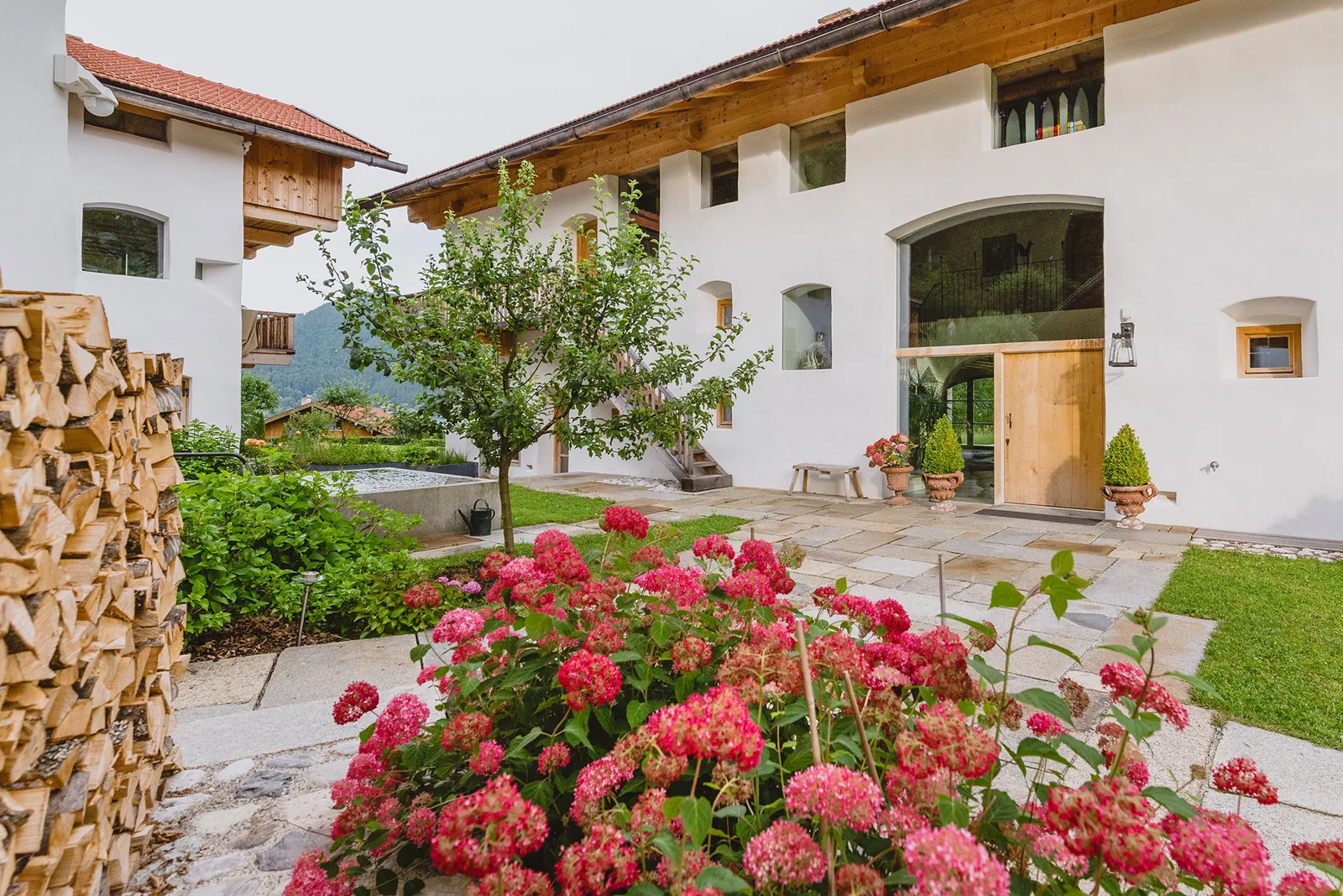
Natural sun protection
Plants are the most beautiful air conditioning: large trees and umbrella-shaped specimen trees and shrubs provide shade, and pergolas covered in climbers cool the seating area. Evergreens give structure in winter, too.
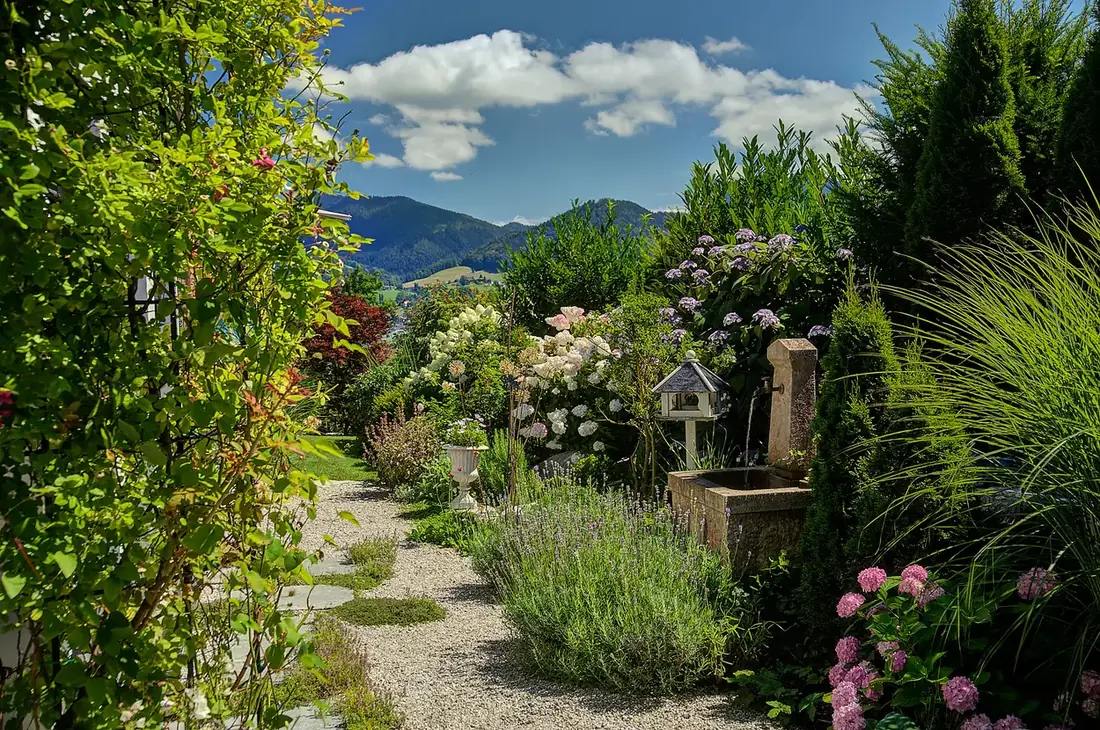
Soil improvement with mycorrhiza
Compacted soil shows itself in mossy lawns, ailing trees or waterlogging. With mycorrhizal fungi, the roots form a symbiosis that improves nutrient and water uptake – this reduces the need for fertiliser and plant protection. Find out more at our Erdenwerk.
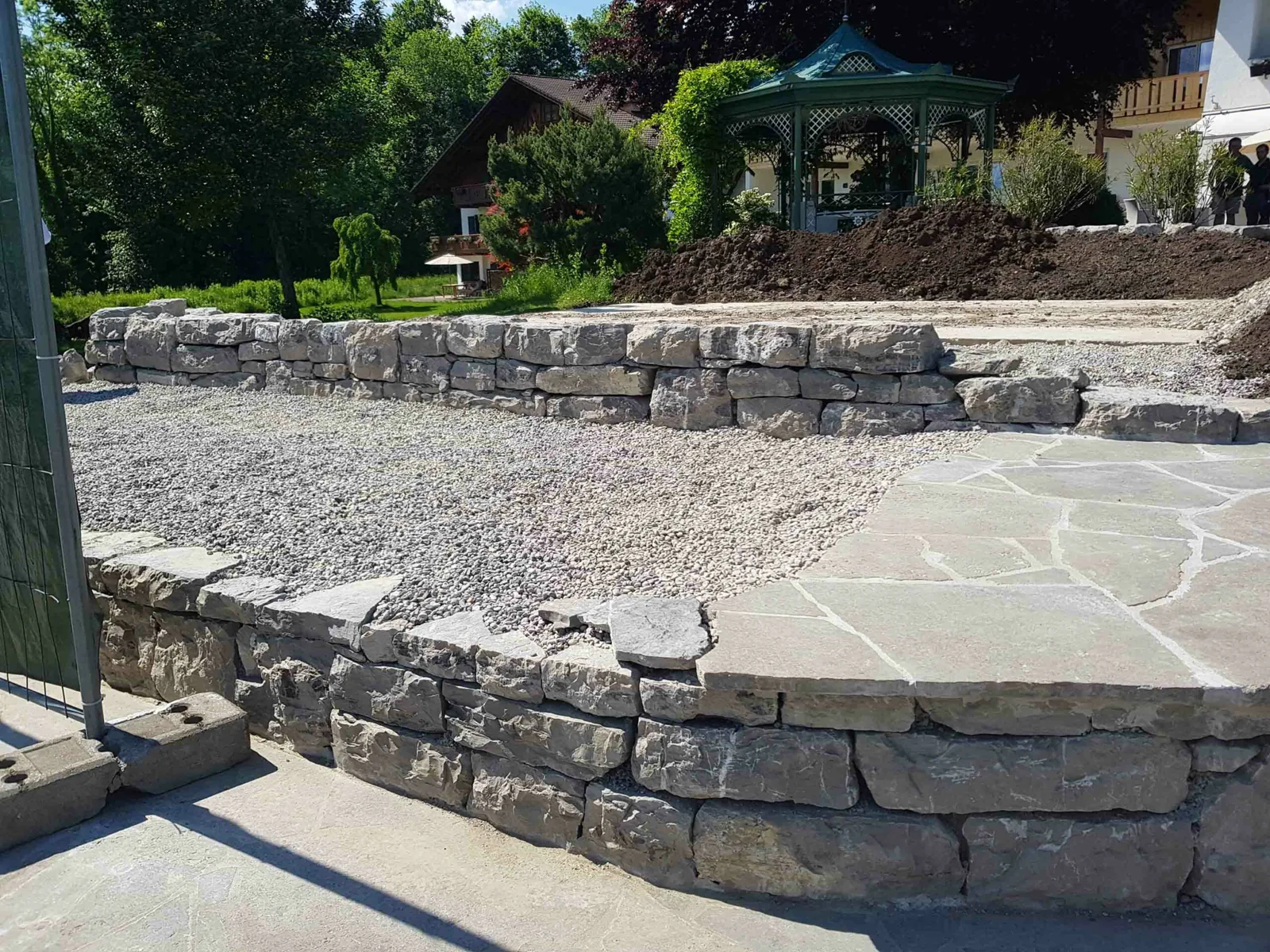
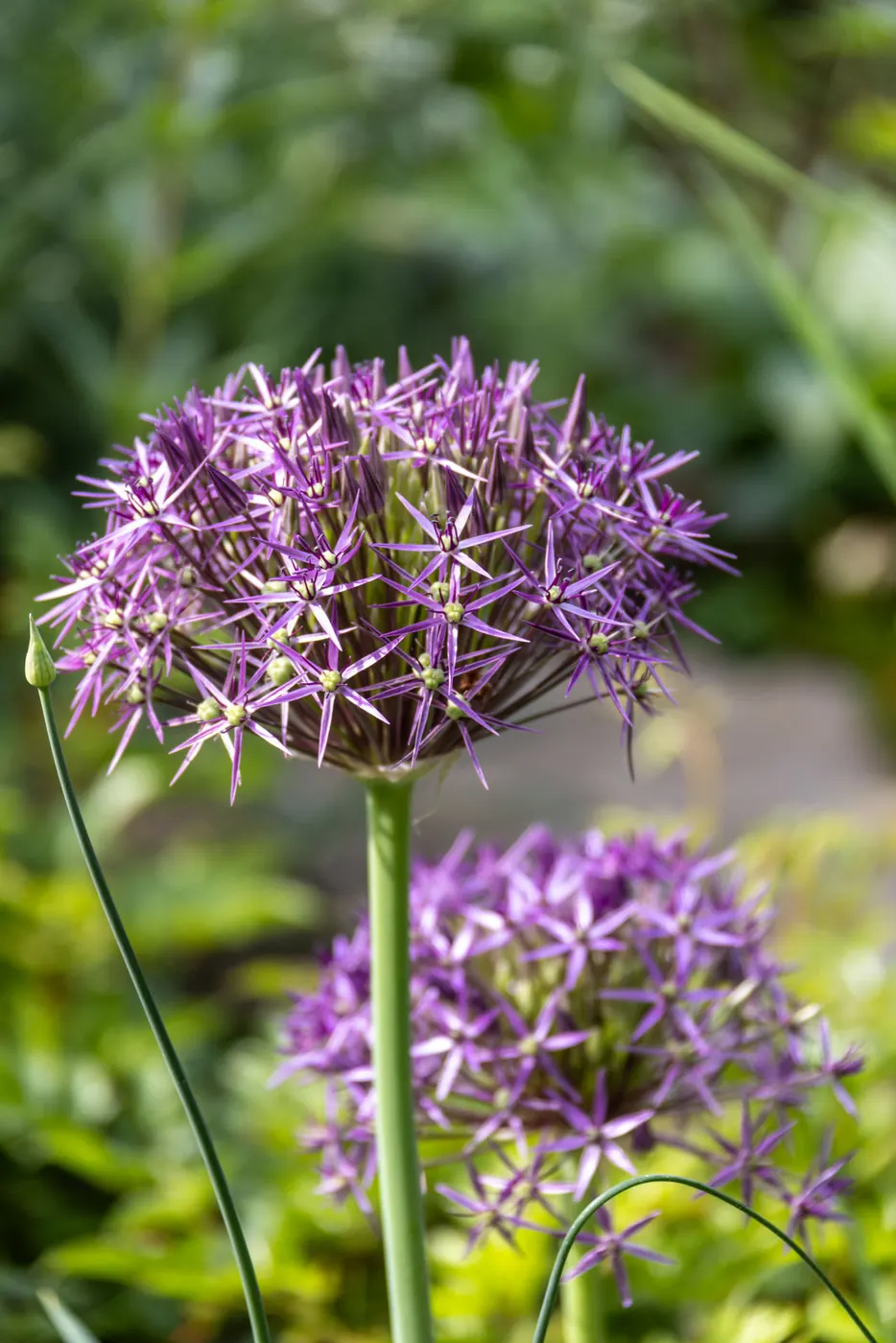
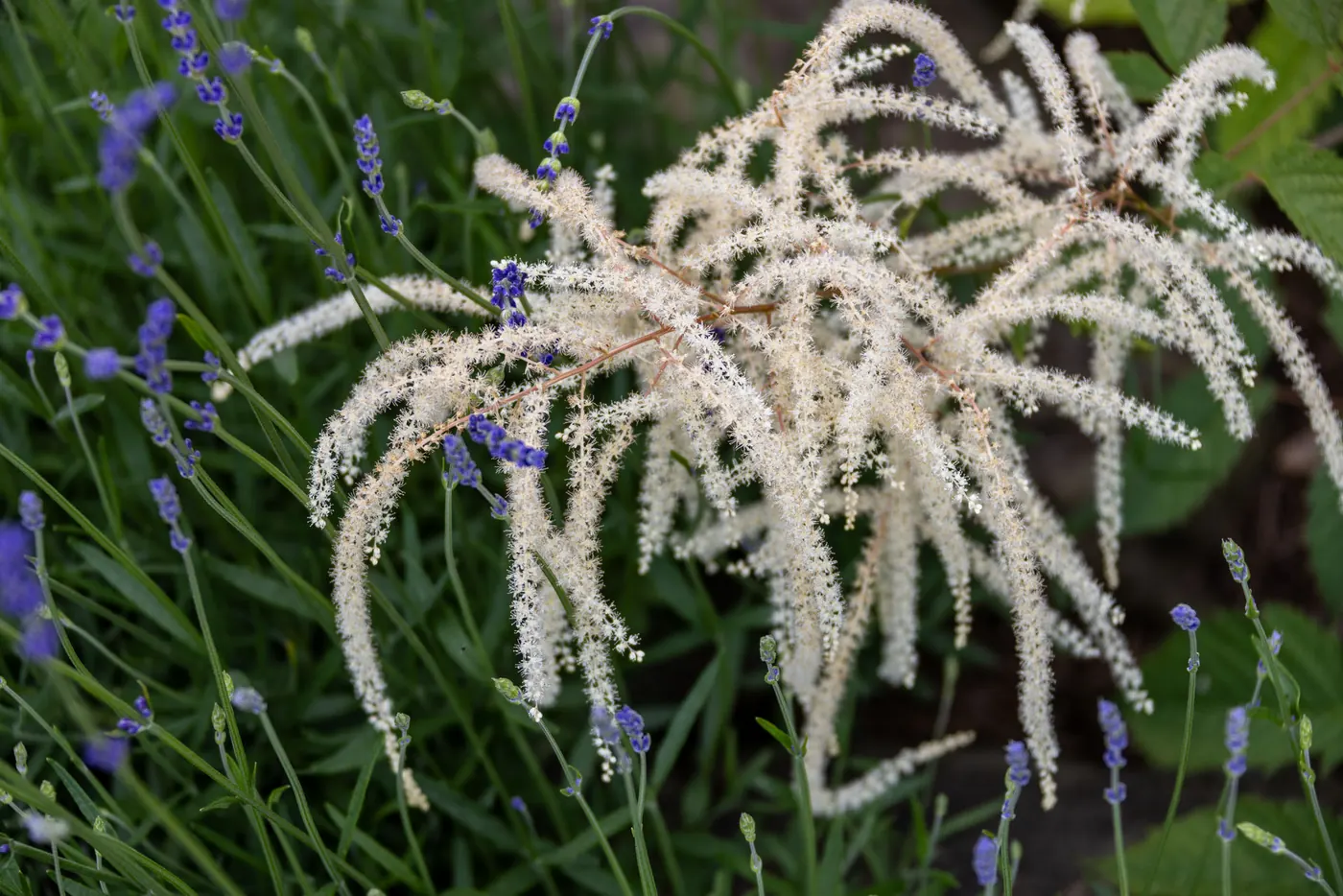
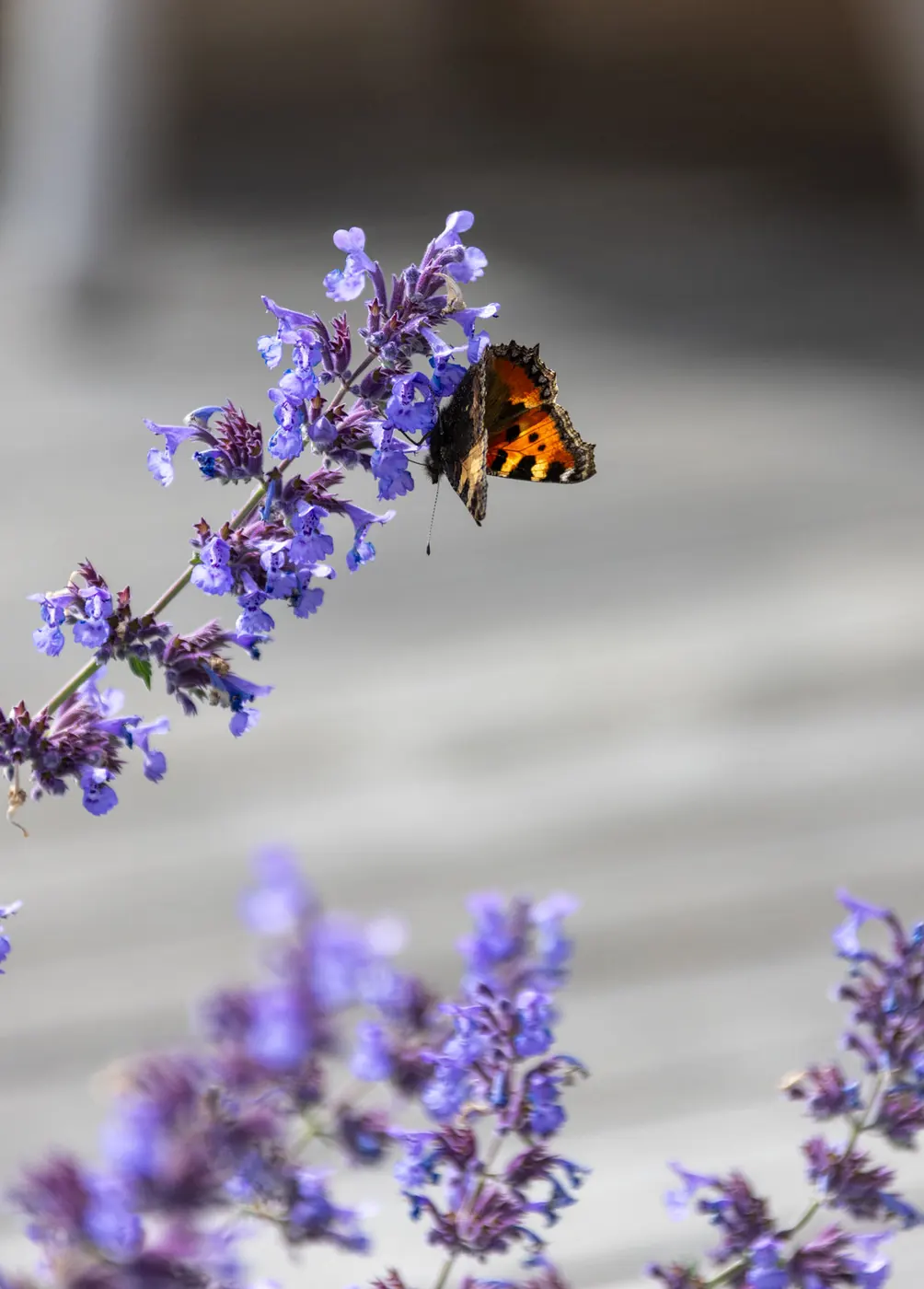
Three plants that often feature in our work
Not because they are particularly rare, but because they do what they should: flower for a long time, cope with the site and feed plenty of insects.
What a planting plan looks like
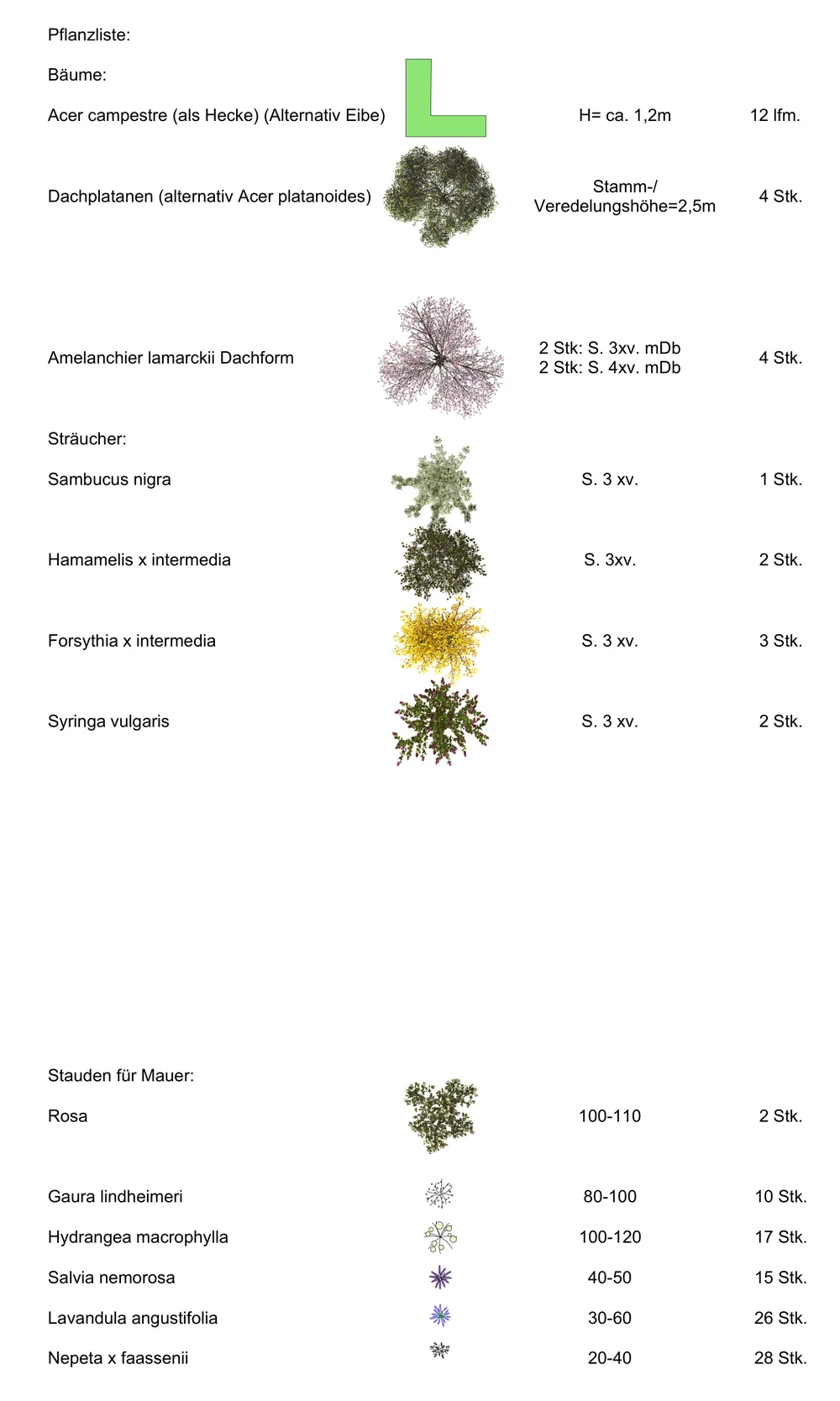
Most people never see one. That is why we are showing a section of one of our plans here – without the name and address: they are in the title block, which has been cropped out.
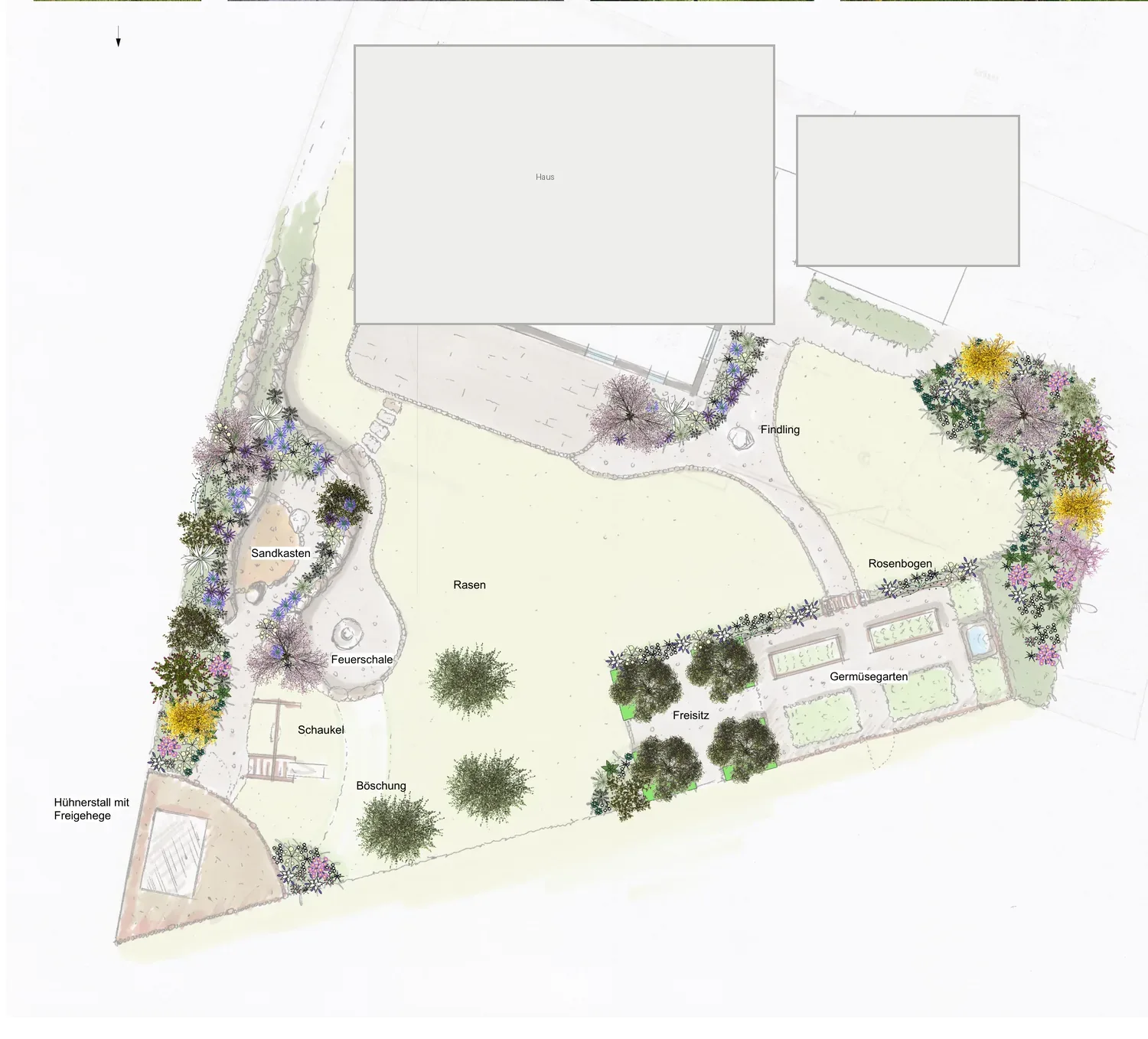
What is in a plan like this
Not “perennials”, but every plant with variety, size and quantity – and arranged by the role it plays in the bed:
Key perennials set the tone, a few plants with great effect – in the example delphinium, astilbe, aster.
Companion perennials fill gaps and extend the flowering season – Japanese anemone, Siberian iris.
Ground cover perennials cover the ground so there is no room for weeds – Siberian bugloss, foamflower.
Ferns and grasses for structure and winter interest.
Climbers for everything that grows vertically.
This order is why a planned bed looks better after three years than a bought one. If you buy by colour alone, you have gaps in July and bare patches in September.
To find out how the journey to a plan works, see Consultation & Planning. Perennial beds in detail: Perennial planting.
From plan to planted
For us, a planting plan is not a recommendation but a set of working instructions – and the work is carried out by the same people who know the garden. First comes the fine grading with sieved soil from our own works, then the pots are laid out according to the plan, checked – and only then planted. After that, we don't leave the bed to fend for itself: watering, feeding and the first round of weeding are part of the establishment care until everything has taken root securely.


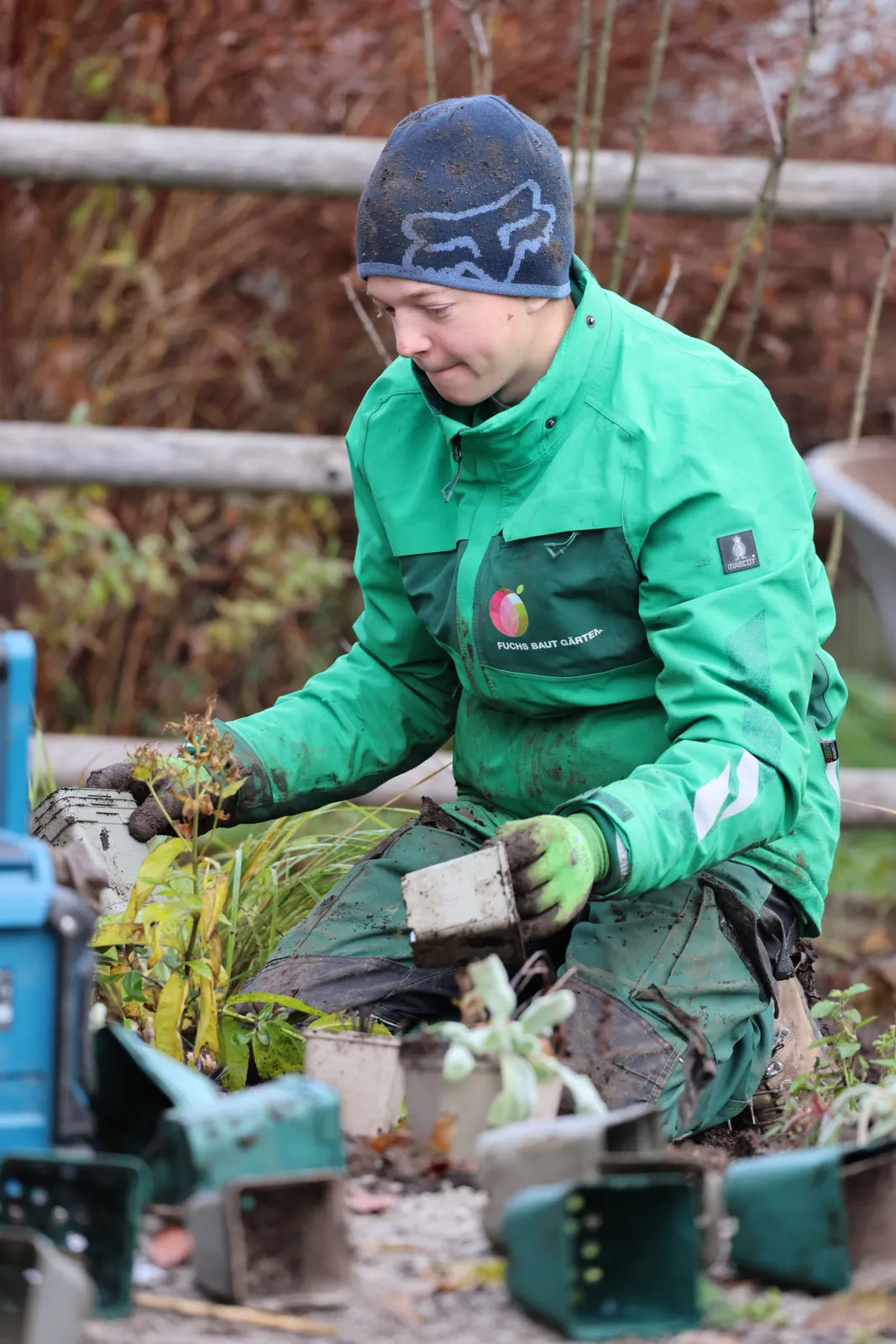

Autumn perennial planting. Photos: Benjamin Klopp.
That applies from the perennial bed to the big projects: hedges of all sizes, perennial plantings arranged by habitat, seeding from hard-wearing lawn to wildflower meadow – and large trees set in place by crane.
Trees and shrubs that anchor a garden
The right single tree does more for a garden than twenty small ones. These are specimen trees that actually stand in our projects – not copied from a catalogue.
Acer palmatum 'Fireglow', Japanese maple
Stands in the villa garden in Pullach above a moss landscape. Slow-growing, expensive, priceless in autumn.
Heptacodium miconioides Seven-son flower tree
Umbrella-shaped in “Grasses and Geometry”. Flowers in September when nothing else is in bloom, and afterwards bears red calyces.
Gleditsia triacanthos 'Inermis', thornless honey locust
Also in Unterwössen, underplanted with Stipa. The lightest foliage a tree of this size can have – you sit beneath it in dappled shade, not in darkness.
Parrotia persica Persian ironwood
In Pullach as a specimen tree, in Unterwössen as a trained espalier standard for privacy screening. The autumn colour runs from yellow through orange to burgundy – on the same tree.
Cornus kousa 'Milky Way', Japanese flowering dogwood
In Pullach. Blooms in such dense white that you can hardly see the tree.
Liquidambar styraciflua Sweet gum
Also Pullach. A climate-resilient tree that copes with drought better than most – and turns red in autumn like hardly any other.
Carpinus betulus Hornbeam, clipped into shape
Trained as a canopy to give shade in Unterwössen, and as a columnar hornbeam in “Seeblicke” on Lake Tegernsee – there it stands in front of a copper beech hedge and makes the neighbouring house disappear without blocking the lake view.
Malus Ornamental apple and espalier fruit
In Unterwössen as espalier fruit for privacy screening, in “Seeblicke” as ornamental apple in metal planters – privacy screening that blossoms and bears fruit instead of a wall.
How a tree like this gets onto a plot – by crane, over the roof or through the house passage – is explained under Trees & Large Trees.
Where our plants come from
A good plan is of little use if the plant isn't up to it. That's why we buy from nurseries that grow specimen trees over many years – not from wherever is quickest.
Lorenz von Ehren
Hamburg, since 1865, with over 600 hectares under cultivation. Many of our specimen trees come from there – the nursery itself calls them “one-offs” – along with shaped trees and shrubs, hedge elements and climate-resilient trees. There is a show garden in Munich where you can see trees beforehand.
Ebben
The Netherlands, 550 hectares, five generations. Specialises in large specimen trees and shrubs up to 150 cm trunk circumference, climate-resilient trees and multi-stem trees. Very useful for planning is the tree search engine TreeEbb, which lets you filter by location and crown shape.
Fehrle Stauden
Schwäbisch Gmünd, over 1,200 perennials plus grasses, ferns and herbs – from small pot sizes to large perennials. Co-founder of the Stauden Ring and specialised in mixed perennial plantings, which is exactly what a planting plan like the one above calls for.
Sometimes it works the other way round: at Stachus in Munich, Lorenz von Ehren had the contract, and the client had chosen the plants there herself – we got to do the planting. It's better to be involved from the start and to advise. But we're happy to come on board at any stage of construction.
Answers about plants
What are borders in a garden?
Do you choose plants to suit the site?
Do you also lay lawns?
What are the benefits of soil improvement with mycorrhiza?
Do you also use plants as natural sun protection?
Let's talk about your project
We are happy to advise you in person, with no obligation.
Request a consultation