
Walls & Fences
Natural stone walls, retaining walls and boundary enclosures – durable, expertly built and designed to blend into the garden.
Stones that hold each other in place
A wall structures the garden, holds the slope and stores warmth – and when it is built without mortar, it also becomes a home for wildlife. This page explains how it works, when you need a retaining wall and how to recognise a well-built dry stone wall.
Over 3,500 m² of dry stone walls
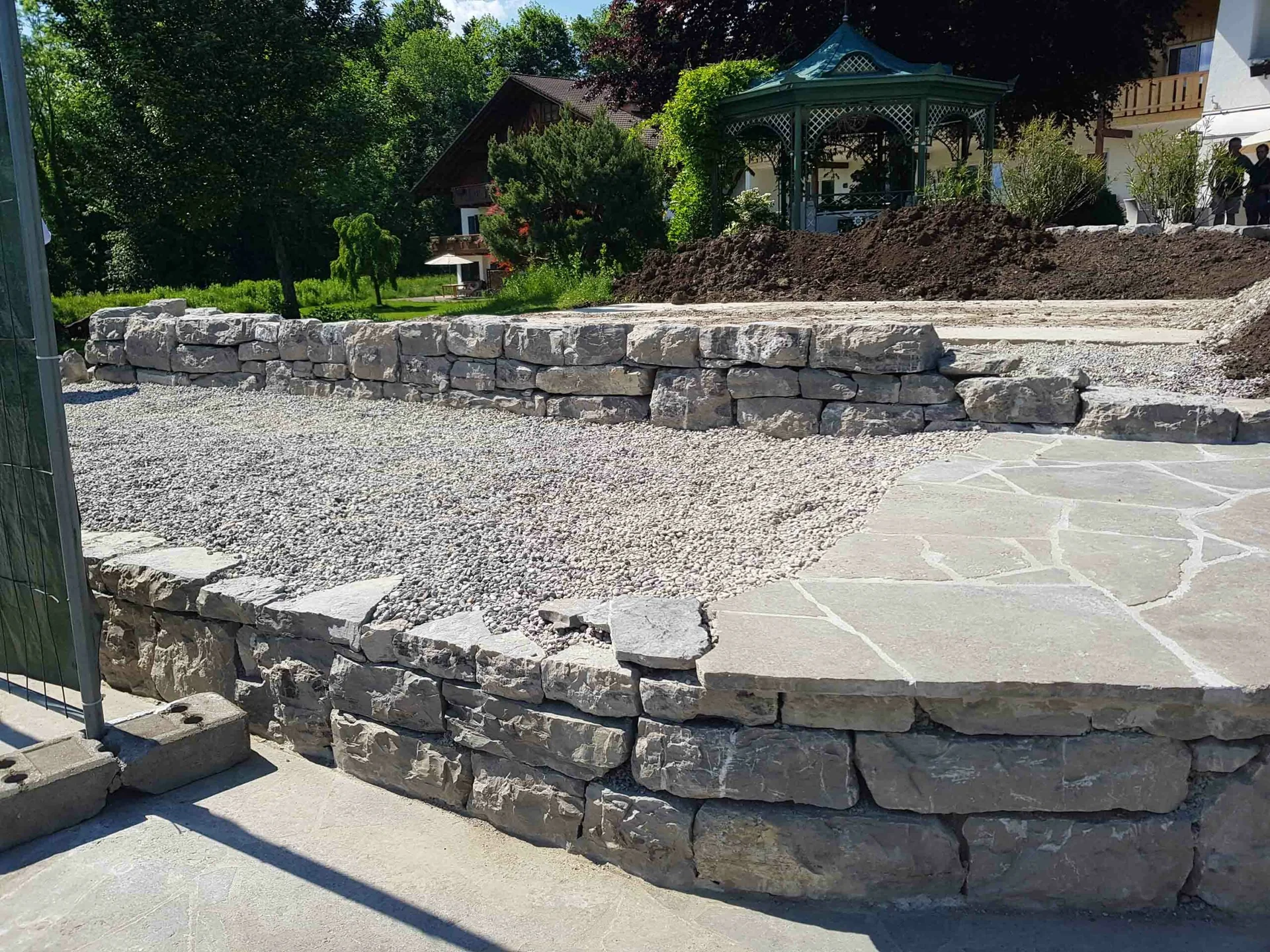
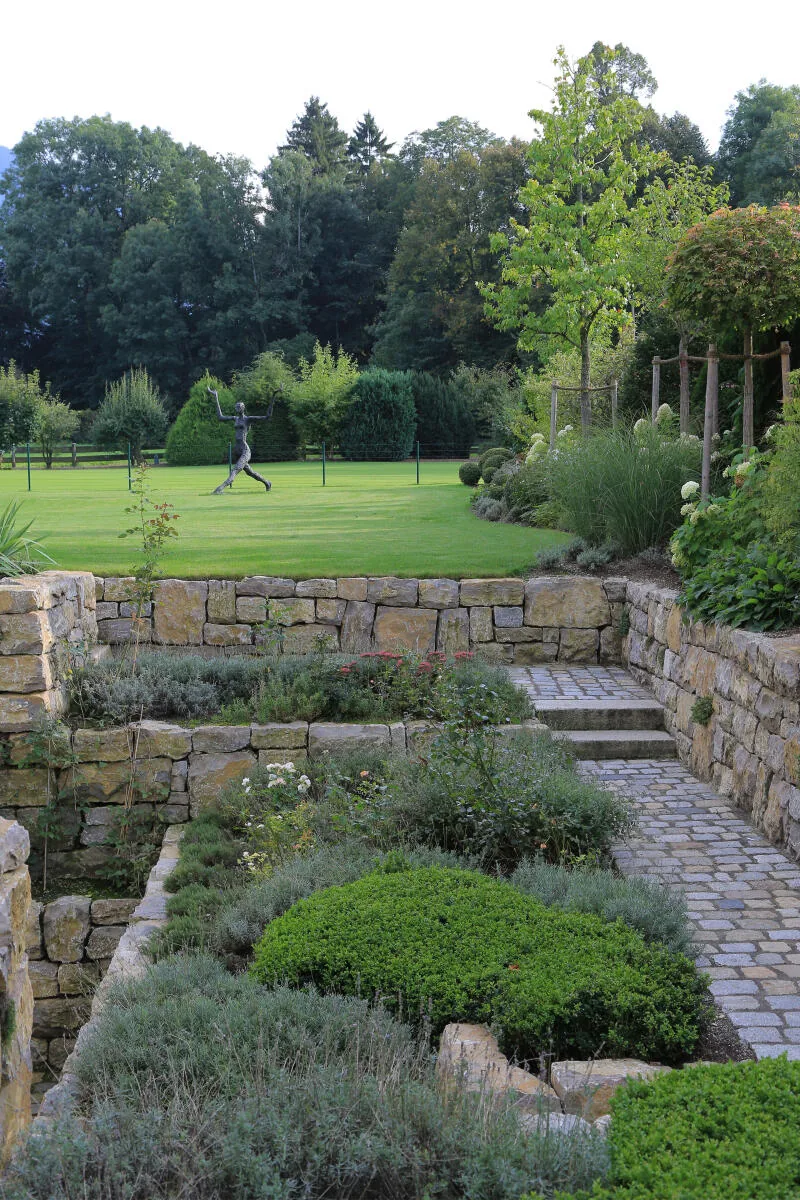
That is how much visible wall surface of limestone and quarry stone walls we have built and invoiced since 2004 – layer by layer, mostly without mortar. Terracing on slopes is everyday work for us in the Alps: the wall divides the ground into usable levels and holds it at the same time.
Over 14 km of granite edging
Edging stones, large and small setts in rows – the most understated natural stone work, and the one that keeps paving and beds in shape for good. Laid end to end, our edging would stretch from Lenggries beyond the Sylvenstein.
Over 15,000 m² of paving
Natural stone paving and slabs, from granite setts laid in arcs to shell limestone slabs – find out more under Terraces.
Stones that hold each other in place
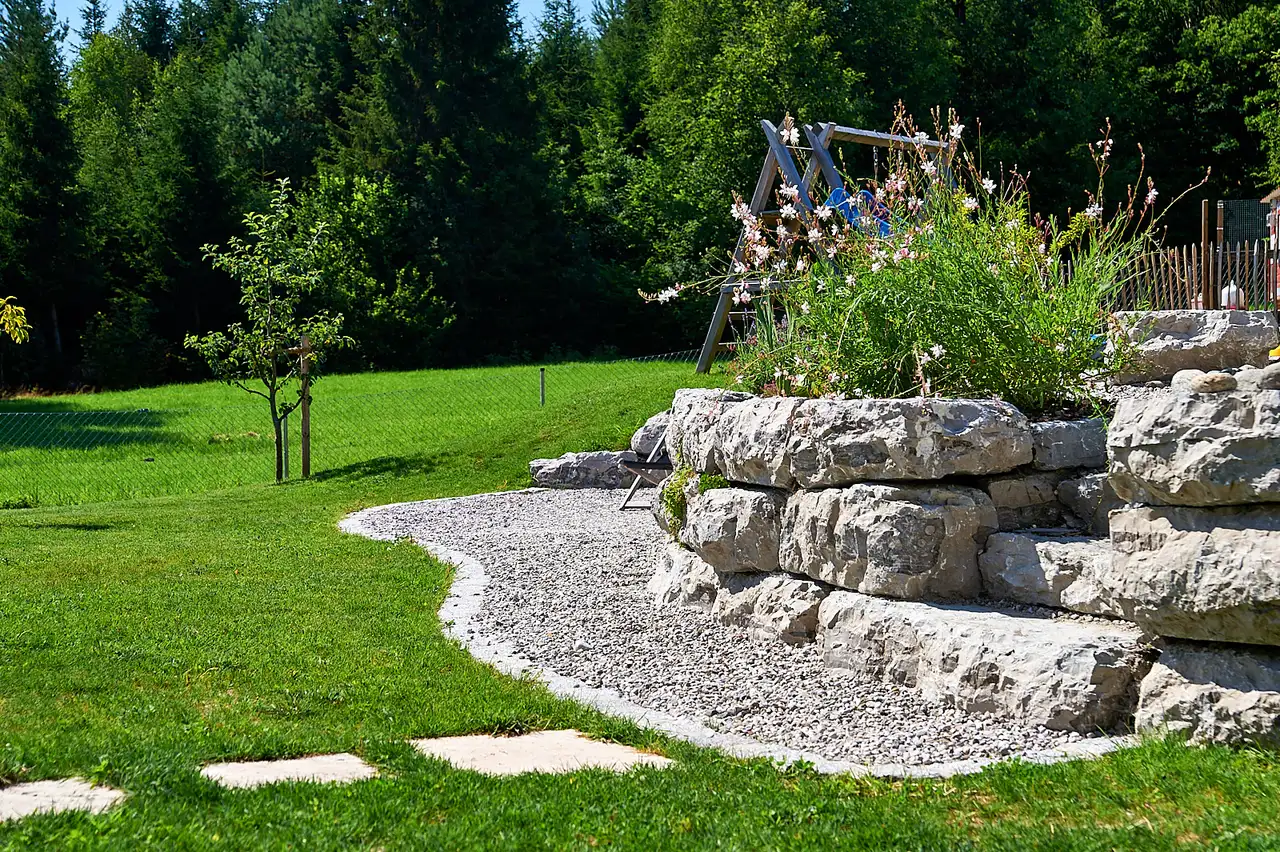
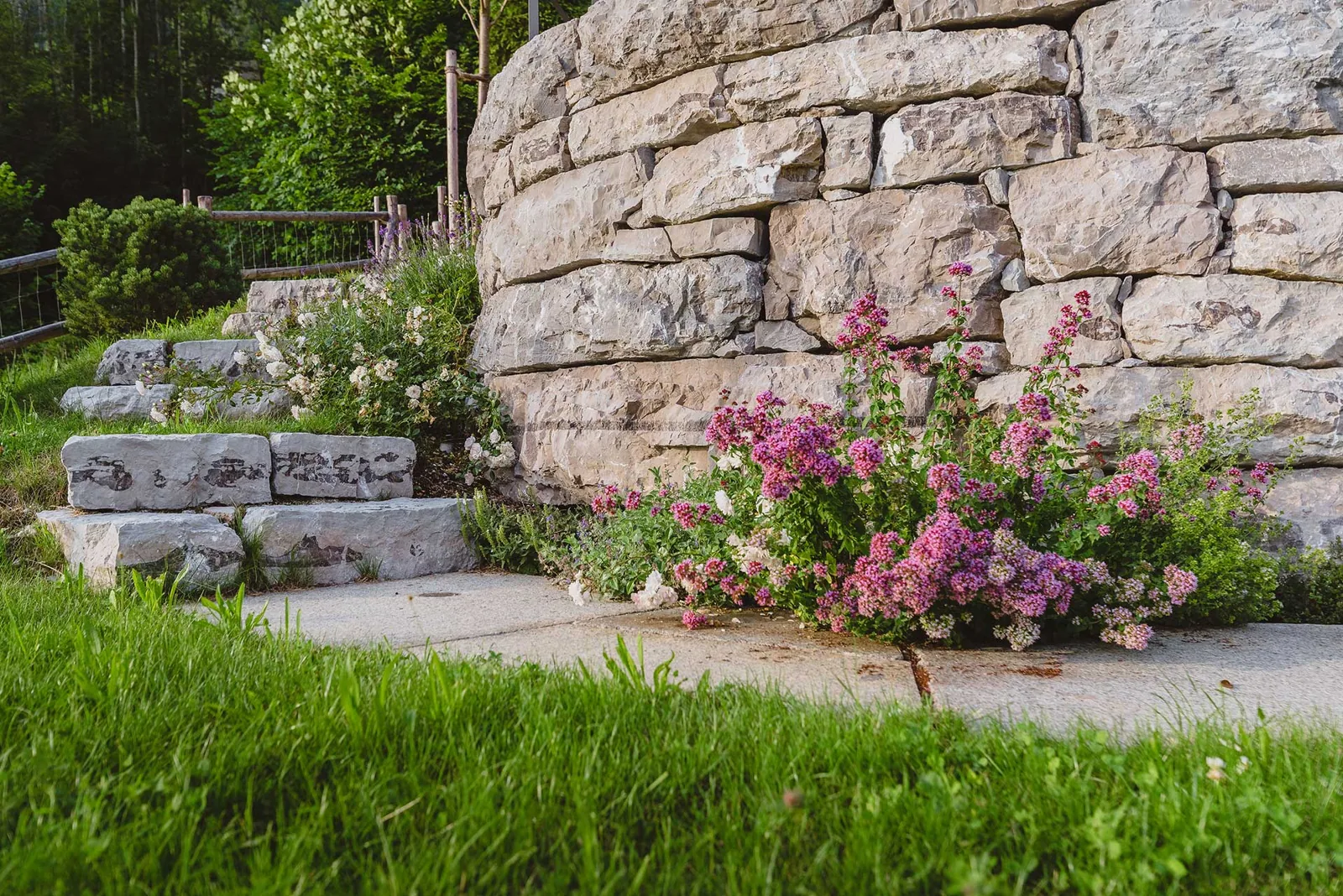
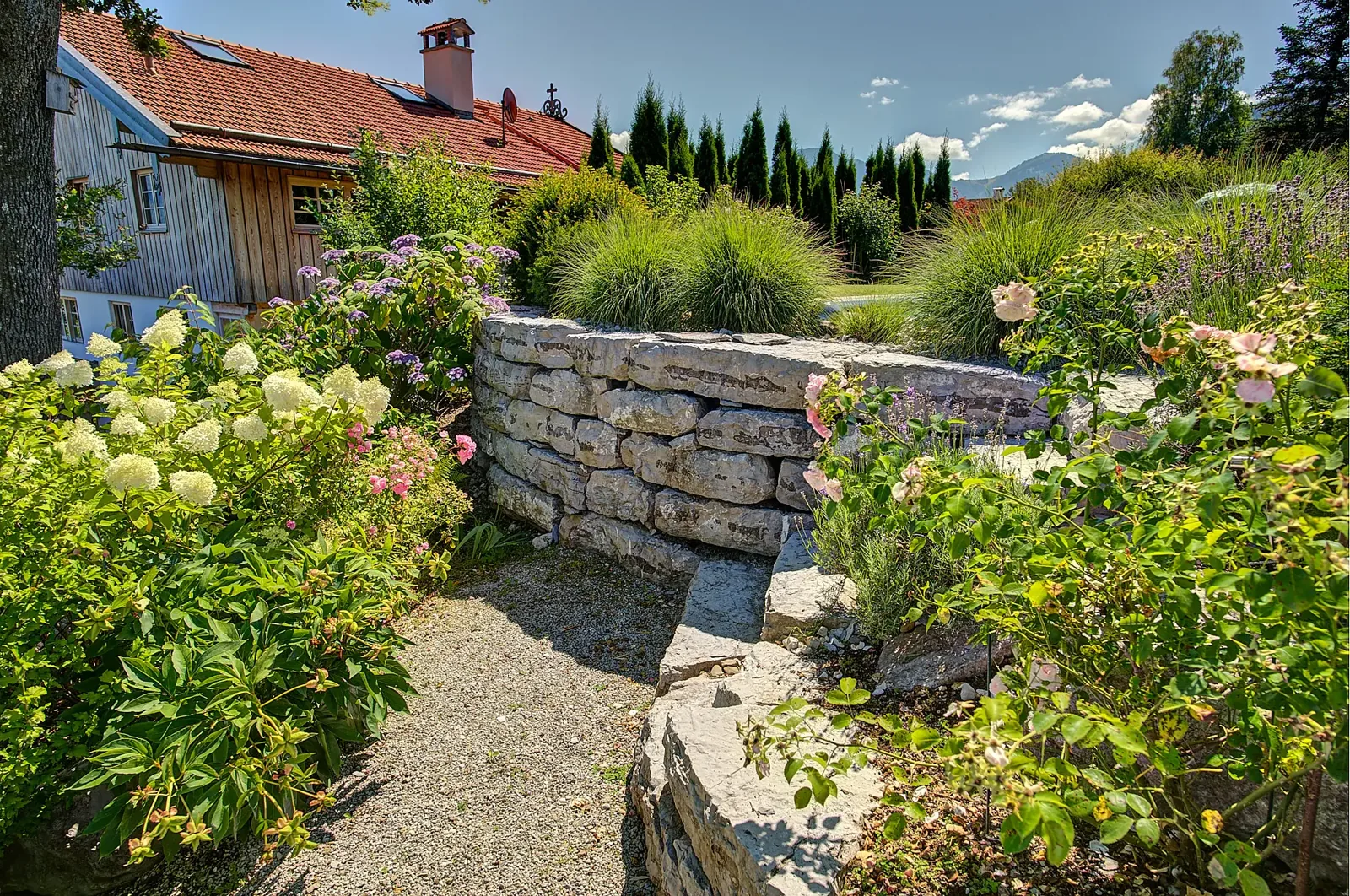
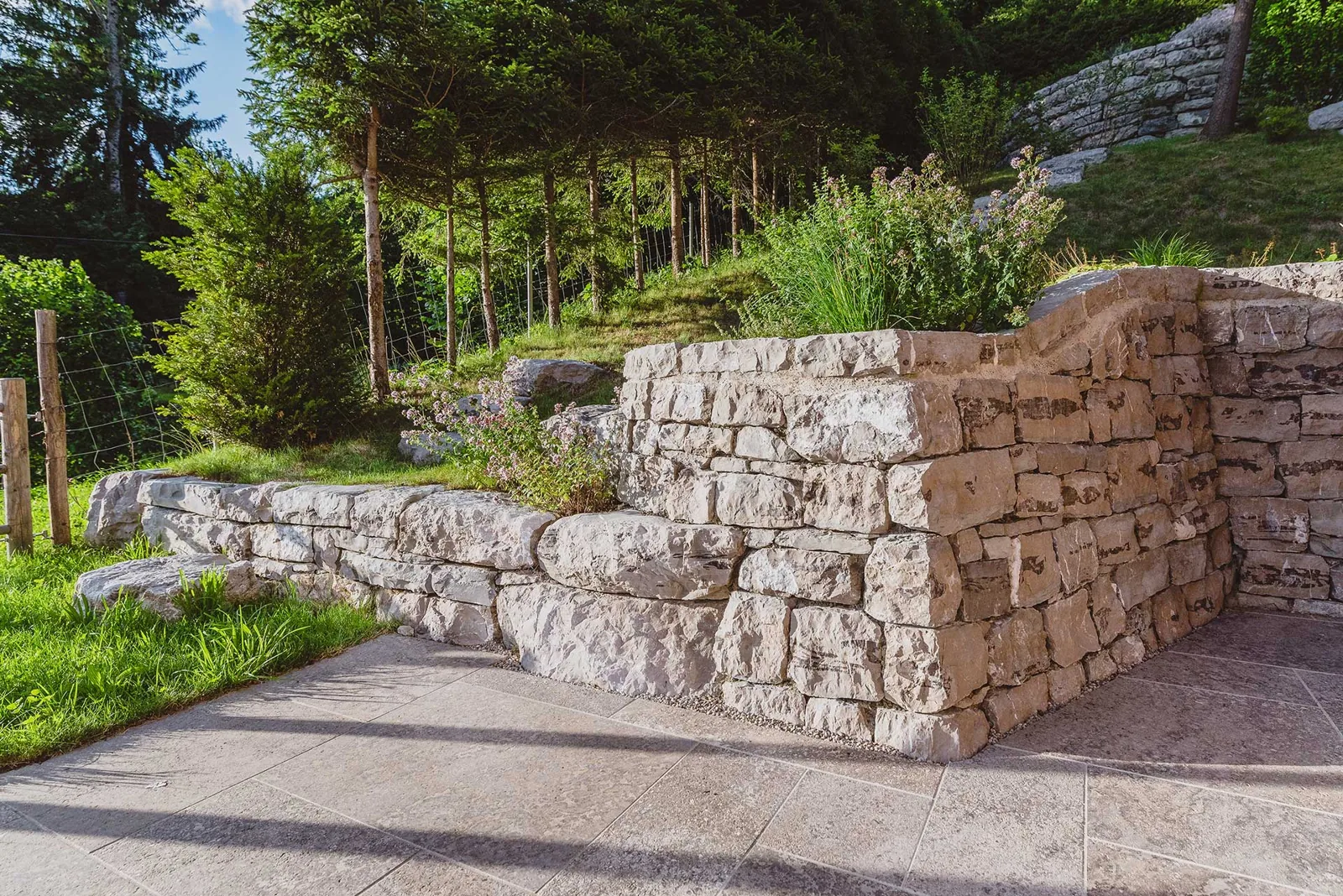
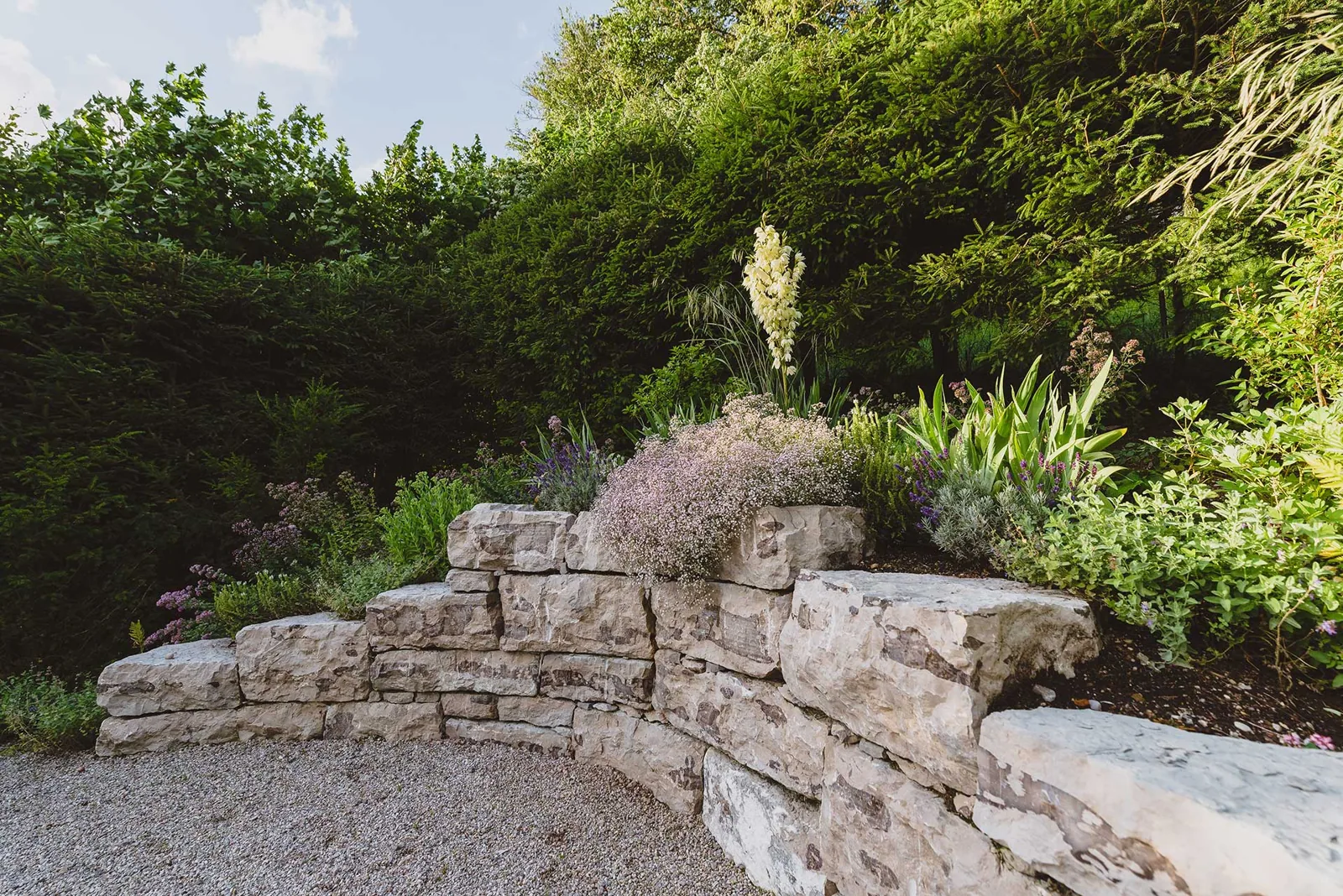
A dry stone wall needs no mortar. It stands because every stone is laid so that it passes the load on – set by hand, layer by layer, with backing masonry and backfill that carry the water away. That is exactly why it lasts for decades and withstands frost: where there is no mortar, nothing can crack.
That this is a craft and not just a building job is not only our industry's view: the art of dry stone walling has been UNESCO intangible cultural heritage since 2018. At Schliersee we terraced an entire slope with hand-stacked limestone – see Bathing Tub and Mountain View.
A wall that something lives in
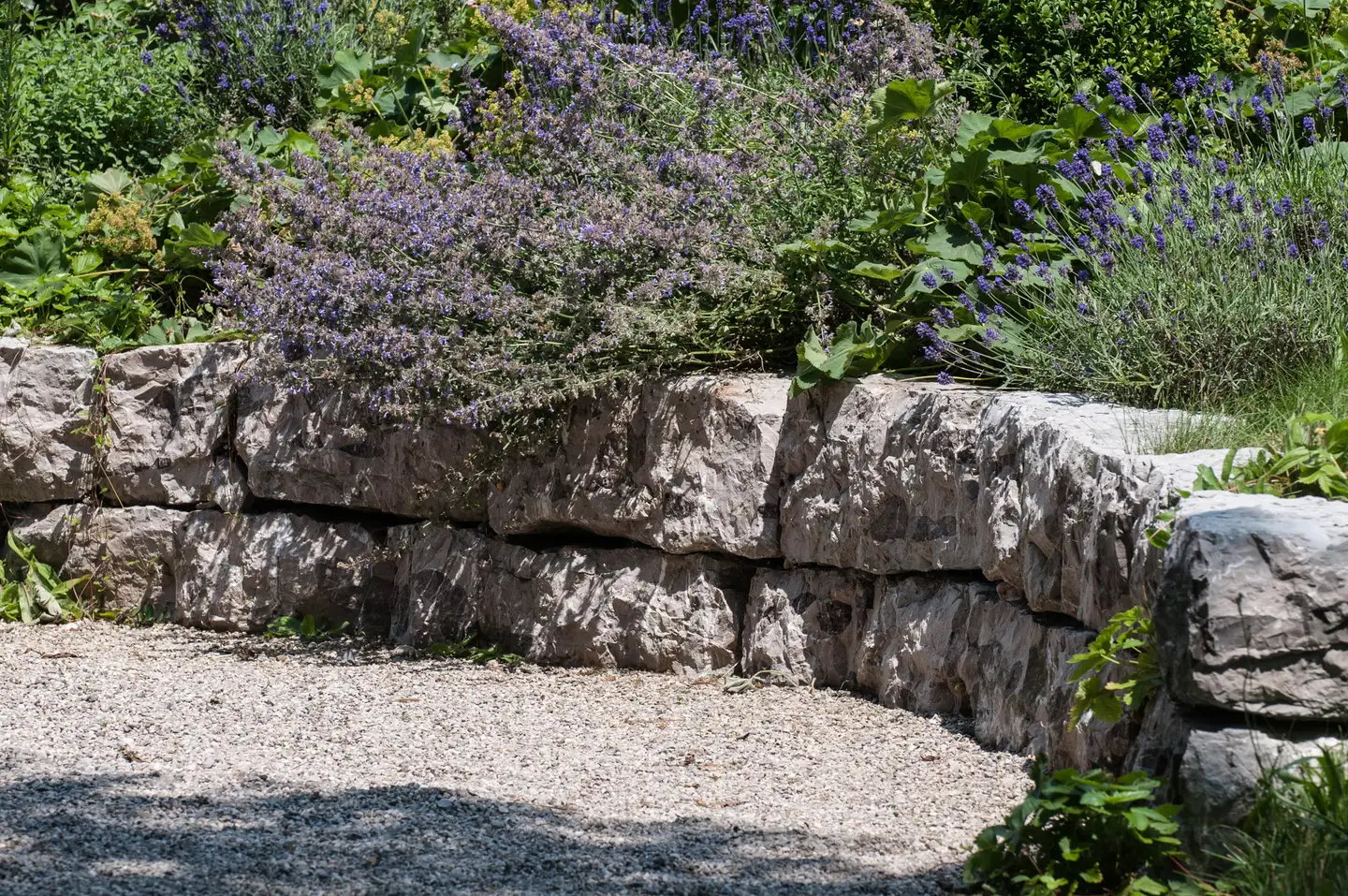
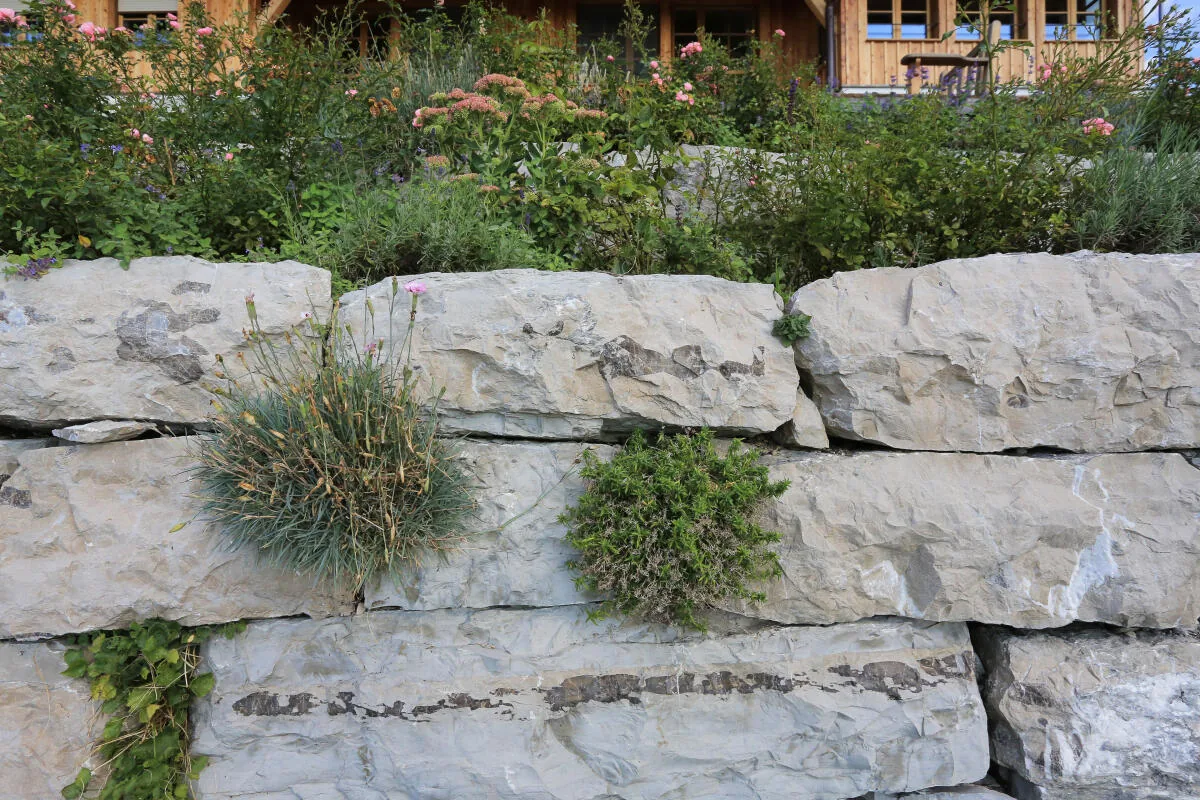
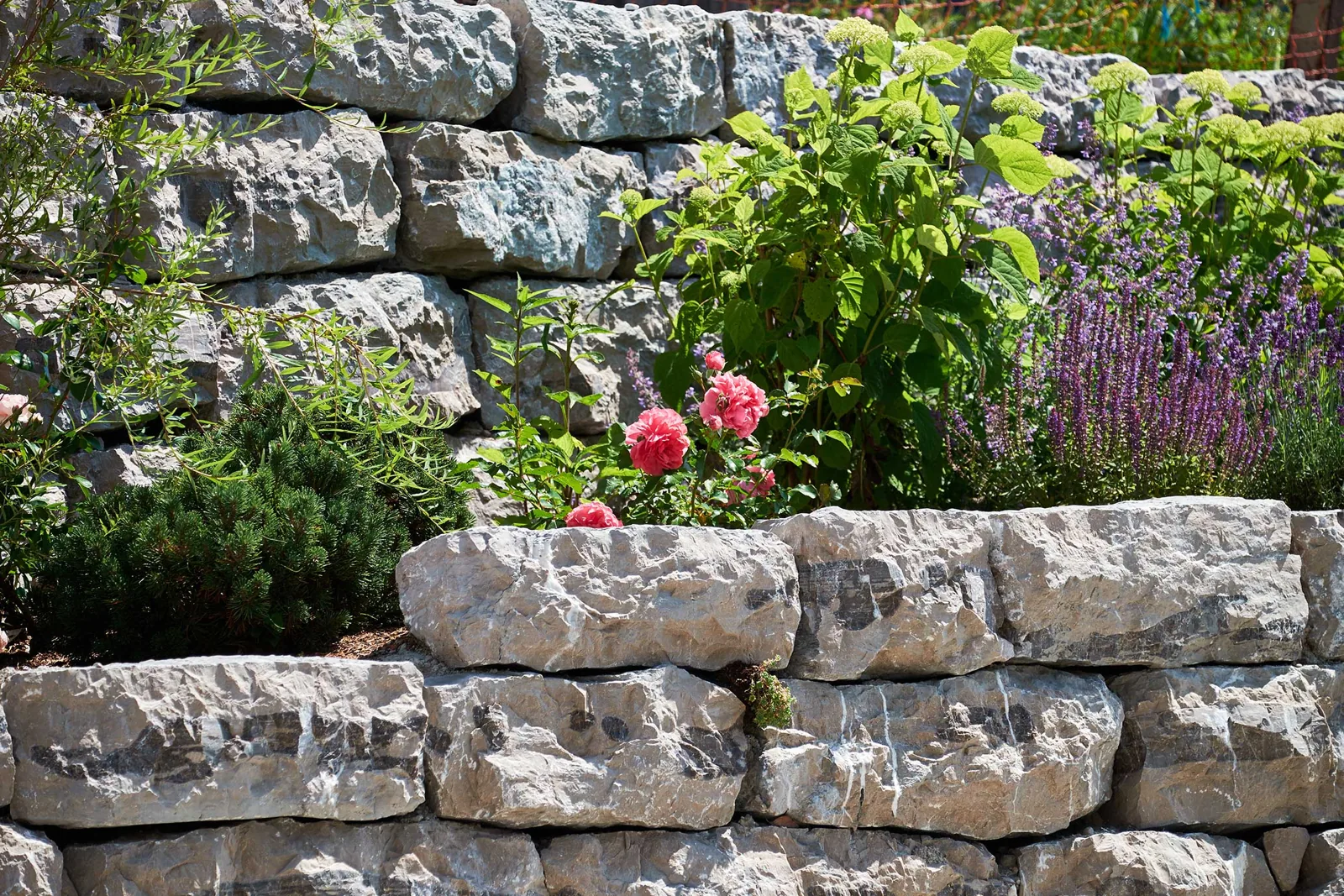
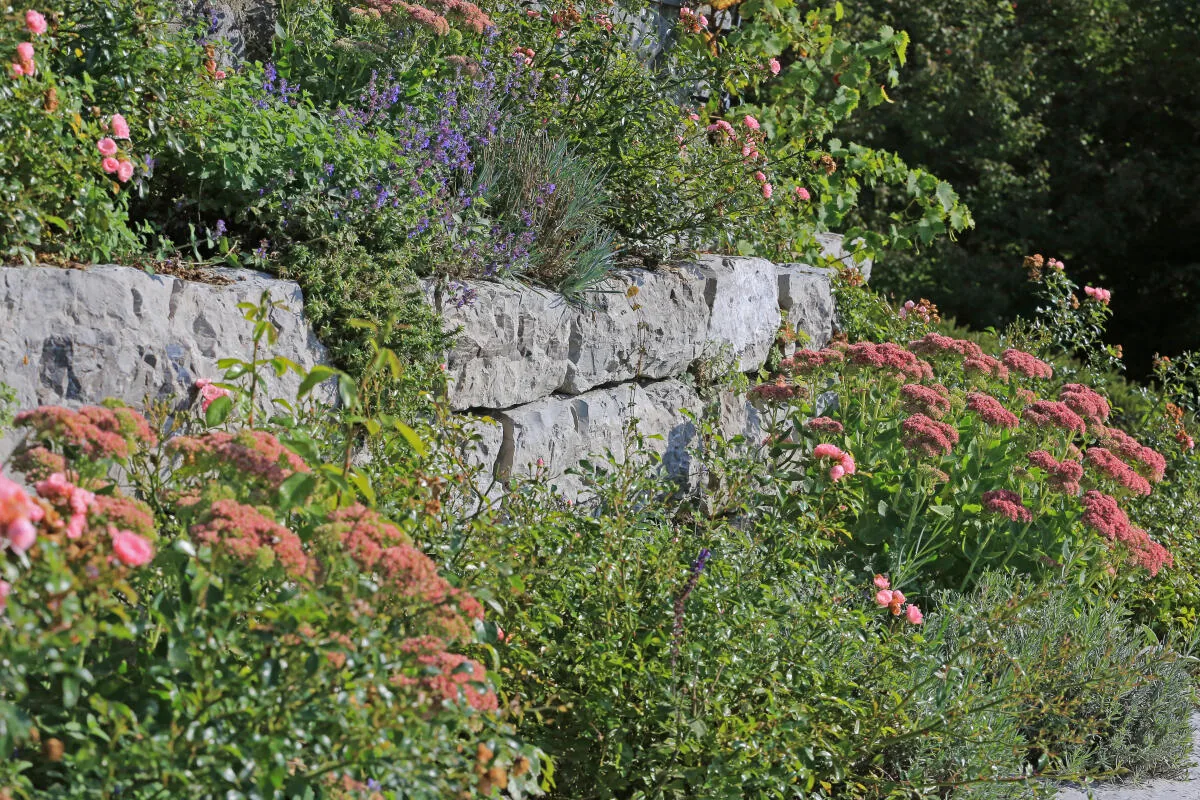
This is the argument that is mentioned least and matters most: the joints of a dry stone wall are home to lizards, wild bees, ground beetles and toads. The stones store warmth, the crevices give cover, and because nothing is mortared, there are ways in. Nature conservation associations list dry stone walls as connecting elements in the landscape – so a wall in your garden can be more than a boundary.
That is why we deliberately build them to stay inhabitable: open joints instead of grouting, planting joints for stonecrop, pinks and ferns, and a gravel zone at the base that stays dry. More on this: Environment and biodiversity.
Retaining wall or dry stone wall – which one, and when
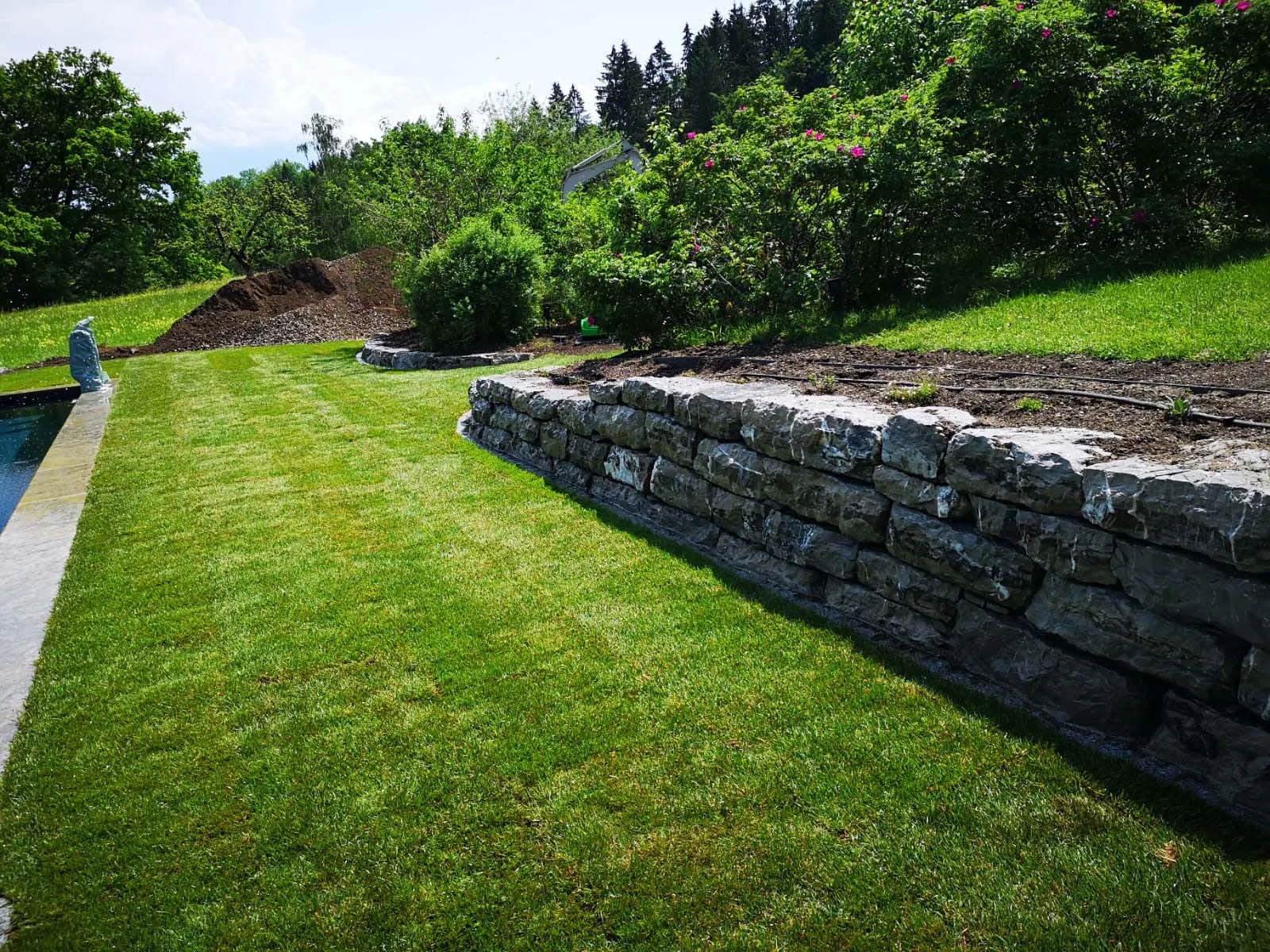
The difference is decided by the slope, not by taste. A dry stone wall frames beds, terraces the ground and holds soil as long as the loads are manageable. As soon as vehicles drive above it, a building stands closer or the slope presses on it, you need a retaining wall with a foundation, reinforcement and drainage behind the wall. Anyone who mixes the two up will find out after the second winter.
For the stone, we work with what belongs here: limestone for walls and steps, Limes dolomite for large slope walls, granite for plinths and kerbstones – also reclaimed. More on the construction: Implementation.
Walls that are something more
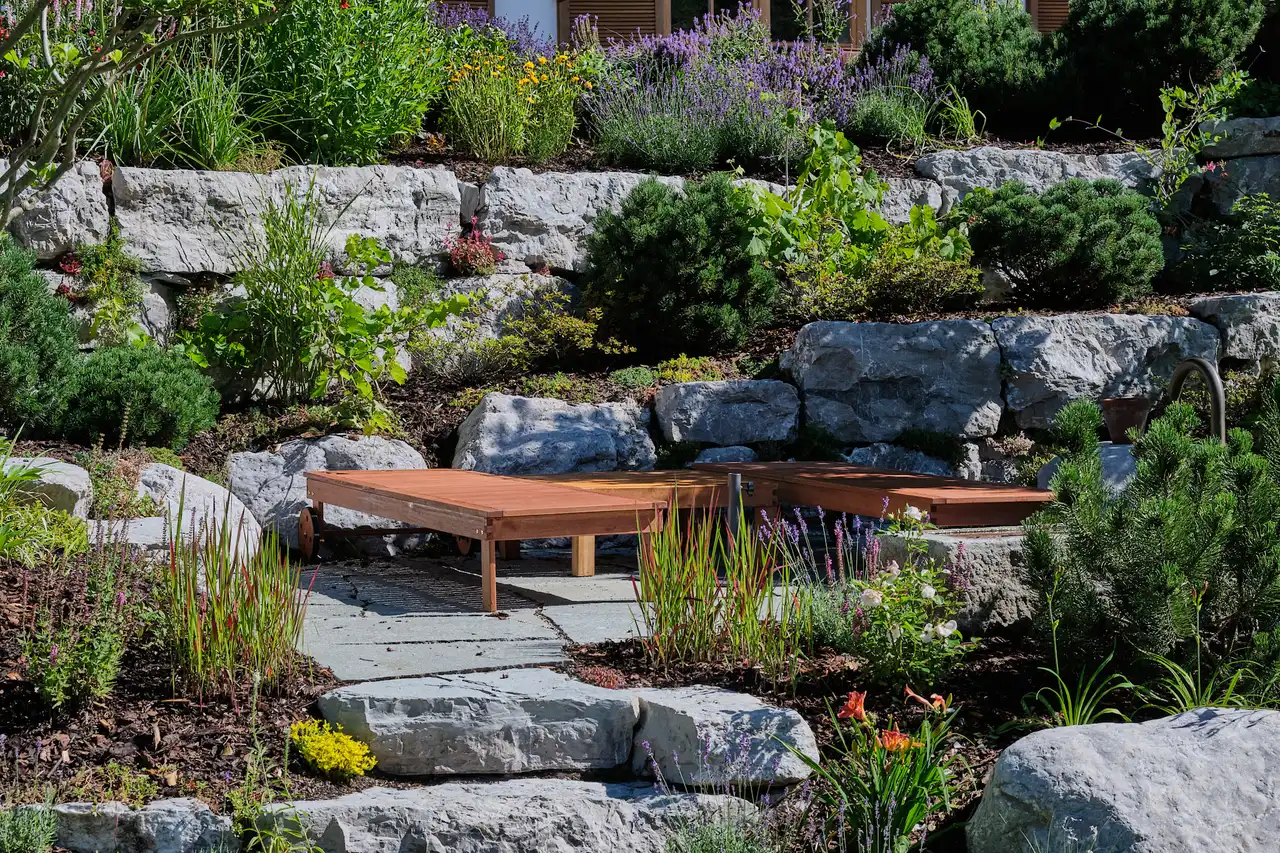
The best walls in our gardens are not just walls. In Thanning, a bench made from a single slab of stone sits in the dry stone wall – not a piece of furniture that gets put away in winter, and in summer it becomes overgrown. In Penzberg, a sandpit is built into the wall and can be removed once the children no longer need it – without leaving a gap.
And a south-facing wall noticeably changes the climate in front of it: it stores warmth and releases it at night. Plants that would normally be too tender here benefit – one reason why figs and rosemary make it through winter against the right wall.
Boundaries that suit the house
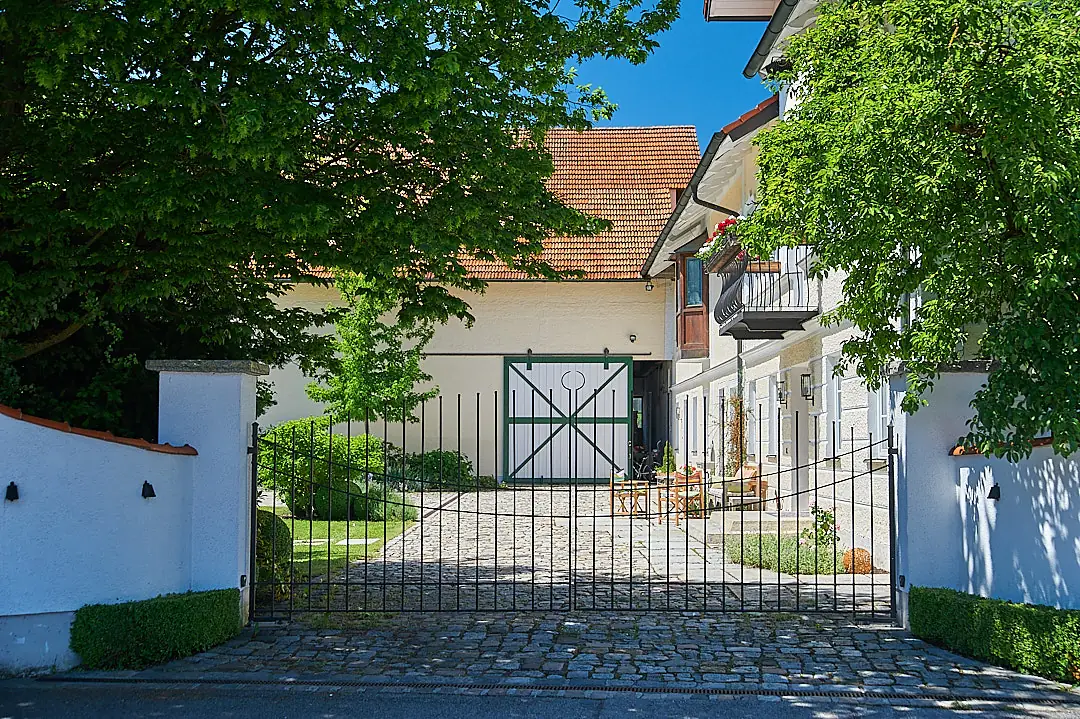
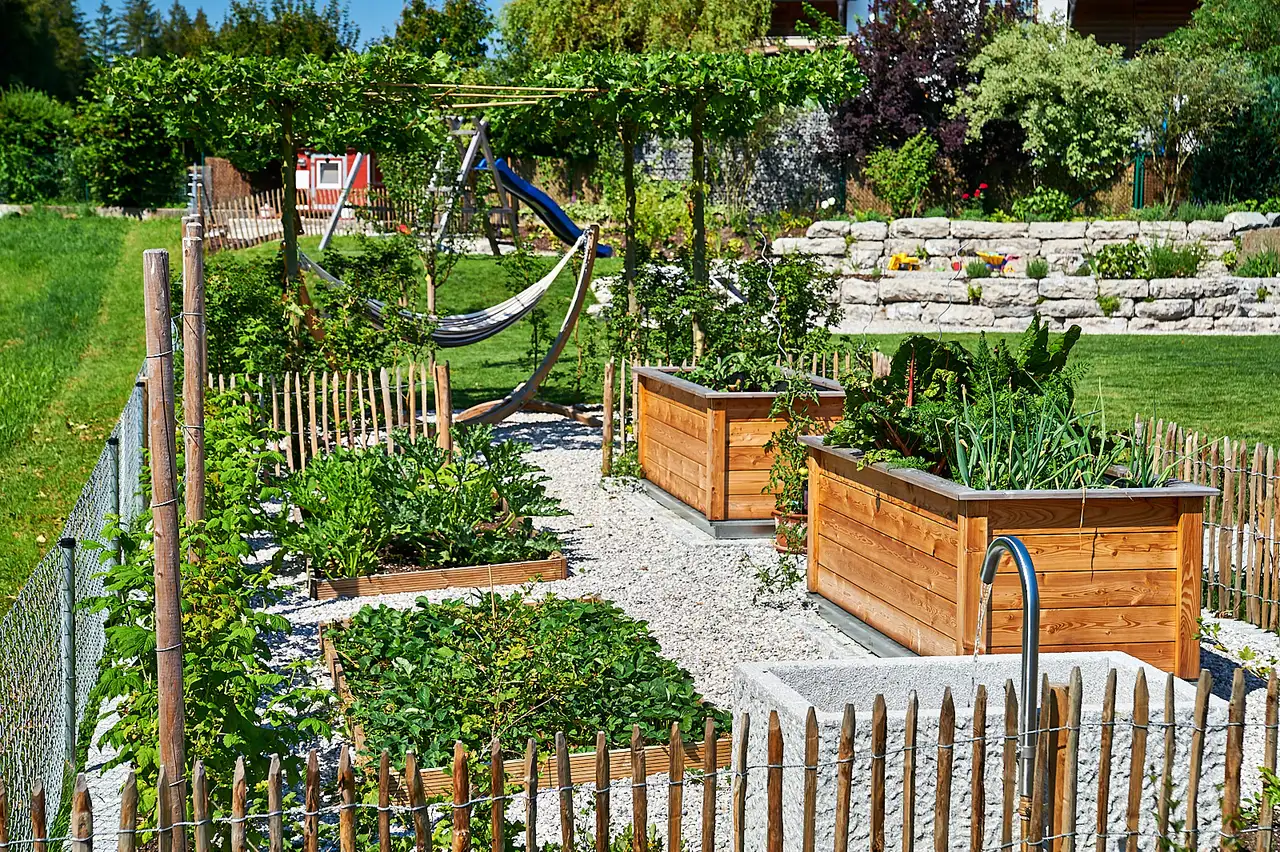
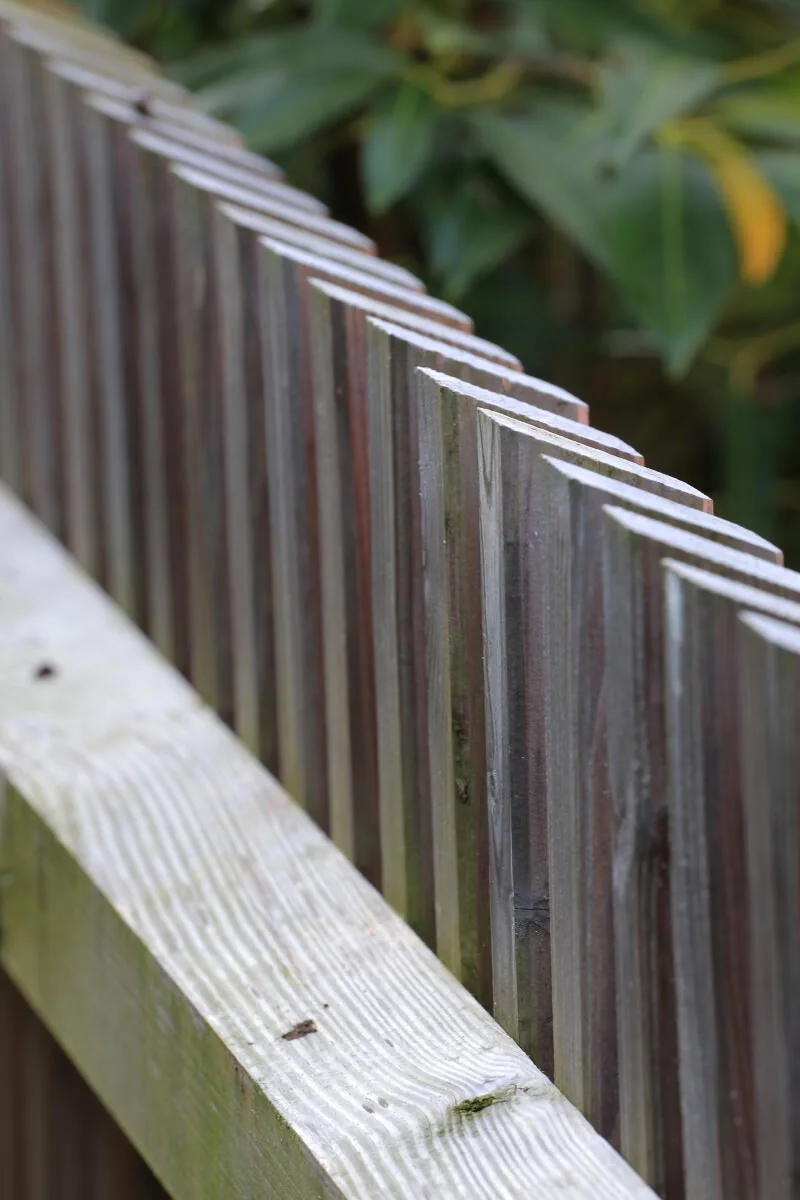
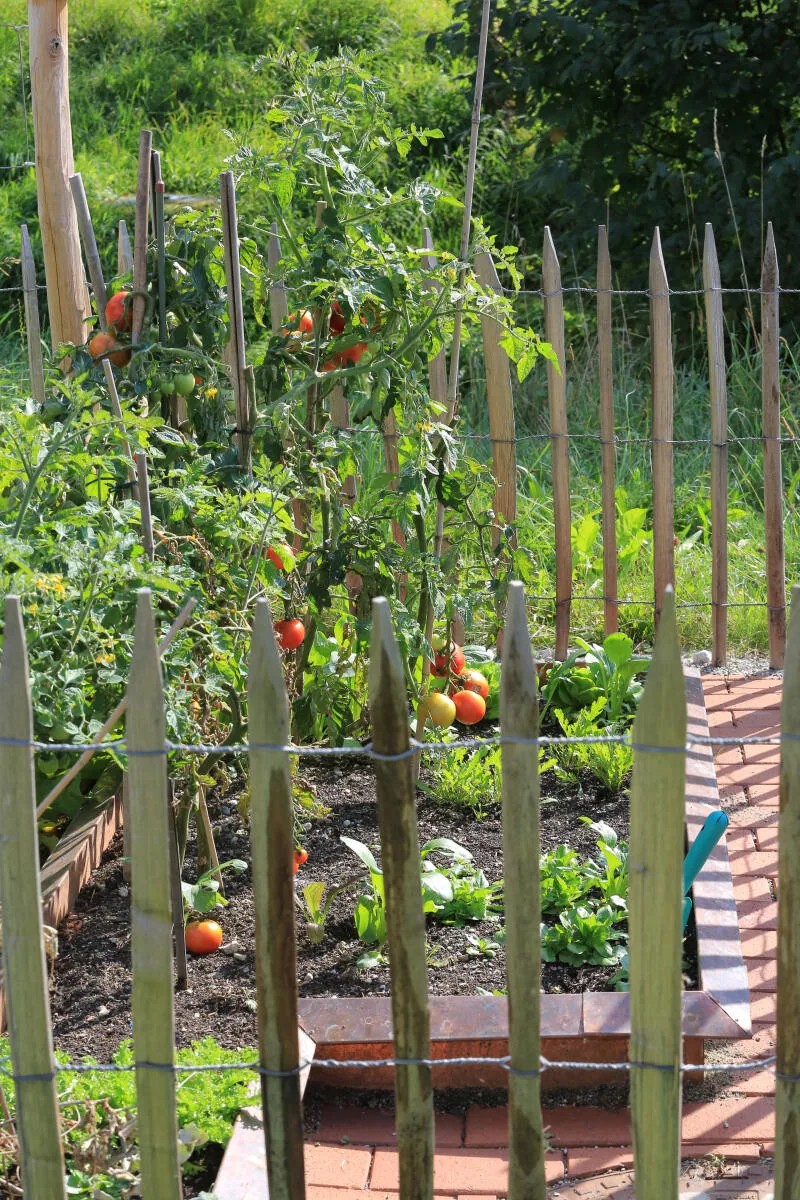
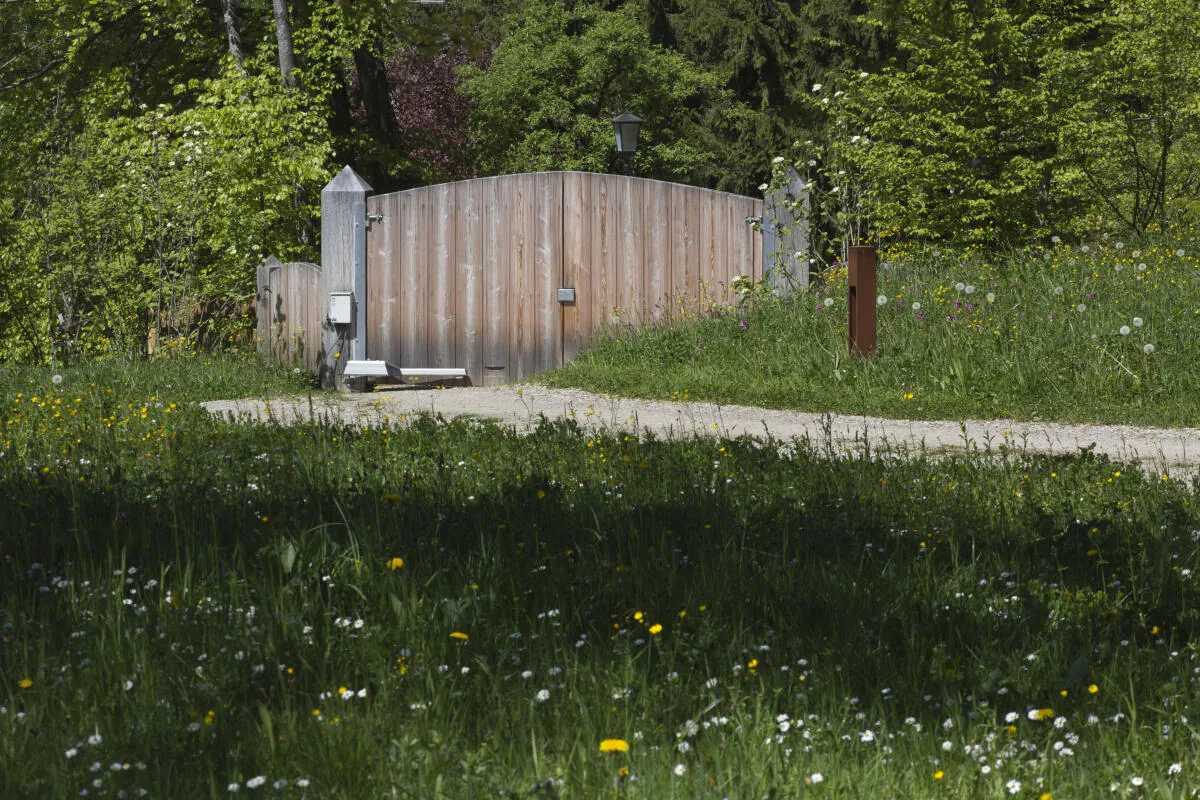
A fence is the first edge you see of a plot – and the cheapest way to spoil a good garden. We build with local timber from our own joinery, with chestnut paling fencing and chestnut posts, as around the vegetable garden in Penzberg, and with metal where it belongs: the gate and the entrance door at the Zehenthof in Kirchheim were forged by a local blacksmith. For a farmstead that has stood in the village for generations, that is no minor detail.
More timber work: our own joinery.
Wall meets hedge
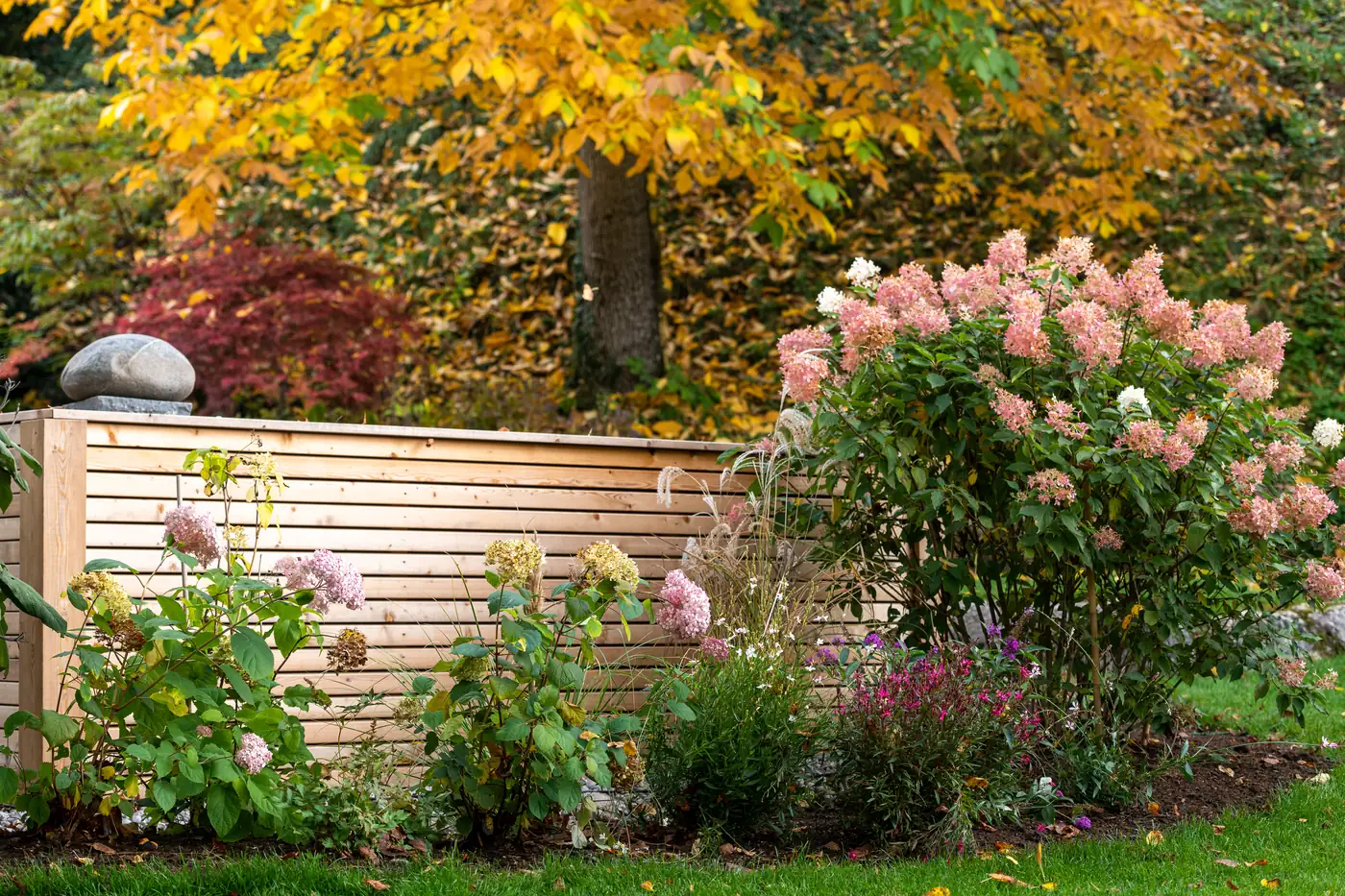
Both together work best: below, the wall that holds the slope and gives warmth; above, the hedge that blocks the view. The wall brings structure and winter interest, the hedge brings height and greenery – and together they need less space than either solution alone. Which hedge for which purpose is covered under Privacy screening and hedges.
Natural stone walls in the sauna courtyard of the Alpenhof Murnau
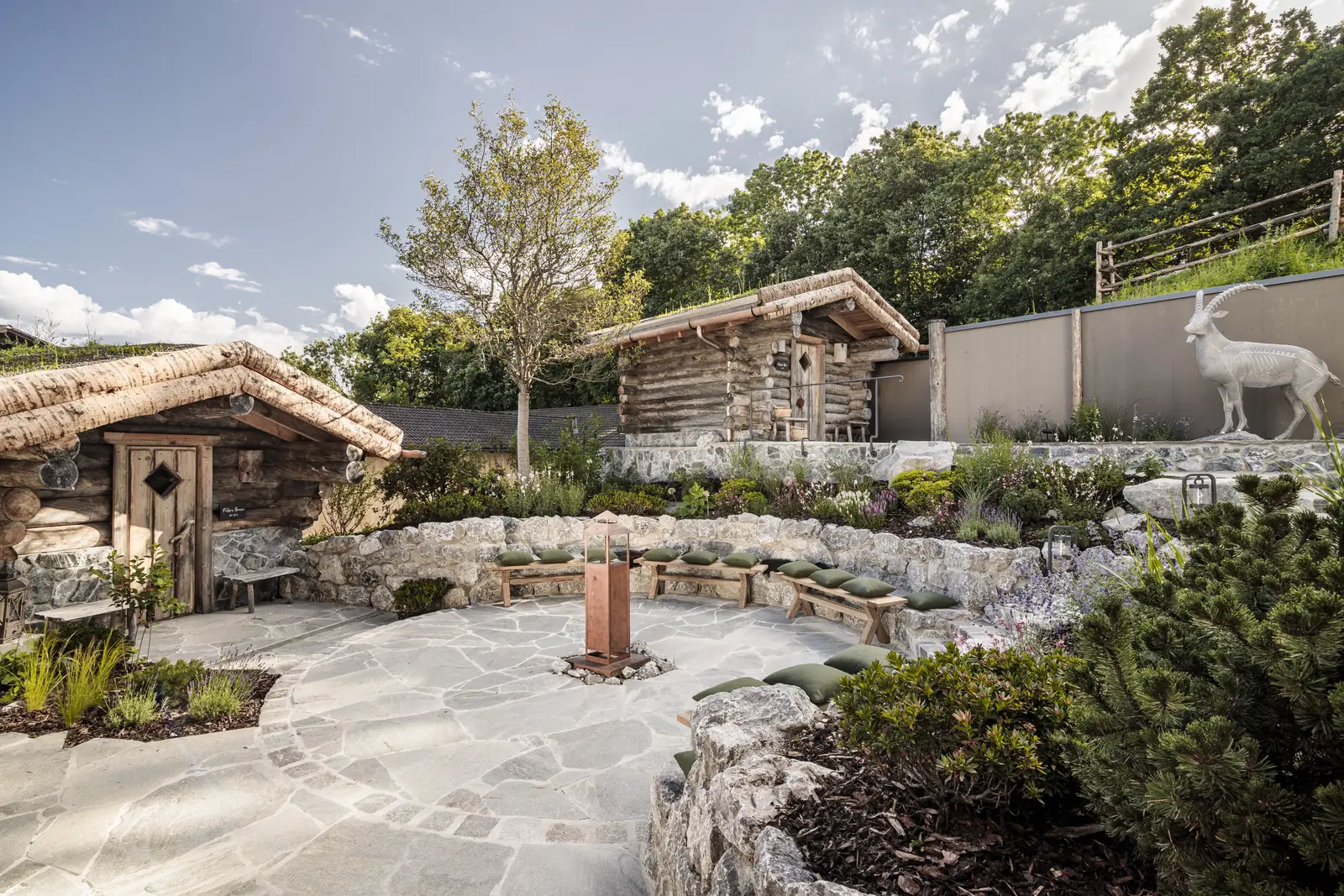
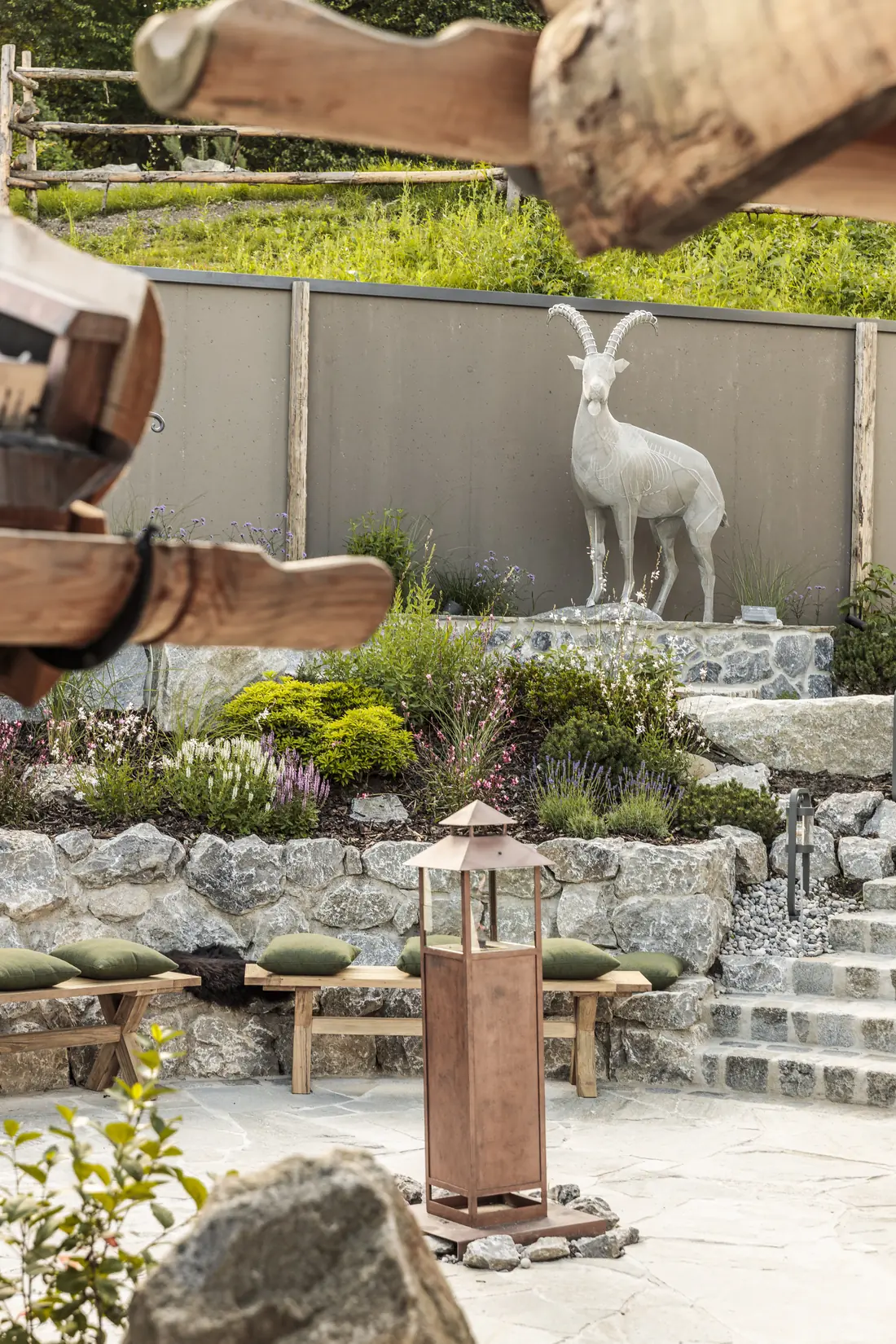
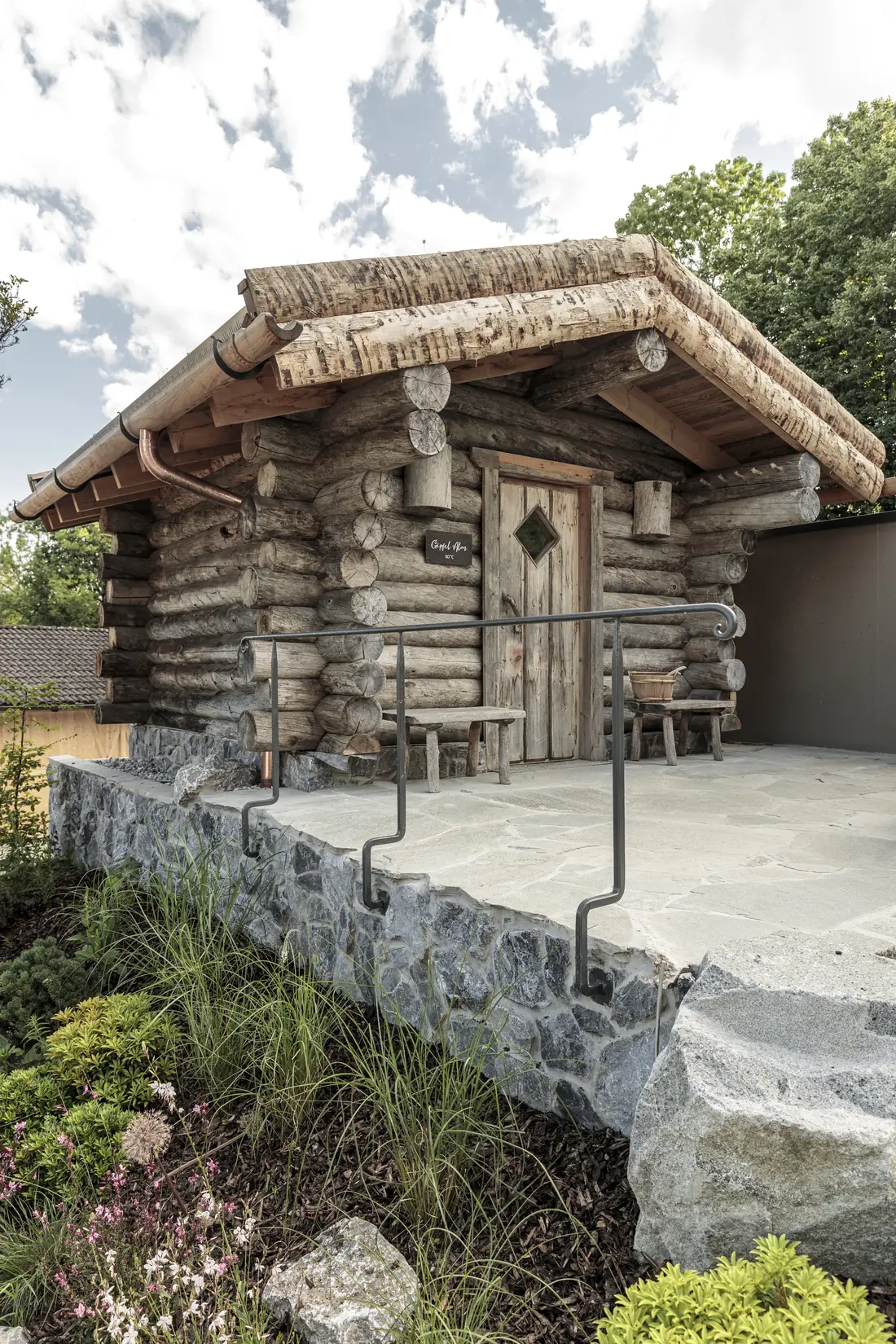
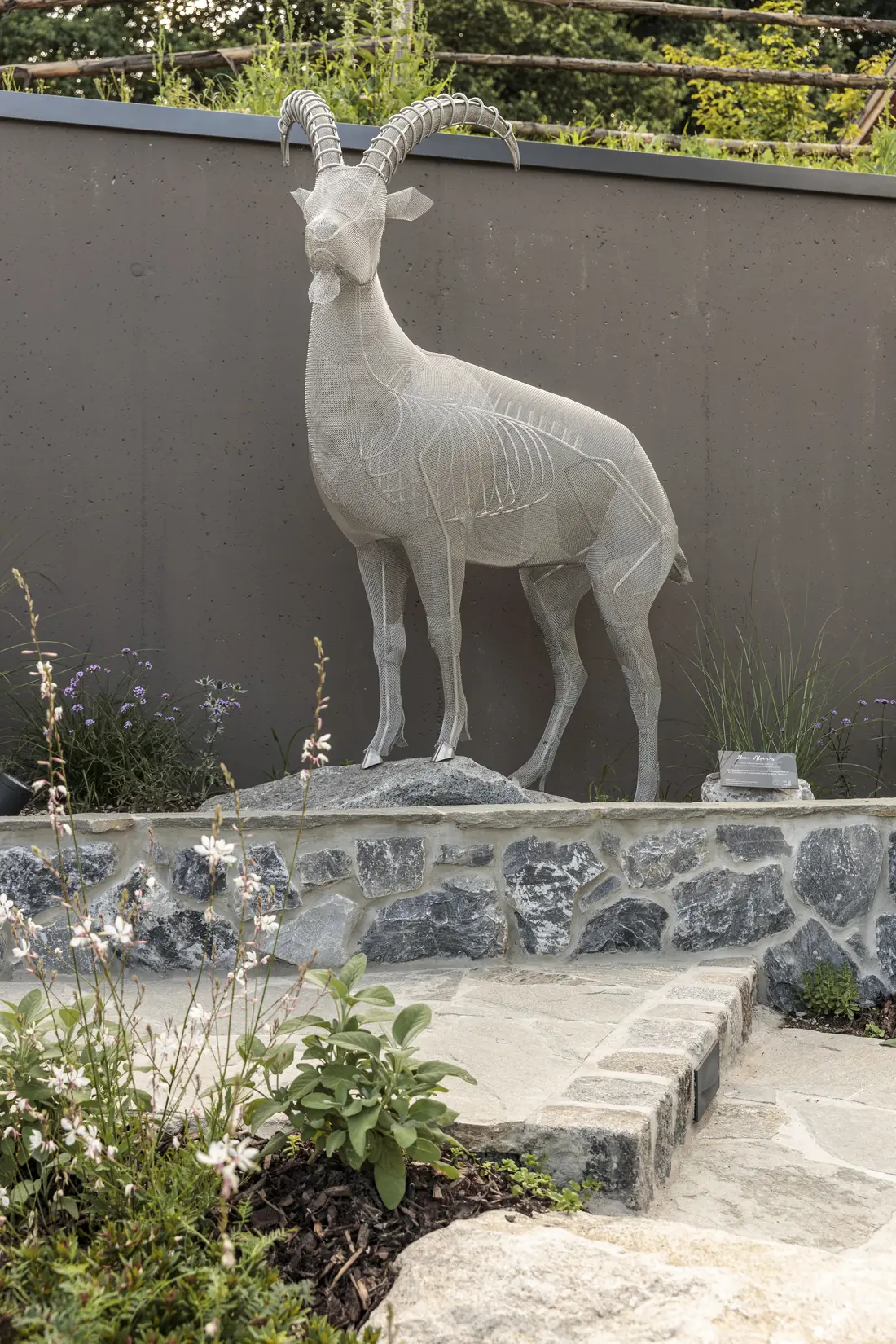
The sauna courtyard of the Alpenhof Murnau at the Murnauer Moos shows how much a natural stone wall can achieve. A slope has become several levels: dry stone walls frame the beds, log cabins stand on natural stone plinths, and in between lie large-format polygonal slabs in Quarzit Hellas and large granite stones. Perennials grow in the planting joints and soften the wall over time.
Hotel guests walk across the courtyard barefoot – so the work has to be not only beautiful, but also safe underfoot and durable. Our long-standing colleague Jan Vandebotermet designed the outdoor area; we built and maintain the courtyard. The pictures below show it.
What we build in stone
“Natural stone work” can mean anything. Here is what we actually build – using the techniques by which you can recognise true craftsmanship.
- Dry stone walls – coursed masonry in limestone and shell limestone, placed with an excavator or pinned by hand.
- Solid natural stone walls – rubble stone with concrete backing, facing masonry with tight joints.
- Steps and staircases – granite block steps, antique-finish granite steps, rubble stone steps, riser steps with small setts.
- Paving – polygonal slabs on water-permeable drainage concrete (frost-proof, no standing water), small granite setts in rows and arcs, random-length slabs in fixed widths, crust slabs, travertine slabs in set sizes, stepping stones made from boulders.
- Boulders and water-feature stones – as standalone pieces, for waterfall cascades and bank design.
- Pool and pond surrounds – shell limestone surrounds, granite overflow channels, edgings.
- Edgings and borders – small granite setts, steel strip or Corten steel for contrast.
We work with stone that belongs in the landscape: limestone, shell limestone, Isar boulders, granite, Stainzer gneiss, porphyry, quartzite and travertine. Paving in arcs, walls pinned by hand – this is work you can still see after twenty years.
Paving in arcs – our signature
Laying small granite setts in arcs or concentric circles is pure handwork: each stone is set individually, and the radii run without cut edges. It takes time – and that is exactly why such a surface looks, decades later, as if it had always been there. We laid this driveway on a lakeside plot in Upper Bavaria in 2008; the photos show it four years later, settled in and with a patina.
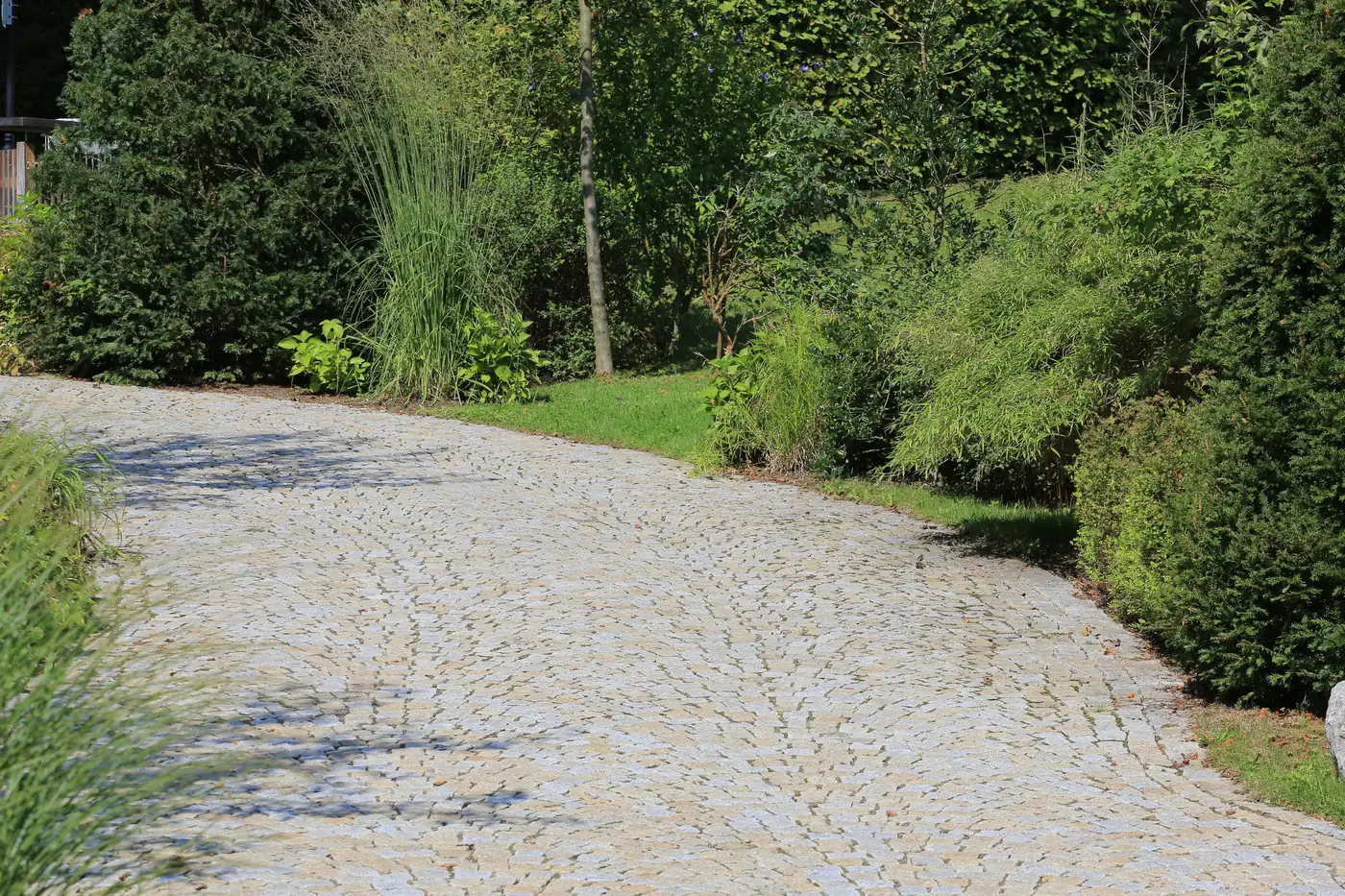
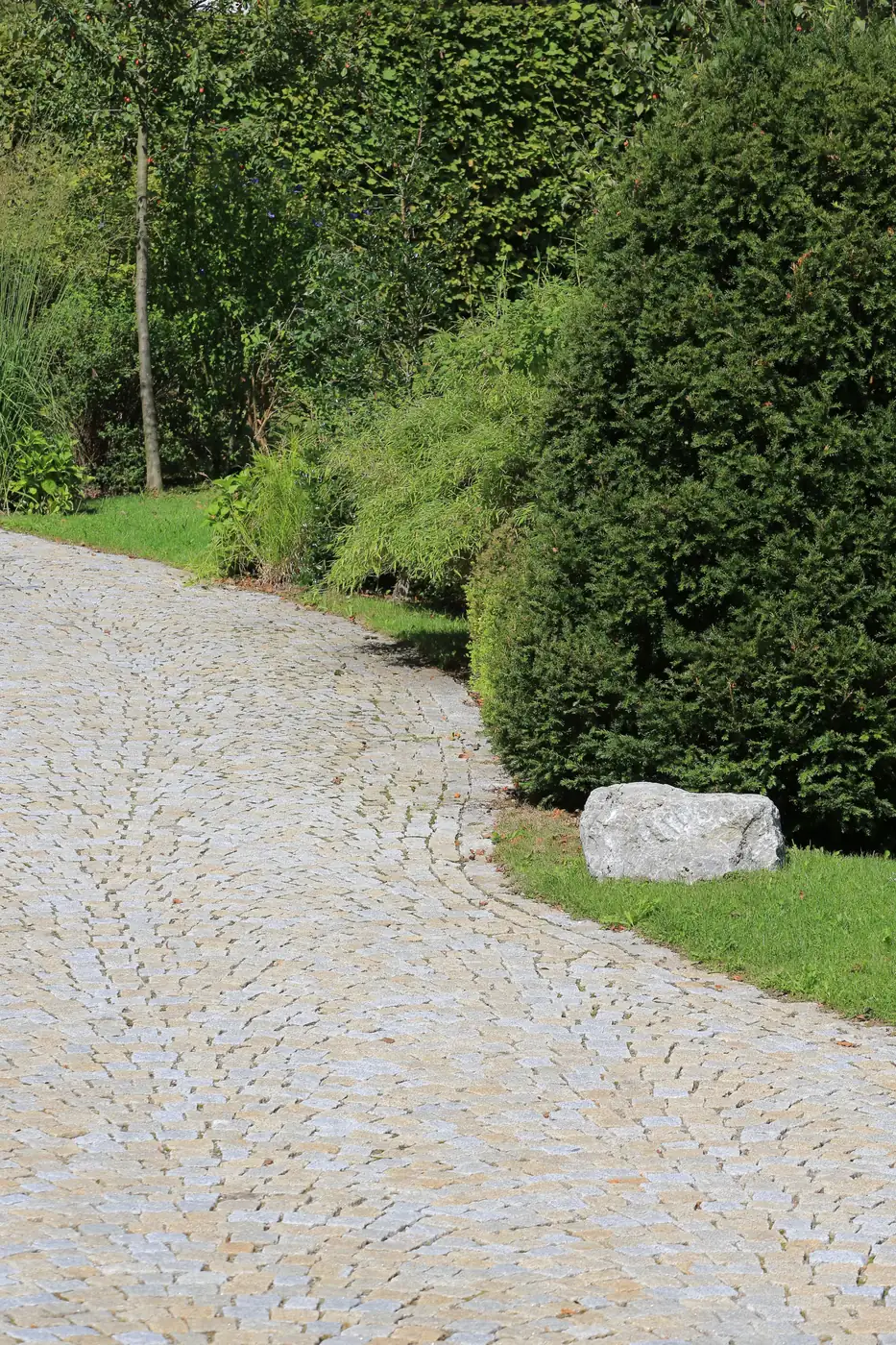
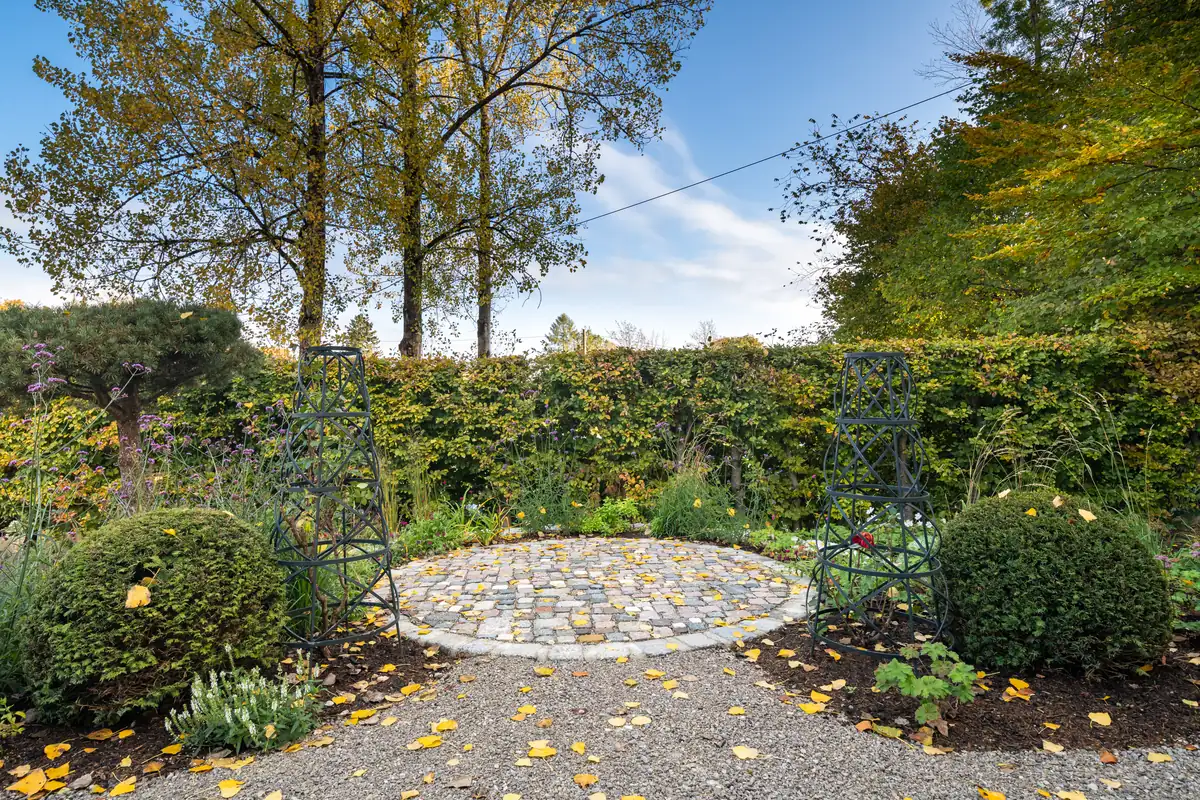
Photos: Miquel Tres and Thorsten Scherz (circular area). Arc paving in built gardens: Hausgarten Krailling · Villa Pemsel.
Fifteen years of natural stone – five gardens
Natural stone proves itself not at handover, but after years. These five projects show our masonry from 2011 to today – the oldest have stood for a decade and a half.
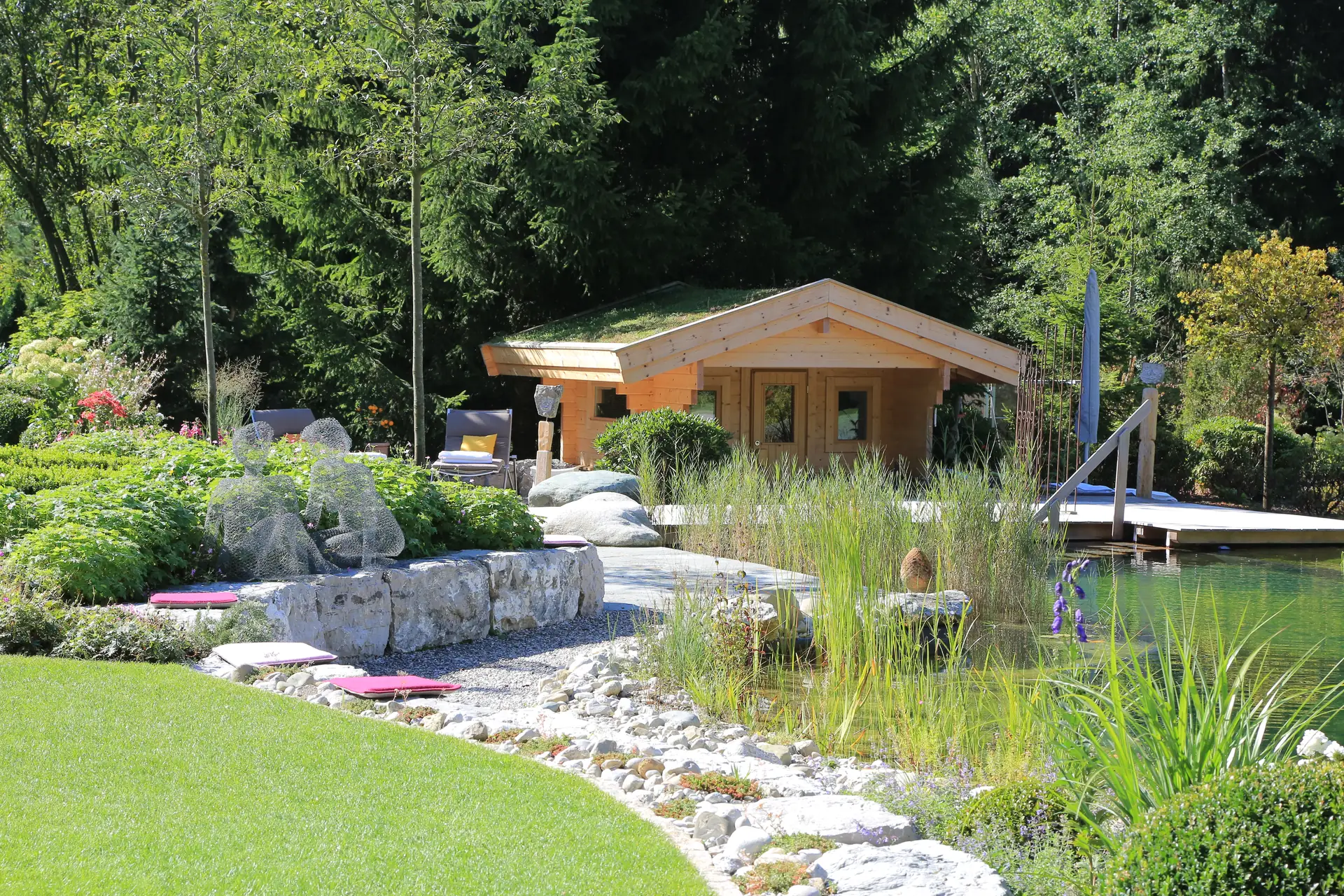
A garden like a small park
Penzberg · –
View project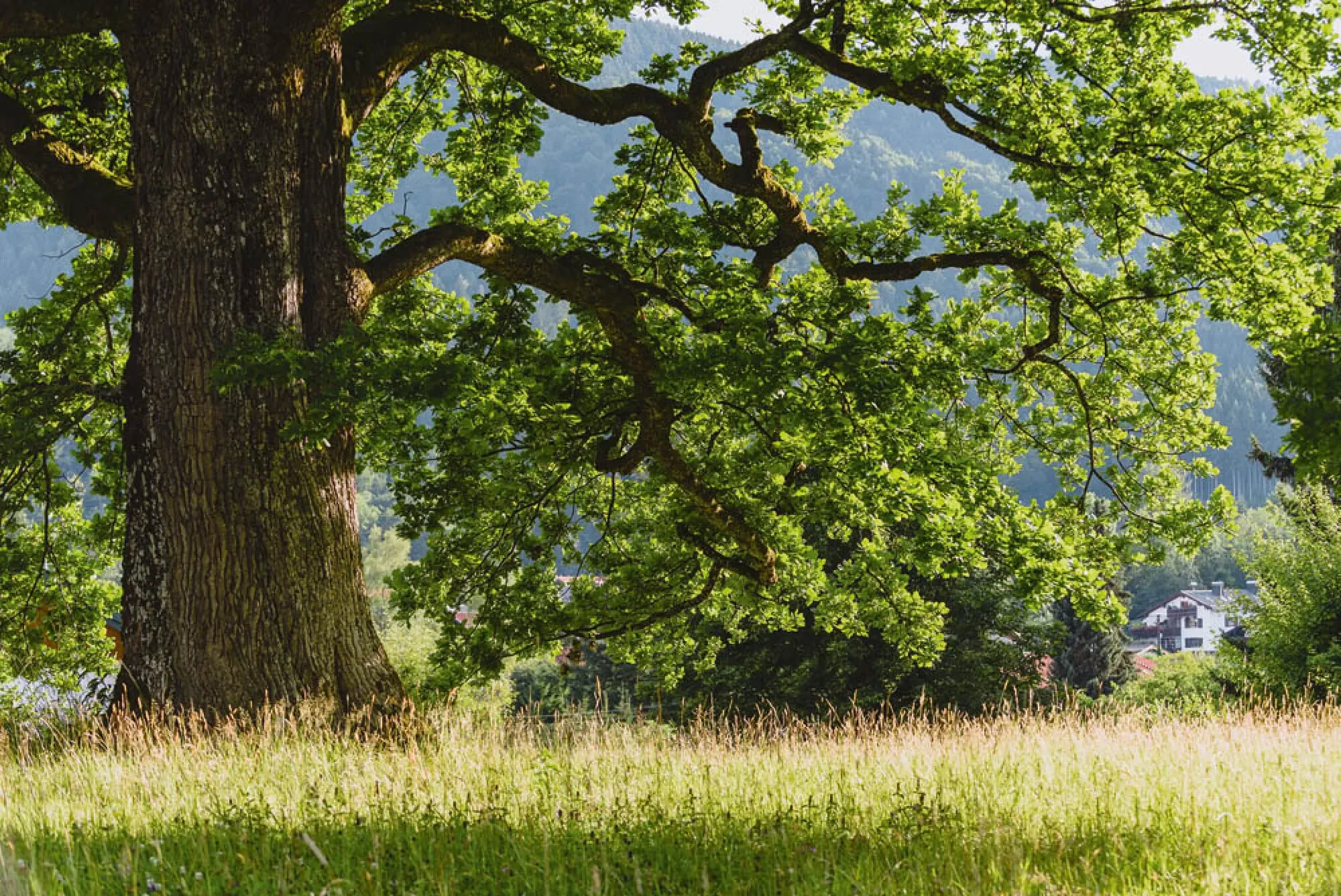
The pure beauty of designed nature
Bad Wiessee · 8,000 m² meadow, 3,000 m² woodland edge, 800 m² courtyard (built 2012/13)
View project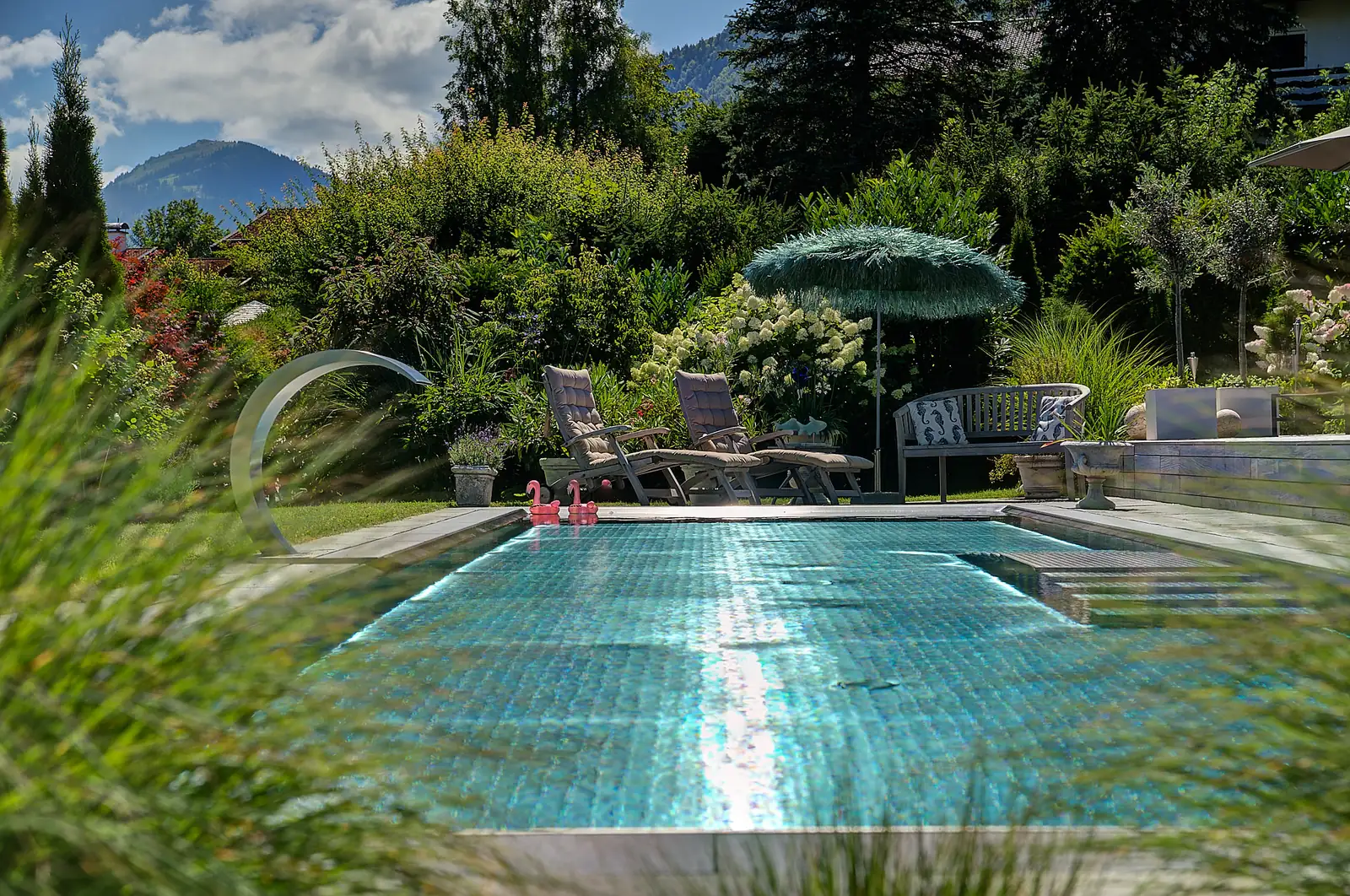
Stainless steel pool meets nature
Bad Wiessee · 2,000 m² (new landscaping 2014)
View project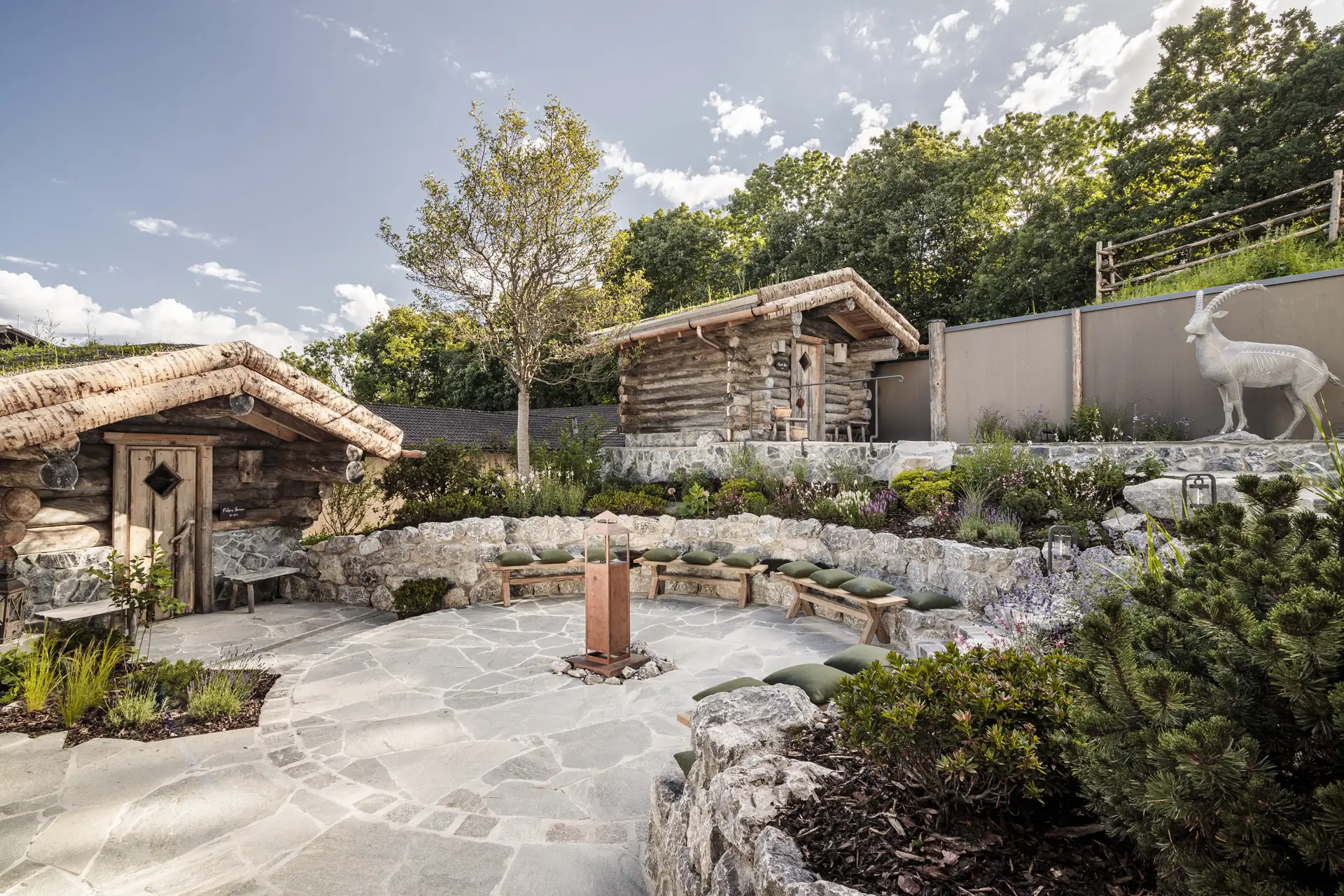
Saunahof am Moos – Alpenhof Murnau
Murnau am Staffelsee · –
View project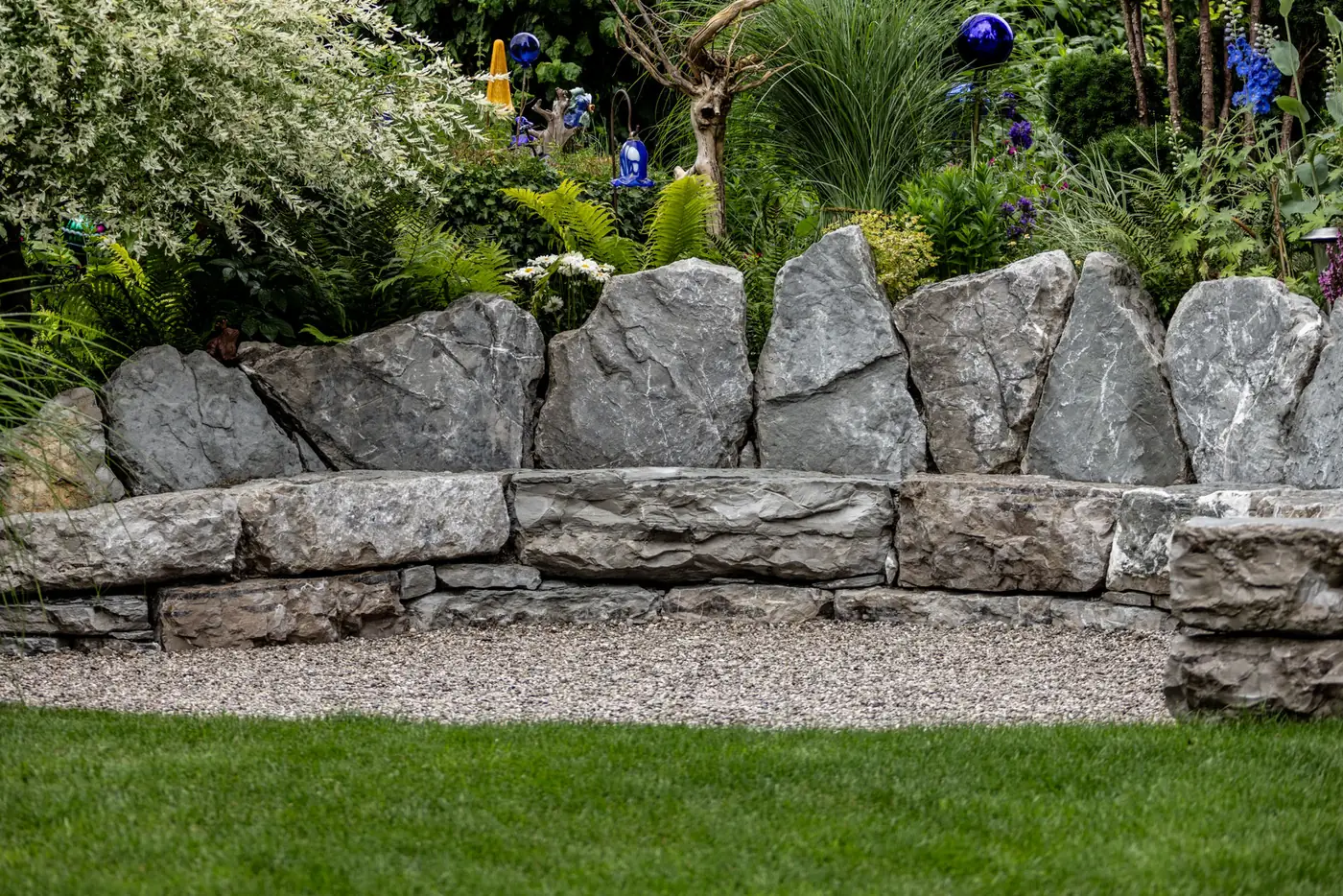
A seating circle for the campfire
Königsdorf · –
View projectMore impressions: Walls & fences
Answers about walls & fences
What is the difference between a dry stone wall and a retaining wall?
How long does a dry stone wall last without mortar?
Which stones do you use for garden walls?
Can a wall be combined with a hedge or fence?
Is a dry stone wall good for wildlife and plants?
Does a garden wall need planning permission?
Let's talk about your project
We are happy to advise you in person, with no obligation.
Request a consultation