
Caring for ornamental ponds and water features
Care for ponds, streams and fountains
Compiled by our master gardeners · Last updated: July 2026
To print and file away – free to download.
Whether it is a garden pond, a formal water basin, a water feature or a stream: water in the garden is both invigorating and calming. A few regular tasks – matched to the seasons – will ensure you enjoy your water garden for many years.
Ornamental pond: spring and summer
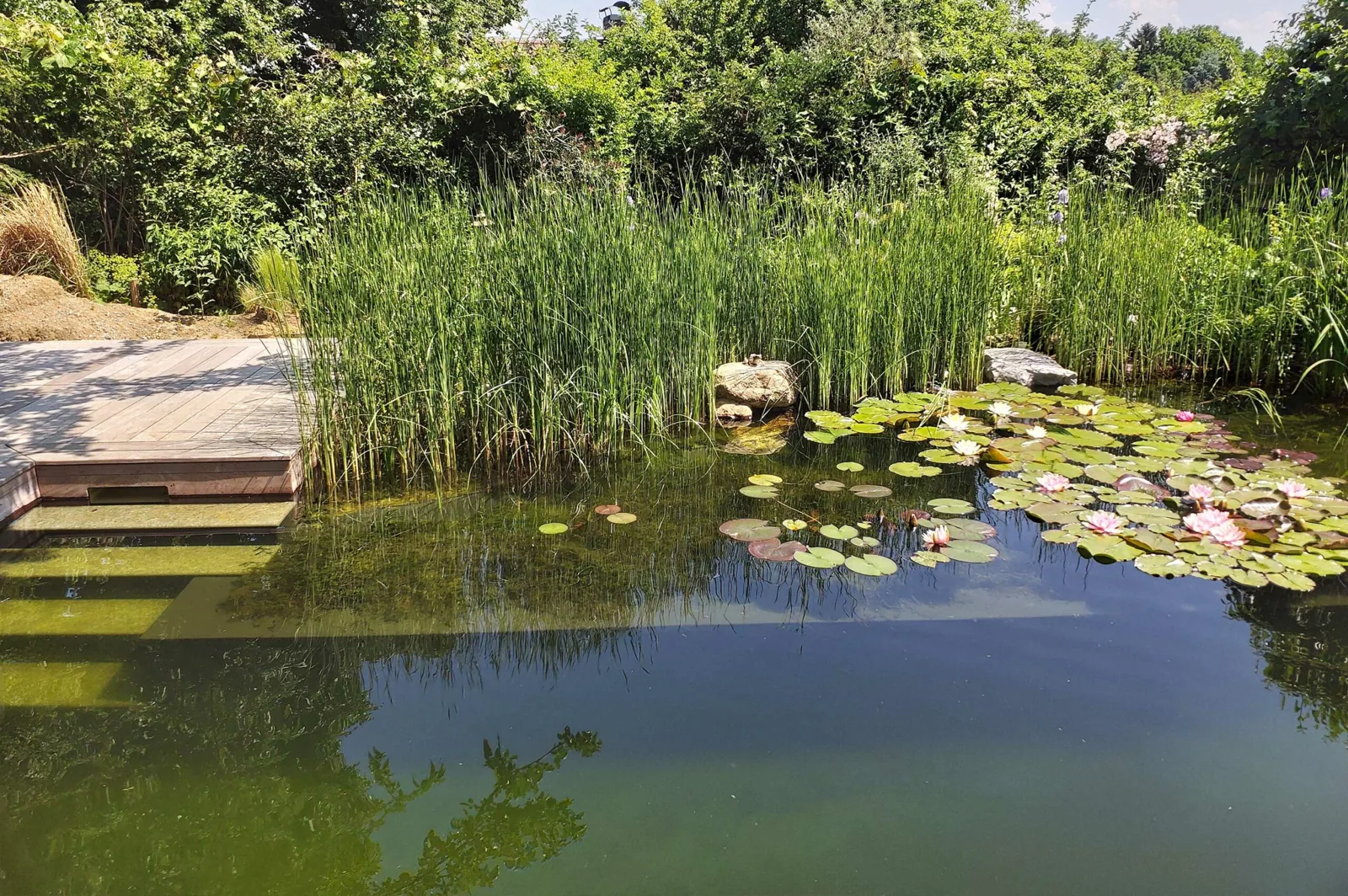
The classic ornamental pond thrives on the interplay of water, plants and animals. In spring, it is time for a thorough clean: a pond sludge vacuum removes decayed leaves and dead plant material from the pond floor, and dead shoots of the water plants are cut back. The planting around the pond edge is cut back too – otherwise plant roots draw water out of the pond through so-called capillary bridges. Check whether any water plants in their planting baskets need repotting, and top up with soil and special aquatic plant fertiliser if needed. Then check the water level and top up if necessary.
In summer, the key is to check the water level and water quality regularly. With a high nutrient content and persistent heat, algae growth can turn the water a brownish green – skim algae off the surface in good time. If water lilies (Nymphaea) or duckweed (Lemna) spread too much, thin them out so enough light remains for life under water.
Ornamental pond: autumn and winter
When the leaves fall, stretch a leaf protection net over the water surface – this way fewer nutrients get into the water. Remove dead plant remains and sludge with the pond sludge vacuum, and cut back overly lush water plants and pond edge plants. Pumps that sit no deeper than 60 centimetres under water are cleaned and overwintered frost-free – ideally in a container filled with water, so the seals do not become porous. Water pipes are drained.
Water plants that are not hardy, such as water hyacinth and water lettuce, are taken out of the pond and overwintered indoors in a container of water, in a bright spot.
Equipment: pump, filter, pipes
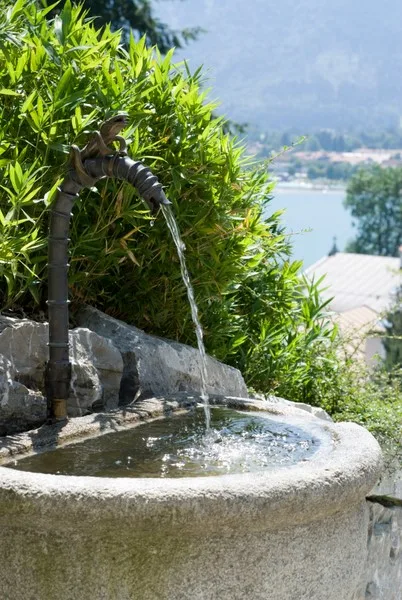
Moving water needs care – this applies to the organically shaped ornamental pond with a bubbling stone just as much as to the formal basin with a stainless steel spout or the stream. What all systems have in common: the pump is stored frost-free before the first frosts, and pipes that carry water are drained in late autumn. Before starting up in spring, check all cables and pipes for damage, and clean the pump, filter, seals and nozzles thoroughly.
Water features
In spring, moss, dirt deposits and foreign objects are removed from the basin. Only if you can be sure that pets will not drink the water may an algae treatment be added to keep it clear. Throughout the summer, regularly remove leaves and other debris, and check the nozzles, filters and strainer inserts. In autumn, drain the water to avoid frost damage.
Streams and spring stones
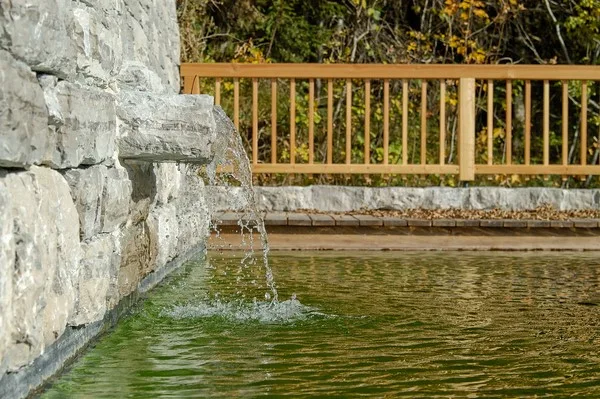
Before starting up in spring, clean the weirs of the stream, remove dead plant material and deposits, and cut back perennials and water plants. In summer, the stream loses a lot of water – not only through evaporation, but also because of the high water demand of the marginal planting; the water level in the pond, and with it in the pump circuit, can drop drastically. Cut back vigorous spreaders such as creeping Jenny (Lysimachia nummularia) or brooklime (Veronica beccabunga) regularly during the growing season too, and check whether water is running over the edges.
With a spring stone, no stones must get into the hose opening – they can block and damage the pump's impeller. In autumn, the pump is also removed here, cleaned thoroughly and stored for the winter.
Winterise irrigation systems too
With automatic irrigation systems, it is important to check the nozzles constantly so blockages are cleared in good time. In autumn, the water is drained completely through the drain valve and the system is switched off; it must also be blown out with compressed air to avoid damage from freezing water.
Answers about ornamental ponds and water features
How do I overwinter the pond pump correctly?
What helps against algae in a garden pond?
Why does my stream lose so much water in summer?
Which water plants are not hardy?
When does the water feature need to be winterised?
Let's talk about your project
We are happy to advise you in person, with no obligation.
Request a consultation