
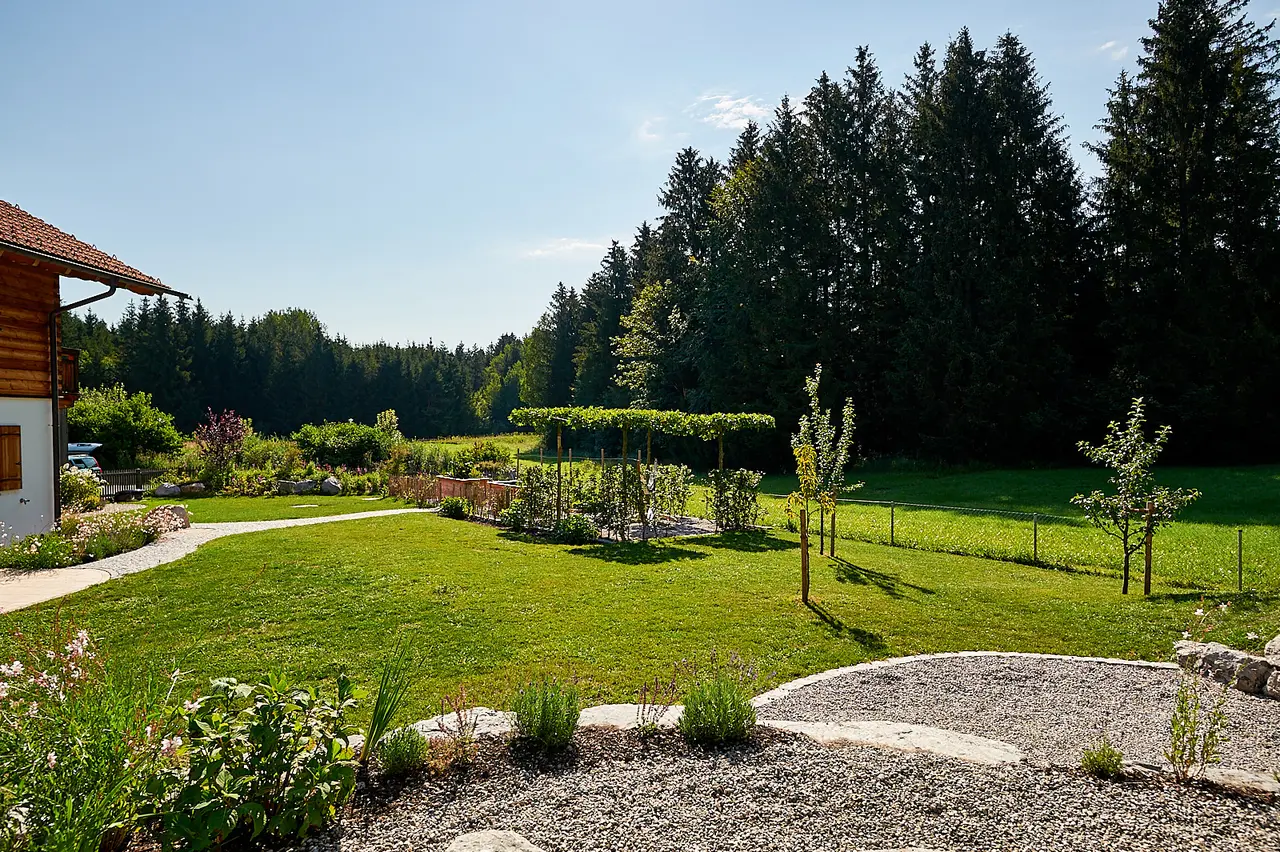
Family garden in Penzberg
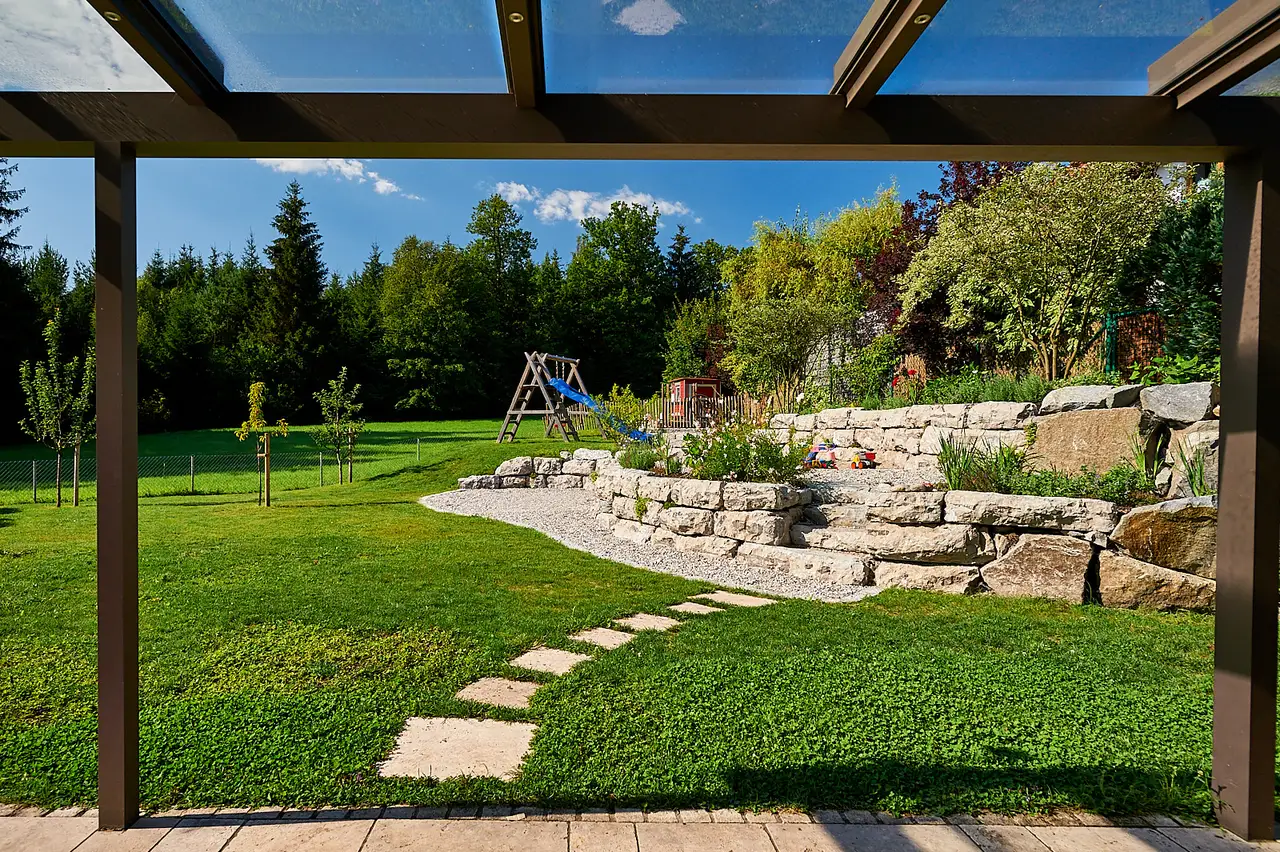
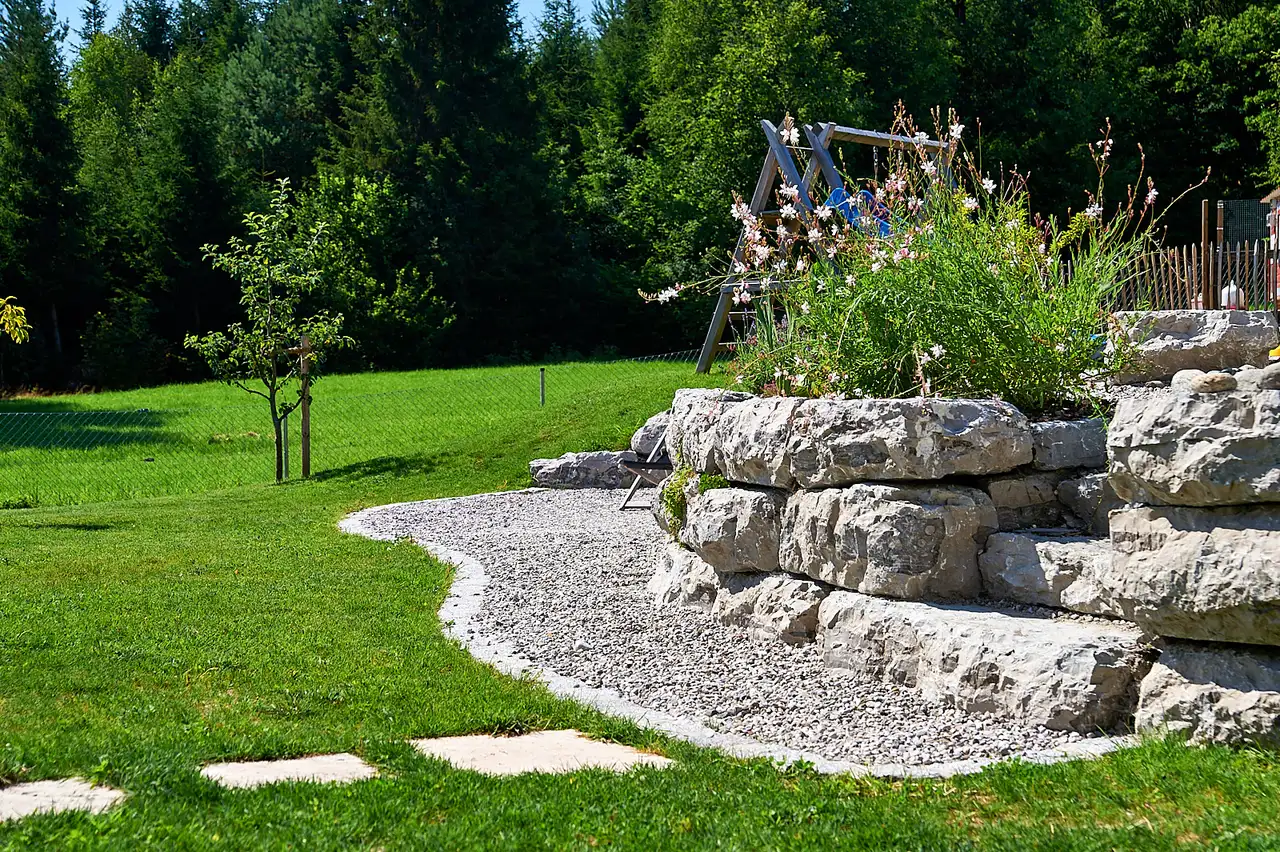
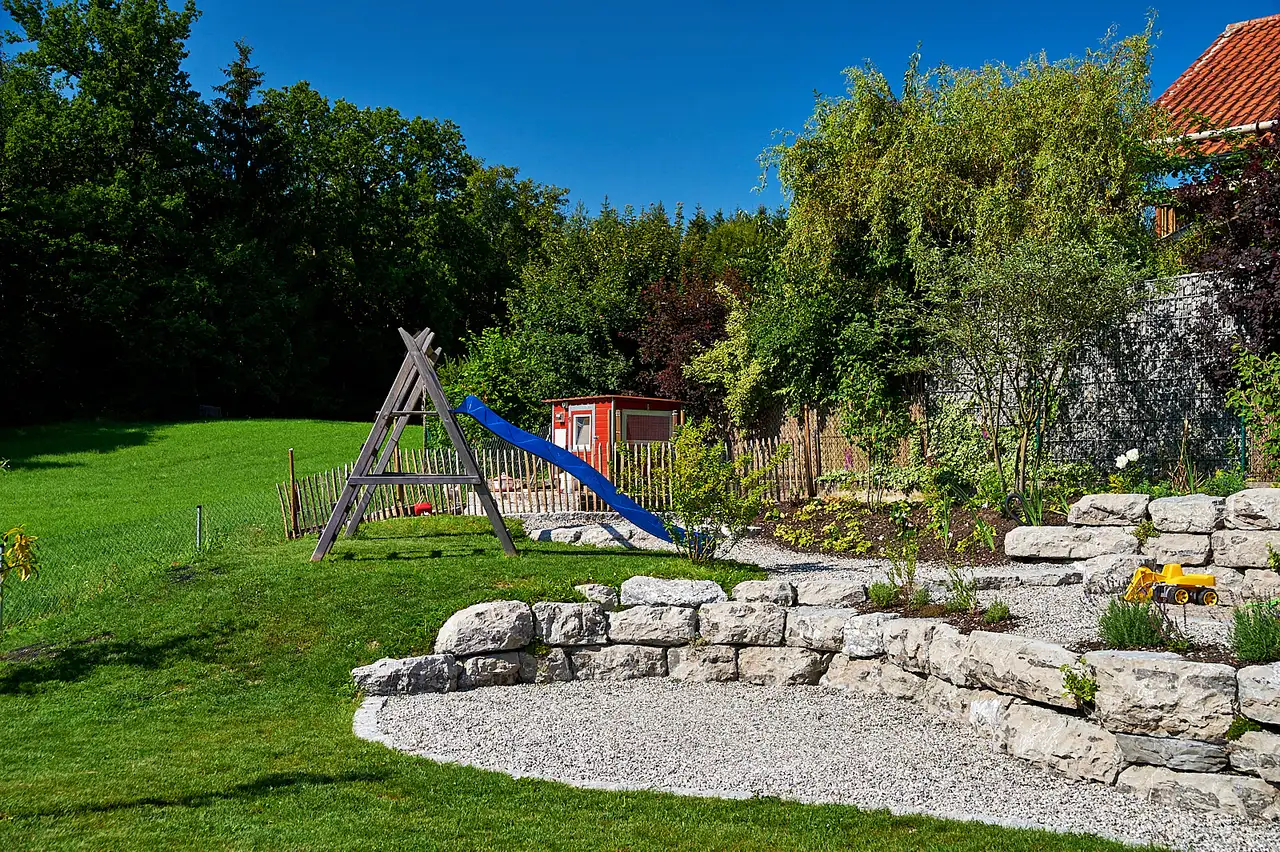
900 m² on the edge of the woods: limestone walls, raised beds behind the chestnut paling fence, and a sandpit built into the wall that can be removed later.
| Location | Penzberg, district of Weilheim-Schongau |
| Size | 900 m² |
| Design | Fuchs baut Gärten GmbH |
| Implementation | Fuchs baut Gärten GmbH – Gärtner von Eden |
| Photography | Klas Stöver, Lenggries |
“The garden should be able to evolve with the family.”
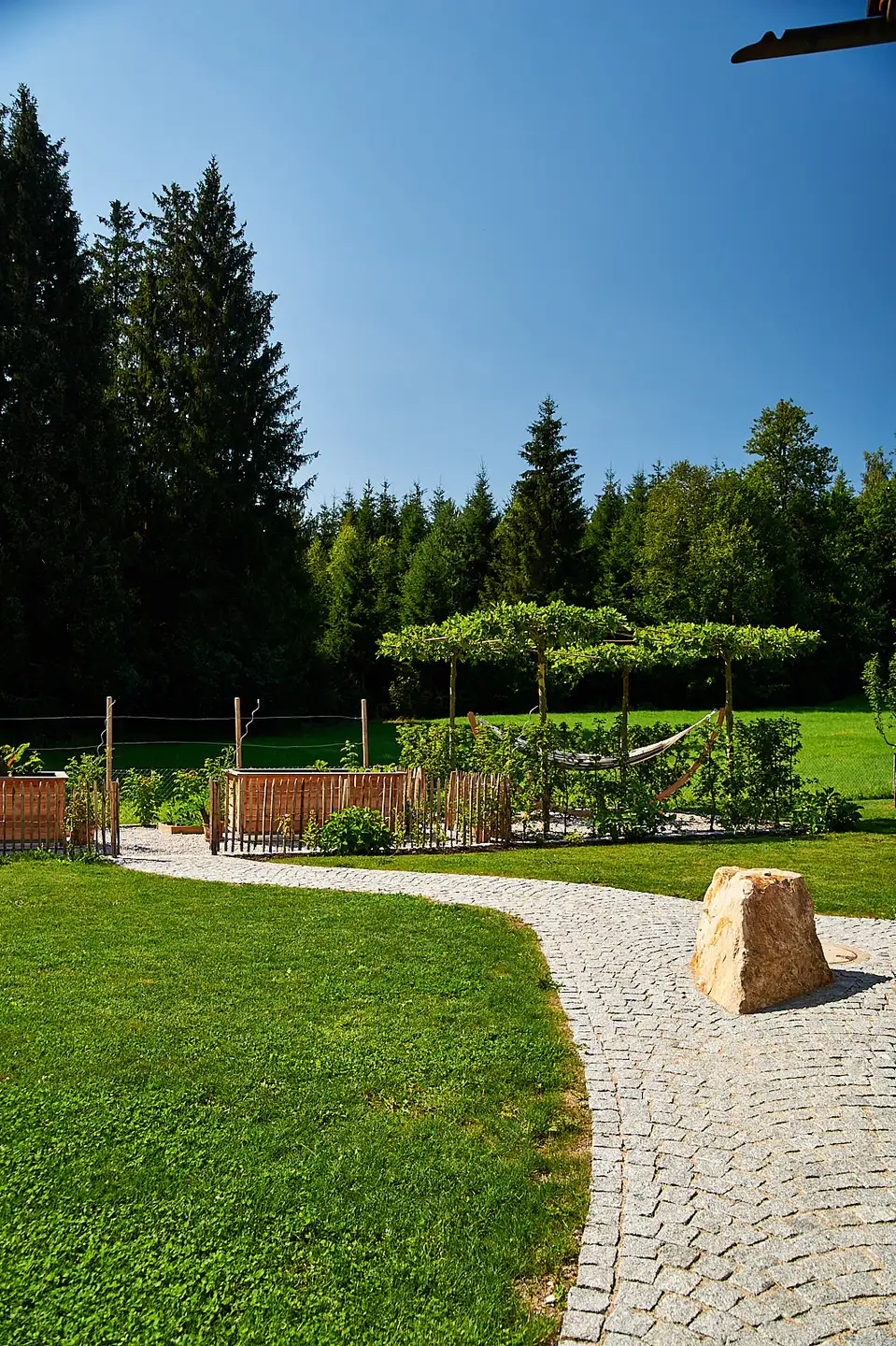
900 m² for a young family in Penzberg – designed from scratch to suit the house. The brief was clear: a natural family garden where they can grow their own vegetables and where the children have room to play. The garden sits on the edge of the woods, and this location sets the tone: limestone walling stones, boulders, granite small-stone paving, fruit trees, chestnut wood. In the photos the garden is still freshly planted – you can see that the plants are only just getting started.
A garden that grows with you
This was the real design challenge, and it is the reason this garden will still work in ten years: the play areas are designed so that they can be given a new use later. The best example is the sandpit built into the wall: it doesn't look like play equipment, but like part of the garden – and when the children no longer need it, it can be removed without leaving a gap. The same goes for the other play areas: lawn, gravel and a wall instead of special structures. And the maintenance is deliberately kept manageable – a young family has no weekends to spare.
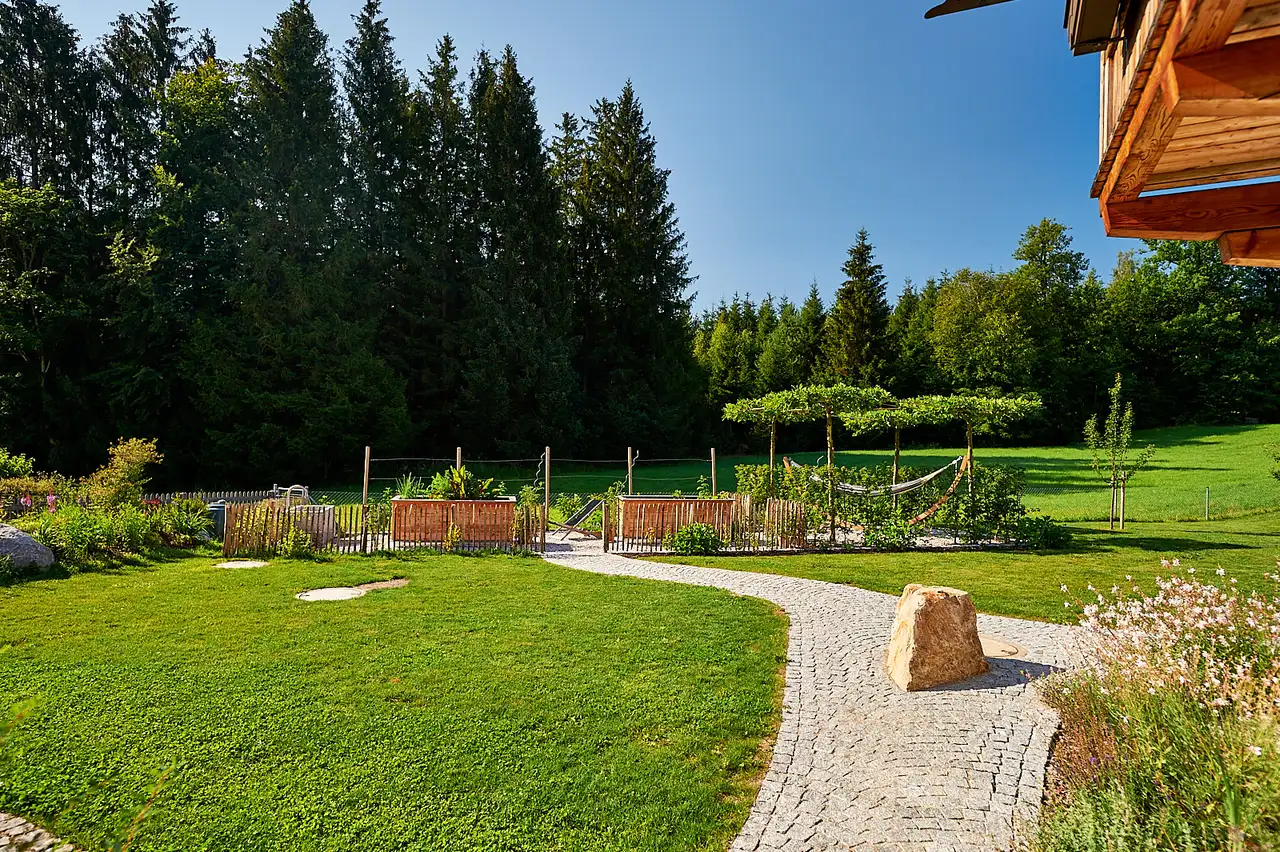
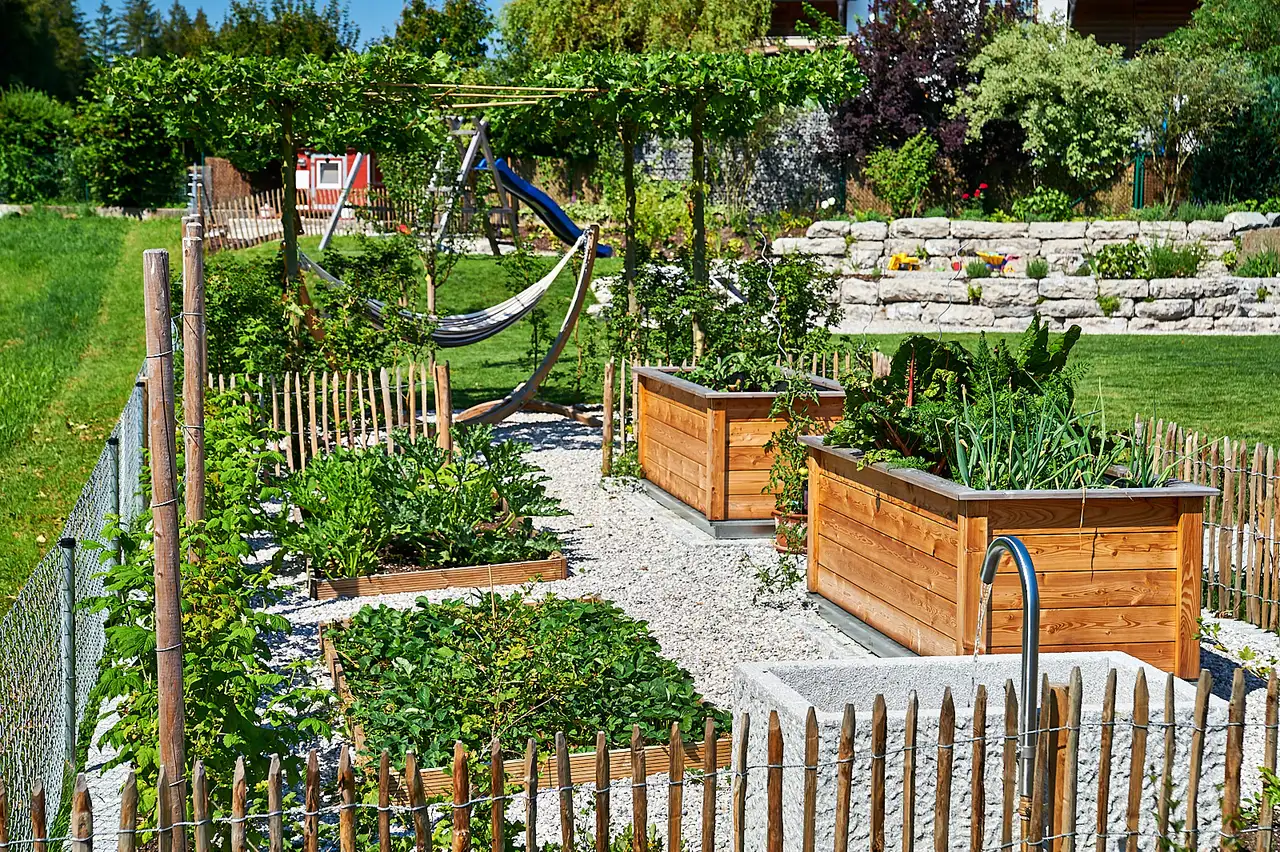
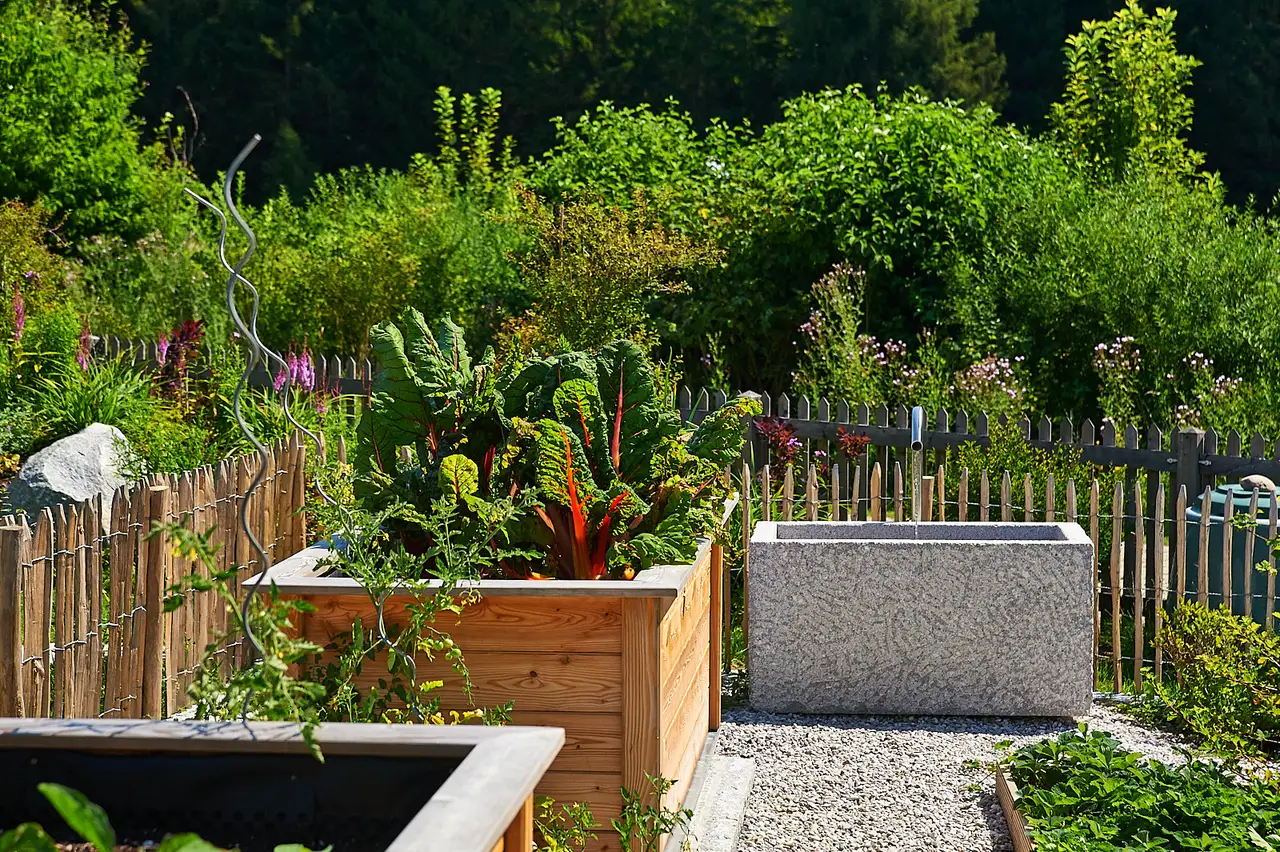
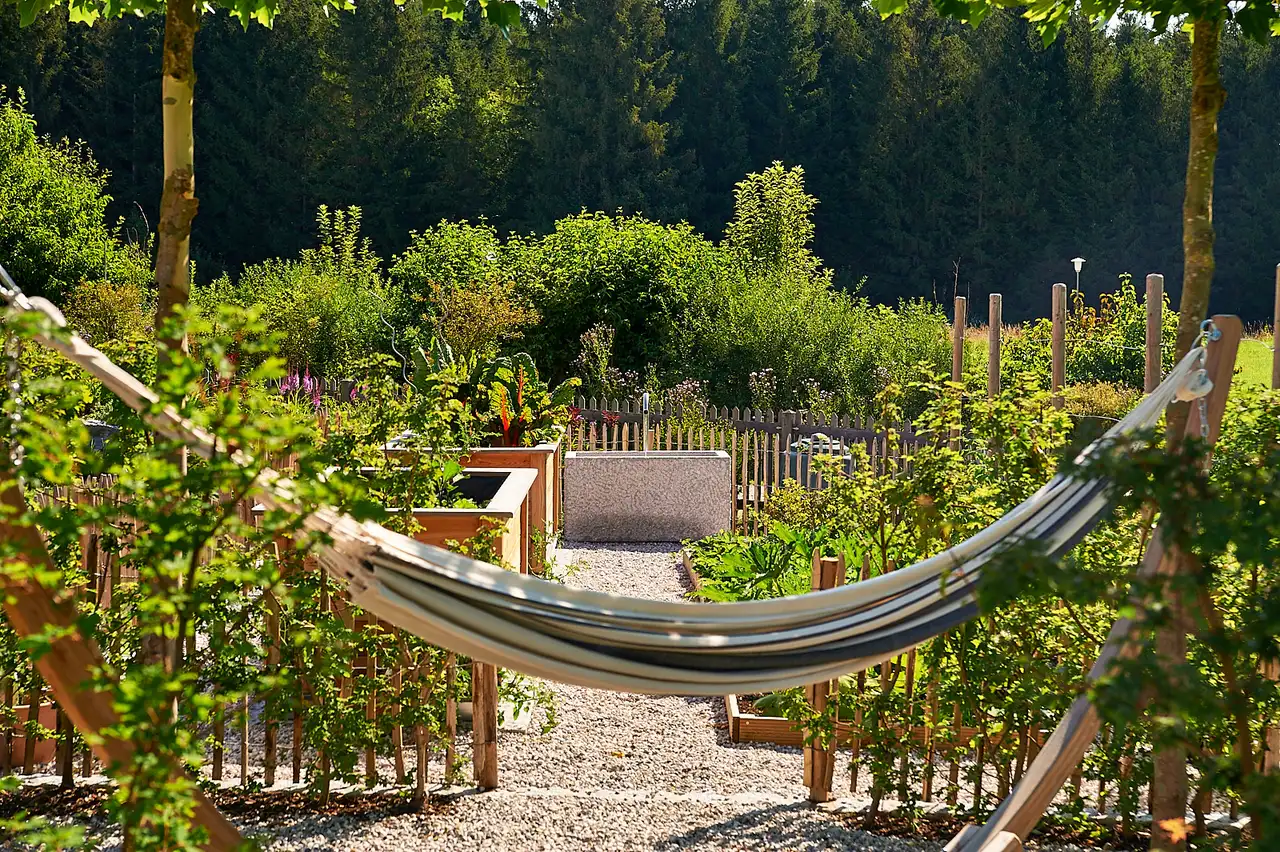
The raised beds are the heart of the garden. Timber raised beds behind a chestnut paling fence with chestnut posts – high enough to work at standing height, and fenced in so the ball doesn't end up in the chard. Beside them stands a rustic granite trough with a stainless steel inlet, serving as a fountain and a watering point. How we bring kitchen garden and family garden together is also covered under garden features.
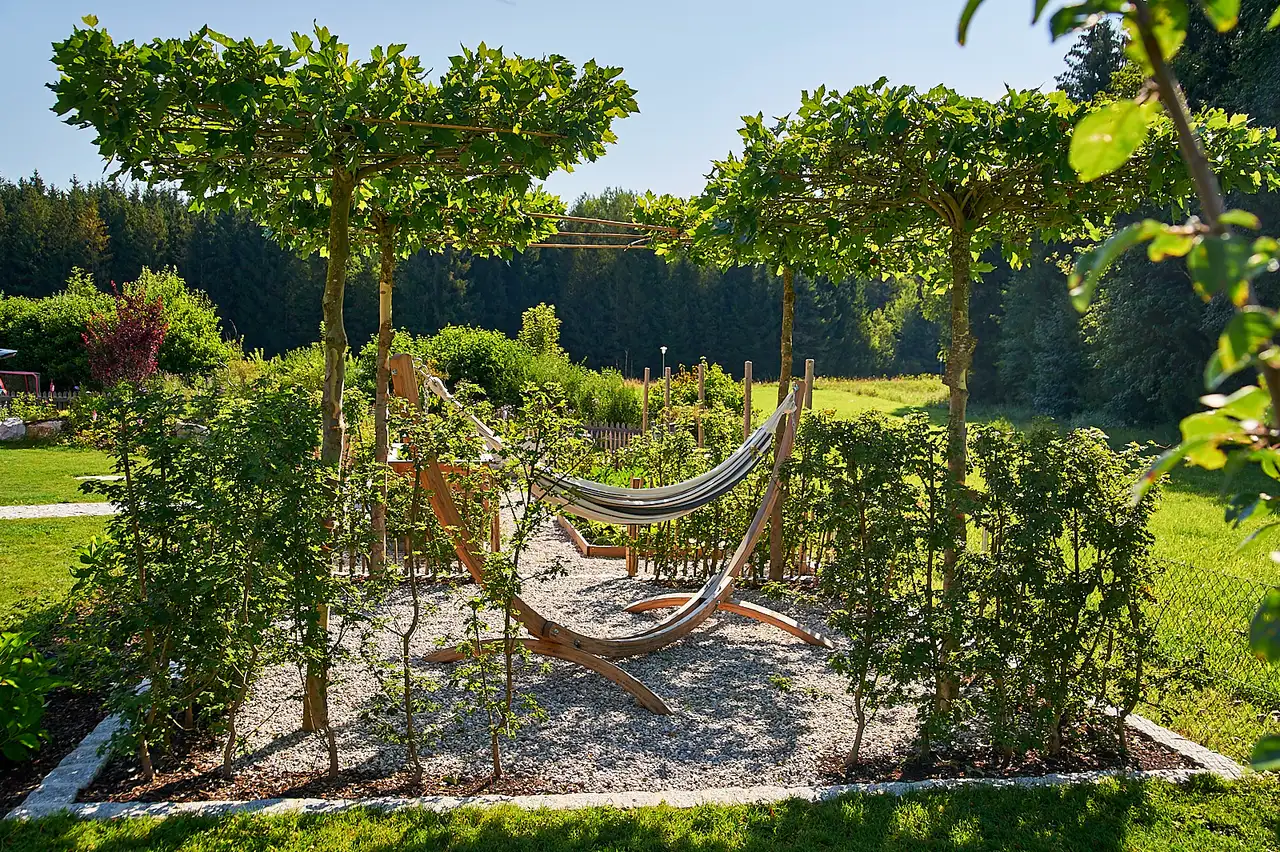
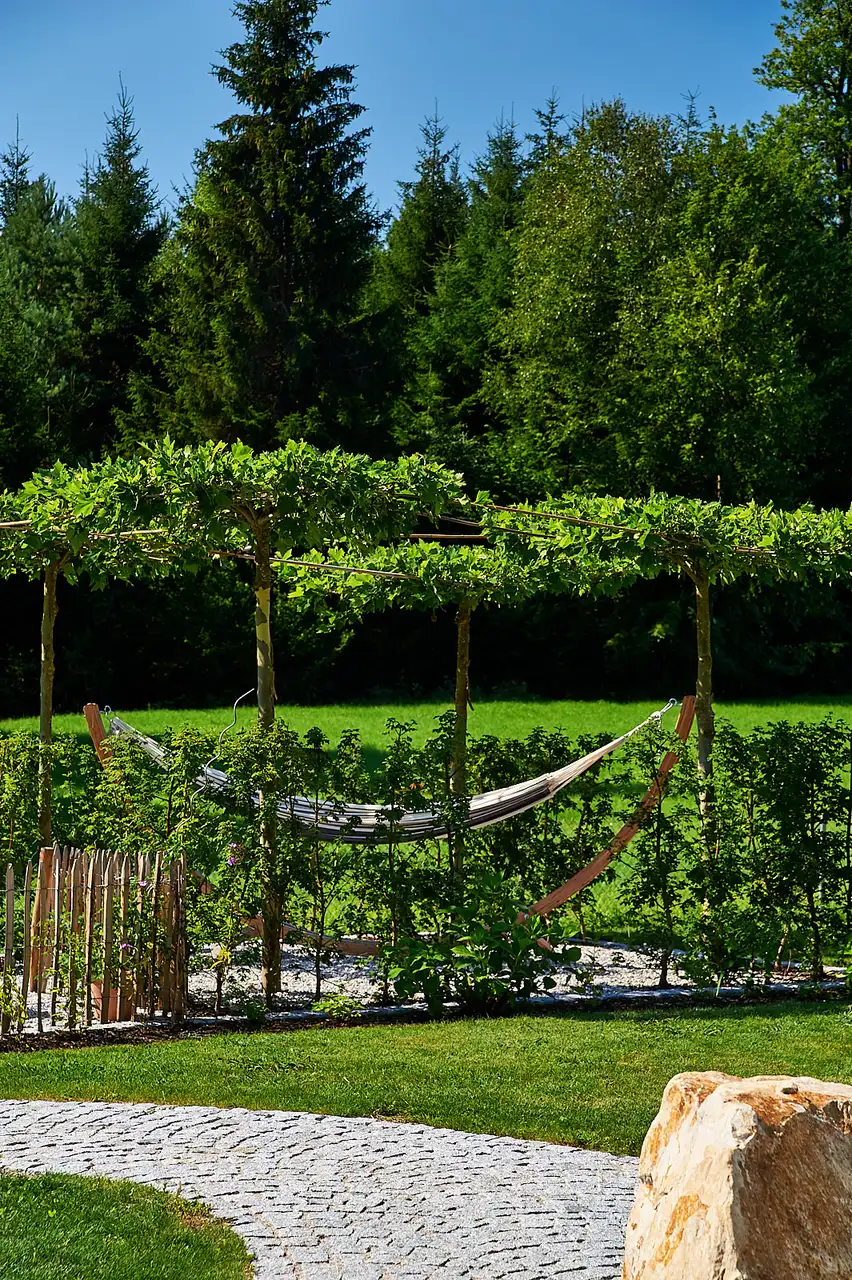
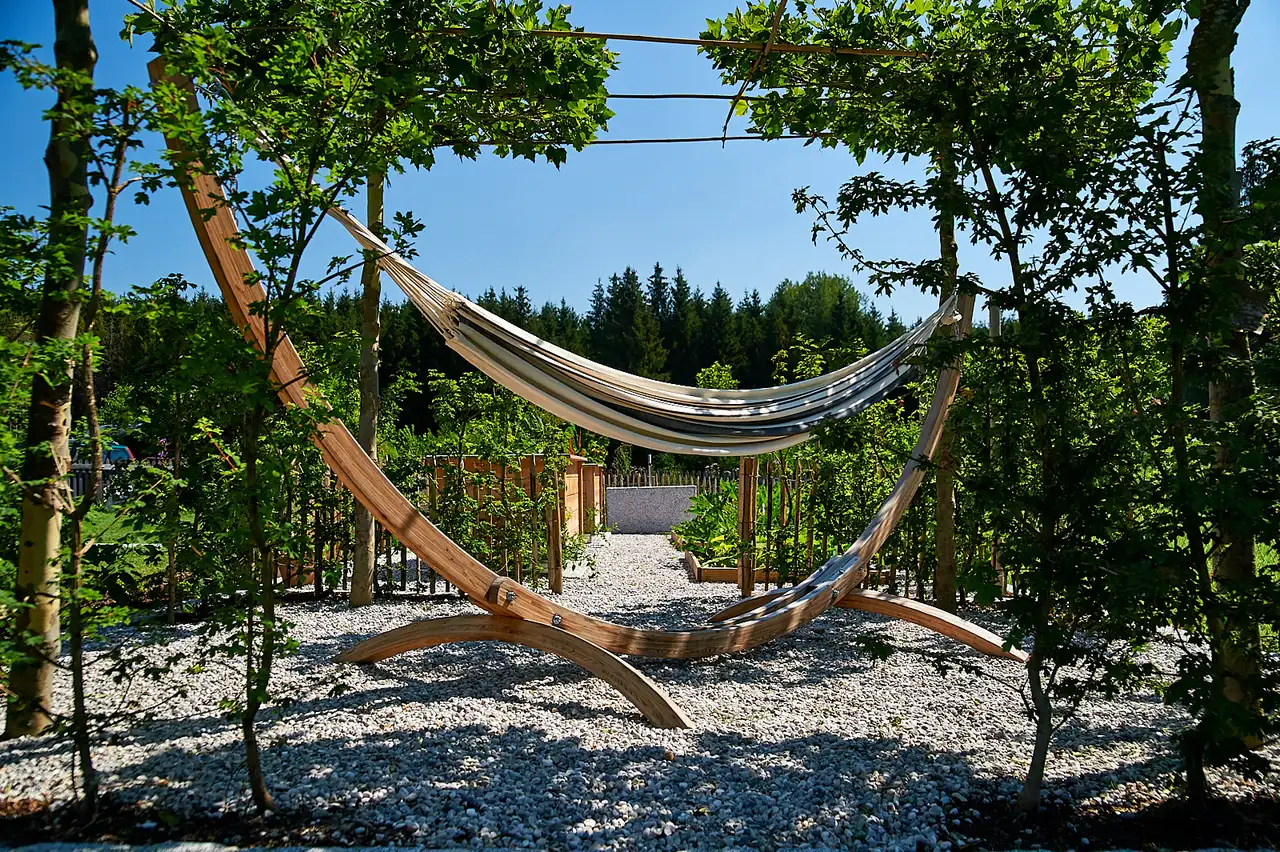
Hammocks under roof-trained plane trees
The best spot in the garden is a gravel area with roof-trained plane trees (Platanus acerifolia), with hammocks hanging between them. They are a modern element in an otherwise natural garden – trained, clipped, with a crisp edge – and it is exactly this contrast that makes it work.
Good to know in advance: roof-trained plane trees only keep their parasol shape if they are pruned regularly. Without this pruning they lose their form and cannot easily be brought back. Anyone who plants them is therefore committing to a regular maintenance appointment – we tell you this beforehand, not afterwards. More on this: Trees and large trees and garden maintenance.
Materials and plants. For the surfaces, granite in three formats – small stone, bush-hammered slabs and split edging stones – plus travertine. For the hedge, field maple (Acer campestre) instead of cherry laurel, along with serviceberry, currant, yellow witch hazel and lilac. The plants came from Lorenz von Ehren. The family describes the result best themselves: cosy, modern, bright – and they have felt very much at home in it from the start.
Let's talk about your project
We are happy to advise you in person, with no obligation.
Request a consultation