
The pure beauty of designed nature
A species-rich flower meadow that is a feast for the senses – a natural garden on a grand scale.
| Location | Bad Wiessee |
| Size | 8,000 m² of meadow, 3,000 m² of tree and shrub border, 800 m² courtyard (built 2012/13) |
| Design | Fred Fuchs (natural garden specialist) |
| Implementation | Fuchs baut Gärten GmbH – Gärtner von Eden |
| Photography | Dama Fotografie, Thomas Greil |
| Award | “Gärten des Jahres” 2018 (Callwey) – published in the book “Die 50 schönsten Privatgärten” · View the project in the competition |
“The challenge was to realise the idea of the natural garden on a grand scale.”
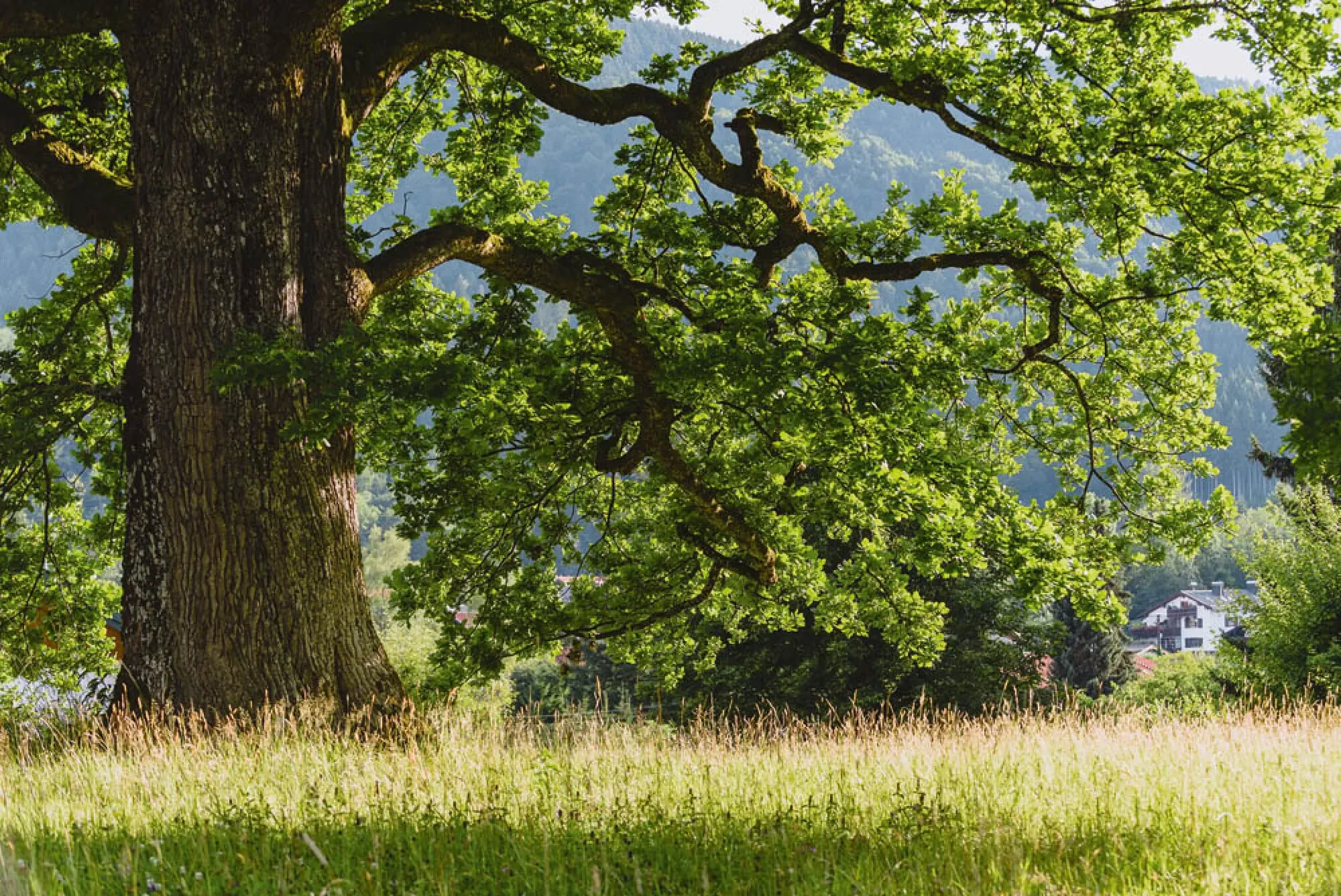
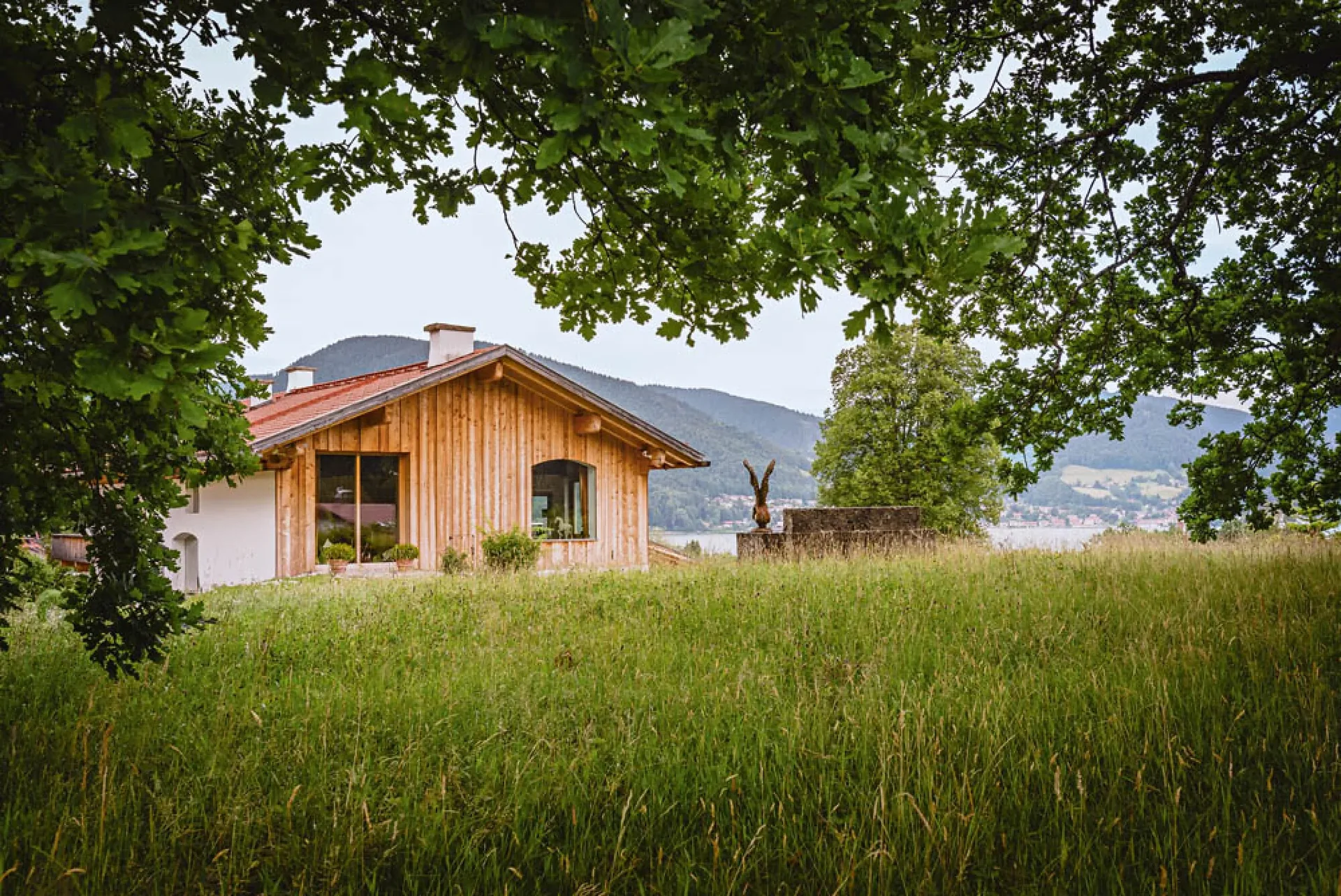
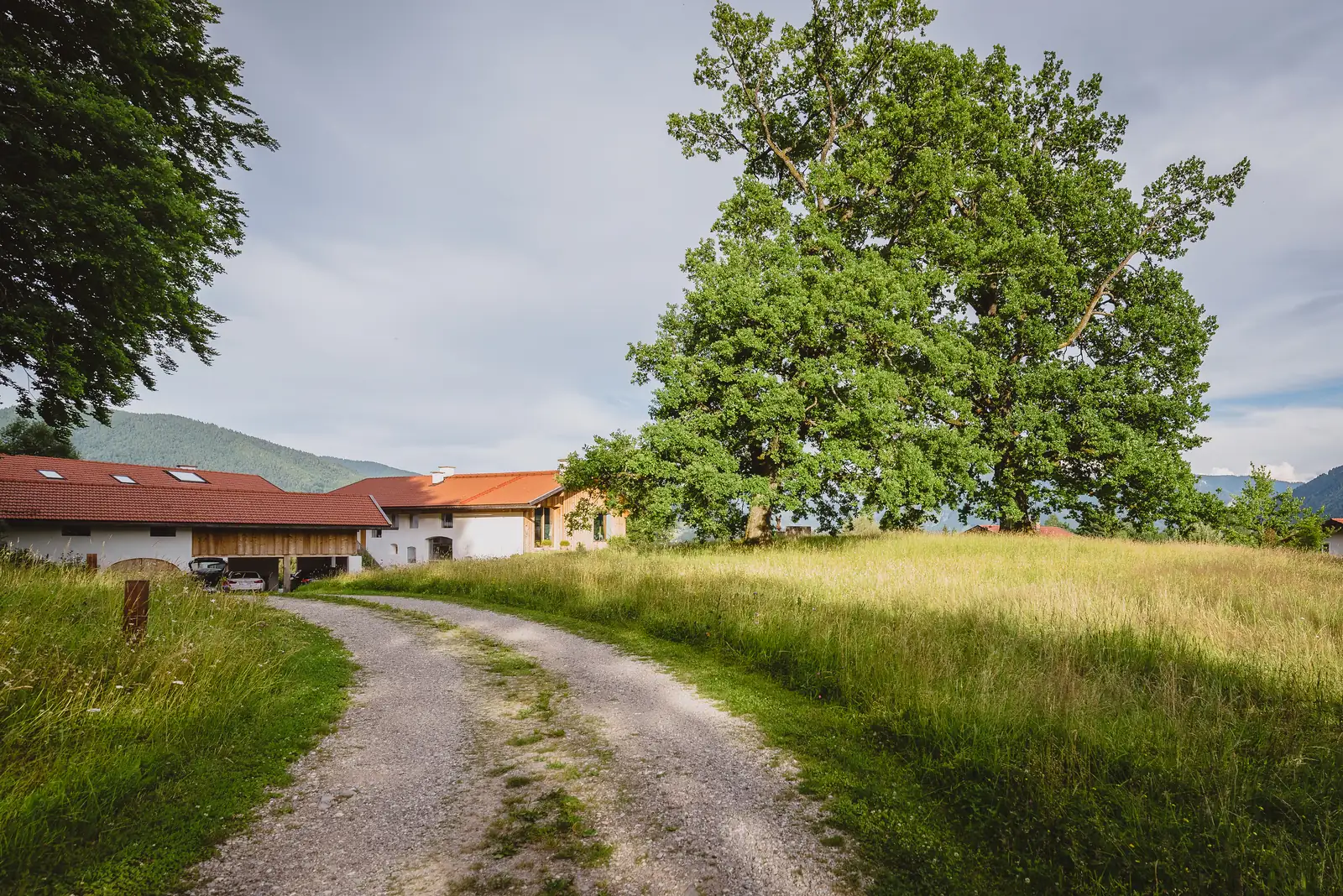
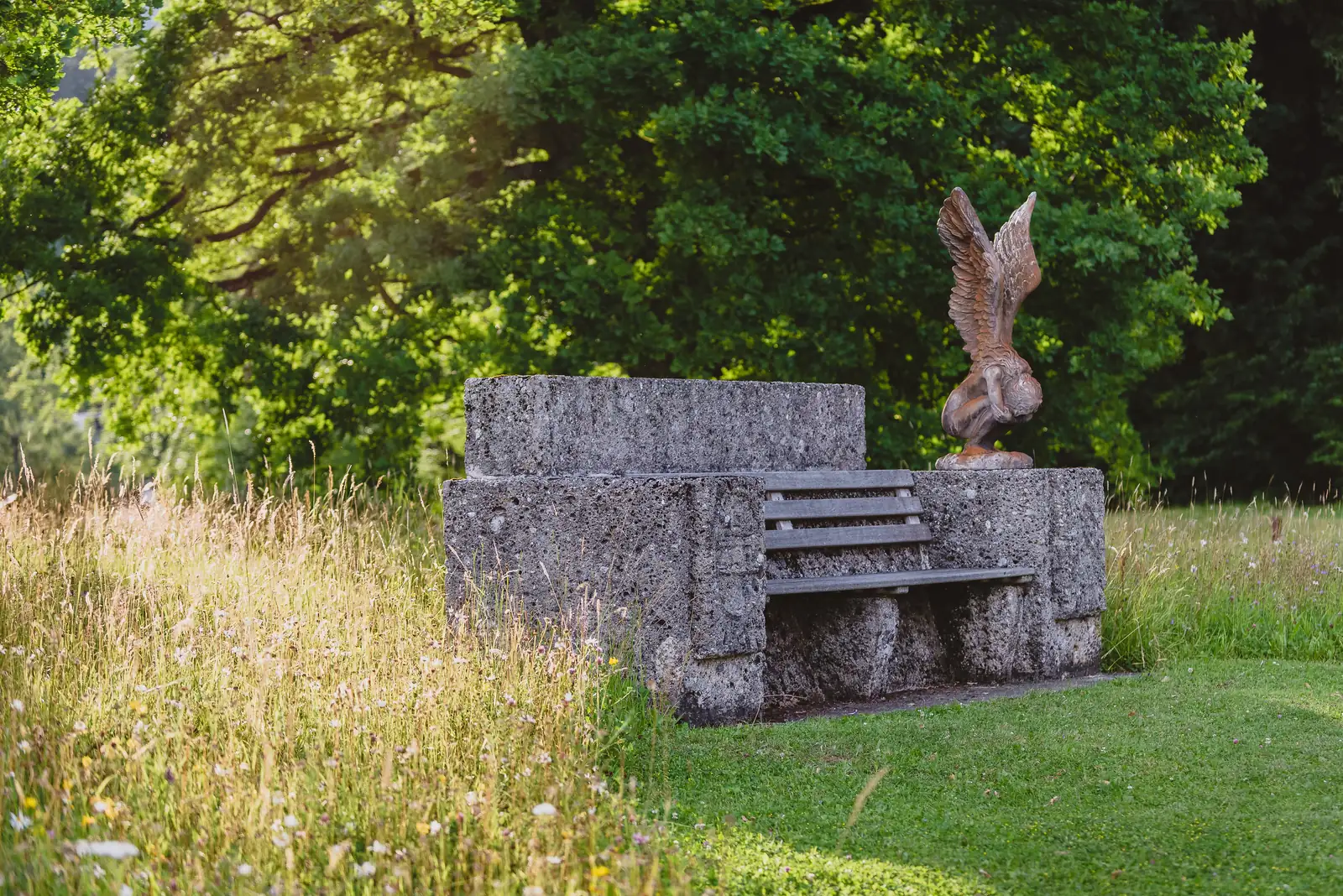
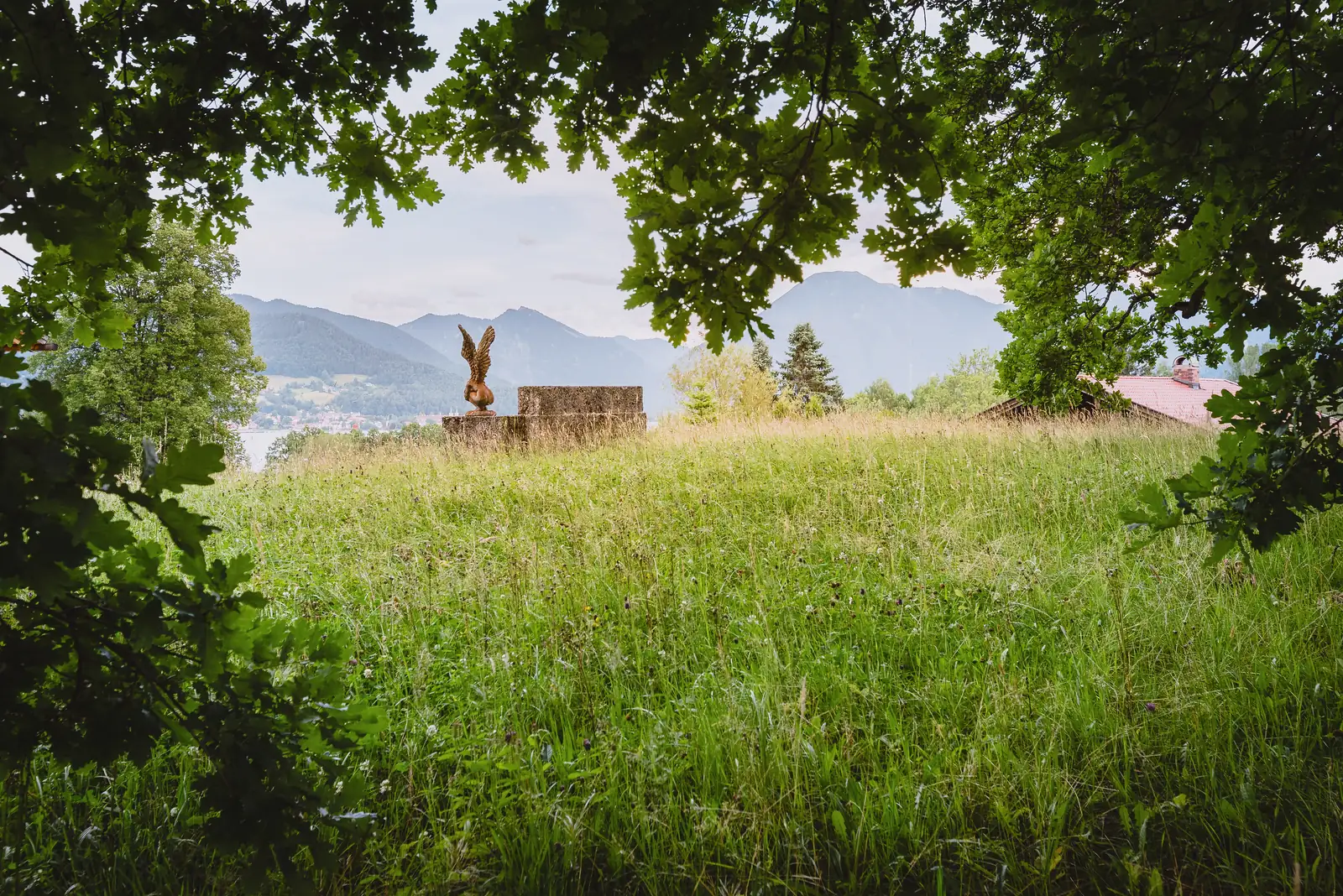
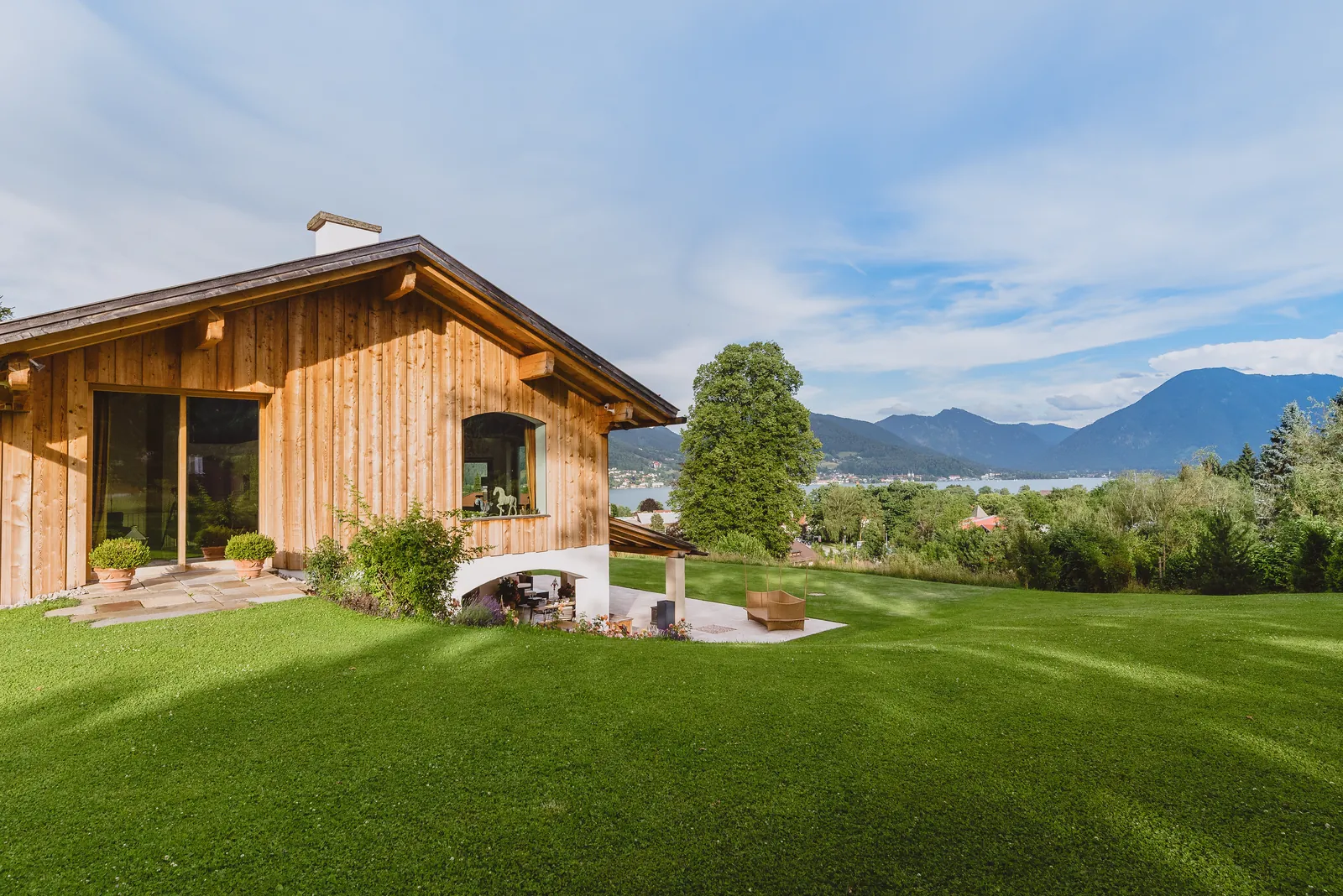
A meadow is something you have to be able to afford – not in price, but in space. Here, the space was there: 8,000 m² of flower meadow wraps around a multi-generational farmstead in the Tegernsee valley, settling it so softly into the landscape that you can't find where one ends and the other begins. Two old oaks stand in it, their branches spread wide – house trees that have long stood free.
The garden was designed by Fred Fuchs, our second generation. He didn't learn about natural gardens from books: he sought out Reinhard Witt, co-founder of the Naturgarten e. V., and trained there as a natural garden specialist. Around 80% of this garden is built to the association's criteria.
Why 5,000 m³ of soil was taken away
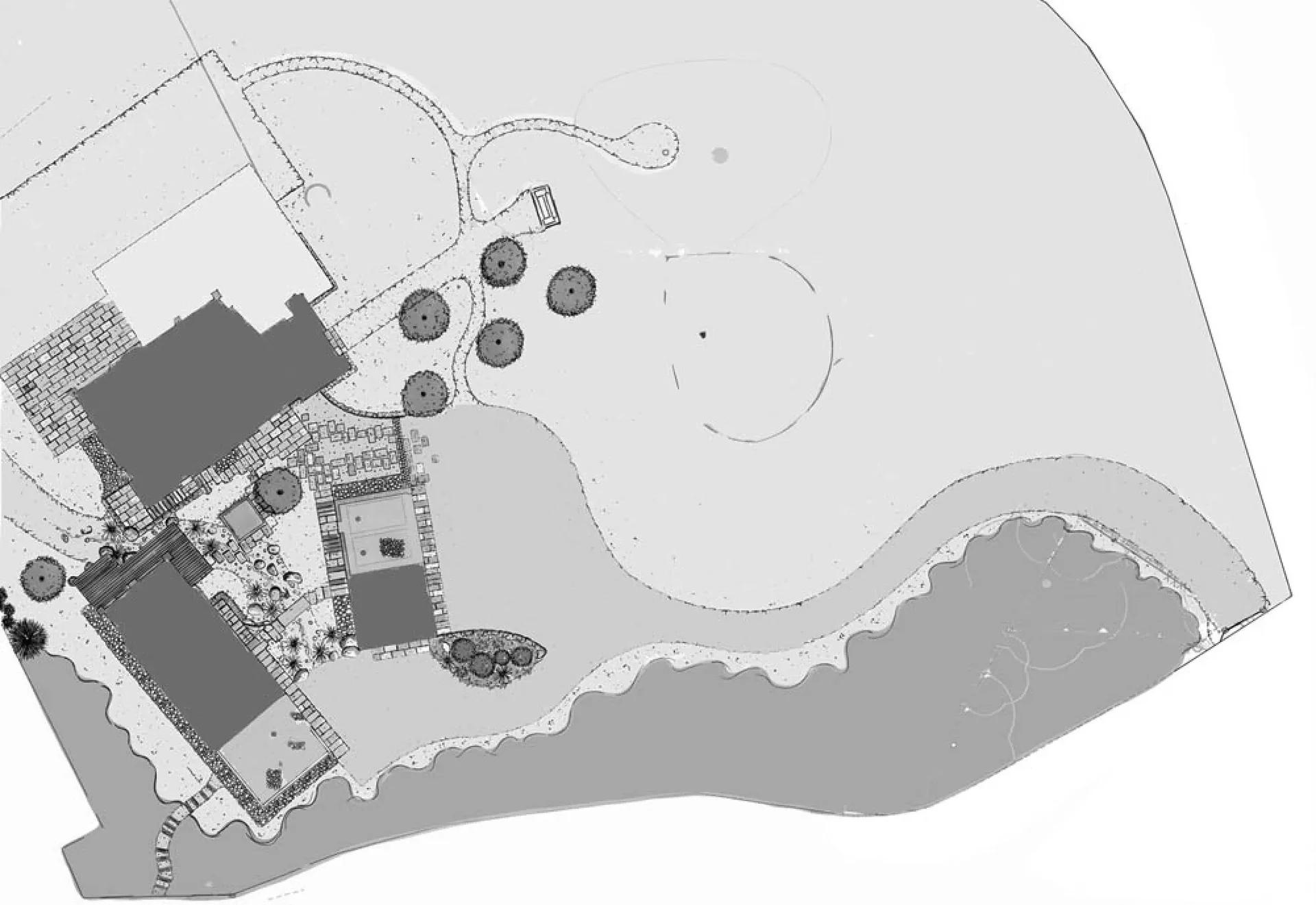
A lean meadow rich in flowers and herbs needs nutrient-poor soil – on good topsoil, a few strong grasses take over and the rest disappear. So most of the topsoil was removed, around 5,000 cubic metres. Today two thirds of the area is meadow and one third remains lawn: a play area for the children. The seed mix came through the Naturgarten network and was matched to this site – that determines which species actually appear in the end.
A flower meadow isn't created by sowing, but by mowing
That is the lesson of this project, and we spell it out because it is almost never talked about: a species-rich meadow only lasts if it is mown at the right time – only once as many species as possible have flowered and set seed. If it is mown too early one year, those species are missing the next. Anyone who creates a meadow is committing to decades of care. That is exactly why we have a dedicated department: garden maintenance – and you can find more on the subject under environment and biodiversity and naturalistic perennial planting.
The water stays on the plot. The surfaces are permeable, so surface water soaks away. Roof water drains via a stream modelled into the slope and stepped towards the buildings with large dolomite boulders: in heavy rain a little mountain torrent rushes through the garden, and afterwards it is dry again. The fountain system also runs through a drainage system so that the water circulates.
The craftsmanship beneath the nature
From our construction documents – built from January 2012 to May 2013, planted by spring 2013.
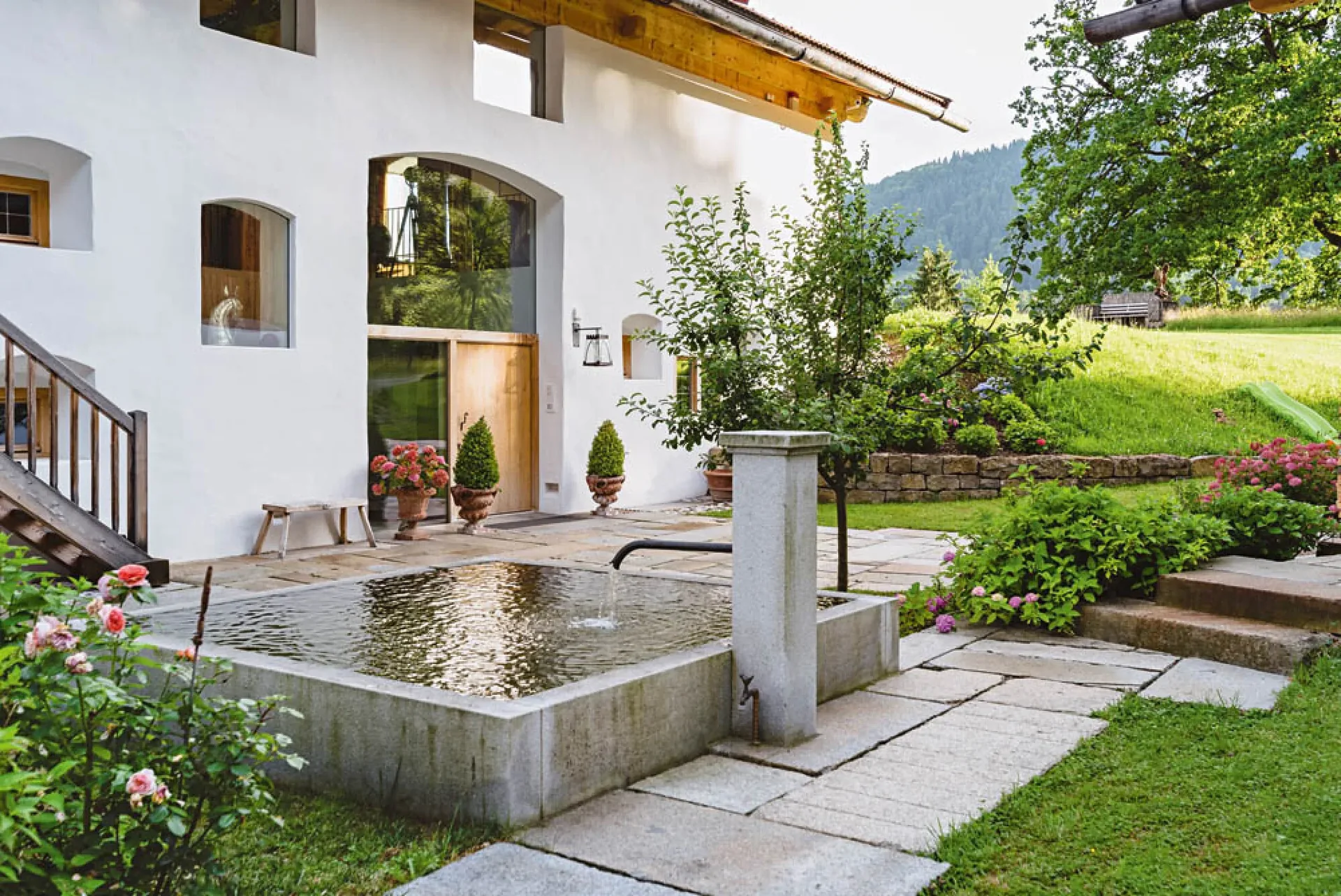
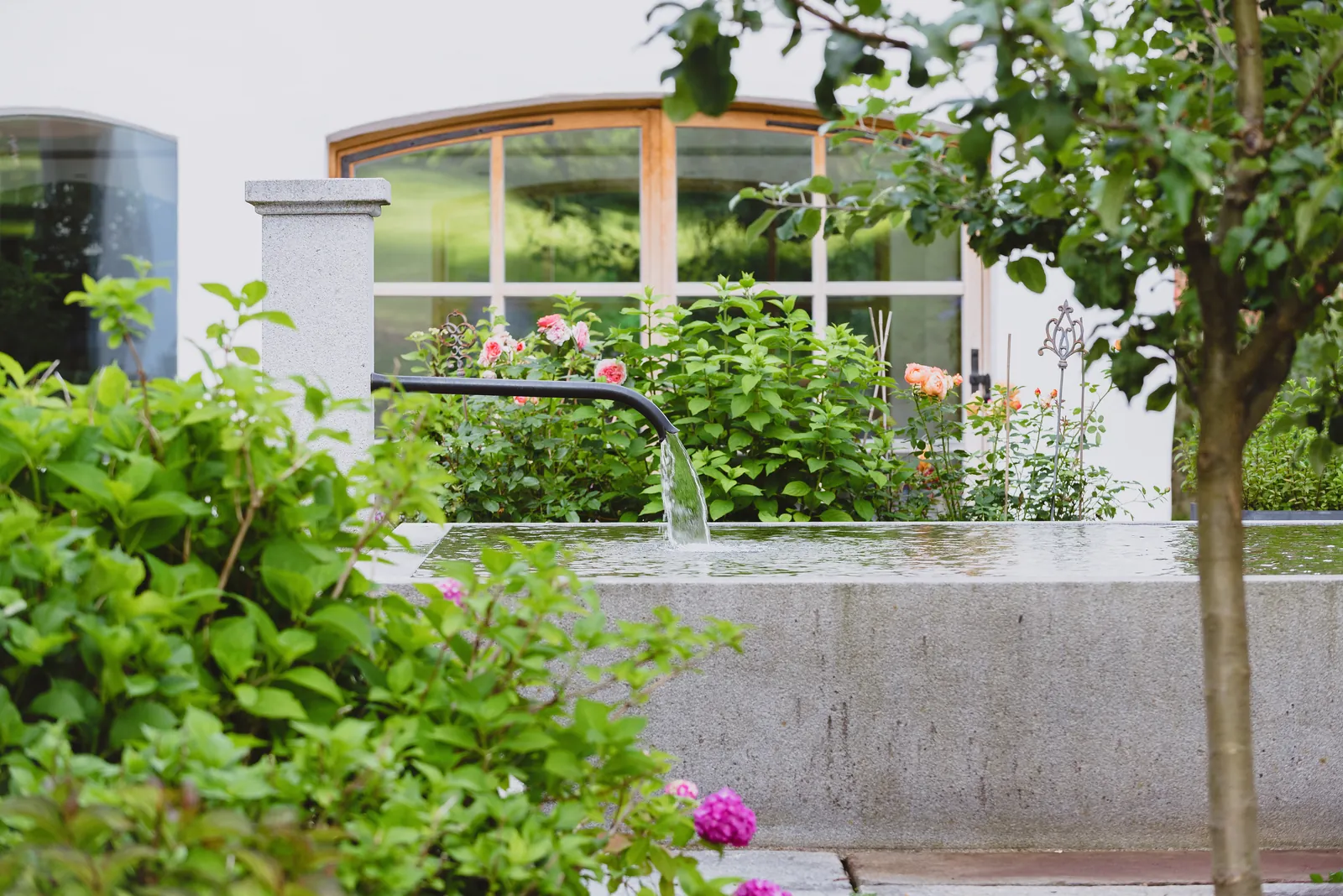
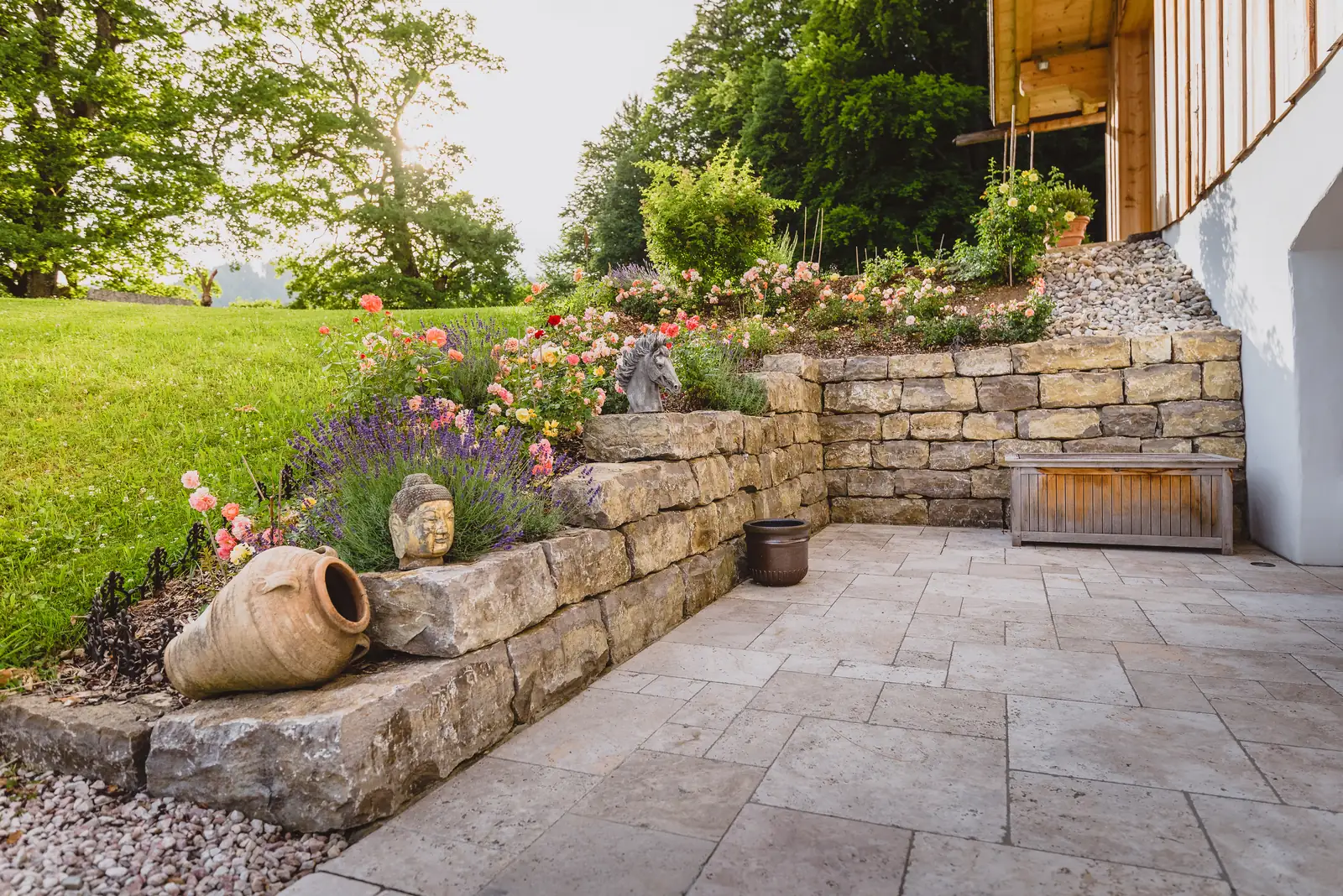
The reason this garden looks so effortless lies in what you can't see: 165 m² of travertine slabs laid on a concrete foundation slab with a drainage mat, plus 155 m² of rough-cut granite slabs, dry stone walls of shell limestone and limestone, antique granite steps, a wall fountain and the granite fountain basin in the courtyard. A deck by the house, Isar boulders in the grounds – and around 450 m² of flowering gravel lawn: green areas that can still be driven on and yet bloom.
The planting was done on a scale that makes an immediate impact: nine espalier hornbeam standards as a green wall, over thirty large specimen yews and field maples four to five metres tall. How we build walls and paving like these is explained under walls and fences and construction.
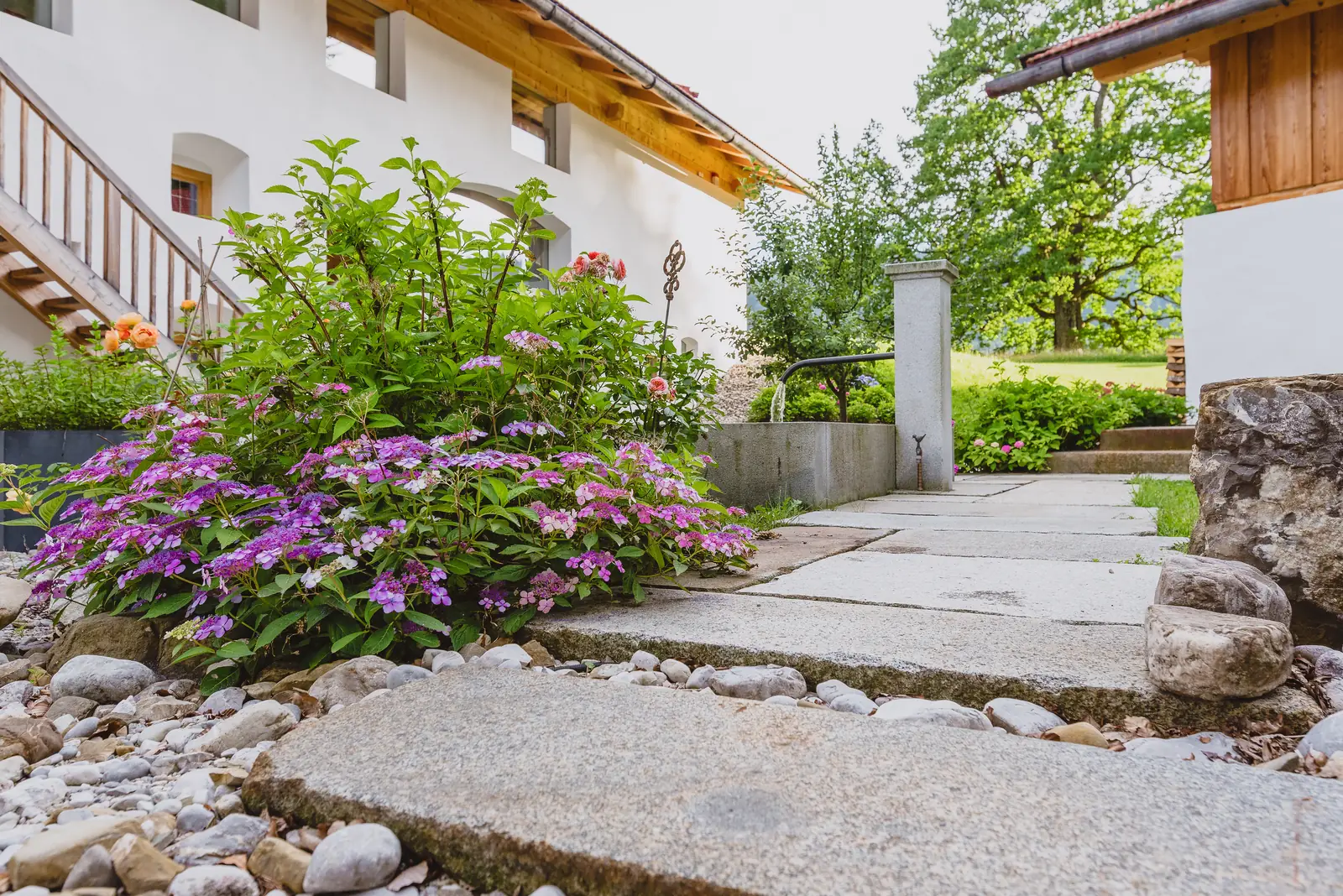
The courtyard is the meeting place for the generations who live here. Its focal point is a wide basin of local granite in which the architecture is reflected; the paths are made of reclaimed granite slabs, partly interspersed with boulders. Here the design becomes denser – hydrangeas, the ‘Elstar’ apple tree – without ever feeling overdone.
There is no hard line towards the landscape, but a border of native trees and shrubs: field maple, spindle, medlar, cornelian cherry. Beneath them grows a herb layer that was sown specially – columbine, false mandrake, brown cranesbill, dame's violet and barren strawberry. The result is a garden that gives something all 365 days of the year, because every season brings something different.
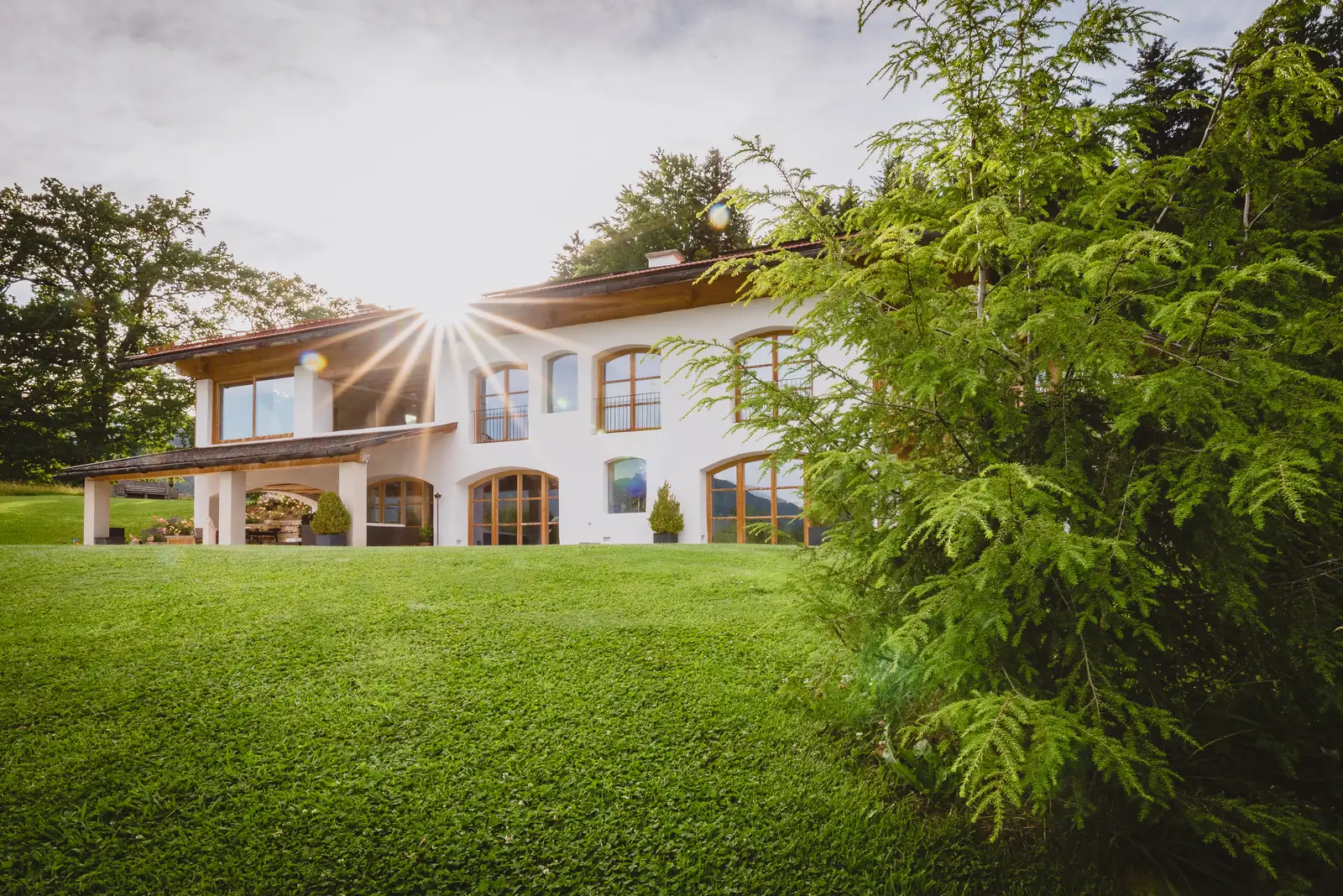
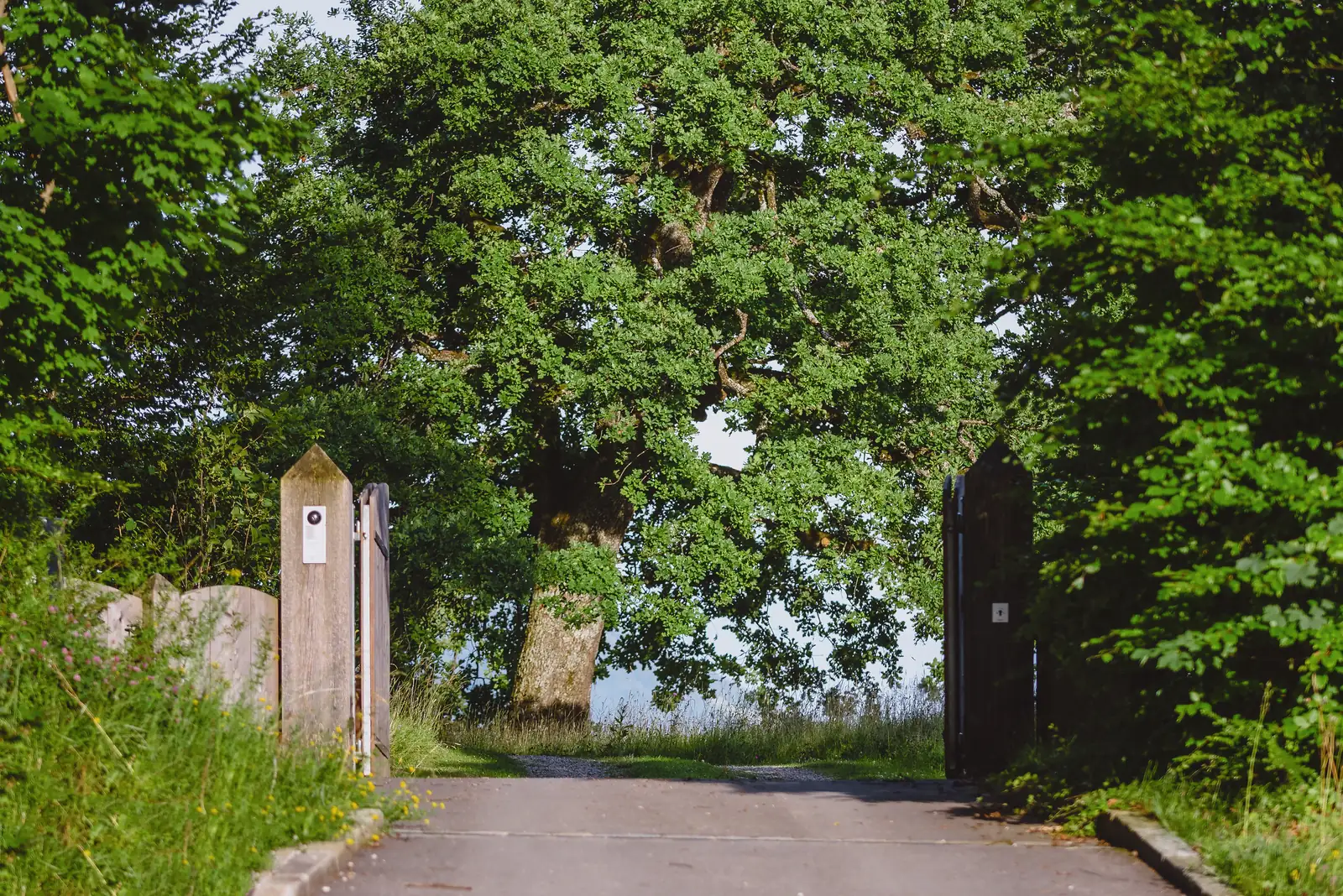
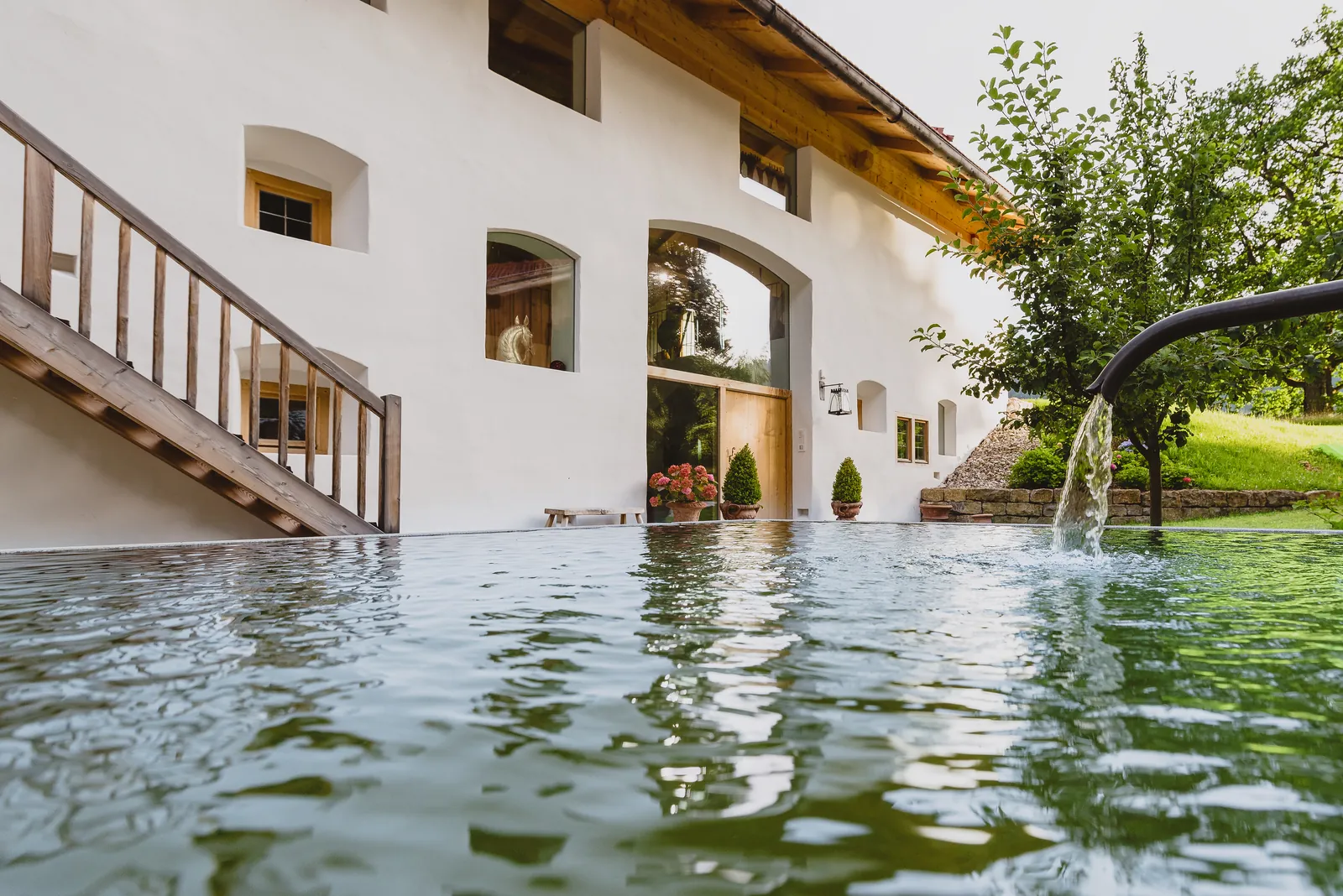
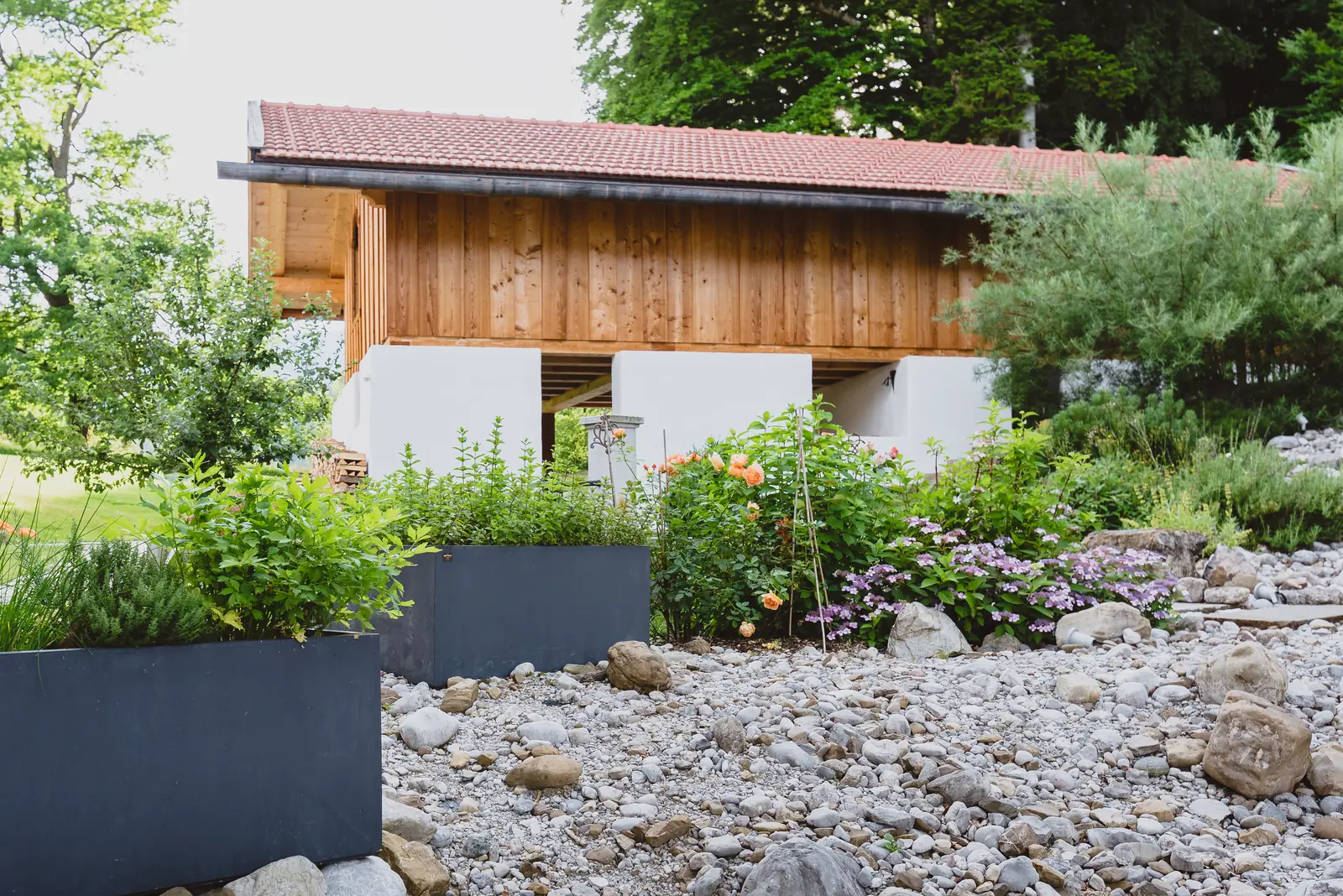
Photos: Dama Fotografie, Thomas Greil · “Gärten des Jahres” 2018 (Callwey) – published in the book “Die 50 schönsten Privatgärten”
Let's talk about your project
We are happy to advise you in person, with no obligation.
Request a consultation