
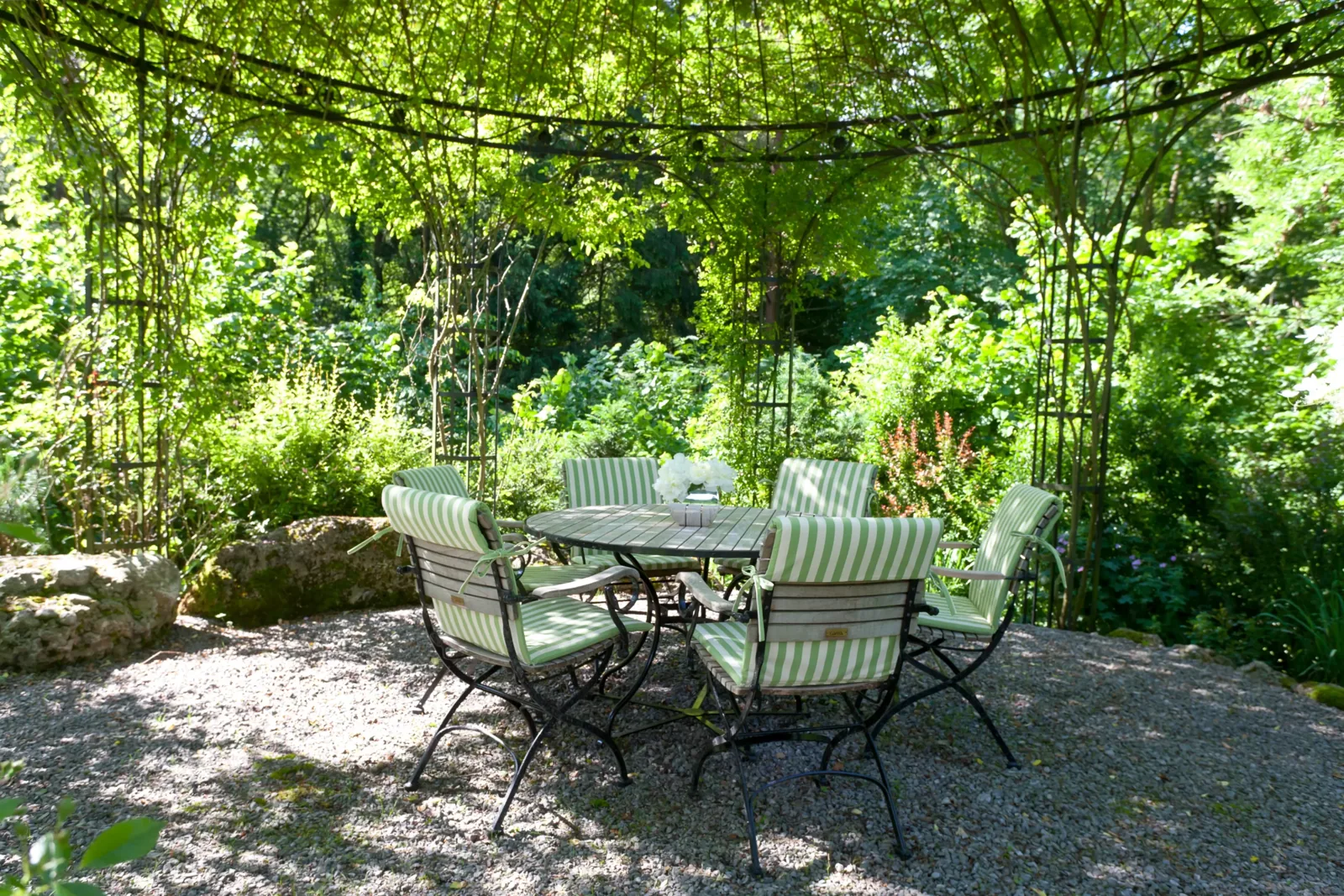
Caring for climbing plants
Climber types, supports, pruning and care
Compiled by our master gardeners · Last updated: July 2026
To print and file away – free to download.
Whether as decorative privacy screening from the neighbours, a firework of colour by the seating area or a green house façade: climbing plants can be used in many ways in the garden and are fairly easy to look after. A few simple rules will help you enjoy them for years.
Climbing types and their supports
Climbing plants have developed different techniques for pulling themselves towards the light – so depending on the type, they need different supports:
- Tendril climbers such as clematis or grapevine (Vitis vinifera) hold on to trellises with shoot tendrils or modified leaf stalks.
- Twiners such as honeysuckle (Lonicera), wisteria (Wisteria) or oriental bittersweet (Celastrus orbiculatus) wind their new growth around the support. When training them, bear in mind: they mostly twine anticlockwise – so guide the shoot anticlockwise.
- Self-clinging climbers such as Virginia creeper (Parthenocissus), ivy (Hedera) or climbing hydrangea (Hydrangea petiolaris) grow up vertical surfaces without a support, using adhesive pads or roots. If growth is too lush, a maintenance prune helps so the plant doesn't get too heavy and pull away from the wall.
- Scrambling climbers such as climbing rose (Rosa), winter jasmine (Jasminum nudiflorum) or evergreen climbing raspberry (Rubus henryi) initially grow stiffly upright, and the support serves as a prop. It is best to tie climbing rose shoots in horizontally at first – this produces plenty of flower-bearing shoots.
Irrigation
Make sure plants get enough water, especially on warm days. Plants under roof overhangs or in pots in particular should be watered regularly. Evergreen climbers such as ivy or evergreen honeysuckle also need water in winter: water on frost-free days to prevent frost drought.
Feeding
Climbing plants need a lot of nutrients because they produce an enormous amount of foliage and flowers in a short time. Organic slow-release fertilisers are practical, as they feed the plant evenly over weeks or months; alternatively, add liquid mineral fertiliser to the water regularly. Measure granular fertiliser exactly as stated on the packaging and spread it well – otherwise “fertiliser pockets” with harmful salt concentrations will form.
Pruning: what each species needs
Some climbing plants need hard pruning to build their structure and flower well, others benefit from thinning, and many can be left unpruned. The most important species:
- Wisteria (Wisteria): cut side shoots back to three buds in late summer – it flowers on short shoots, which pruning encourages. Without pruning, wisteria only flowers after several years. Caution: the plant is poisonous.
- Italian clematis (Clematis viticella): cut back to around 40 cm in December or early spring before new growth starts.
- Alpine clematis (Clematis alpina): tolerates a light pruning after flowering in spring.
- Trumpet vine (Campsis radicans): in early spring before new growth, cut all side shoots back to three buds.
- Russian vine (Fallopia aubertii): needs no pruning to flower, but can be cut back hard in early spring to keep its growth in check.
- Oriental bittersweet (Celastrus orbiculatus): hard annual winter pruning; keep away from young trees and downpipes.
- Ivy (Hedera): a maintenance prune to keep it in check is possible at any time.
- Climbing hydrangea (Hydrangea petiolaris): tolerates a maintenance prune before new growth if it grows too vigorously.
- Evergreen honeysuckle (Lonicera henryi): cut back hard if it becomes bare at the base; this plant is also poisonous.
- Boston ivy (Parthenocissus tricuspidata): trim in summer as needed; in winter, cut back a strip one metre wide below the roof each year so the plant doesn't take over the roof of the house.
Answers about climbing plants
Why isn't my wisteria flowering?
Which climbing plants don't need a climbing support?
Do you have to cut back clematis?
Do you have to water ivy in winter?
How do you stop Virginia creeper from growing onto the roof?
Let's talk about your project
We are happy to advise you in person, with no obligation.
Request a consultation