
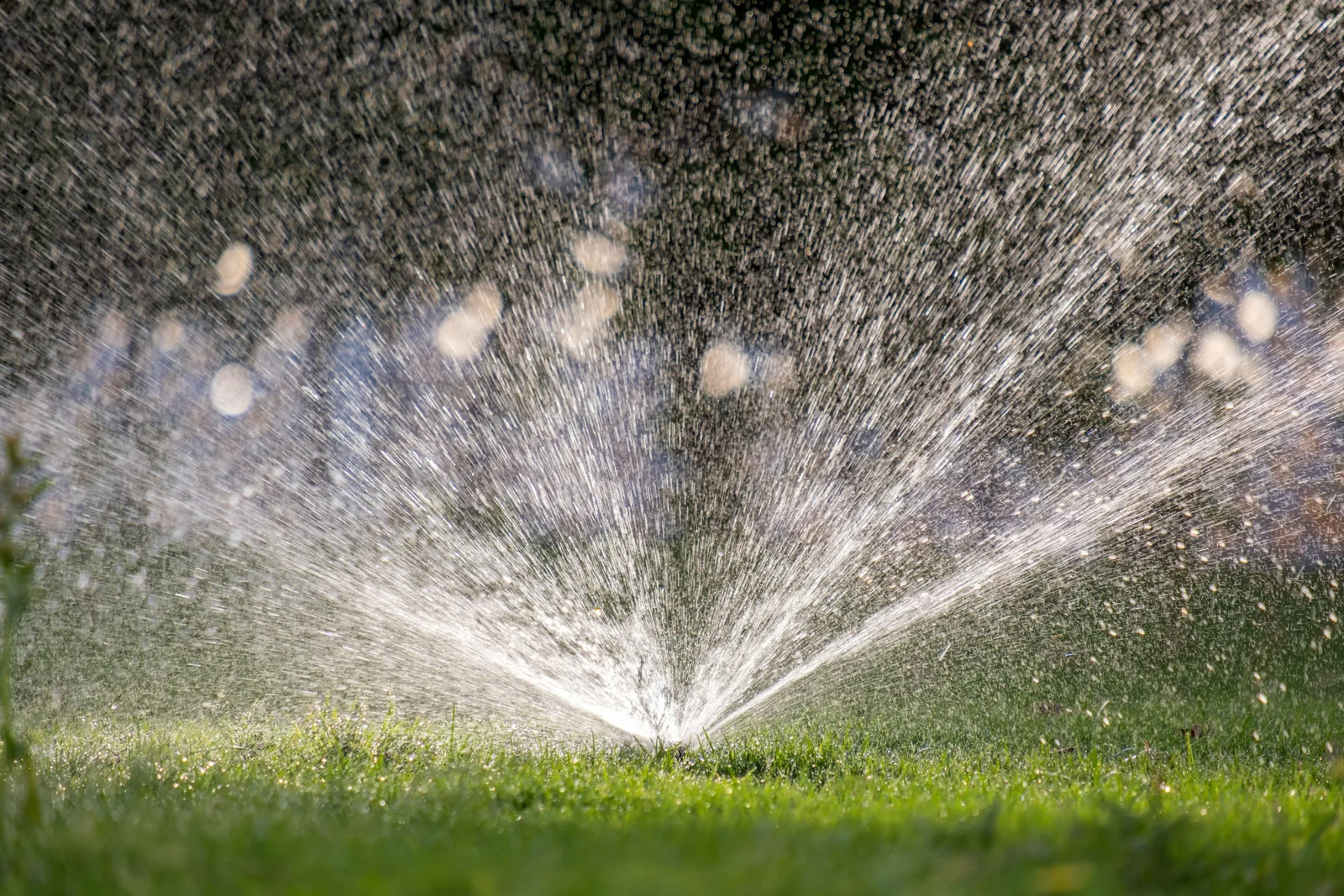
Caring for your irrigation system
Operation, servicing and winterising of automatic irrigation
Compiled by our master gardeners · Last updated: July 2026
To print out and file – free to download.
An automatic irrigation system saves you a lot of work in summer – provided it is checked regularly and properly prepared for winter. Most damage to irrigation systems doesn't happen during operation, but through frost in pipes that haven't been drained. With a few regular tasks, your system will stay reliable for many years.
Start of the season in spring
Only put the system into operation once severe frosts are no longer expected. Open the water supply slowly so that the pipes fill without pressure surges. Then run each irrigation zone individually and check:
- Do all pop-up sprinklers extend fully and retract again?
- Are the throw distance and spray direction still correct?
- Are there wet spots in the lawn or beds that point to a leaking pipe?
Also check the battery of the controller or the valve boxes, if fitted – changing the battery at the start of the season prevents breakdowns in high summer.
Operation over the summer
Preferably water in the early morning hours: evaporation is low and the plants can dry off. It is better to water infrequently and thoroughly than superficially every day – this applies to lawns just as much as to planting beds. Adjust the run times to the weather: after periods of rain, the system can happily pause for a few days. A rain sensor or weather-based controller does this automatically.
Checking nozzles and filters
Limescale-clogged or blocked nozzles are the most common cause of uneven watering. Check the spray pattern once or twice per season and clean nozzles and fine filters as needed. With drip lines, a blockage often only shows in wilting plants – occasionally flushing the line at the end piece helps. Systems using cistern or well water usually have a central filter that should be cleaned regularly.
Smart controller
Modern controllers can be operated via an app and adjust the amount of water to weather data. This saves water and time – but doesn't replace a look at the garden: occasionally check whether the automatically calculated run times match the actual condition of the plants. After a power cut or a change of router, it is worth running a quick test of the connection.
Winterising – the most important date of the year
Before the first frost, the system must be drained completely. Residual water in pipes, valves and sprinklers expands as it freezes and bursts components. The safe method is to blow out the pipes with a compressor, zone by zone, until only a fine mist emerges. Close the water supply, set the controller to winter mode or switch it off, and remove frost-sensitive components such as water meters or external filters and store them frost-free.
Answers about irrigation systems
When should the irrigation system be winterised?
Is it enough to simply turn off the water?
Why is a zone suddenly being watered unevenly?
How often and for how long should the system water automatically?
Let's talk about your project
We are happy to advise you in person, with no obligation.
Request a consultation