
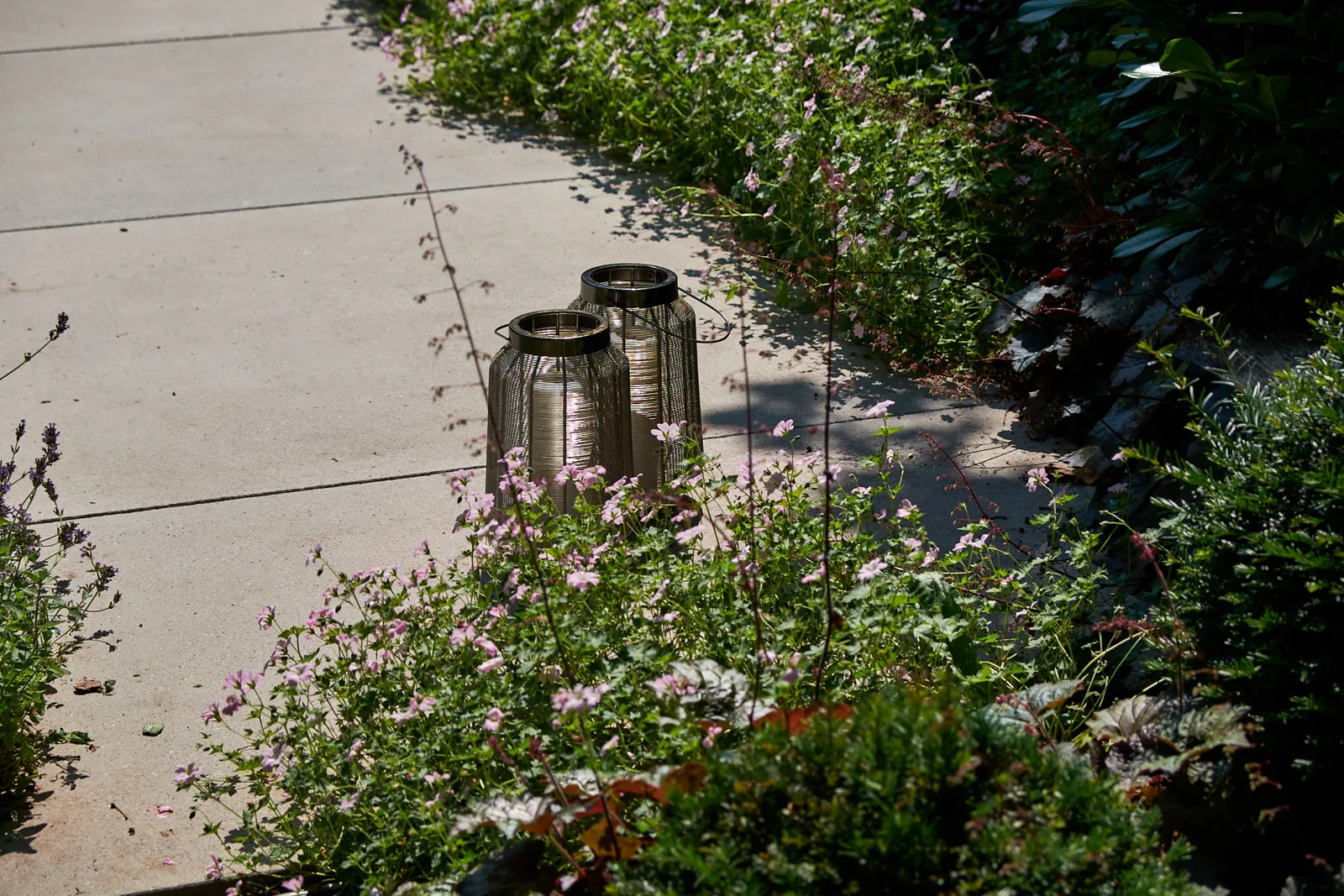
Caring for paving and slab surfaces
Cleaning surfaces, maintaining joints, preventing stains
Compiled by our master gardeners · Last updated: July 2026
To print and file away – free to download.
Paving and slab surfaces are among the oldest and most skilful methods of construction – durable, versatile and often in use for a lifetime. To keep them looking good, the surfaces need the right cleaning and care. How sensitive a surface is depends on the roughness, porosity and surface finish of the material.
Sweep regularly – the most important care task
Normal dirt can be removed by sweeping with a broom or brush, and basic cleaning is done when the surface is dry. For a better result, thoroughly dampen the surface with tap water afterwards, clean it with the broom and rinse with plenty of clear water. For stubborn dirt, a neutral cleaning agent (e.g. pH-neutral soap) helps. For softer stone surfaces, use soft bristles only.
Regular sweeping pays off twice: it reduces the growth of algae and moss, prevents stains from plant matter and protects polished surfaces from scratches. Remove leaves, grass clippings and fertiliser residue promptly – decaying plant parts release tannic acids, which soak into the stone and can cause permanent discolouration. Leaves lying on the surface also increase the risk of slipping.
Avoiding and treating stains properly
Spilled drinks, barbecue grease or fallen fruit are best wiped up immediately with a damp cloth and rinsed with plenty of clear water – that way the substances do not penetrate deep into the stone. Rust stains are caused by forgotten metal tools, garden furniture containing iron, moss killers or iron-containing fertiliser and are hard to remove; use only suitable specialist cleaners for these. For all cleaning products, the same rule applies: they must be compatible with the material. Acidic cleaners work well against cement haze, but they attack concrete paving and many natural stones – distinguish between acid-resistant stones (mostly granite or ceramic) and acid-sensitive ones (limestone, cast concrete stone). Always test products on a hidden spot first.
Joints and weeds
With unbound construction (laid on sand or grit), the joints must always stay filled. If jointing material is washed out, top it up with suitable sand – otherwise the stones loosen, shift or tilt. If dust and organic material collect in the joints, humus forms and plants settle in it. Weeding by hand is the most effective method: remove the whole plant including the root, then refill the joint. Regular sweeping minimises this effort.
Efflorescence – not a defect
White marks or a haze on the stone surface are caused by the reaction of moisture with the building material and are particularly visible on dark stones. They have no effect whatsoever on the quality or durability of the material and are not a defect. As a rule, they disappear by themselves through natural weathering. If you don’t want to wait, you can help things along with clear water and a brush or use special cleaners – make sure they are suitable for the surface in question.
Winter maintenance without salt
De-icing salts attack the stone surface and leave stains. Trees, shrubs and lawn along the edges of paths also suffer when salt is washed off the surfaces. The use of de-icing salt is generally not permitted for environmental reasons and is only allowed in exceptional cases (e.g. black ice) on particularly hazardous areas such as steps. The best protection against salt stains is to avoid it altogether.
Impregnating and sealing
Impregnations soak into the stone, make it water- and dirt-repellent and significantly reduce the cleaning effort; they remain permeable to water vapour and last longer than sealants. Sealants form a protective layer, intensify the colour and create a sheen – but they can make the surface more slippery and they wear off. Important: water-permeable and free-draining surfaces must never be sealed or impregnated, otherwise the water can no longer drain away. Always follow the manufacturer’s instructions and test a sample area first, as the treatment is almost impossible to reverse.
Answers about paving and slab surfaces
Can I clean my paving with a pressure washer?
What are the white marks on my paving stones?
What helps against weeds in the paving joints?
Can I use road salt on the terrace in winter?
Why do some paving stones wobble?
Let's talk about your project
We are happy to advise you in person, with no obligation.
Request a consultation