
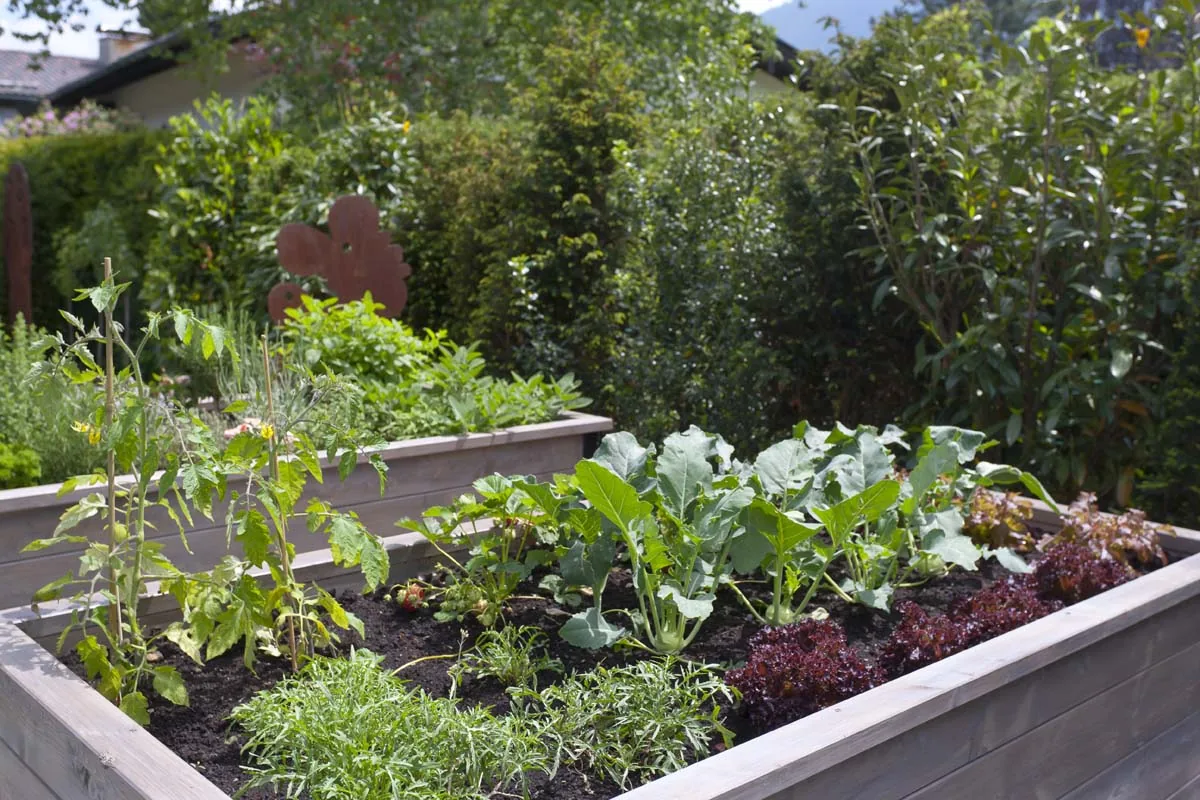
Caring for a raised bed
Substrate, watering and care of materials through the year
Compiled by our master gardeners · Last updated: July 2026
To print and file away – free to download.
A raised bed makes gardening comfortable: a back-friendly working height, loose substrate and, thanks to the heat from the rotting filling, often an earlier start to the gardening year. To keep it that way, a raised bed needs a little attention – above all with the substrate, the irrigation and the material of the frame.
Topping up and renewing the substrate
The layered filling of a raised bed sinks noticeably every year as it rots down – this is normal and not a fault. In spring, top it up with mature compost and good potting soil until the surface is about a hand's width below the rim again. After several years the filling has largely broken down and its nutrient value declines; then it is worth rebuilding the bed completely – in the classic way, from coarse to fine: branches and chippings at the bottom, green waste and half-rotted compost above them, and mature compost and soil on top. A fine-mesh wire grid at the base keeps voles out and should be checked when you rebuild the bed.
Irrigation
Raised beds dry out faster than beds at ground level – the filling is loose and the walls heat up. In dry spells this means: water regularly and thoroughly, ideally in the morning and directly at the root zone. A mulch layer of grass clippings or straw keeps moisture in the bed and saves water. Drip irrigation works conveniently and evenly in a raised bed, and it can also be connected to an existing irrigation system.
Crop rotation and fertilising
The old gardener's rule applies in a raised bed too: don't grow the same crop in the same place every year. Alternate between heavy feeders (e.g. tomatoes, courgettes, cabbage), medium feeders (e.g. lettuce, carrots) and light feeders (e.g. herbs, peas, beans). In the first year or two after building, the bed is especially rich in nutrients – ideal for heavy feeders; after that, medium and light feeders follow, supplemented with compost in spring. This keeps the soil and plants healthy and stops diseases from building up.
Caring for timber and other materials
Timber raised beds last longer if the inner walls are protected from constant soil moisture with a studded membrane or pond liner – check the liner for damage whenever you top up. On the outside, it is enough to keep the timber clean; if you want to paint it, use safe finishes suitable for vegetable beds. Larch, Douglas fir or oak last many years untreated and simply turn grey. With metal and stone beds, a visual check for rust spots or cracks is enough; keep hinges and attachments (e.g. cold frame lids) moving freely.
Preparing for winter
After the last harvest, remove spent plant remains and do not leave diseased plant parts in the bed. The bed does not have to stay empty over winter: winter lettuce, lamb's lettuce or spinach make use of the residual warmth, or a green manure crop or a mulch layer protects the substrate from silting up and leaching. A fleece cover or a cold frame top extends the season at both ends. Drain irrigation lines in the raised bed before the frost.
Answers about raised beds
Why does my raised bed sink every year?
How often do I need to replace the filling completely?
What should I plant in a freshly built raised bed?
Do I need to paint my timber raised bed?
Let's talk about your project
We are happy to advise you in person, with no obligation.
Request a consultation