
Compiled by our master gardeners · Last updated: July 2026
To print and file – download it free of charge.
Topiary is wonderfully versatile: as an eye-catching specimen, as privacy screening or as a room divider in the garden. To keep it in shape, consistent care is important – then the trees and shrubs gain in beauty and value over the years.
What topiary is
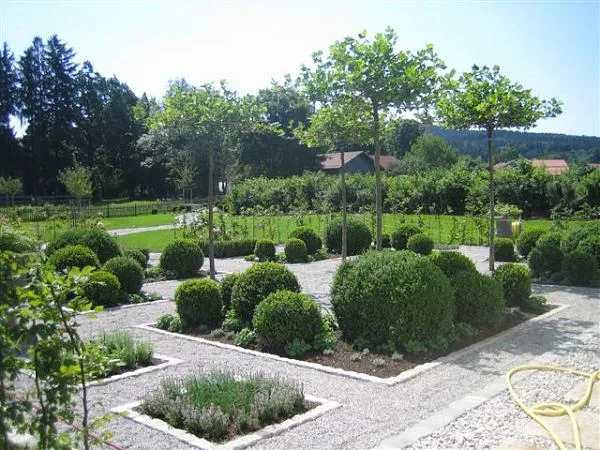
Topiary plants are all those that can be trained into an artificial shape by regular cutting – geometric forms as well as special shapes such as large bonsai, and of course hedges. What they all have in common: the desired shape is only kept if you cut precisely and at the right time. Evergreen and deciduous plants, conifers and broadleaf trees and shrubs are all suitable. The classics – already used in the Baroque era – include hornbeam (Carpinus betulus), box (Buxus sempervirens) and yew (Taxus baccata). As a general rule: the more formal the shape, the more often it needs cutting. Cut twice a year, topiary stays dense and immaculate.
The choice of plant depends on its purpose: for low edging and block planting, slow-growing box varieties such as “Herrenhausen” or “Blauer Heinz” are suitable, while common hedging box suits larger shapes from knee height. For tall hedges, arbours and niches, common beech (Fagus sylvatica) is often used – its brown leaves cling on long into winter and so continue to provide privacy screening.
The right time to cut
Cut during the cold season and/or in early summer. A late summer cut is particularly unwise for evergreens: cutting stimulates new growth – if these shoots do not harden off before winter, the result is frost damage and unsightly browning.
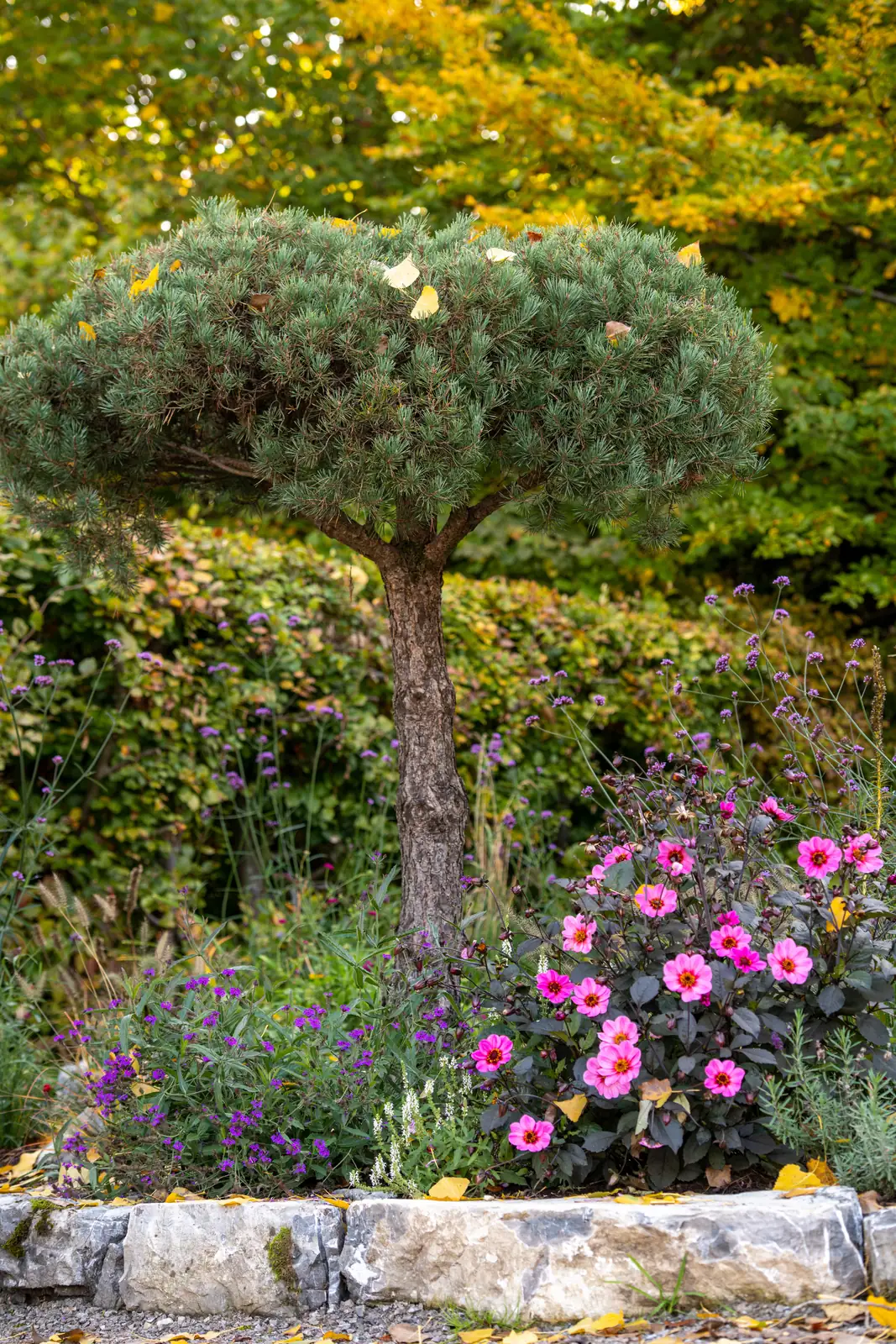
Large bonsai call for a practised hand: the individual shape must not only be maintained by cutting, but perfected. With conifers, the young growth is thinned out and shortened before the needles have matured – this avoids bristly, unnatural-looking needles, and the remaining needles develop perfectly.
Working cleanly: hygiene and tools
Never cut in great heat and strong sunshine – this leads to rapid drying out of the cut surfaces, especially on large-leaved evergreens such as cherry laurel (Prunus laurocerasus), and so to scorching. Blades and knives must always be very sharp to avoid unsightly tearing of the shoots.
Feeding
Topiary needs feeding too: because it grows so densely, little water reaches the root zone. Feeding followed by watering is important for rich green foliage. Pure nitrogen fertilisers are unsuitable, as they encourage unwanted long growth of the new shoots.
Alternatives to box
Good alternatives are box honeysuckle (Lonicera pileata), yew (Taxus baccata) and the small-leaved Ilex crenata – all three are evergreen and can be trained into any shape imaginable. Box honeysuckle grows very quickly, but is at risk in extreme winters. Yews grow very slowly: if you plant larger specimens from the start, you buy yourself time.
Answers about topiary
How often does topiary need cutting?
When is the best time to clip topiary?
Why does cherry laurel turn brown after cutting?
Which plants are a good alternative to box?
How can you stop box blight from spreading?
Let's talk about your project
We are happy to advise you in person, with no obligation.
Request a consultation