
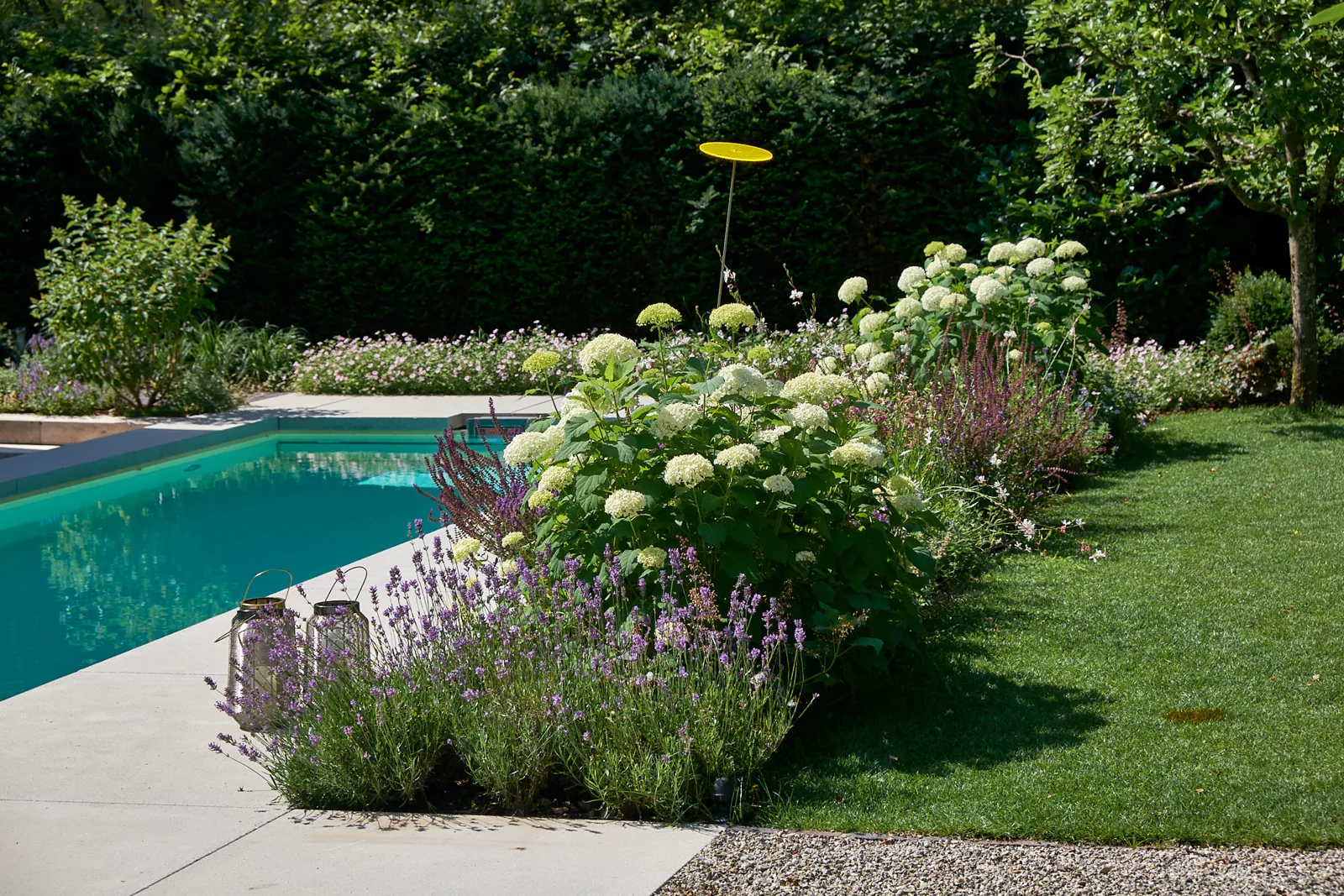
Caring for Turf (Rolled Lawn)
From laying to a hard-wearing lawn
Compiled by our master gardeners · Last updated: July 2026
To print and file away – free to download.
Turf – usually called rolled lawn – is the quickest way to get a continuous lawn that you can walk on straight away. The area only becomes hard-wearing, however, once the lawn has fully established. The first two to three weeks after laying are crucial: mistakes in watering or feeding can lead to stunted growth, moss or, in extreme cases, total failure.
Laying and establishment phase
You can walk on the area straight after laying – for watering and mowing, it is even necessary. It is ready for full use after about three weeks, once the turf has rooted firmly in the soil beneath. In the early period, especially in warm, damp weather, more toadstools may appear. They come from the natural organisms in the soil, are harmless to the lawn and, if they spoil the look, can simply be mown off or raked away. As soon as the intensive watering ends and the lawn starts to grow, mushroom growth usually stops completely.
Watering in the first weeks
After laying, the turf must be kept constantly moist for two to three weeks – ideally with a lawn sprinkler, preferably early in the morning or in the evening to avoid losses through evaporation. As a rule of thumb, allow about 10 to 15 l/m² per day; reduce accordingly when it rains or the weather is cool. The soil should be soaked through, but the area should still be walkable. A simple check: if 10 to 15 mm of water collects in a shallow container, you have watered enough.
The first mowing
The first cut is made when the blades are 6 to 8 cm tall – cut back to 4 to 5 cm. Regular mowing, at least weekly during the growing season, keeps the sward looking dense. By the fourth mowing, the cutting height can be lowered gradually to about 4 cm, and in shade not below 5 cm. Never remove more than a third, and at most half, of the blade per mowing, and only use well-sharpened blades – blunt blades leave ragged edges that let disease in. Rake up the clippings afterwards.
Ongoing care after establishment
Once the lawn has rooted firmly after about three weeks, you no longer water daily but less often and more thoroughly: once or twice a week with about 15 to 20 l/m² is generally enough. The right moment is shown by the first signs of wilting – footprints that stay in the lawn, or small blue-grey patches on the grass. Feed from March to autumn in 2 to 3 applications with a total of 12 to 15 g nitrogen/m² per year: quick-release fertiliser at the end of March or beginning of April (when the forsythia blooms), slow-release complete fertiliser at the end of June or beginning of July, and in autumn a potassium-rich fertiliser that increases the grasses’ winter hardiness. Spread fertiliser in two passes at right angles and then water thoroughly. To deal with thatch, scarify in spring (blades no more than 3 mm into the soil), then top-dress with sand; for deeper compaction, aeration helps. Remove leaves and fallen fruit regularly, otherwise the lawn can suffocate; moss points to mowing too short, nutrient deficiency, waterlogging or shade.
Common mistakes
- Watering daily but only on the surface (after establishment): The roots stay in the top few centimetres, the lawn becomes thatchy and sensitive to drought.
- Too much water: Constant wetness leads to rot on leaves and roots – the area must stay walkable.
- Mowing too short: With blades shorter than 2 to 3 cm, some grasses are permanently damaged.
- Uneven feeding: The result is uneven growth and patchy colour – so spread at right angles and water afterwards.
- Leaving leaves and clippings lying: The lawn can suffocate underneath, and thatch builds up faster.

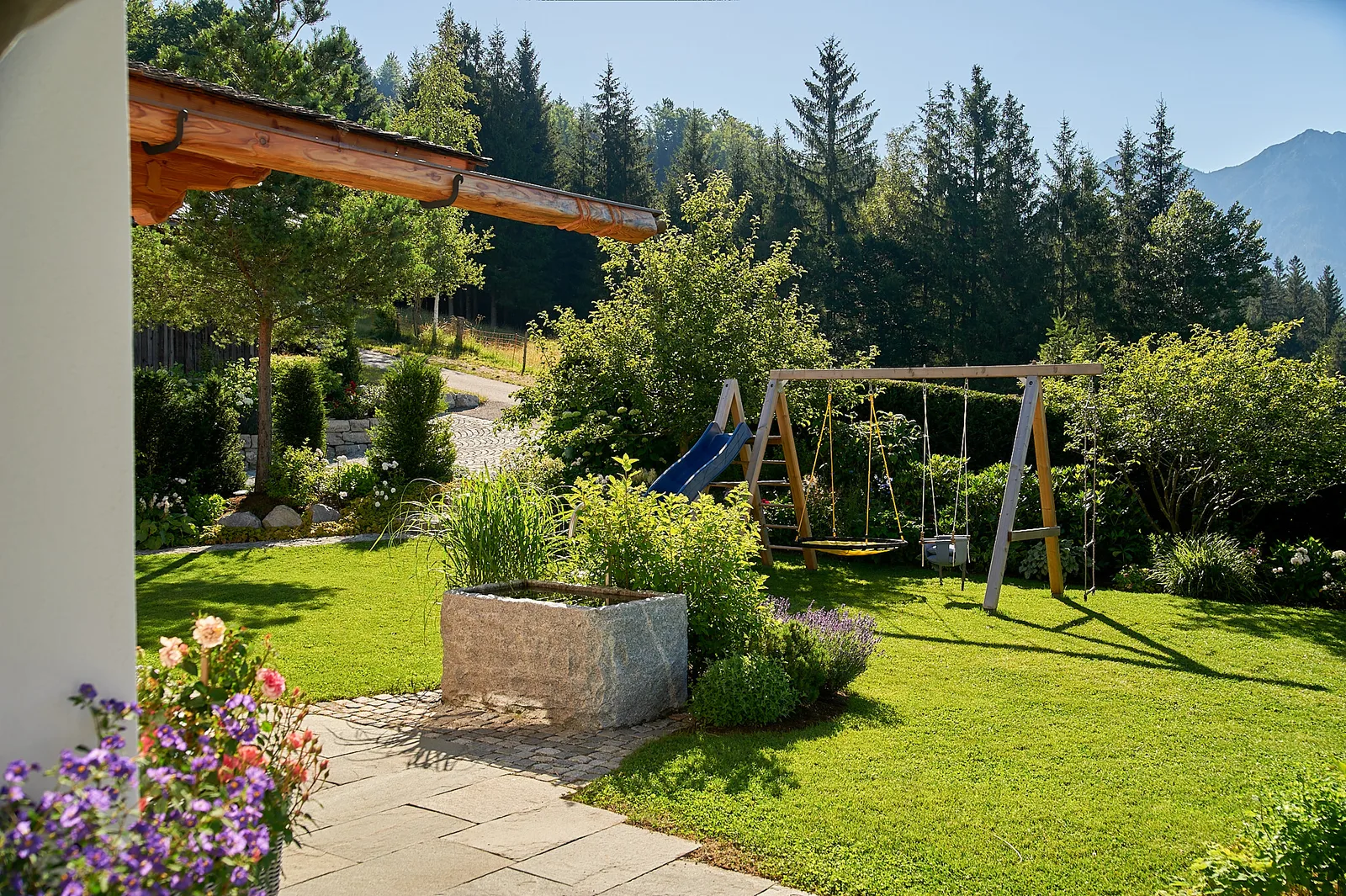
Answers about turf (rolled lawn)
How long do you need to water turf after laying it?
When can you walk on turf and use it fully?
When is turf mown for the first time?
Why do mushrooms grow in freshly laid turf?
How often does turf need feeding?
Let's talk about your project
We are happy to advise you in person, with no obligation.
Request a consultation