
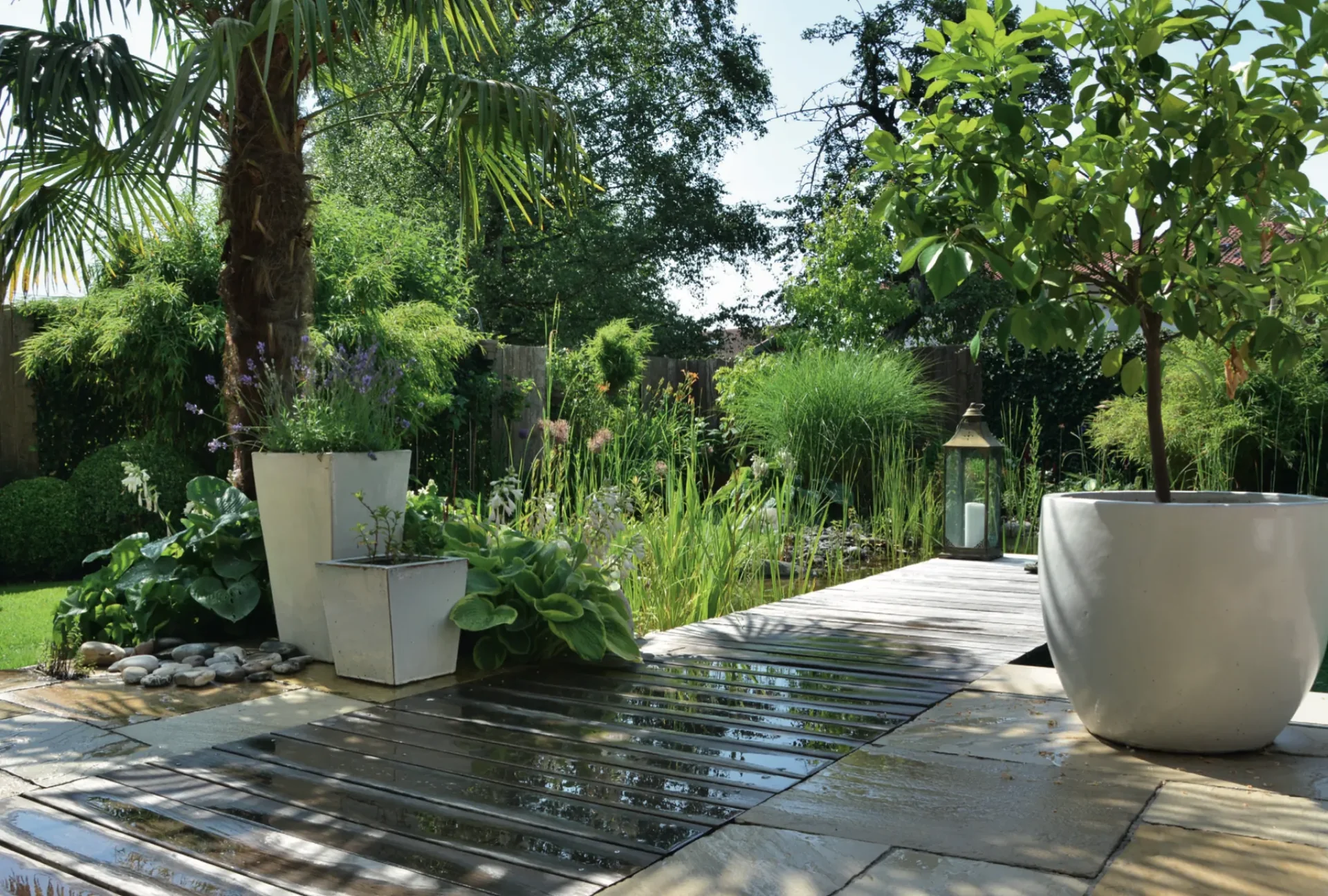
Bamboo care
Home › Garden guide › Bamboo

Bamboo care

Rhizome barrier, water, fertiliser and pruning

Compiled by our master gardeners · Last updated: July 2026

“Bamboo” care guide as a PDF
To print out and file away – free to download.
Download PDF

Bamboo belongs to the grass family. It is not only robust but also fairly undemanding – pests and diseases are practically unknown here. Alongside clump-forming bamboo such as umbrella bamboo (Fargesia), there is a whole range of running species such as flat-stemmed bamboo (Phyllostachys) and dwarf bamboo (Sasa) – and this is exactly what determines how much care is needed.

Rhizome barrier: the most important precaution

So that running bamboo species do not spread unchecked through the garden and sometimes cause major damage, they need something to limit their growth. The rhizome barrier (root barrier), made of sturdy membrane, is buried about 70 cm deep in the ground when planting, with five centimetres left above ground as a rim. This holds back rhizomes growing underground as well as those growing upwards.

Even with this protection in place, check the rhizome barrier regularly for “escapees” and cut them back where necessary. Also thin out plants growing inside the barrier regularly, to reduce the plant mass and prevent the barrier from being burst.

Irrigation

All bamboo varieties are sensitive to wind and cannot tolerate longer dry spells – nor waterlogging, though. If the leaves roll up in summer, the plant urgently needs water. In winter, too, you should water on frost-free days to prevent frost drought in these evergreen plants. Bamboo in rhizome barriers depends on regular watering.

Feeding

As a vigorous grower, bamboo has a high nutrient requirement. As soon as the new shoots become visible in spring, the grass needs a nitrogen-rich fertiliser – up to three times between March and June. The last feed is in August, so that the bamboo can store enough nutrients; later feeding reduces frost hardiness.

Bamboo takes up a lot of the trace element silicon – look for the relevant information when choosing a fertiliser. Silicon is also found in the fallen leaves, by the way, which is why you can safely leave them where they lie. Bamboo in rhizome barriers in particular depends on a regular supply of nutrients.

Pruning

Ground-cover bamboo such as bush bamboo (Pleioblastus) or dwarf bamboo should be cut back hard every spring before new growth starts, as it often looks untidy after winter. Bamboo can also be reduced in height – this makes it bushier, but changes its typical appearance and lets you train it into a green hedge wall.

More “typical” for bamboo is cutting out canes that have grown too tall: individual canes of upright species such as flat-stem bamboo or umbrella bamboo only live for a maximum of 8 years in established stands. They should be cut off close to the ground at regular intervals between November and April – this encourages new, thick canes to shoot and lets light through to the underplanting.

Bamboo as a hedge

Bamboo is becoming ever more popular as a hedging plant, as hardly any other plant screens unwanted views so quickly and effectively. Umbrella bamboo is particularly well suited thanks to its compact habit and good tolerance of pruning – and it doesn't spread by runners, so a rhizome barrier isn't needed.
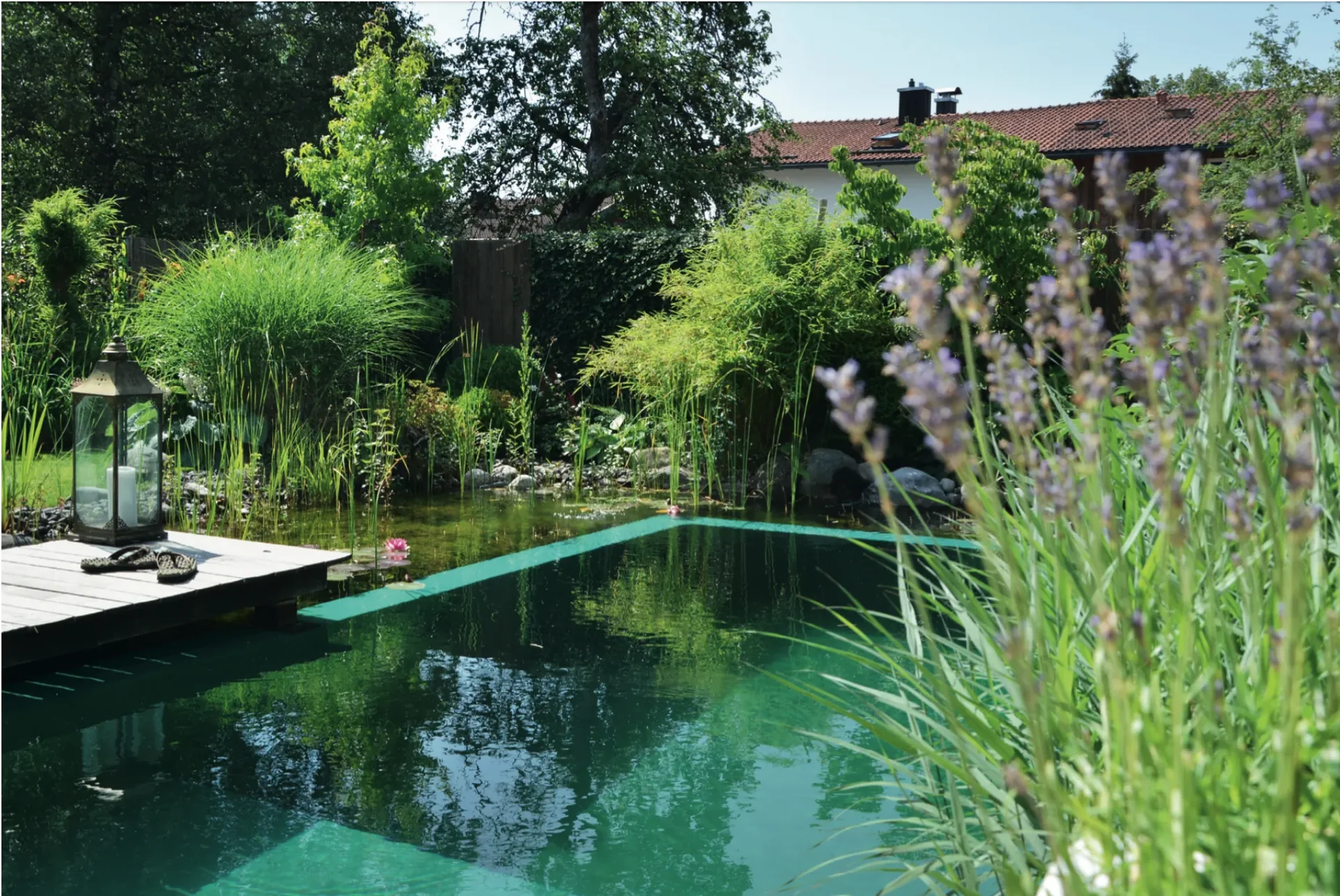

Bamboo – an example from our gardens

← All care guides · Professional care: Fuchs Service

Frequently asked questions

Answers about bamboo

Does every bamboo need a rhizome barrier?
No. Running species such as flat-stemmed bamboo (Phyllostachys) or dwarf bamboo (Sasa) absolutely need a barrier. Clump-forming umbrella bamboo (Fargesia) does not spread by runners and does fine without one.
How deep does a rhizome barrier need to be installed?
The barrier, made of sturdy membrane, is buried about 70 cm deep; five centimetres stay above ground as a rim. Even so, check regularly for “escapees”.
Why are my bamboo leaves curling up?
Curled leaves in summer are a clear sign of a lack of water – the plant urgently needs watering. Bamboo tolerates neither longer dry spells nor waterlogging.
When and how often should bamboo be fed?
Feed with a nitrogen-rich fertiliser as soon as the new shoots appear in spring, up to three times between March and June, and for the last time in August. Later feeding reduces frost hardiness. Look for silicon in the fertiliser.
Does bamboo need watering in winter?
Yes, on frost-free days – bamboo is evergreen and would otherwise suffer from frost drought. This applies especially to plants in rhizome barriers.
Does bamboo need a lot of water?
Yes, bamboo depends on even moisture: it cannot tolerate longer dry spells, but it cannot tolerate waterlogging either. If the leaves curl up in summer, that is a clear sign of a lack of water. Bamboo in a rhizome barrier needs particularly regular watering, because the root space there is limited. In winter, too, the evergreen plant needs water on frost-free days, otherwise it suffers from frost drought.
When should bamboo be pruned?
Canes that have grown too tall on upright species such as flat-stemmed or umbrella bamboo are cut out at ground level between November and April – this encourages new, thicker canes and lets light into the underplanting. In established stands, individual canes only live for a maximum of eight years anyway. Ground-cover bamboo such as bush or dwarf bamboo is cut back hard every year in spring before new growth starts. Pruning is not strictly necessary, but it keeps the stand vital and attractive.
How fast does bamboo grow?
Faster than any tree or shrub – but not in the way most people think. A bamboo cane grows only once: it reaches its final height and thickness in a single growing season and never grows again – bamboo has no thickening growth like a tree. When this shoot growth begins depends heavily on altitude here: in the south of Munich and towards Chiemsee it starts earlier than in the Spitzing area and the higher parts of the Bavarian Oberland. The figure you can plan with is the annual increase: for clump-forming umbrella bamboo (Fargesia) we reckon on about 40 to 60 cm a year – here at the edge of the Alps more towards the lower end, because the growing season is shorter. The spectacular daily figures you find online – around 2.5 to 3.5 cm for Fargesia, 15 to 25 cm for the runner-forming flat-stem bamboo (Phyllostachys) – are guideline values from the specialist literature, not measurements from our own gardens. They only describe the few weeks of shoot growth anyway, not the whole year. And the record reports of a metre a day come from giant tropical bamboos and have nothing to do with a Bavarian garden. Important here: the truly fast-growing species are usually exactly those that need a rhizome barrier and experience. Phyllostachys sends out runners and, without a professionally installed barrier, will sooner or later turn up in the neighbour's garden – and getting it out again is expensive. So if you want fast growth, you shouldn't choose the species on growth rate alone.
How tall does bamboo grow – and how long does it take?
That depends on the species. Dwarf and ground-cover bamboo (Pleioblastus, Sasa) stays at around 0.3 to 1.5 m, umbrella bamboo (Fargesia) reaches 1 to 5 m, and runner-forming flat-stem bamboo (Phyllostachys) can grow 6 to 12 m tall – but the latter only with a rhizome barrier, otherwise it spreads uncontrollably. At the edge of the Alps, because of the short growing season, we tend to be at the lower end of these ranges. How long it takes to get there can't be said in general – it depends on two things: the variety and the size at purchase. If you plant small stock, you wait years; if you plant larger stock, you get your privacy screening correspondingly sooner. If you wish, we plan this in from the outset: we select the variety to suit your requirements – by desired height, by when you want the hedge to be dense, and by location. In general, each year's new canes come out a little taller and thicker than the last, until the site sets the limit. That is exactly why regular cutting is worthwhile: since an old cane never gets any thicker, it is only by removing canes that are too tall and old that the plant is prompted to send up strong new ones.
Is there an alternative to bamboo for privacy screening?
Yes, and often it's the better choice: tall grasses. Giant Chinese silver grass (Miscanthus × giganteus) grows to around three metres depending on the site, is clump-forming and doesn't produce runners – so it needs no rhizome barrier and can't wander into the neighbour's garden. That removes exactly the risk that makes runner-forming bamboo laborious. The difference that matters: Miscanthus is deciduous. It is cut back close to the ground in spring and only stands tall again later – ideal as screening for the garden season, unsuitable as a year-round screen. Bamboo is evergreen and screens in winter too. So if you look out onto the terrace in winter, choose bamboo; if you want to shield your seating area in summer, grasses are usually simpler and cheaper. You'll find more on care in our grasses guide – including the note that Miscanthus leaves have sharp edges, so gloves are a must when cutting.

Let's talk about your project

We are happy to advise you in person, with no obligation.

Request a consultation
CallConsultation