
Asters: the stars of the autumn garden
From knee-high cushion asters to head-high rough-leaved asters: the loveliest autumn asters in pink, lilac and violet, proven varieties and care for healthy plants.
By Balbina Fuchs, landscape architect and owner · Fuchs baut Gärten, Lenggries · published 16 October 2026
When the summer flowers are over, asters take centre stage: from September until the first frost they bloom in pink, lilac, violet and white – from knee-high cushion asters at the edge of the border to head-high rough-leaved asters at the back. And they are one of the last major food sources for bees and butterflies of the year.
Which aster goes where?
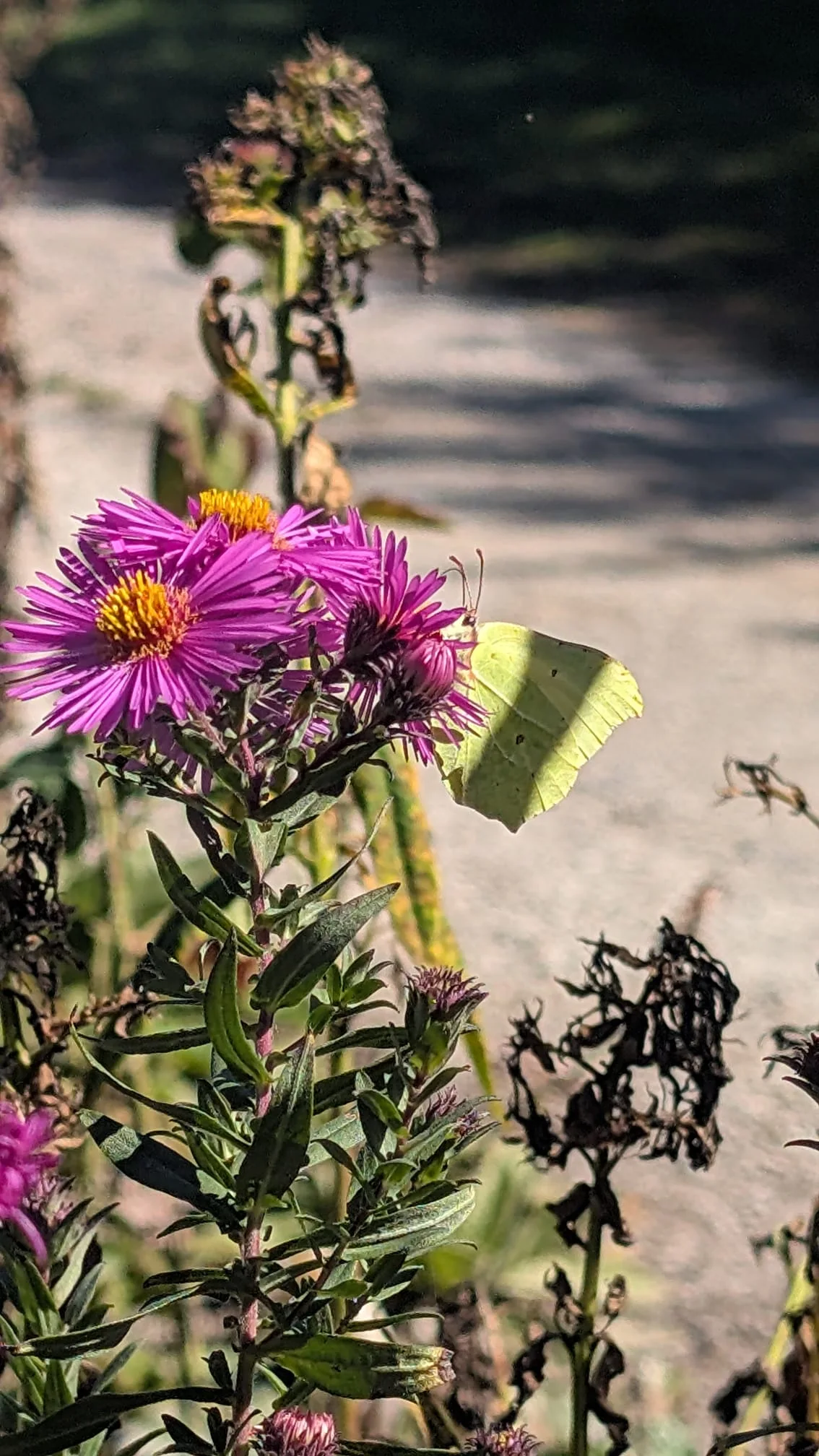
Most autumn asters come from North America and are now botanically called Symphyotrichum, though they are still sold as “aster” (BOKU Wien). Five groups matter most for the garden:
- Cushion asters grow 30 to 50 centimetres tall and are ideal for the edge of a border in sunny spots.
- Italian asters (Aster amellus) are native, 30 to 50 centimetres tall, violet with a yellow centre, and like sun, fairly dry conditions and chalky soil – good for gravel beds (BOKU Wien).
- Heath asters carry countless small flowers on shoots 80 to 120 centimetres tall and suit naturalistic planting.
- Rough-leaved asters and smooth-leaved asters are the tall ones: up to about 1.20 metres, some varieties even taller, flowering until the first frost (Sächsische Gartenakademie).
For partial shade under trees and shrubs, there is the white wood aster, which flowers as early as August.
Proven varieties in pink and lilac
The Arbeitskreis Staudensichtung tests over several years at multiple sites which varieties really deliver in the garden. A selection rated “excellent” (*) and “very good” ():
- Low, for the edge of the border: cushion aster 'Rosenwichtel' (lilac-pink, 20 to 30 cm) , 'Herbstgruß vom Bresserhof' (lilac-pink, 40 cm) , 'Zwergenhimmel' (pale blue-violet, 40 to 50 cm) , Italian aster 'Veilchenkönigin' (dark violet, 50 to 60 cm) .
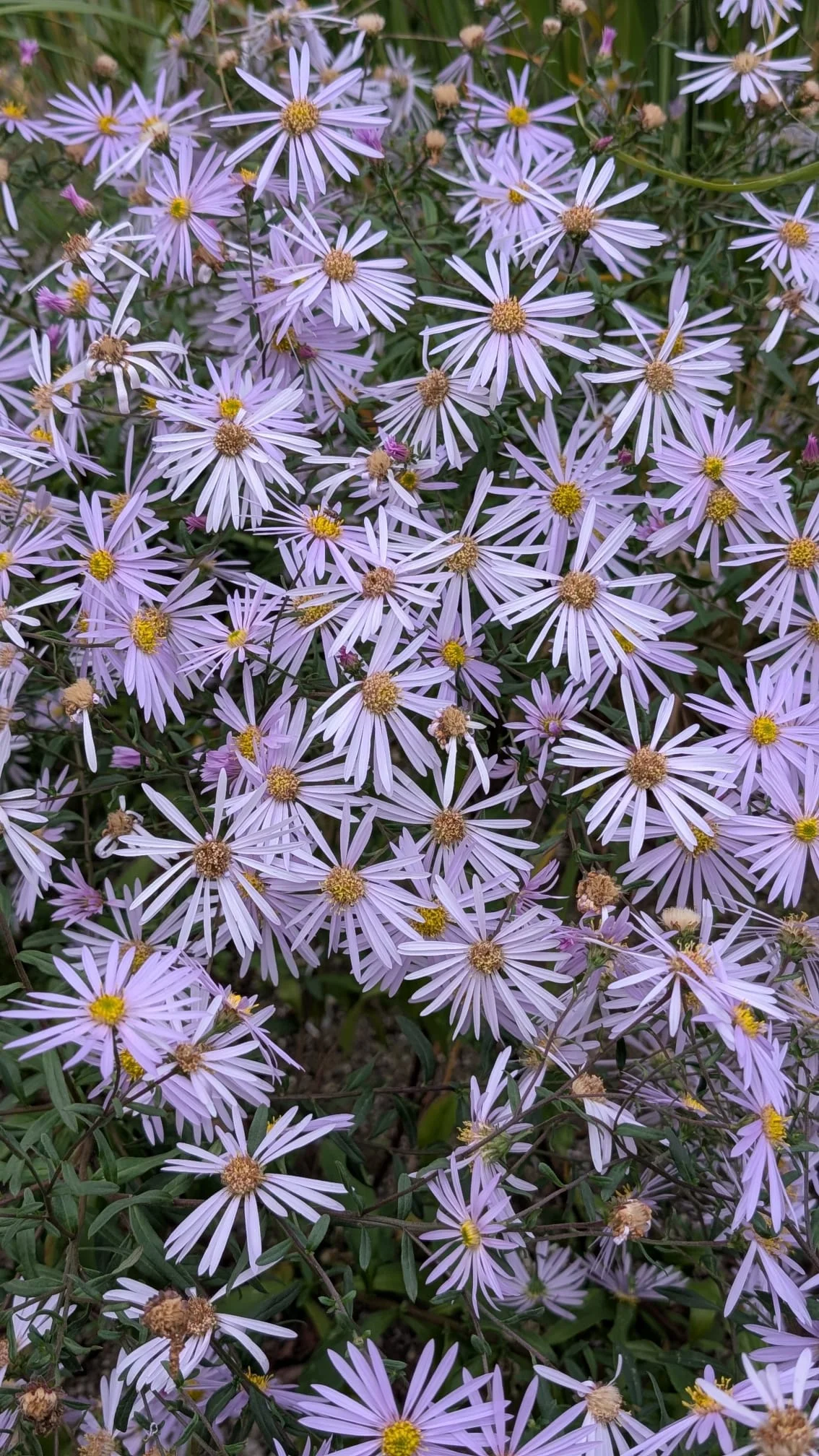
- Medium height, airy: heath aster 'Lovely' (pale pink-lilac) and 'Pink Cloud' (violet-pink) .
- Tall, for the back of the border: rough-leaved aster 'Alma Pötschke' (bright pink, 80 to 120 cm) , 'Barr's Pink' (violet-pink, up to 160 cm) , 'Violetta' (dark violet) and smooth-leaved aster 'Karminkuppel' (purple-pink, very sturdy) .
Keeping asters healthy
- Position: sunny. Rough-leaved asters need moderately moist to moist soil that is not too rich in nutrients, otherwise they topple over more easily (BOKU Wien). Smooth-leaved asters prefer richer, evenly moist soil, with compost in spring.
- Powdery mildew: rough-leaved asters are considered highly resistant to powdery mildew; smooth-leaved asters are more susceptible in dry, warm weather (Sächsische Gartenakademie). If you want to avoid mildew, choose rough-leaved asters or varieties with a good trial rating.
- Dividing: lift and divide tall asters every few years, otherwise they become bare in the middle.
- Planting time: in harsh locations with cold, wet winters, Italian asters are better planted in spring – this applies here in the Bavarian Oberland too.
Lovely combinations
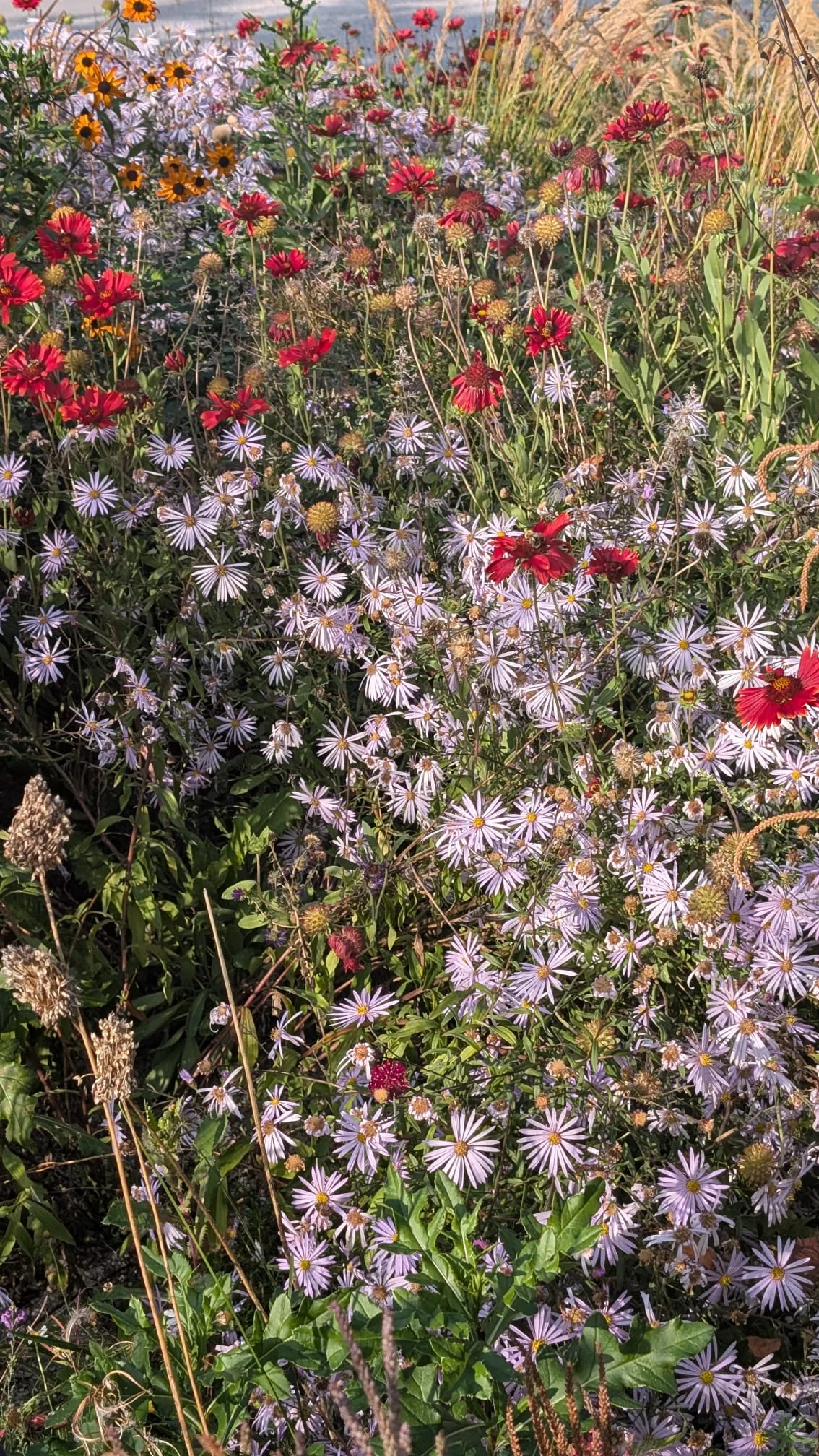
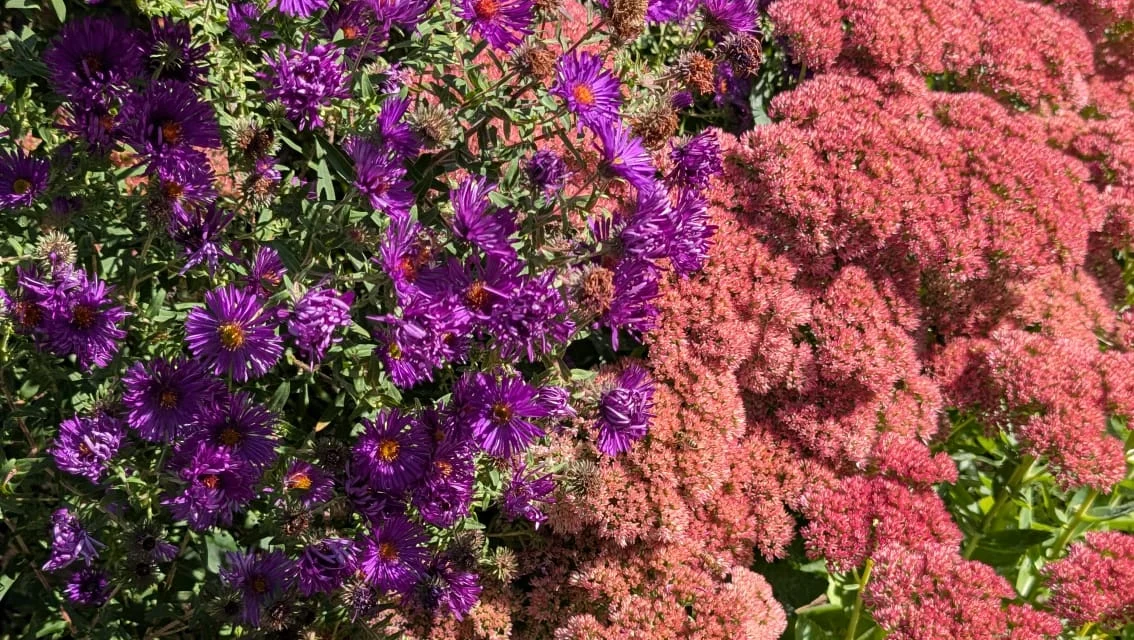
Rough-leaved asters lose their lower leaves early. Tall sedum in front and ornamental grasses alongside hide this and are ideal partners (Sächsische Gartenakademie) – the cover photo shows exactly this combination. In naturalistic borders, asters also go well with blanket flowers and grasses, as above. Our pumpkin article shows autumn asters with pumpkins. How we plan such autumn borders is explained under perennial planting.
Photos: Balbina Fuchs
Quick answers
When do asters flower?
Which asters don't get powdery mildew?
How tall do asters grow?
Are asters good for bees?
What would you like to know?
Your question not answered here? Write to us – we reply personally. Sometimes we take up good questions in a new article, without your name, of course.
More from the garden guide
Every Thursday, we answer a question from the garden here – often one that our customers ask us.
Let's talk about your project
We are happy to advise you in person, with no obligation.
Request a consultation