
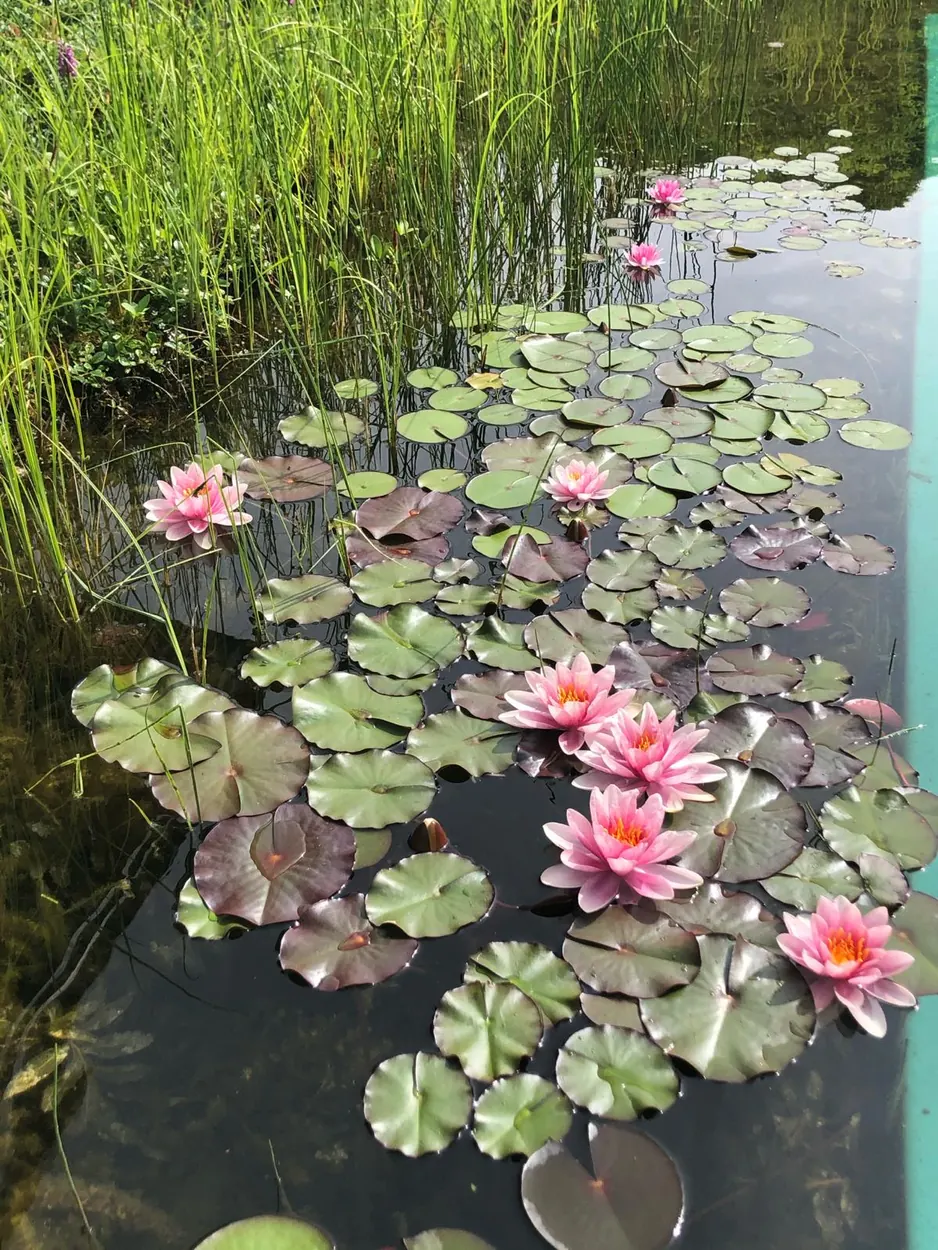
Monet and his water lilies: a garden as a work of art
Claude Monet created a water lily pond in Giverny and painted it for almost 30 years. Here is the story behind it – and how to grow water lilies in your own pond.
By Balbina Fuchs, landscape architect and owner · Fuchs baut Gärten, Lenggries · published 5 November 2026
Claude Monet did not just paint his water lilies, he planted them himself first: in 1893 he had a pond dug in Giverny, sourced the then-new coloured water lilies and kept painting them until his death in 1926. His garden still shows today how much calm a water lily pond brings to a garden – and that is possible in Upper Bavaria too.
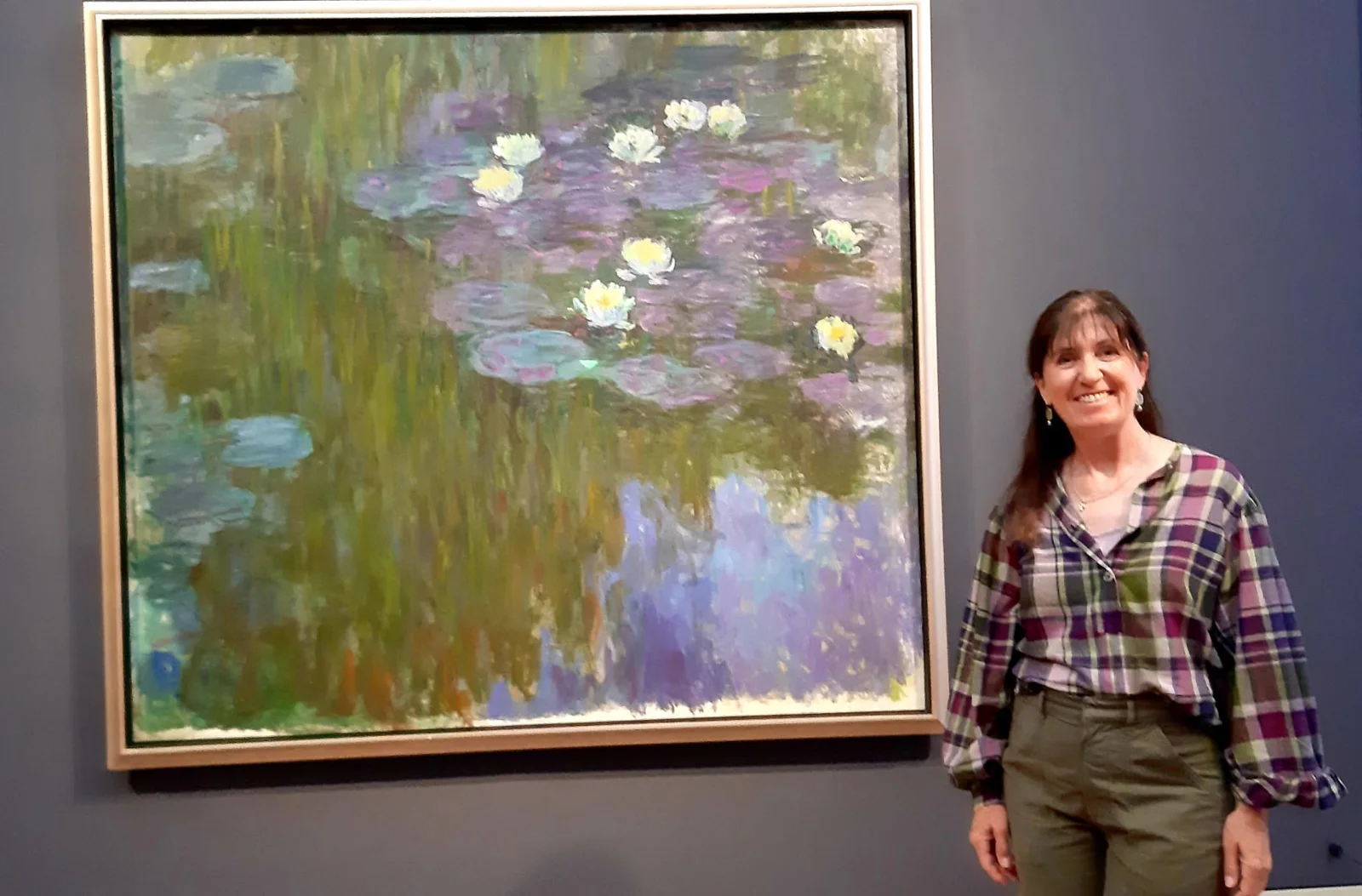
The idea for this article came from my mother, Angelika Fuchs: in early October she was in Berlin for the business managers' meeting, saw Monet's water lilies in the original at the Museum Barberini in Potsdam and sent me the pictures – I was thrilled. In front of a painting like that, you understand what a garden can be: an artist's muse.
A pond built for painting
In 1883 Monet moved into the house in Giverny, a village on the Seine north-west of Paris, and bought it a few years later. In 1893 he acquired a plot on the other side of the road and the railway line and asked the prefect for permission to dig a basin there, fed by an arm of the little river Epte (Musée des impressionnismes Giverny). Over it he built a Japanese bridge – green rather than red, as would be usual in Japan. One gardener did nothing but look after the pond, removing every wilted leaf so that the water stayed calm and clear (Fondation Claude Monet). In 1901 Monet bought more land and enlarged the pond to about three times its size.
The water lilies came from the south of France. The gardener Joseph Bory Latour-Marliac was the first to breed hardy water lilies in pink, red and yellow, and won a first prize for them at the Paris World's Fair in 1889 (Latour-Marliac). Monet saw them there – and a few years later placed an order for his pond.
Around 300 paintings of the same water
What followed is unique in art history: from the late 1890s until 1926 Monet painted his pond again and again – the Musée de l'Orangerie speaks of almost 300 paintings, including more than 40 large-format ones (Musée de l'Orangerie). The day after the armistice in 1918, he offered the French state a cycle of large water lily panels as a gift. Since May 1927 they have surrounded visitors in two oval rooms of the Orangerie in Paris, almost 100 metres of painting all around.
The fact that the late paintings look so different also has to do with Monet's eyes: cataracts made it almost impossible for him to tell blue and green apart, and his paintings became reddish and murky. After an operation in 1923, blue and violet returned (Science History Institute).
If you would rather not wait until Paris to see the water lilies: the Albertina in Vienna owns “The Water Lily Pond”, painted around 1917 to 1919 and two metres wide (Albertina), and the Museum Barberini in Potsdam (Humboldtstraße 5–6), where the photo above was taken, shows two water lily paintings in its Monet collection (Museum Barberini). Monet's house and garden in Giverny are open every year from April to early November.
Water lilies in your own pond
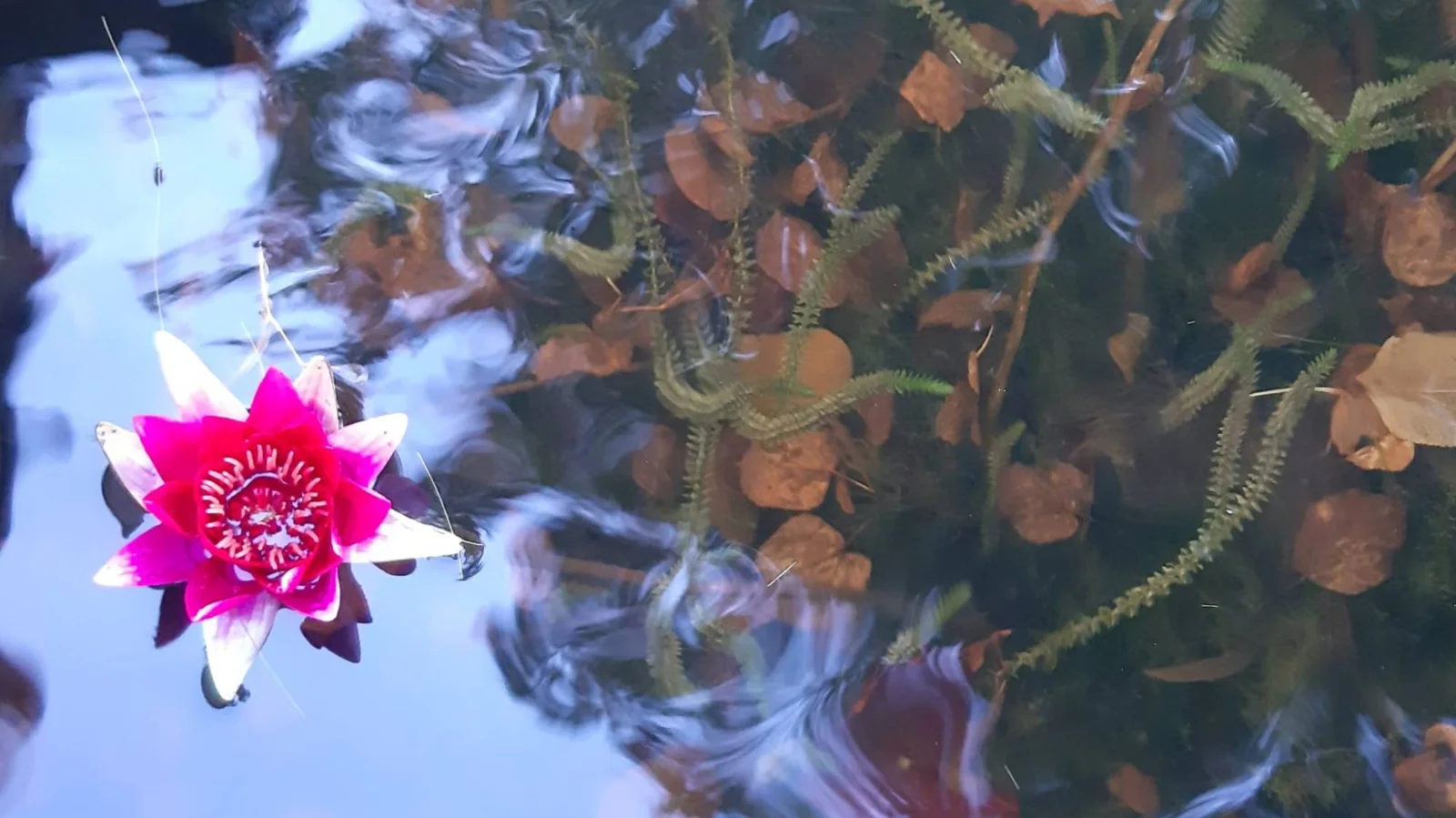
Monet's most important insight applies in your own garden too: water lilies need sun and still water. The Royal Horticultural Society recommends at least six hours of full sun a day and a spot well away from fountains, pumps and flowing water (RHS).
- The right depth: Small varieties grow with 30 to 45 centimetres of water above the plant, medium ones with 45 to 75, large ones with up to 120 centimetres. Young plants are first set in shallower water and moved deeper later.
- Planting time: from late spring to late summer, in a planting basket with pond soil or heavy loam.
- Not too many: At most half of the water surface should be covered by leaves.
- Care: Remove faded flowers and yellow leaves – otherwise they rot and encourage algae. Every few years the plants are divided.
- Winter: Hardy varieties, like the ones Monet had, simply stay in the pond.
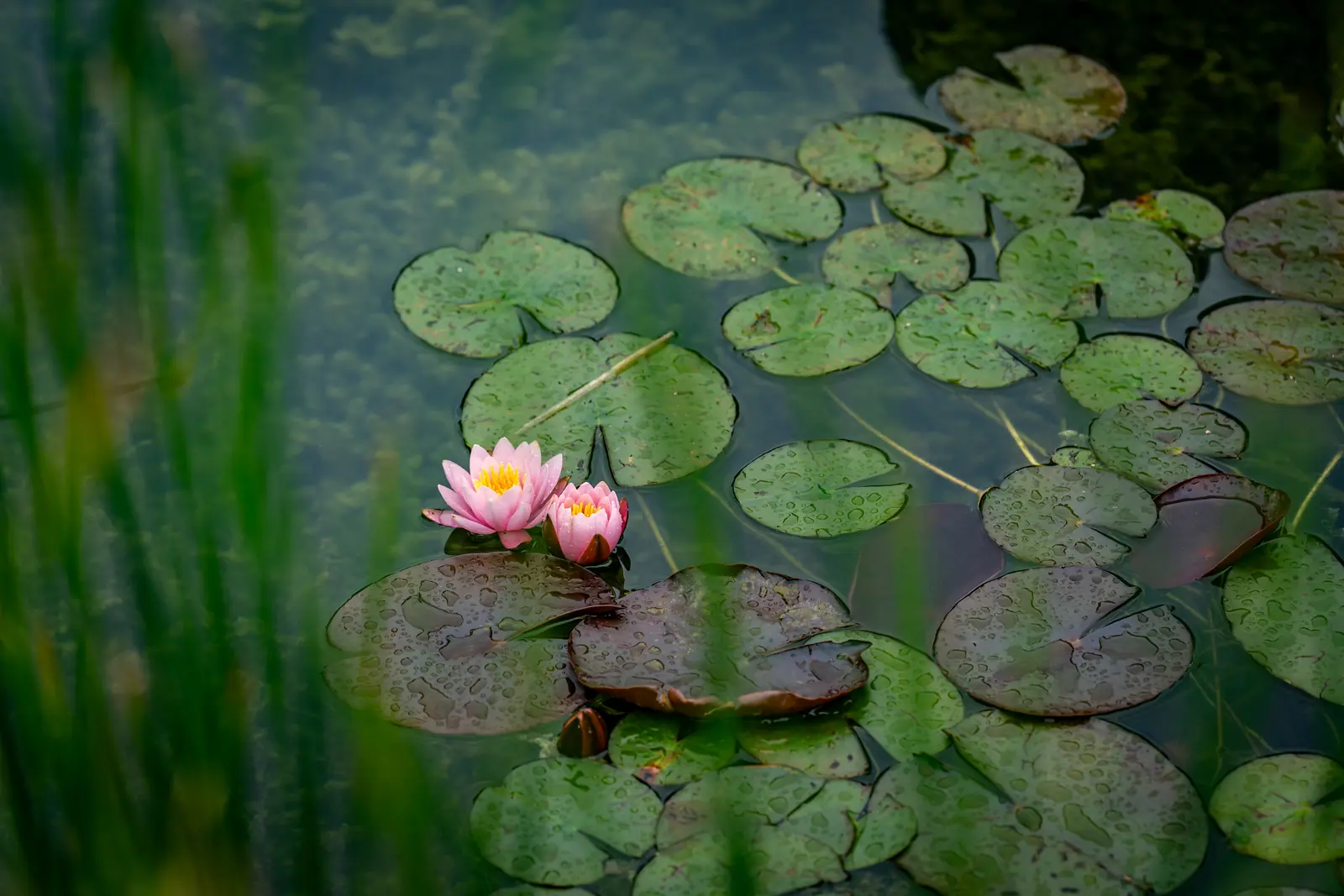
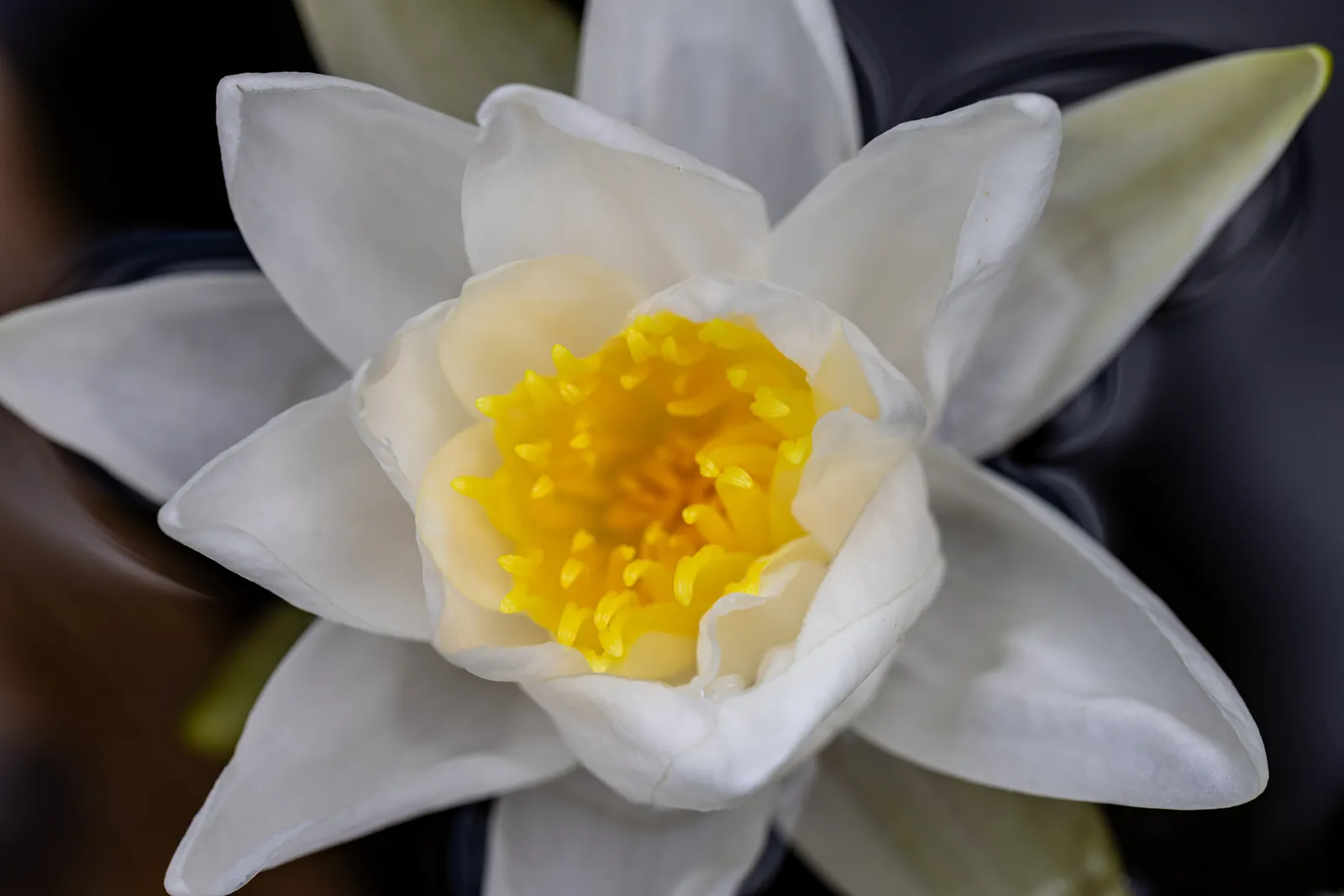
In a swimming pond, water lilies find their place in the regeneration zone, where the water is calm and the plants help to clean it. The pink and white water lilies in this article bloom in ponds we have built: in the Swimming Pond with Alpine View, in the Swimming pond in Rottach-Egern and in the Wasserreich der Gelassenheit – Giverny in miniature, with a mountain view.
And who knows: perhaps one day an artist will stand at one of our swimming ponds, take inspiration from the water lilies – and we will discover the painting in a museum someday.
Photos: clients of the Swimming Pond with Alpine View (cover image); Victor Liska photography (two pink water lilies); Benjamin Klopp / frames for good (white water lily); Angelika Fuchs (Museum Barberini); Fuchs baut Gärten (red water lily)
Quick answers
Where did Monet paint his water lilies?
How many water lily paintings did Monet paint?
How deep does a pond need to be for water lilies?
Do water lilies need protection in winter?
What would you like to know?
Your question not answered here? Write to us – we reply personally. Sometimes we take up good questions in a new article, without your name, of course.
More from the garden guide
Every Thursday, we answer a question from the garden here – often one that our customers ask us.



Let's talk about your project
We are happy to advise you in person, with no obligation.
Request a consultation