
Autumn is planting time: trees, hedges and perennials
Why autumn is the best time to plant trees, hedges and perennials, how late you can plant – and what is better left until spring.
By Balbina Fuchs, landscape architect and owner · Fuchs baut Gärten, Lenggries · published 22 October 2026
For most hardy trees, hedges and perennials, autumn is the best time to plant: growth above ground is over, while below ground the roots keep growing in the still-warm soil. The plants get a head start in spring – and cope better with the next dry summer.
One important point first: the classic planting season mainly applies to bare-root plants and root-balled stock. Anything grown in a pot – perennials in small pots or trees and shrubs in containers – we plant all year round. The only pause is when the ground is frozen hard.
Why right now?
The Bavarian Garden Academy gives several reasons for planting in autumn (leaflet “Ideal planting time”):
- The roots keep working. Even in late autumn the soil is warm enough for new roots to grow.
- A head start in spring. Well-rooted plants come into leaf earlier and cope better with dry spells the following year.
- Less watering. It rains more often in autumn, and the soil retains moisture (Saxon Garden Academy).
- The widest choice. Tree nurseries and perennial nurseries have their full range in autumn.
How late can you plant?
Bare-root trees and shrubs are planted from the end of September to early December, depending on the weather – on frost-free days, when the soil has thawed and dried off. Robust native trees and shrubs can go in from leaf fall onwards, as long as the ground is not frozen (LWG). Here in the Bavarian Oberland the ground often freezes earlier than in the lowlands, so we prefer to schedule autumn planting early in the season.
Bare-root, root-balled or potted?
What matters for planting time is how a plant is supplied:
- Bare-root plants are only available outside the growing season, so in autumn or early spring. Before planting, put the roots in water for just one to two hours.
- Root-balled stock should be watered thoroughly, and the knot of the root-ball cloth should be loosened when planting (leaflet “Planting new trees and shrubs”).
- Container plants can be planted all year round – just not in frost or intense summer heat (LWG). As long as the ground is not frozen, we also plant in late autumn and winter.
Hedges: evergreens first
Yew, cherry laurel, holly and box should go into the ground as early in autumn as possible. They lose water through evaporation in winter too, and can only replace it with new roots. If autumn is dry, evergreen broadleaf and coniferous plants need a thorough watering of about 30 to 40 litres per square metre around mid-October (leaflet “The garden in autumn”). You can find out which hedge suits which purpose under Privacy screening and hedges.
Trees: sometimes with a crane

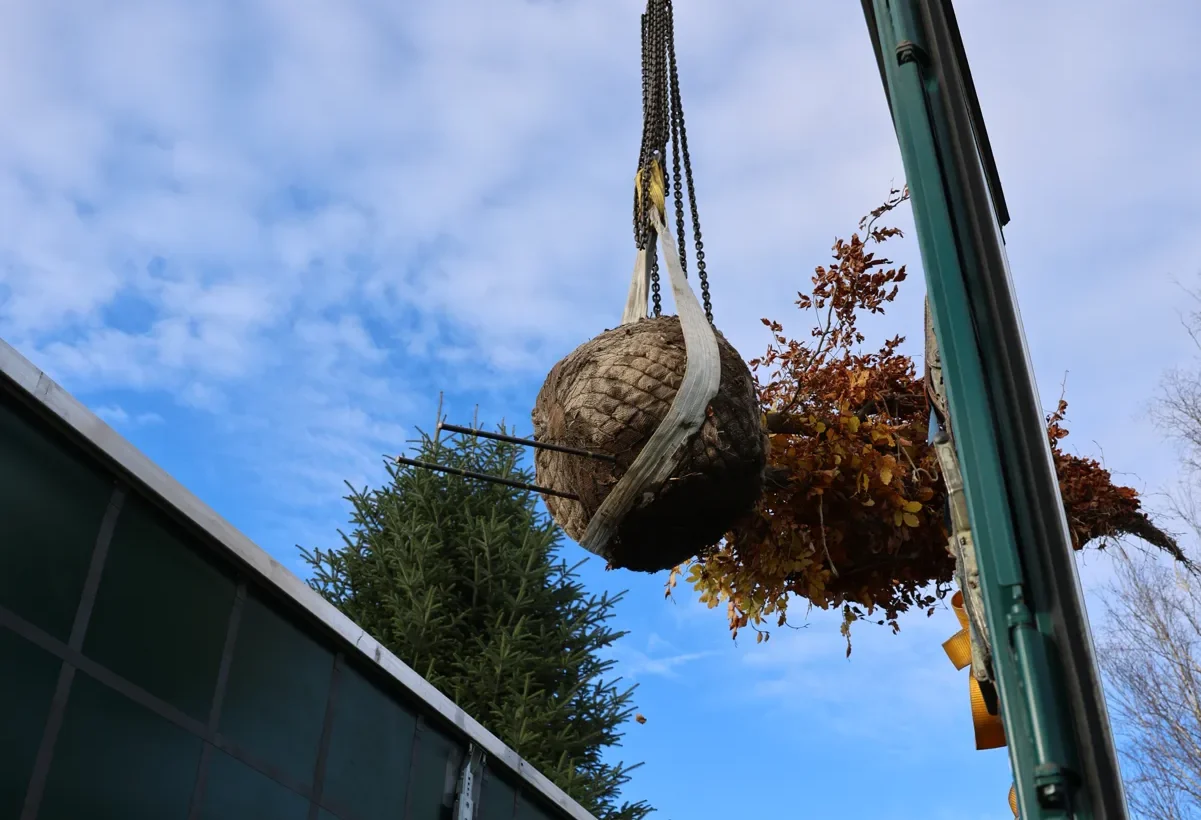
Young trees are planted by hand, while we often bring in large ones by crane: the root ball floats over a wall or house straight into the prepared planting hole. For larger trees, one or two support stakes go into the planting hole straight away; afterwards the tree is watered moderately and covered with about five centimetres of bark mulch (LWG). The page Trees and large trees shows how we carry out a large tree planting.
Perennials: hardy ones now
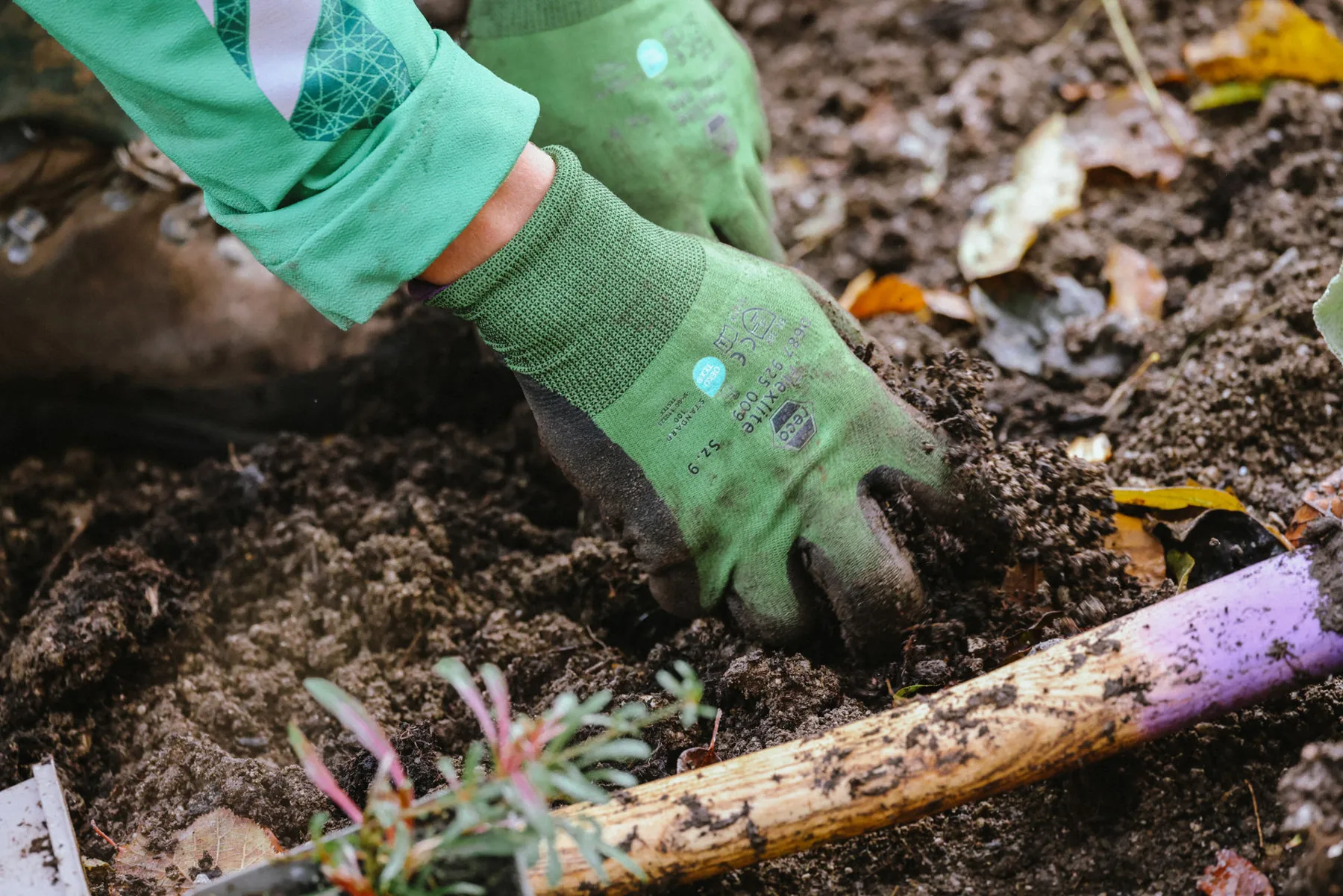
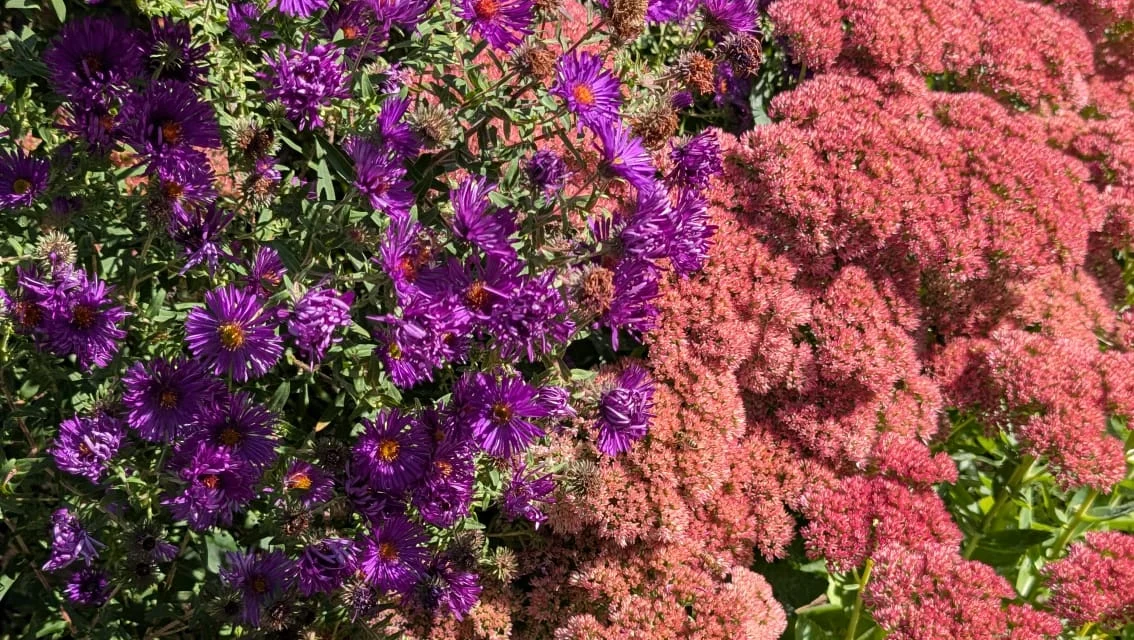
The same applies to perennials as to trees and shrubs: hardy species can be planted in autumn. Slightly more delicate ones from mild regions, such as the Japanese anemone, are lightly covered with leaves in their first autumn (LWG).
From our experience: with freshly planted perennials, frost can push the small root balls out of the soil before they have properly rooted. So check after frosty nights and gently press any lifted plants back down. You can read how we design and plant perennial beds under Perennial planting.
What is better left until spring
Not everything belongs in autumn. It is better to plant the following in spring (LWG):
- frost-sensitive trees, shrubs and perennials, such as hydrangeas, hibiscus, peach and apricot,
- roses in harsh locations with hard winters – then in March or April,
- anything on heavy, clayey soils or in spots with strongly drying winds.
Photos: Benjamin Klopp / frames for good
Quick answers
Why is autumn the best time to plant?
How late can you plant in autumn?
What is better planted in spring?
Do hedges planted in autumn need watering?
What would you like to know?
Your question not answered here? Write to us – we reply personally. Sometimes we take up good questions in a new article, without your name, of course.
More from the garden guide
Every Thursday, we answer a question from the garden here – often one that our customers ask us.
Let's talk about your project
We are happy to advise you in person, with no obligation.
Request a consultation